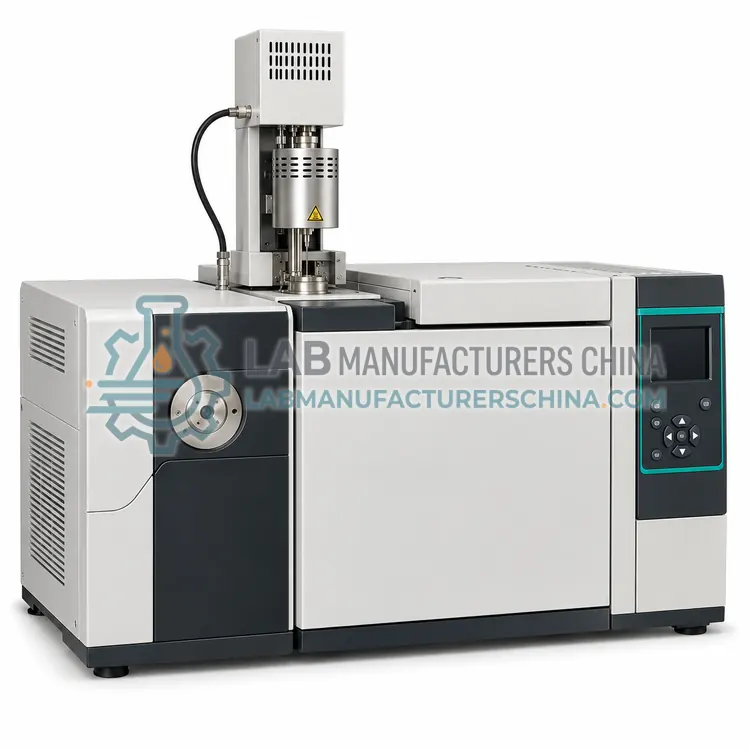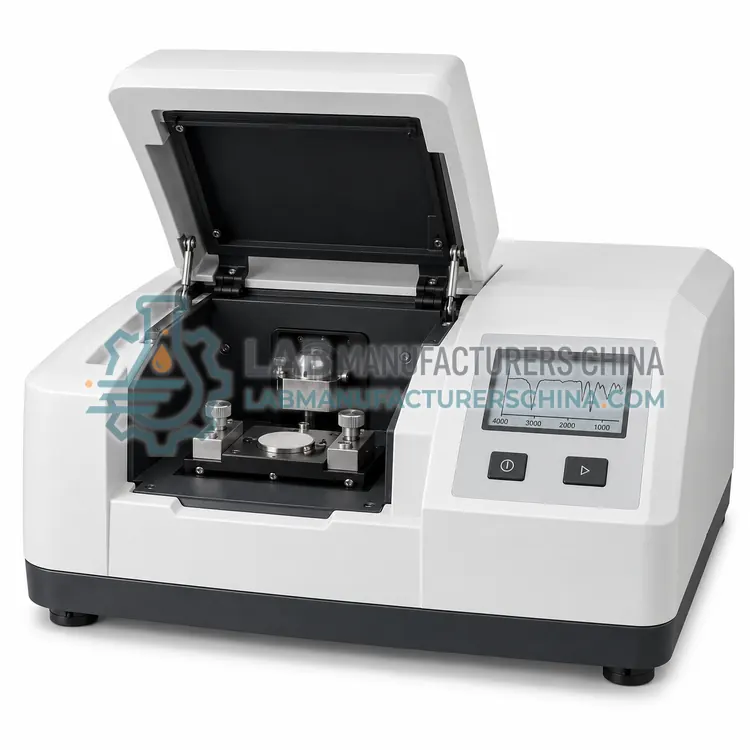
Filler Content Analyzer for Plastics
塑料填料含量测定仪
- SKU PCA-0001
- Plastic Composition Analysis
- CE (to be confirmed)
- ISO 9001 manufacturing (to be confirmed)
Price on request — FOB / CIF quoted per order
Prices depend on configuration, quantity and destination port.
Key specifications
| Maximum temperature | 1200 °C |
|---|---|
| Working temperature | 625 °C per ISO 3451-1 |
| Temperature uniformity | ±5 °C at working temperature |
| Heating rate control | Programmable ramps and holds |
| Chamber volume | 4–12 L |
| Crucible material | Quartz, porcelain or platinum |
Request a quote Download brochure · to be provided
By Lab Manufacturers China Technical TeamLast reviewed Standards: ISO 3451-1, ASTM D5630, ASTM D1603
What is the Filler Content Analyzer for Plastics?
A filler content analyzer ashes plastic specimens in a controlled muffle furnace and weighs the residue to quantify mineral filler and glass content. It is the classical, low-cost method for verifying compounded formulations.
What is the Filler Content Analyzer for Plastics?
A filler content analyzer ashes plastic specimens in a controlled muffle furnace and weighs the residue to quantify mineral filler and glass content. It is the classical, low-cost method for verifying compounded formulations.
Overview
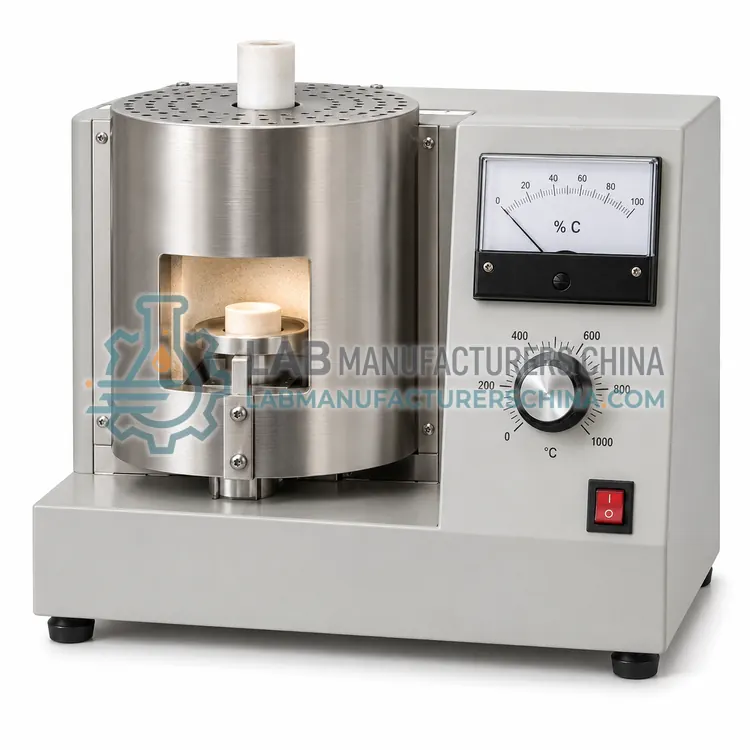
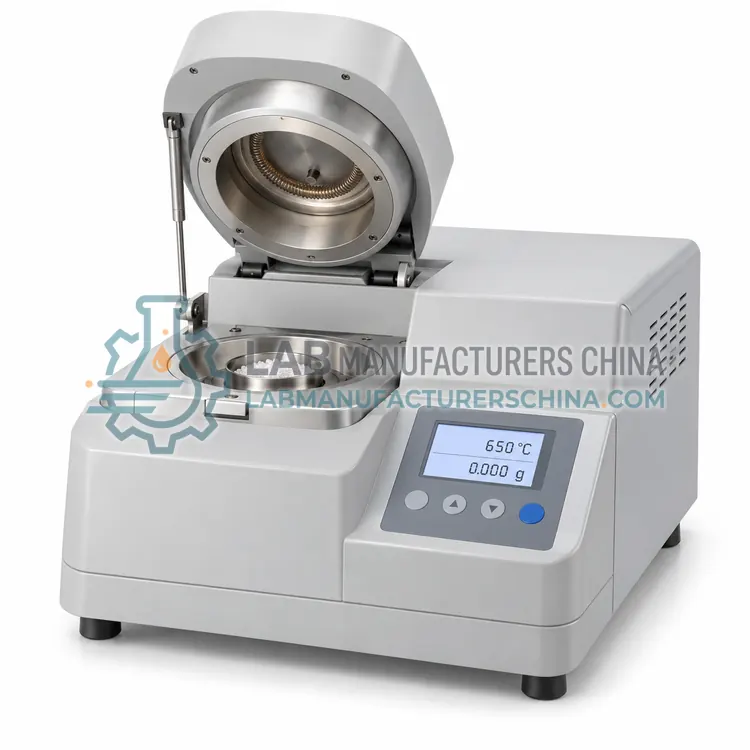
The equipment consists of a muffle furnace with a programmable temperature profile, a balance of 0.1 mg resolution, clean crucibles and desiccators. Specimens are weighed, ignited at a temperature specified by the method and cooled in a desiccator before the residue is weighed, with a crucible blank deducted. Typical programmes hold at 625 °C for ISO 3451-1 general plastics, while higher temperatures are used for specific mineral fillers, and some compounds require a preliminary acid digestion or a two-stage programme to separate glass from mineral filler. Chamber capacity, temperature uniformity and the ability to reproduce the ramp rate determine how well results from different laboratories agree.
How does it work?
Different questions require different physical principles. Ashing and combustion methods remove the organic matrix by heating in air or oxygen, leaving the inorganic filler or ash as a residue that is weighed, which quantifies mineral content and glass fibre. Carbon black is measured by pyrolysing the polymer in nitrogen and then burning the carbon in oxygen. Infrared spectrometry identifies the polymer and detects functional-group changes caused by oxidation or additives. X-ray fluorescence excites the sample with X-rays and records the emitted characteristic radiation, giving rapid elemental screening for restricted substances. Pyrolysis gas chromatography with mass spectrometry thermally fragments the polymer in an inert atmosphere and separates the fragments, which identifies copolymers, plasticisers and additives that spectroscopy alone cannot resolve.
What are the key features?
- Programmable temperature profile to 1200 °C
- Temperature uniformity across the chamber
- Crucible handling tools and desiccator set
- Balance interface for direct ash calculation
- Multi-stage programmes for two-component fillers
- Exhaust port for combustion gases
What are the technical specifications?
A typical filler content analyzer for plastics configuration offers maximum temperature of 1200 °C, working temperature of 625 °C per ISO 3451-1, temperature uniformity of ±5 °C at working temperature, heating rate control of Programmable ramps and holds, chamber volume of 4–12 L and crucible material of Quartz, porcelain or platinum. Values are indicative of the product class; the exact figures for each configuration are confirmed on the quotation and the calibration documents supplied with the instrument.
Which applications is it used for?
The Filler Content Analyzer for Plastics is used in glass fibre and mineral filler content in compounds, verification of masterbatch loading, ash content in pipe and profile formulations and control of recycled compound composition. Across the wider Plastic Composition Analysis class, laboratories also deploy it for filler and glass fibre content determination, carbon black content in pipe and cable compounds and polymer identification in incoming inspection.
Which standards and certifications apply?
Relevant standards and methods include ISO 3451-1, ASTM D5630, ASTM D1603, ASTM E1131, ASTM D5576, ASTM D3452, ASTM F2617 and IEC 61010-1. Certification candidates for this model are CE and ISO 9001 manufacturing; each is to be confirmed for the specific configuration before shipment, and certificates are supplied only where they have been issued.
Representative sampling matters more than instrument precision, because fillers and additives are rarely distributed perfectly evenly. Grind or cryo-mill specimens, or take several portions from different locations, and record the sampling plan. Control the ashing temperature and time exactly, since mineral fillers may lose mass at high temperature and glass fibre can sinter. Keep crucibles clean and run a blank. For X-ray fluorescence, check the measurement area against the sample size and confirm whether the result reflects the surface layer only. Calibrate all equipment with certified reference materials and retain the raw data with the report.
How do I select the right Filler Content Analyzer for Plastics?
Choose ashing when you need a simple, robust and inexpensive filler determination that is easy to defend against the standard, and when sample numbers are moderate. Confirm the maximum temperature and chamber size against your fillers and batch size, and order crucibles of the recommended material, since filler residues can react with some crucible types.
How does it compare with other Plastic Composition Analysis variants?
Choose by the question and the number of samples. Filler or glass content is measured by ashing in a muffle furnace or by thermogravimetry, and carbon black by a dedicated tube furnace with controlled atmospheres. Polymer identification is fastest by infrared, while X-ray fluorescence gives the quickest elemental screen for compliance work and can be used on a whole part without preparation. Pyrolysis gas chromatography is reserved for cases where the polymer or additive must be identified rather than quantified quickly, for example in a competitor product study or in a contamination investigation. For surface-specific questions such as filler dispersion or the composition of a single particle, microscopy with elemental analysis is added.
Full specifications
| Maximum temperature | 1200 °C |
|---|---|
| Working temperature | 625 °C per ISO 3451-1 |
| Temperature uniformity | ±5 °C at working temperature |
| Heating rate control | Programmable ramps and holds |
| Chamber volume | 4–12 L |
| Crucible material | Quartz, porcelain or platinum |
| Balance resolution | 0.1 mg |
| Typical specimen mass | 1–10 g |
| Power supply | 220 V or 380 V, 50/60 Hz |
Indicative values for this product class. Final specifications are confirmed on the quotation and in the calibration documents supplied with the instrument.
Applications
- Glass fibre and mineral filler content in compounds
- Verification of masterbatch loading
- Ash content in pipe and profile formulations
- Control of recycled compound composition
Key features
- Programmable temperature profile to 1200 °C
- Temperature uniformity across the chamber
- Crucible handling tools and desiccator set
- Balance interface for direct ash calculation
- Multi-stage programmes for two-component fillers
- Exhaust port for combustion gases
Frequently asked questions about Filler Content Analyzer for Plastics
The temperature is high enough to burn off the polymer matrix completely in a reasonable time, yet low enough that most mineral fillers such as calcium carbonate and talc do not decompose appreciably. Higher temperatures may be needed for specific fillers but risk weight loss from carbonates and sintering of glass.
The total ash is first determined. Then either the ash is digested in acid to dissolve the mineral filler and the glass is weighed, or the specimen is pyrolysed in nitrogen and then ashed at a temperature that removes the mineral fraction, depending on the method used. The procedure must be stated with the result.
Uneven filler distribution in the specimen, insufficient grinding, incomplete ignition leaving carbon, moisture pickup between cooling and weighing, and crucible residues from previous tests are the usual causes. Sieving the powder, using the same specimen mass, cooling in a desiccator and cleaning crucibles thoroughly all improve repeatability.
A weighed specimen is ashed at 625 °C under the conditions of ISO 3451-1, and the residue is weighed as total filler. For glass content alone, the ash is further treated by acid digestion or ignition at higher temperature to remove mineral fillers, and the remaining glass is weighed. Cryo-milling improves repeatability.
Carbon black burns away at ashing temperatures, so it is not included in the ash residue, and it is a separately specified additive in cable, pipe and geosynthetic compounds. It is determined by pyrolysing the polymer under nitrogen and then oxidising the carbon, so the mass loss in the oxidising stage gives the carbon black content.
Infrared identifies the main polymer and shows additive bands, but it cannot easily separate chemically similar additives or distinguish a copolymer composition in detail. Pyrolysis gas chromatography with mass spectrometry separates the fragments, so plasticisers, stabilisers, flame retardants and comonomer ratios can be identified even in a complex compound.
Related models