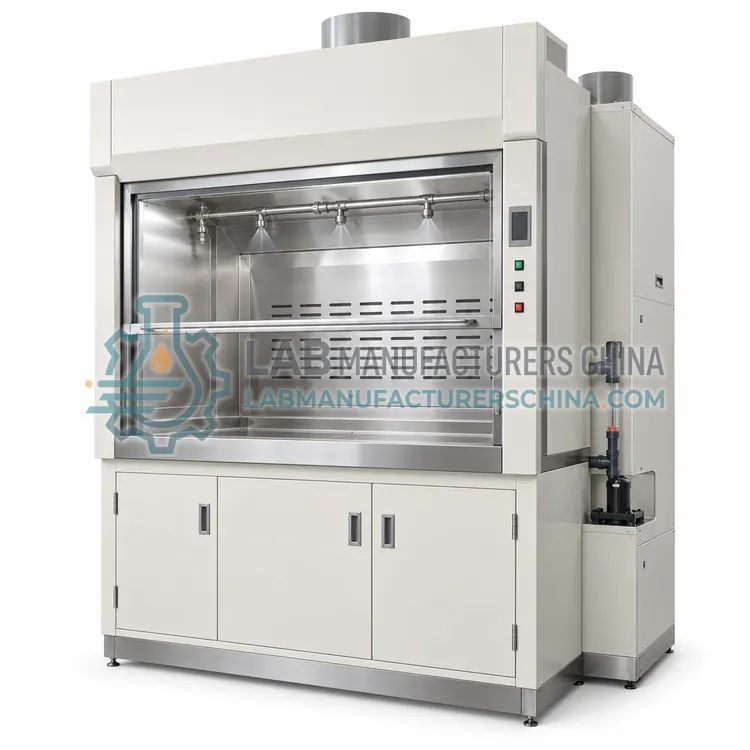
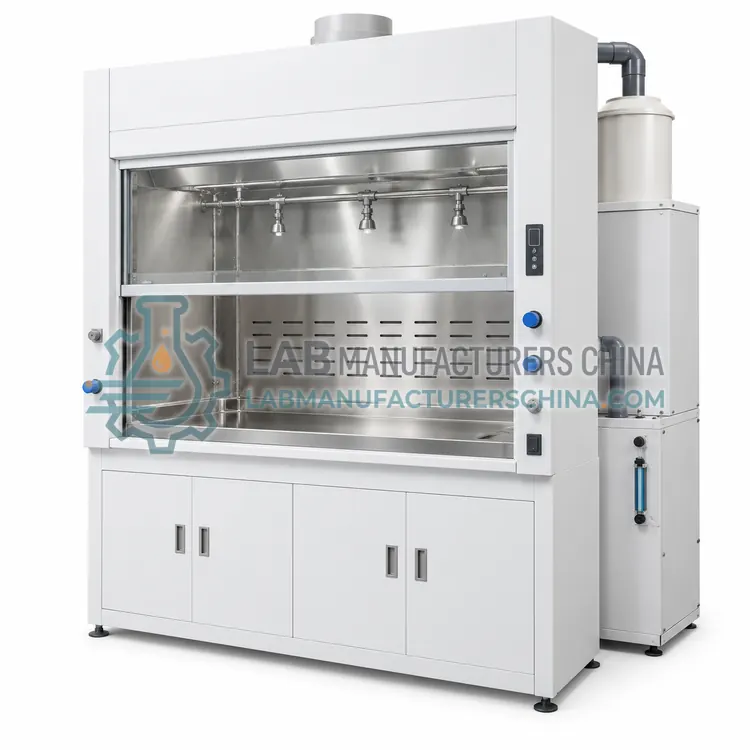
VAV Perchloric Acid Hood
变风量高氯酸通风柜
- SKU PAH-0004
- Perchloric Acid Hoods
- CE (to be confirmed)
- ISO 9001 manufacturing (to be confirmed)
Price on request — FOB / CIF quoted per order
Prices depend on configuration, quantity and destination port.
Key specifications
| Control type | Variable air volume (VAV) |
|---|---|
| Face velocity | 0.4–0.6 m/s, controlled |
| Airflow range | 300–1500 m3/h |
| Sash sensor | Linear position |
| Washdown cycle | 3–10 min, full duct |
| Body material | Polypropylene or 316L |
Request a quote Download brochure · to be provided
By Lab Manufacturers China Technical TeamLast reviewed Standards: EN 14175-2 (fume cupboards, safety and performance), EN 14175-3 (type test methods), ASHRAE 110 (method of testing performance of laboratory fume hoods)
What is the VAV Perchloric Acid Hood?
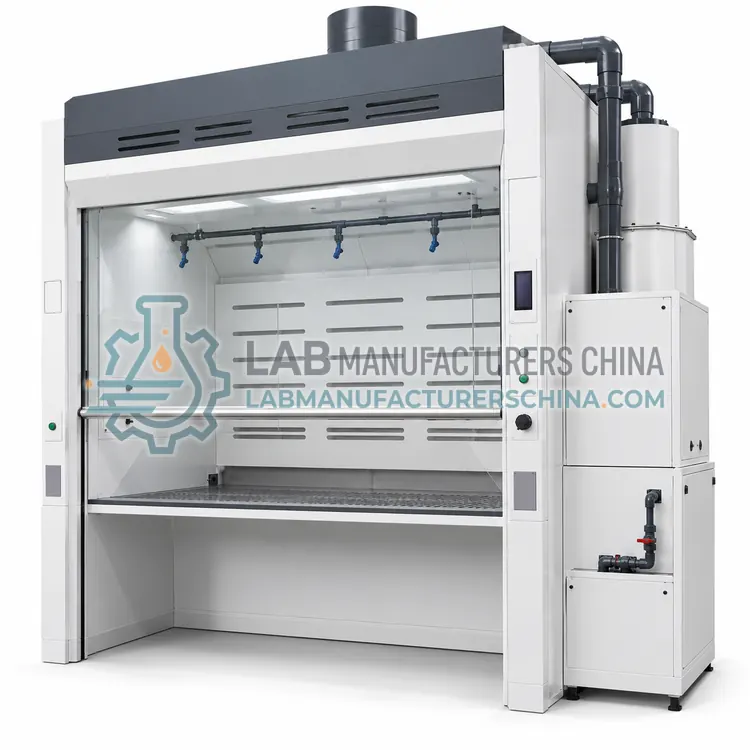
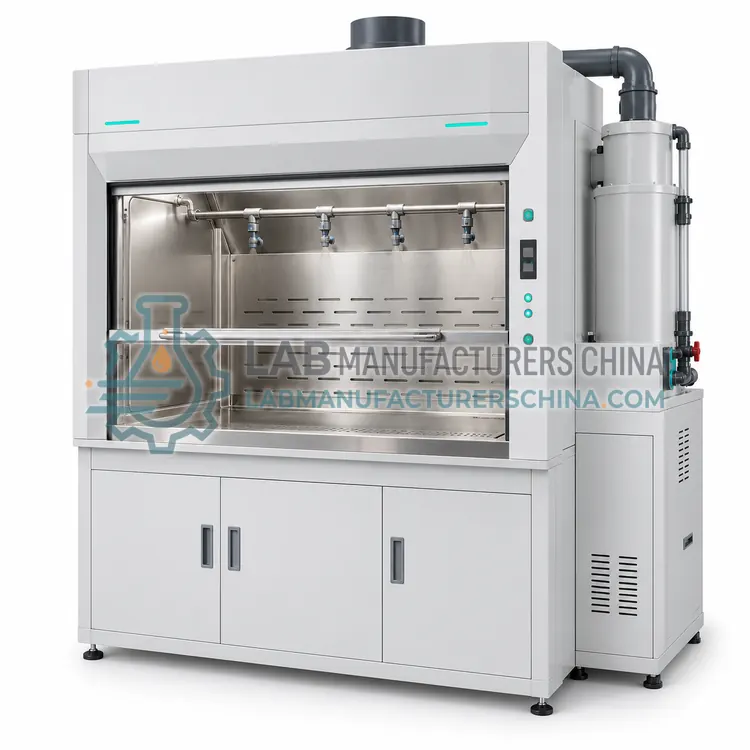
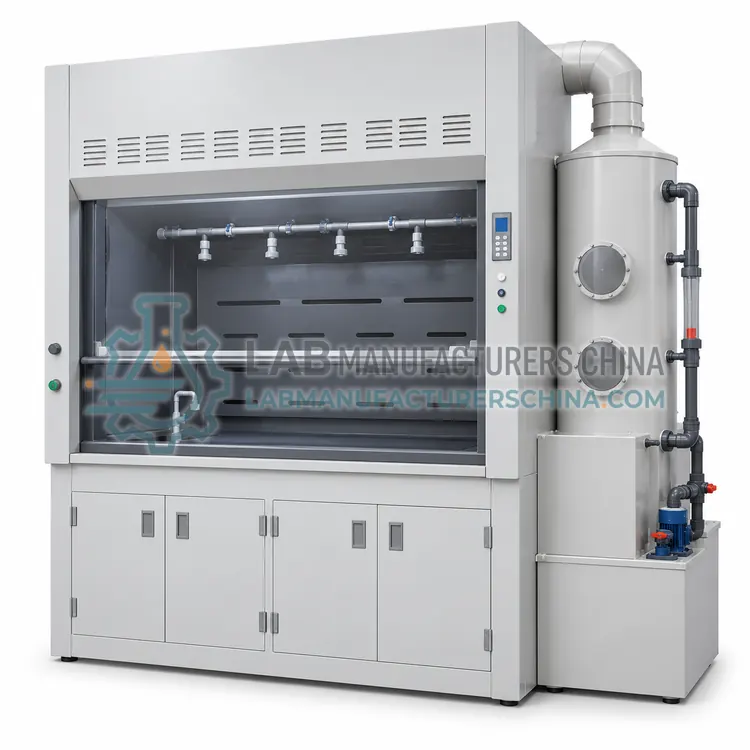
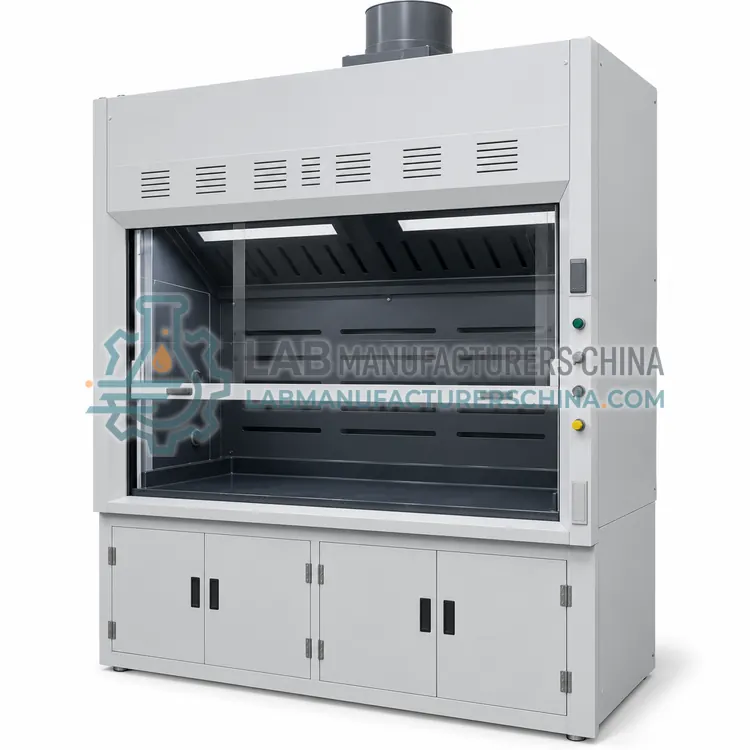
A VAV perchloric acid hood controls exhaust volume to keep face velocity constant as the sash moves, while retaining full washdown. It reduces energy use in laboratories with several perchloric exhaust points.
What is the VAV Perchloric Acid Hood?
A VAV perchloric acid hood controls exhaust volume to keep face velocity constant as the sash moves, while retaining full washdown. It reduces energy use in laboratories with several perchloric exhaust points.
Overview
This hood adds a variable air volume control loop to the washdown design. A sash sensor and airflow controller adjust the damper or fan speed so face velocity stays at 0.4–0.6 m/s as the sash is raised or lowered, cutting exhaust and conditioned-air losses. All-welded, smooth duct and full interior and duct washdown are retained, and the washdown cycle runs even when airflow is reduced. The controller is usually linked to the building management system, with alarms for low airflow and washdown status. Because perchloric service requires a dedicated exhaust, the VAV system serves only perchloric hoods and cannot be combined with general fume hood exhaust. Materials and coved, crevice-free construction follow the same rules as fixed-volume perchloric hoods.
How does it work?
Perchloric acid hoods work like other fume hoods but add a washdown system that periodically sprays water through the interior, the rear baffle and the entire exhaust duct. Heated perchloric acid vaporises, and its vapour can condense with organic material to form perchlorate salts in the duct, which are shock-sensitive and can explode. Water washdown dissolves these deposits before they accumulate. The hood and duct are constructed from non-combustible, chemically resistant materials with smooth, coved and crevice-free interiors and no sharp bends or horizontal runs where liquid or salt could collect. The washdown cycle runs for several minutes, typically daily or after each use, and drains to a dedicated chemical waste line. A dedicated exhaust system, separate from other hoods, prevents cross contamination and dilution problems.
What are the key features?
- VAV control loop holding 0.4–0.6 m/s
- Sash sensor and airflow controller
- Full washdown retained under reduced flow
- All-welded dedicated perchloric duct
- BMS link with low-flow and washdown alarms
- Energy saving versus fixed volume
What are the technical specifications?
A typical vav perchloric acid hood configuration offers control type of Variable air volume (VAV), face velocity of 0.4–0.6 m/s, controlled, airflow range of 300–1500 m3/h, sash sensor of Linear position, washdown cycle of 3–10 min, full duct and body material of Polypropylene or 316L. Values are indicative of the product class; the exact figures for each configuration are confirmed on the quotation and the calibration documents supplied with the instrument.
Which applications is it used for?
The VAV Perchloric Acid Hood is used in multi-hood perchloric laboratories, high-throughput trace-metal digestion, environmental and geological analysis and energy-conscious institutional labs. Across the wider Perchloric Acid Hoods class, laboratories also deploy it for trace-metal digestion with perchloric acid, environmental and geological analysis and food and biological sample decomposition.
Which standards and certifications apply?
Relevant standards and methods include EN 14175-2 (fume cupboards, safety and performance), EN 14175-3 (type test methods), ASHRAE 110 (method of testing performance of laboratory fume hoods), NFPA 45 (fire protection for laboratories using chemicals), GB/T 34269 and IEC 61010-1. Certification candidates for this model are CE and ISO 9001 manufacturing; each is to be confirmed for the specific configuration before shipment, and certificates are supplied only where they have been issued.
Never share the duct with other hoods, and never use the hood for organic solvents or for drying organic material, since perchloric acid and organics can form explosive mixtures. Run the washdown cycle before and after work and keep a log of cycles and cleaning. Inspect the duct interior for salt deposits on a defined schedule, using a borescope where needed, and clean any deposit with water rather than scraping. Keep all surfaces smooth and free of ledges, gaskets or insulation that could collect salts. Verify face velocity and alarms regularly, and train users to keep glassware away from baffles. Treat washdown effluent as acidic waste and confirm the trap and drain are compatible.
How do I select the right VAV Perchloric Acid Hood?
Choose VAV when several perchloric exhaust points share a dedicated system and energy cost matters. Confirm the control keeps face velocity in range during washdown. RFQ: number of hoods, sash sizes, duct design, BMS protocol and response time.
How does it compare with other Perchloric Acid Hoods variants?
Every perchloric acid hood must have a full washdown system covering the interior and the whole duct, because partial washdown leaves deposition sites. Choose a dedicated exhaust path with no shared ductwork, and specify smooth, all-welded construction with coved corners and no internal fasteners or ledges. Select the liner for the acids used: polypropylene or PVC for mixed acid work, and stainless steel or special alloys where hot concentrated perchloric acid is handled. Match the internal height to reflux glassware and the digestion block, and select airflow so face velocity stays at 0.4–0.6 m/s. Include a washdown timer or automatic cycle, drainage with an acid-resistant trap, and airflow monitoring with an alarm. Confirm the duct material, slope and washdown coverage in writing.
Full specifications
| Control type | Variable air volume (VAV) |
|---|---|
| Face velocity | 0.4–0.6 m/s, controlled |
| Airflow range | 300–1500 m3/h |
| Sash sensor | Linear position |
| Washdown cycle | 3–10 min, full duct |
| Body material | Polypropylene or 316L |
| Duct | Dedicated, all-welded |
| Response time | ≤ 2 s to velocity setpoint |
| BMS interface | BACnet or Modbus |
| Alarms | Low airflow and washdown status |
Indicative values for this product class. Final specifications are confirmed on the quotation and in the calibration documents supplied with the instrument.
Applications
- Multi-hood perchloric laboratories
- High-throughput trace-metal digestion
- Environmental and geological analysis
- Energy-conscious institutional labs
Key features
- VAV control loop holding 0.4–0.6 m/s
- Sash sensor and airflow controller
- Full washdown retained under reduced flow
- All-welded dedicated perchloric duct
- BMS link with low-flow and washdown alarms
- Energy saving versus fixed volume
Frequently asked questions about VAV Perchloric Acid Hood
No. Perchloric exhaust must stay dedicated, so VAV control serves only perchloric hoods. Mixing with general exhaust would spread deposits and complicate containment.
Yes. The washdown cycle is independent of airflow and runs at full coverage even when the damper is nearly closed, so the whole duct is still wetted each cycle.
Savings depend on sash use, hood count and climate, but can reach 30–50 % of exhaust and make-up air energy in busy laboratories. Actual savings should be estimated for the specific system.
Heated perchloric acid vapour can condense with organic material to form perchlorate salts, which are shock-sensitive and may explode. Water washdown dissolves these deposits from the hood and duct before they accumulate.
No. It requires a dedicated exhaust system. Shared ductwork can carry perchloric acid vapour into other systems, spread deposits, and dilute or disturb airflow, so dedicated exhaust is a basic safety requirement.
Before and after perchloric acid work as a minimum, and many institutions run it daily. Cycle time is typically 3–10 minutes to wet all duct surfaces. Keep a log of cycles for audit and inspection.
Related models