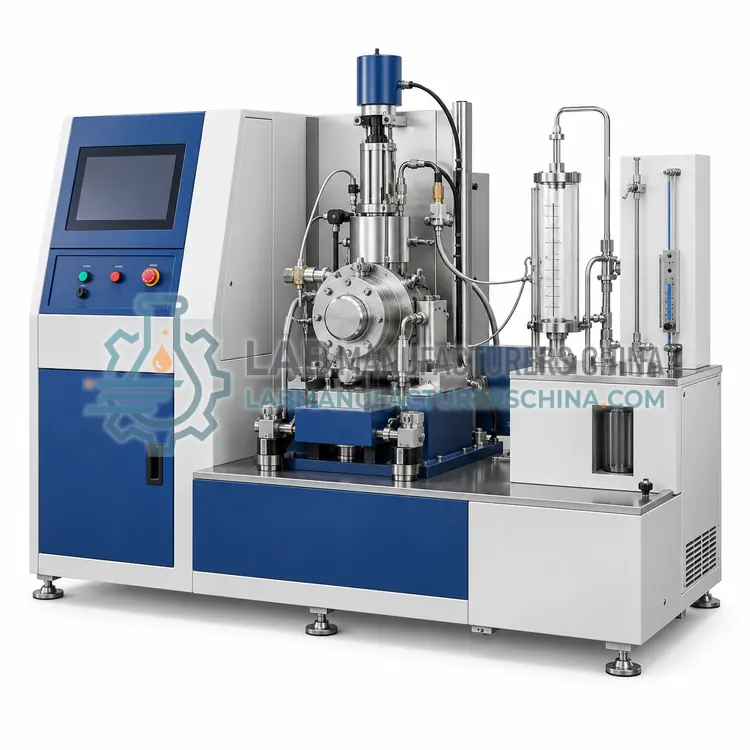
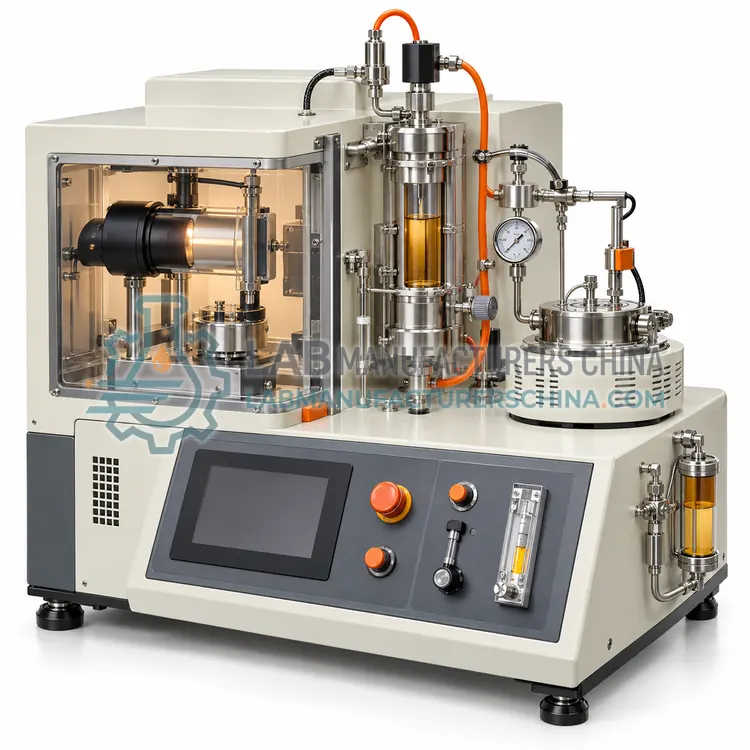
Benchtop NIR Octane and Cetane Analyzer
台式近红外辛烷值和十六烷值分析仪
- SKU OCA-0004
- Octane/Cetane Analyzers
- CE (to be confirmed)
- ISO 9001 manufacturing (to be confirmed)
Price on request — FOB / CIF quoted per order
Prices depend on configuration, quantity and destination port.
Key specifications
| Validation practice | ASTM D6122, ASTM E1655 |
|---|---|
| Spectral range | 780–2500 nm |
| Predicted properties | RON, MON, cetane number, density |
| Octane range | RON 80–105 typical model |
| Measurement time | About 1 min |
| Sample volume | About 10 mL |
Request a quote Download brochure · to be provided
By Lab Manufacturers China Technical TeamLast reviewed Standards: ASTM D2699, ASTM D2700, ASTM D613
What is the Benchtop NIR Octane and Cetane Analyzer?
A benchtop near-infrared analyzer estimates octane and cetane numbers by measuring the near-infrared spectrum of a fuel sample and applying a calibration model built from engine test data. It gives results in about one minute and supports blending control under ASTM D6122 validation practice.
What is the Benchtop NIR Octane and Cetane Analyzer?
A benchtop near-infrared analyzer estimates octane and cetane numbers by measuring the near-infrared spectrum of a fuel sample and applying a calibration model built from engine test data. It gives results in about one minute and supports blending control under ASTM D6122 validation practice.
Overview
The NIR analyzer passes near-infrared light, typically 780 to 2500 nm, through a liquid sample in a temperature-controlled cell and records absorption produced by C-H, O-H and N-H overtone and combination bands. The spectrum contains information about hydrocarbon classes, such as aromatics, olefins and paraffins, which control octane and cetane. Chemometric models, such as partial least squares regression, link the spectra to reference octane or cetane numbers measured on engines. After calibration, the analyzer predicts RON, MON, cetane and sometimes other properties such as density or distillation points in about a minute. ASTM D6122 and related practices describe validation and performance monitoring of such analyzers. Models must match the fuel type and be updated when blend streams change. The instrument is well suited for blending control and screening but does not replace engine referee tests.
How does it work?
Octane number is defined by comparison with primary reference fuels, a blend of iso-octane and n-heptane. In a cooperative fuel research (CFR) engine, the compression ratio is raised until the sample reaches standard knock intensity, and the result is bracketed against reference blends to give research octane number (RON, ASTM D2699) or motor octane number (MON, D2700) under more severe conditions. Cetane number is similarly measured in a variable-compression diesel CFR engine by adjusting compression ratio until ignition delay matches reference blends of n-cetane and heptamethylnonane (D613). Constant-volume combustion analyzers inject fuel into a heated pressurized chamber, measure ignition delay and derive a derived cetane number. Near-infrared and mid-infrared analyzers record spectra and estimate octane or cetane using chemometric models built from engine results.
What are the key features?
- Near-infrared spectrometer covering about 780–2500 nm
- Temperature-controlled liquid sample cell
- Chemometric models for RON, MON and cetane
- Results in about one minute
- Validation and outlier detection software
- Additional property predictions such as density and aromatics
What are the technical specifications?
A typical benchtop nir octane and cetane analyzer configuration offers validation practice of ASTM D6122, ASTM E1655, spectral range of 780–2500 nm, predicted properties of RON, MON, cetane number, density, octane range of RON 80–105 typical model, measurement time of About 1 min and sample volume of About 10 mL. Values are indicative of the product class; the exact figures for each configuration are confirmed on the quotation and the calibration documents supplied with the instrument.
Which applications is it used for?
The Benchtop NIR Octane and Cetane Analyzer is used in gasoline blending control, terminal incoming fuel screening, diesel cetane estimation and refinery laboratory supplemental testing. Across the wider Octane/Cetane Analyzers class, laboratories also deploy it for gasoline grade certification (RON/MON), diesel cetane number verification and refinery blending control.
Which standards and certifications apply?
Relevant standards and methods include ASTM D2699, ASTM D2700, ASTM D613, ASTM D6890, ASTM D7668, ASTM D975, ASTM D4814, EN 590, ISO 5164, ISO 5163, ISO 5165, GB/T 5487 and GB/T 386. Certification candidates for this model are CE and ISO 9001 manufacturing; each is to be confirmed for the specific configuration before shipment, and certificates are supplied only where they have been issued.
CFR engines require a dedicated, vibration-isolated test cell with a concrete foundation, exhaust ducting, cooling water, conditioned intake air and safe storage of flammable reference fuels. Calibrate by running check fuels, such as toluene standardization fuels, before each test session, and log the results on control charts. Replace piston rings, valves and injectors on schedule, and monitor knock meter response. Constant-volume combustion analyzers need clean compressed air, stable chamber temperature and periodic injector maintenance. Spectroscopic analyzers require regular validation with engine-tested samples, monitoring of model applicability, and maintenance of optical windows or fiber probes. Participation in proficiency testing programs is advisable, and staff should be trained on reference fuel handling and on the applicable method revision.
How do I select the right Benchtop NIR Octane and Cetane Analyzer?
Select a benchtop NIR analyzer when speed, low sample use and low cost per test matter more than referee status, for example in blending control or terminal screening. It needs a validated model for each fuel type. In an RFQ specify fuel types, properties, calibration data source and validation support.
How does it compare with other Octane/Cetane Analyzers variants?
Select by the reference method named in your specification and by your need for legal or referee results. CFR engines are the primary standard for RON, MON and cetane number, produce referee results, and need trained operators, dedicated space, cooling water and significant maintenance. Constant-volume combustion instruments give derived cetane number quickly from about 30 mL of sample, with lower cost per test, and are accepted by specifications such as EN 590 and ASTM D975 when correlated. Spectroscopic analyzers give results in minutes, suit blending control and field checks, but rely on calibration to engine data and must be validated for each fuel type. Consider throughput, sample volume, fuel types, operator skill, utilities, and ongoing costs of reference fuels and calibration checks, because these often exceed instrument price.
Full specifications
| Validation practice | ASTM D6122, ASTM E1655 |
|---|---|
| Spectral range | 780–2500 nm |
| Predicted properties | RON, MON, cetane number, density |
| Octane range | RON 80–105 typical model |
| Measurement time | About 1 min |
| Sample volume | About 10 mL |
| Cell temperature control | ±0.1 °C |
| Repeatability | Typically 0.1–0.3 octane number, model dependent |
| Data output | USB, Ethernet, LIMS |
| Power supply | 220 V, 50 Hz, 150 W |
Indicative values for this product class. Final specifications are confirmed on the quotation and in the calibration documents supplied with the instrument.
Applications
- Gasoline blending control
- Terminal incoming fuel screening
- Diesel cetane estimation
- Refinery laboratory supplemental testing
Key features
- Near-infrared spectrometer covering about 780–2500 nm
- Temperature-controlled liquid sample cell
- Chemometric models for RON, MON and cetane
- Results in about one minute
- Validation and outlier detection software
- Additional property predictions such as density and aromatics
Frequently asked questions about Benchtop NIR Octane and Cetane Analyzer
Accuracy depends on the calibration model and fuel type. Well-maintained models can approach engine repeatability, typically within a few tenths of an octane number for matched fuels. Regular validation against engine results is necessary.
Yes, models need updating when refinery streams, additives or seasonal blends change, because spectra may fall outside the model space. Outlier detection flags these samples, and new reference data can be added to extend the model.
No, NIR complements the CFR engine. It provides rapid estimates for process control, while the CFR engine provides the reference values that calibrate and validate NIR models and supports referee and regulatory results.
Research octane number (ASTM D2699) is measured at 600 rpm with milder intake conditions, while motor octane number (D2700) uses 900 rpm and heated mixture, which is more severe. MON is usually 8 to 12 points below RON, and pump octane is often the average of the two.
Spectroscopic analyzers estimate octane from calibrated models and are well suited to blending control and field checks, but they are not reference methods. Regulatory or referee results usually still require the CFR engine, so many laboratories use both.
Derived cetane number (DCN) is calculated from ignition delay and combustion delay measured in a constant-volume chamber under ASTM D6890 or D7668, using a correlation to engine cetane number. It needs about 30 mL of sample and less time than engine testing.