Neutron Moisture Gauge for Coal Conveyors
输送带中子煤水分仪
- SKU MOI-0005
- Moisture Analyzers
- CE (to be confirmed)
- ISO 9001 manufacturing (to be confirmed)
Price on request — FOB / CIF quoted per order
Prices depend on configuration, quantity and destination port.
Key specifications
| Moisture range | 2–30 % |
|---|---|
| Accuracy | ± 0.5 % absolute typical |
| Update interval | About 60 s |
| Source | Americium-241/beryllium, shielded |
| Belt width | 800–2000 mm |
| Coal size | 0–50 mm |
Request a quote Download brochure · to be provided
By Lab Manufacturers China Technical TeamLast reviewed Standards: ASTM D3302, ASTM D3173, ASTM D2961
What is the Neutron Moisture Gauge for Coal Conveyors?
A neutron moisture gauge measures the hydrogen content of the coal bed on a conveyor and converts it to moisture continuously. It complements ash or elemental on-line analyzers where real-time moisture is needed for control and reporting.
What is the Neutron Moisture Gauge for Coal Conveyors?
A neutron moisture gauge measures the hydrogen content of the coal bed on a conveyor and converts it to moisture continuously. It complements ash or elemental on-line analyzers where real-time moisture is needed for control and reporting.
Overview
Fast neutrons from a shielded source enter the coal bed, and hydrogen atoms, present mainly as water, moderate them efficiently. A detector counts the moderated thermal neutrons, and the count rate is related to moisture per unit volume of coal after correction for bed depth and density, which are obtained from a separate load or gamma measurement. The method responds to hydrogen in any form, including coal's organic hydrogen and any oil or dust treatment, so calibrations are built against oven moisture results for the specific coals handled. The measurement is non-contact, covers the whole stream and updates within about a minute, making it suitable for boiler efficiency calculation, blending control and stockpile accounting. Safety requirements mirror other neutron installations: licensing, shielding, interlocks, dose monitoring and operator training.
How does it work?
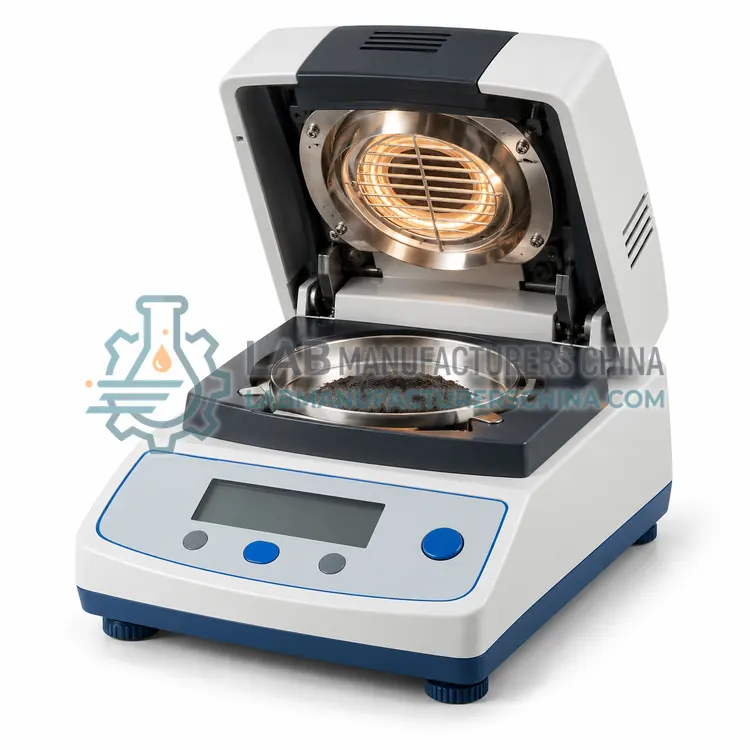
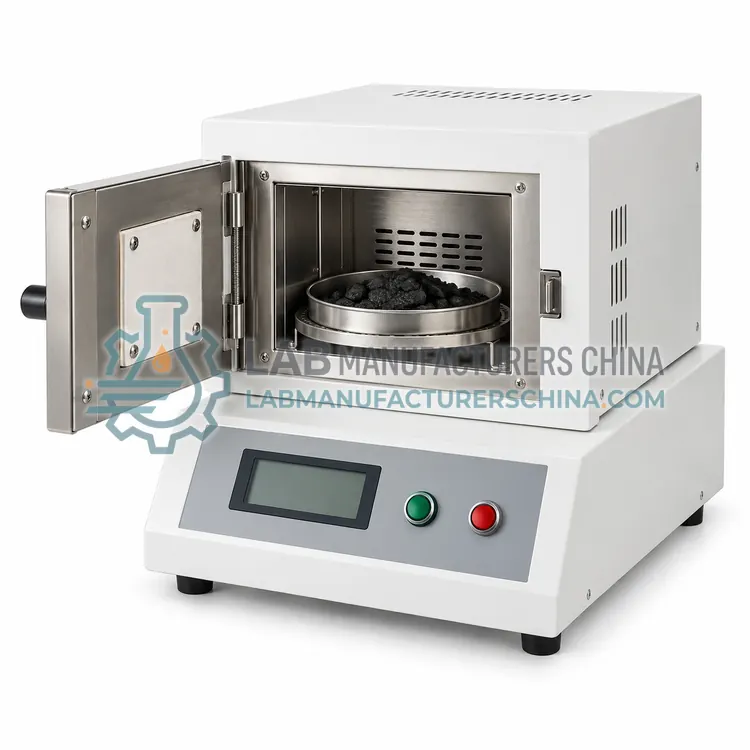
Water in coal is reported in more than one form. Total moisture includes free surface water and the moisture held inside the coal particles; it is measured by the reference oven method, in which a sample is dried in air at 105 to 110 °C until constant mass and the mass loss is expressed on the as-received mass. The moisture in the general analysis sample is determined the same way on air-dried, pulverized coal, and for some low-rank coals drying in nitrogen is preferred to avoid oxidation. Halogen and infrared instruments place the sample on a built-in balance and dry it with a lamp, recording mass loss continuously, which shortens the test to minutes. Microwave instruments heat the water selectively and also use mass loss. On a conveyor, microwave or neutron gauges measure moisture continuously and non-destructively by relating the response of water molecules to the mass of coal present.
What are the key features?
- Non-contact measurement across the full belt stream
- Hydrogen-based moisture determination independent of drying
- Density and bed depth correction from load signals
- Shielded source housing with interlocks and warning lamps
- Control-room outputs updating about once per minute
- Calibration against oven results per coal source
What are the technical specifications?
A typical neutron moisture gauge for coal conveyors configuration offers moisture range of 2–30 %, accuracy of ± 0.5 % absolute typical, update interval of About 60 s, source of Americium-241/beryllium, shielded, belt width of 800–2000 mm and coal size of 0–50 mm. Values are indicative of the product class; the exact figures for each configuration are confirmed on the quotation and the calibration documents supplied with the instrument.
Which applications is it used for?
The Neutron Moisture Gauge for Coal Conveyors is used in boiler efficiency calculation for power stations, blending control on coal preparation flows, stockpile and shipment moisture accounting and combined ash and moisture reporting on line. Across the wider Moisture Analyzers class, laboratories also deploy it for total moisture for coal shipment pricing, power station combustion and mill control and preparation plant moisture reduction control.
Which standards and certifications apply?
Relevant standards and methods include ASTM D3302, ASTM D3173, ASTM D2961, ISO 5068-2, ISO 11722, ASTM D7582, GB/T 211 and IEC 61010-1. Certification candidates for this model are CE and ISO 9001 manufacturing; each is to be confirmed for the specific configuration before shipment, and certificates are supplied only where they have been issued.
For oven methods, verify the drying temperature across the working space, keep the oven clear of wet samples during a run and cool crucibles in a desiccator before weighing, since warm or damp samples drift upward in mass. Weigh immediately after cooling and keep records of drying time, because incomplete drying biases moisture low and shifts every subsequently reported basis. Nitrogen drying requires oxygen-free gas at a controlled flow and a leak-tight oven. For halogen or microwave instruments, verify agreement with the oven at least monthly using coal samples of similar rank, and re-check after lamp or sensor replacement. On-line gauges need calibration against oven results on stream samples taken across the full belt width, plus routine checks of the electronics and, for neutron units, a formal radiation program.
How do I select the right Neutron Moisture Gauge for Coal Conveyors?
Select the neutron gauge when moisture must be measured continuously on high-tonnage flows and other on-line analyzers already share the same installation. Confirm licensing, shielding and dose-monitoring support, and specify belt dimensions, size range, correction inputs and accuracy requirement.
How does it compare with other Moisture Analyzers variants?
Selection depends on the form of moisture you must report and the speed you need. The forced-air oven remains the reference method for total moisture and is required for contract analysis and for calibrating faster instruments, so most laboratories keep one. Halogen drying balances are convenient for moisture in the general analysis sample because they are fast, need small samples and give a printed result, but they dry only a few grams and their agreement with the oven must be demonstrated. Microwave analyzers offer rapid batch results for preparation plant control. On-line microwave and neutron gauges provide continuous moisture data for boiler control, blending and stockpile management, and need a stable belt load and a size range within their specification. Check sample mass and particle size, temperature control, agreement with the reference method, dry-gas supply for nitrogen drying, and whether results are required on as-received, air-dried or dry basis.
Full specifications
| Moisture range | 2–30 % |
|---|---|
| Accuracy | ± 0.5 % absolute typical |
| Update interval | About 60 s |
| Source | Americium-241/beryllium, shielded |
| Belt width | 800–2000 mm |
| Coal size | 0–50 mm |
| Depth correction | Load cell or gamma density input |
| Ingress protection | IP65 |
Indicative values for this product class. Final specifications are confirmed on the quotation and in the calibration documents supplied with the instrument.
Applications
- Boiler efficiency calculation for power stations
- Blending control on coal preparation flows
- Stockpile and shipment moisture accounting
- Combined ash and moisture reporting on line
Key features
- Non-contact measurement across the full belt stream
- Hydrogen-based moisture determination independent of drying
- Density and bed depth correction from load signals
- Shielded source housing with interlocks and warning lamps
- Control-room outputs updating about once per minute
- Calibration against oven results per coal source
Frequently asked questions about Neutron Moisture Gauge for Coal Conveyors
It measures how strongly hydrogen slows fast neutrons. Since most hydrogen in coal is in water, the moderated neutron count, corrected for bed depth and density, provides moisture per unit mass of coal.
Coal's organic hydrogen, residual oil, dust suppressants and changes in bed depth, bulk density or size distribution all influence the count rate. Correction channels and per-source calibrations keep the error within specification.
No. It provides continuous control-grade data and should be calibrated against and audited with oven results. Contract moisture values are still determined gravimetrically in the laboratory.
Total moisture is measured on the coal as received, including free surface water, and is used for mass and price reconciliation. Analysis sample moisture is measured on air-dried pulverized coal and is needed to convert other results to a common basis.
The water must be driven off without decomposing the coal or oxidizing it, which would add or remove mass. Air drying at this temperature removes moisture while limiting oxidation, and the method prescribes the time and atmosphere needed.
When validated against the oven method on similar coals, benchtop microwave analyzers agree within a few tenths of a percentage point. On-line units typically achieve within about 0.5 percentage points under stable belt loading.
Related models