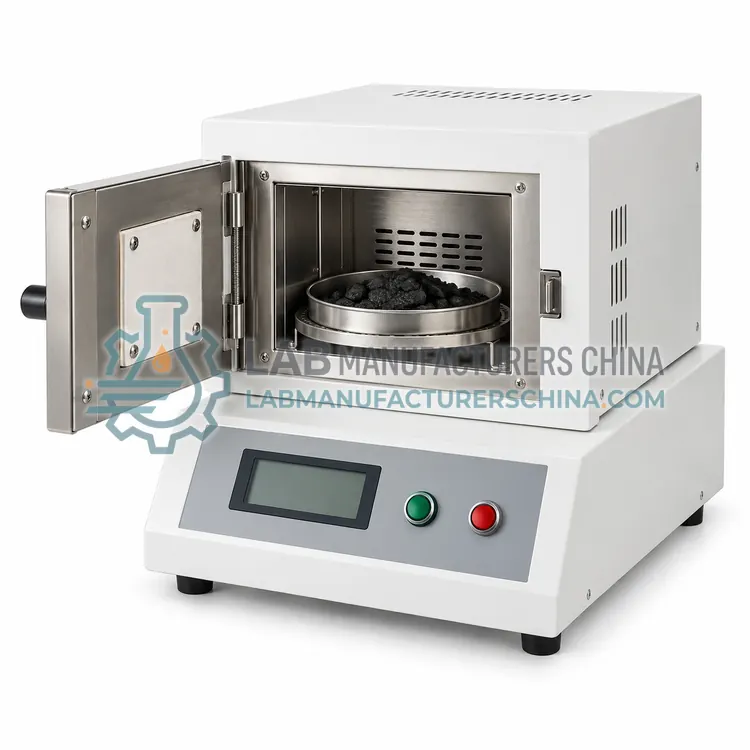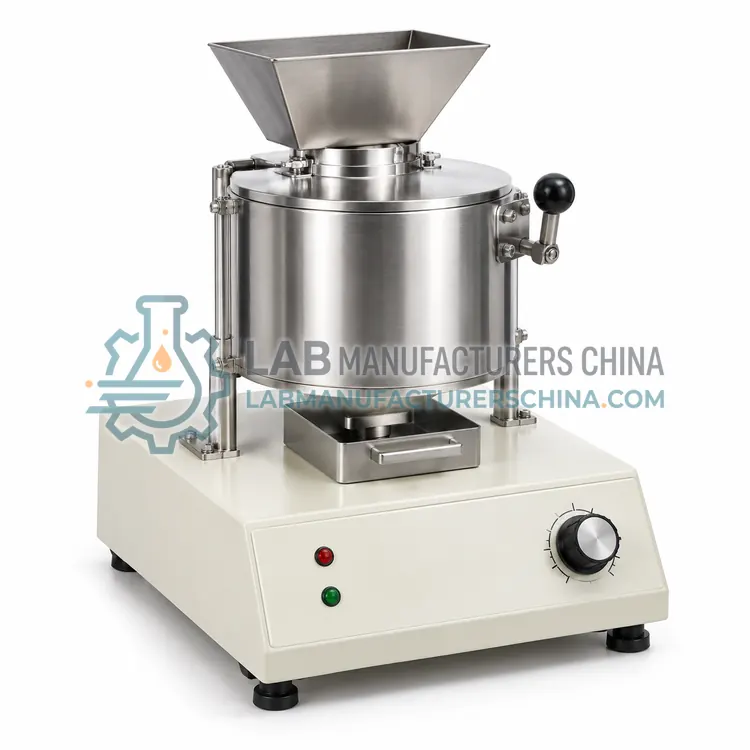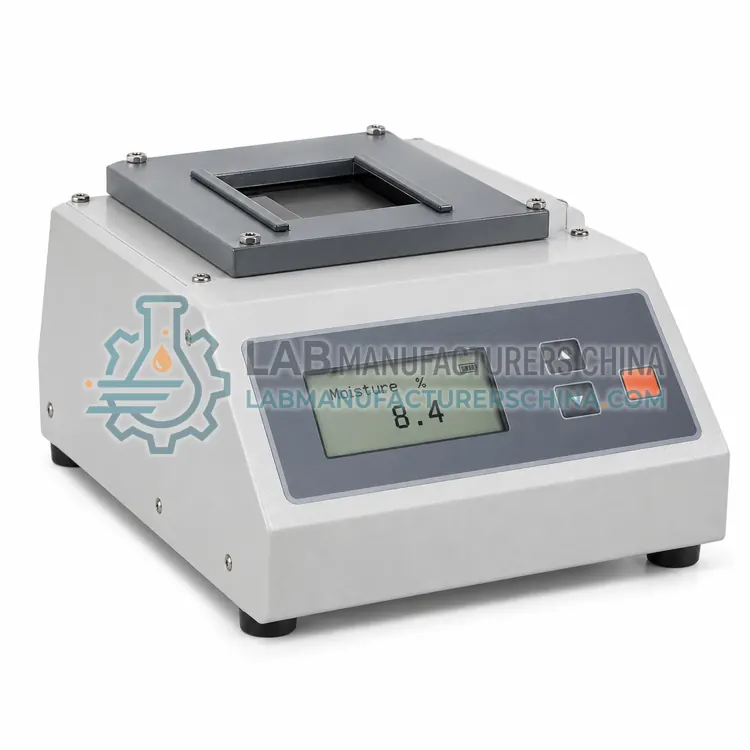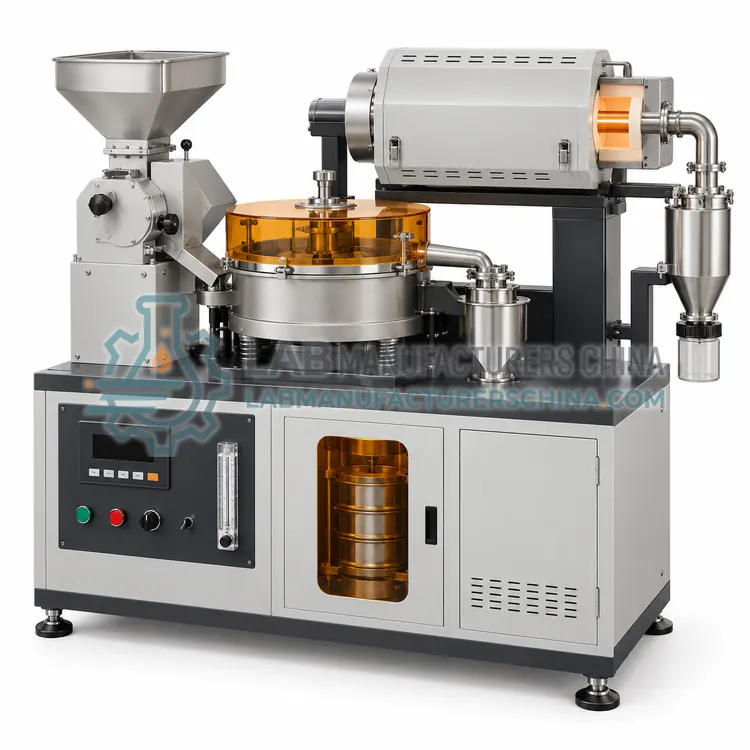
Halogen Drying Moisture Analyzer for Coal Analysis Samples
卤素干燥法煤分析试样水分测定仪
- SKU MOI-0002
- Moisture Analyzers
- CE (to be confirmed)
- ISO 9001 manufacturing (to be confirmed)
Price on request — FOB / CIF quoted per order
Prices depend on configuration, quantity and destination port.
Key specifications
| Balance resolution | 0.001 g / 0.01 % moisture |
|---|---|
| Sample mass | 2–10 g |
| Drying temperature | 105 °C typical, up to 200 °C |
| Measurement time | 5–15 min |
| Repeatability | ± 0.2 % typical |
| Heating source | Halogen lamp |
Request a quote Download brochure · to be provided
By Lab Manufacturers China Technical TeamLast reviewed Standards: ASTM D3302, ASTM D3173, ASTM D2961
What is the Halogen Drying Moisture Analyzer for Coal Analysis Samples?
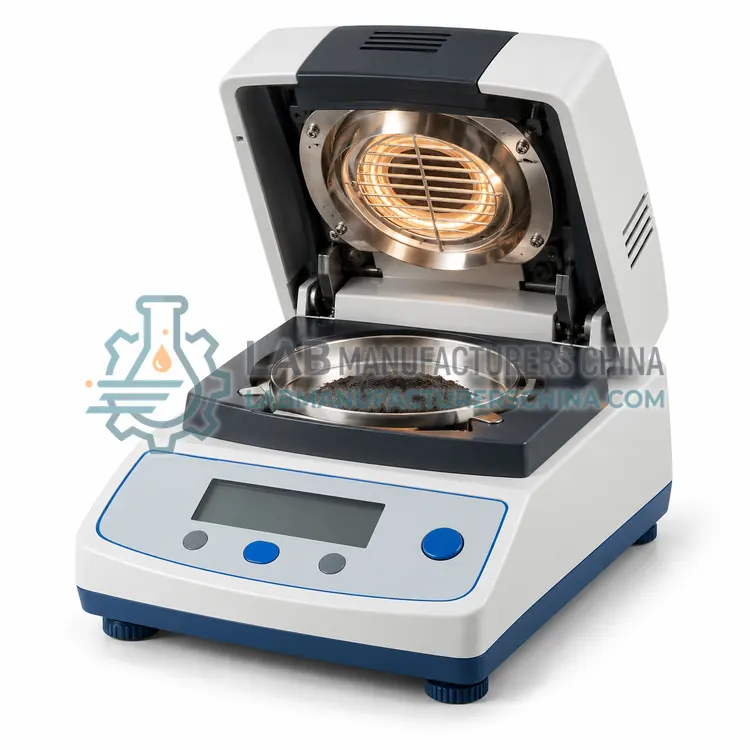
A halogen drying moisture analyzer places a small coal sample on an internal balance and dries it with a halogen lamp, reporting moisture from continuous mass loss in minutes. It suits analysis sample moisture in busy laboratories.
What is the Halogen Drying Moisture Analyzer for Coal Analysis Samples?
A halogen drying moisture analyzer places a small coal sample on an internal balance and dries it with a halogen lamp, reporting moisture from continuous mass loss in minutes. It suits analysis sample moisture in busy laboratories.
Overview
The instrument combines a halogen lamp heater with a precision balance reading to 0.001 g. A few grams of air-dried, pulverized coal are spread in a disposable pan, a drying program sets the temperature and shut-off criterion, and the display shows moisture in percent while the run proceeds. Typical programs dry at 105 °C with an automatic end point based on mass change per unit time, and total run time is five to fifteen minutes. Because the sample is small and heated from above, agreement with the oven method must be demonstrated for each coal type, and results are best used for control or comparison rather than for contract reporting. The strengths are speed, simple operation, small bench footprint and printed or exported results, which reduce the operator time associated with repeated oven weighings.
How does it work?
Water in coal is reported in more than one form. Total moisture includes free surface water and the moisture held inside the coal particles; it is measured by the reference oven method, in which a sample is dried in air at 105 to 110 °C until constant mass and the mass loss is expressed on the as-received mass. The moisture in the general analysis sample is determined the same way on air-dried, pulverized coal, and for some low-rank coals drying in nitrogen is preferred to avoid oxidation. Halogen and infrared instruments place the sample on a built-in balance and dry it with a lamp, recording mass loss continuously, which shortens the test to minutes. Microwave instruments heat the water selectively and also use mass loss. On a conveyor, microwave or neutron gauges measure moisture continuously and non-destructively by relating the response of water molecules to the mass of coal present.
What are the key features?
- Halogen lamp heating with internal precision balance
- Automatic end point based on mass change per unit time
- Temperature programs up to about 200 °C
- Moisture displayed as percent during the run
- Disposable sample pans for quick cleaning
- Result storage and print or export function
What are the technical specifications?
A typical halogen drying moisture analyzer for coal analysis samples configuration offers balance resolution of 0.001 g / 0.01 % moisture, sample mass of 2–10 g, drying temperature of 105 °C typical, up to 200 °C, measurement time of 5–15 min, repeatability of ± 0.2 % typical and heating source of Halogen lamp. Values are indicative of the product class; the exact figures for each configuration are confirmed on the quotation and the calibration documents supplied with the instrument.
Which applications is it used for?
The Halogen Drying Moisture Analyzer for Coal Analysis Samples is used in analysis sample moisture for basis conversion, rapid coal quality checks in preparation plants, feed, fertilizer and mineral moisture screening and checking oven results on incoming samples. Across the wider Moisture Analyzers class, laboratories also deploy it for total moisture for coal shipment pricing, power station combustion and mill control and preparation plant moisture reduction control.
Which standards and certifications apply?
Relevant standards and methods include ASTM D3302, ASTM D3173, ASTM D2961, ISO 5068-2, ISO 11722, ASTM D7582, GB/T 211 and IEC 61010-1. Certification candidates for this model are CE and ISO 9001 manufacturing; each is to be confirmed for the specific configuration before shipment, and certificates are supplied only where they have been issued.
For oven methods, verify the drying temperature across the working space, keep the oven clear of wet samples during a run and cool crucibles in a desiccator before weighing, since warm or damp samples drift upward in mass. Weigh immediately after cooling and keep records of drying time, because incomplete drying biases moisture low and shifts every subsequently reported basis. Nitrogen drying requires oxygen-free gas at a controlled flow and a leak-tight oven. For halogen or microwave instruments, verify agreement with the oven at least monthly using coal samples of similar rank, and re-check after lamp or sensor replacement. On-line gauges need calibration against oven results on stream samples taken across the full belt width, plus routine checks of the electronics and, for neutron units, a formal radiation program.
How do I select the right Halogen Drying Moisture Analyzer for Coal Analysis Samples?
Select the halogen drying analyzer for fast analysis sample moisture where a few grams are acceptable and agreement with the oven method has been shown. Specify sample mass range, temperature programs, resolution, print and export options, and the calibration weights needed.
How does it compare with other Moisture Analyzers variants?
Selection depends on the form of moisture you must report and the speed you need. The forced-air oven remains the reference method for total moisture and is required for contract analysis and for calibrating faster instruments, so most laboratories keep one. Halogen drying balances are convenient for moisture in the general analysis sample because they are fast, need small samples and give a printed result, but they dry only a few grams and their agreement with the oven must be demonstrated. Microwave analyzers offer rapid batch results for preparation plant control. On-line microwave and neutron gauges provide continuous moisture data for boiler control, blending and stockpile management, and need a stable belt load and a size range within their specification. Check sample mass and particle size, temperature control, agreement with the reference method, dry-gas supply for nitrogen drying, and whether results are required on as-received, air-dried or dry basis.
Full specifications
| Balance resolution | 0.001 g / 0.01 % moisture |
|---|---|
| Sample mass | 2–10 g |
| Drying temperature | 105 °C typical, up to 200 °C |
| Measurement time | 5–15 min |
| Repeatability | ± 0.2 % typical |
| Heating source | Halogen lamp |
| Programs | Multiple stored drying profiles |
| Data output | USB, RS232 |
Indicative values for this product class. Final specifications are confirmed on the quotation and in the calibration documents supplied with the instrument.
Applications
- Analysis sample moisture for basis conversion
- Rapid coal quality checks in preparation plants
- Feed, fertilizer and mineral moisture screening
- Checking oven results on incoming samples
Key features
- Halogen lamp heating with internal precision balance
- Automatic end point based on mass change per unit time
- Temperature programs up to about 200 °C
- Moisture displayed as percent during the run
- Disposable sample pans for quick cleaning
- Result storage and print or export function
Frequently asked questions about Halogen Drying Moisture Analyzer for Coal Analysis Samples
For routine control and comparison it can, provided it has been validated against the oven on your coal types. Contract reporting usually still requires the reference oven method or a method that the contract names explicitly.
The pan sits directly on a precision balance, so the practical loading range is a few grams. Small samples dry quickly but represent a heterogeneous material less well, which is why repeatability must be checked on your coals.
Choose a mass-change-per-time threshold that stops the run after drying is complete but before the sample starts to oxidize. Verify the setting by comparing results against oven values at least monthly.
Total moisture is measured on the coal as received, including free surface water, and is used for mass and price reconciliation. Analysis sample moisture is measured on air-dried pulverized coal and is needed to convert other results to a common basis.
The water must be driven off without decomposing the coal or oxidizing it, which would add or remove mass. Air drying at this temperature removes moisture while limiting oxidation, and the method prescribes the time and atmosphere needed.
When validated against the oven method on similar coals, benchtop microwave analyzers agree within a few tenths of a percentage point. On-line units typically achieve within about 0.5 percentage points under stable belt loading.
Related models