Sliding Microtome
滑动式切片机
- SKU MIT-0001
- Microtomes
- CE (to be confirmed)
- IEC 61010-1 compliance (to be confirmed)
- ISO 13485 manufacturing (to be confirmed)
Price on request — FOB / CIF quoted per order
Prices depend on configuration, quantity and destination port.
Key specifications
| Section thickness | 1–100 µm |
|---|---|
| Thickness increment | 1 µm steps |
| Maximum block size | up to 150 × 100 mm |
| Specimen stroke | up to 200 mm |
| Knife type | Steel knife or disposable blades |
| Knife angle | 0–25° |
Request a quote Download brochure · to be provided
By Lab Manufacturers China Technical TeamLast reviewed Standards: IEC 61010-1, IEC 61010-2-101, IEC 61326-1
What is the Sliding Microtome?
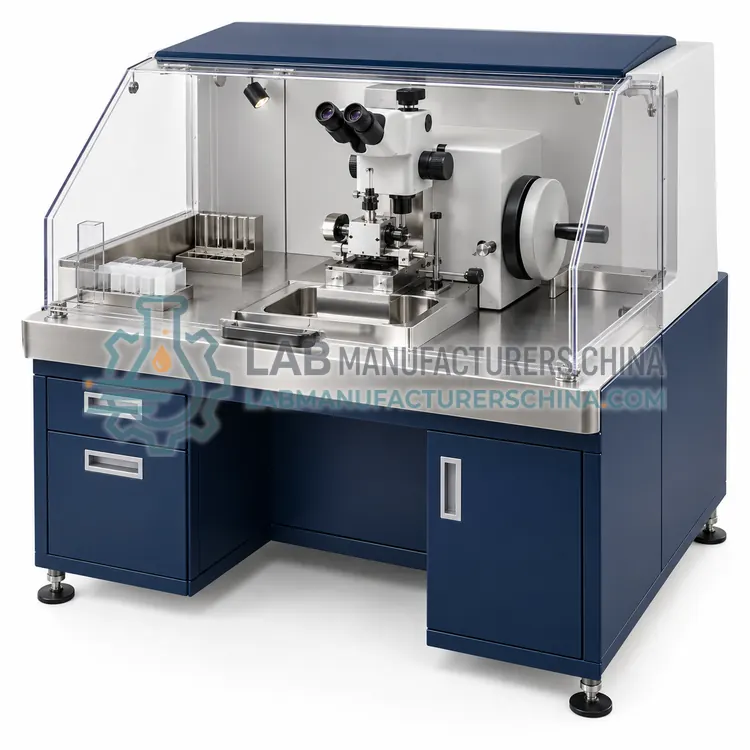
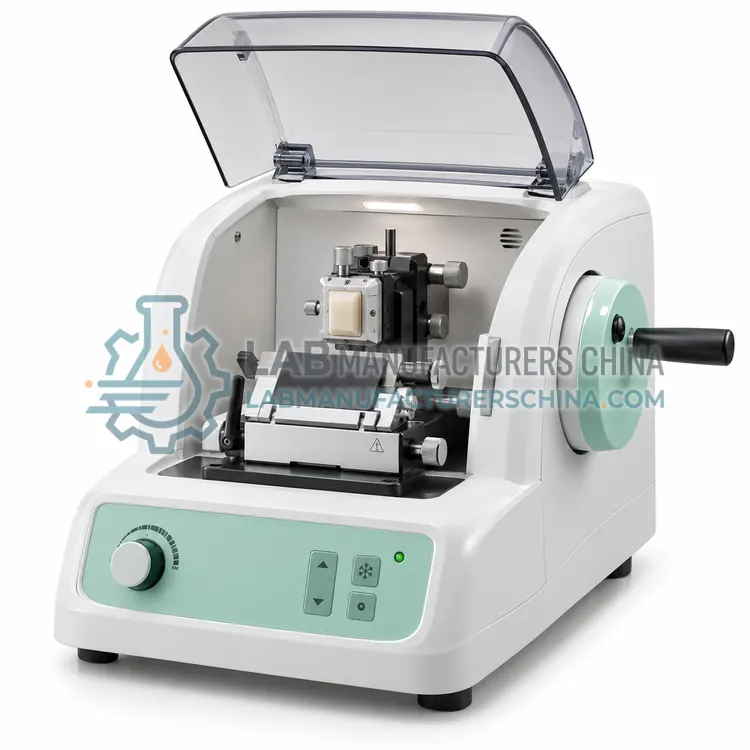
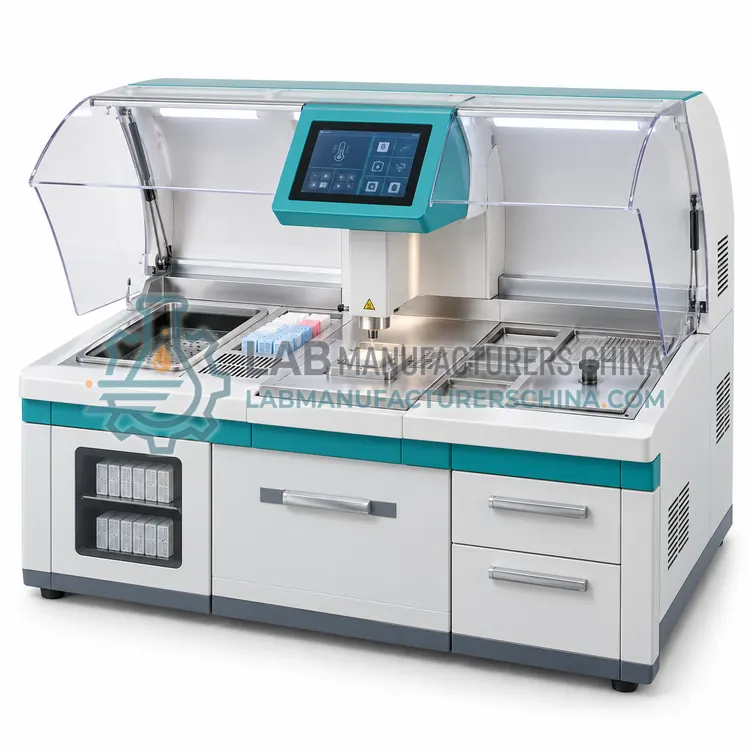
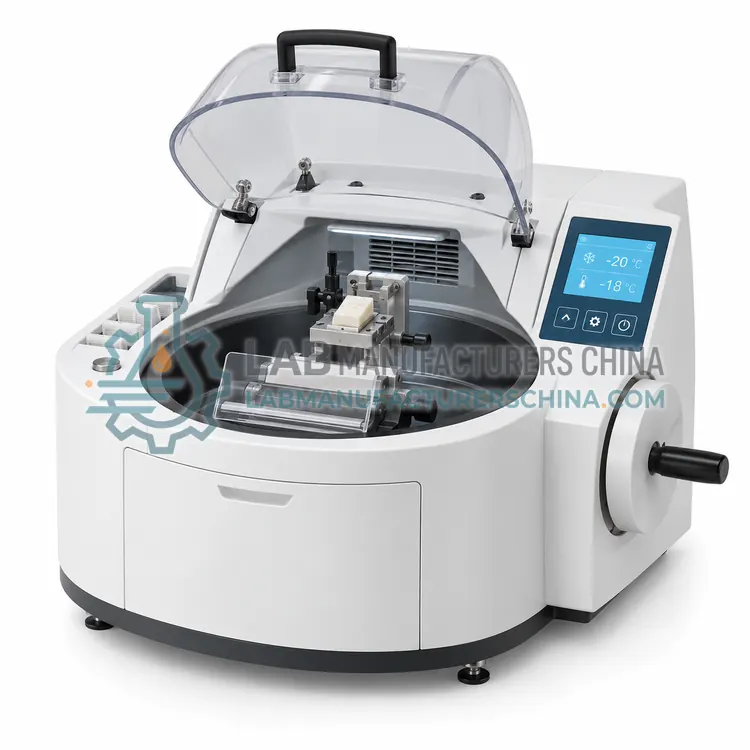
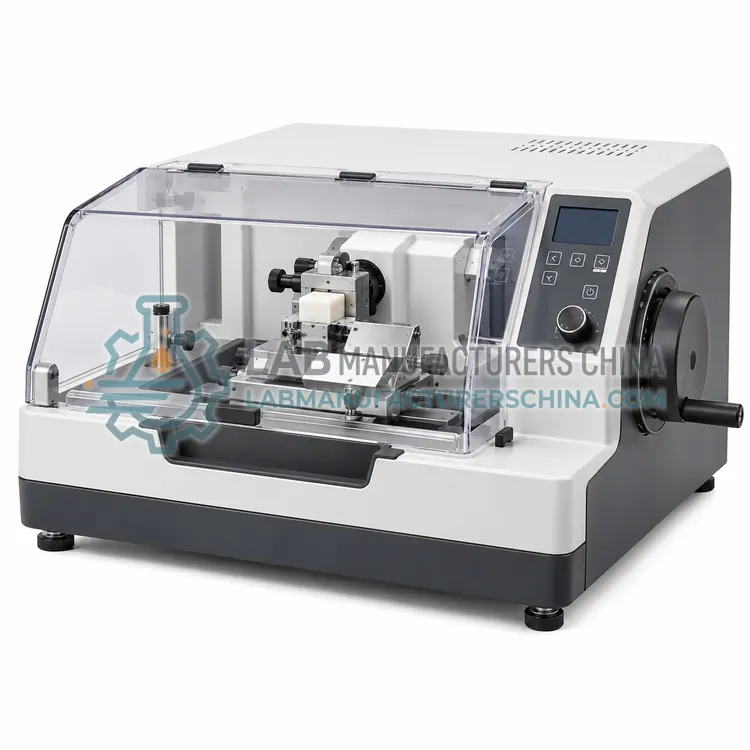
A sliding microtome moves the specimen block on a horizontal slide past a stationary knife to cut large or hard sections. It is the usual choice for big brain slices, hard tissue and sections from large blocks.
What is the Sliding Microtome?
A sliding microtome moves the specimen block on a horizontal slide past a stationary knife to cut large or hard sections. It is the usual choice for big brain slices, hard tissue and sections from large blocks.
Overview
In a sliding microtome the knife holder is fixed and the specimen carriage slides on a low-friction linear track. A fine feed mechanism raises the block between strokes, usually in 1 to 100 µm increments. Sections are cut with a long, oblique draw that reduces compression, which helps with large, hard or brittle specimens such as whole-brain slices, bone blocks and plant material. Many models can be fitted with a freezing stage so frozen sections are cut at –20 to –40 °C using dry ice or a circulating coolant. Blocks up to 150 mm can be cut with suitable holders. Sliding microtomes are robust and durable, and they accept heavy-duty knives or disposable blades. Sectioning is often manual, but some have motorized sliding for repeatable cutting speed.
How does it work?
A microtome holds a specimen block and advances it by a controlled increment toward a fixed knife or blade, then cuts a section as the block or knife moves past. Precision comes from a feed mechanism, often a micrometer screw or stepper motor, that sets section thickness, and from rigid, vibration-free mounting. Sliding microtomes move the block across a stationary knife on linear guides, while vibrating blade types oscillate the blade at 50 to 100 Hz to cut soft unfixed tissue. Ultramicrotomes use thermal or mechanical advance and a glass or diamond knife to cut 40 to 100 nm sections. Cooling chambers, knife angle adjustments, waste removal and safety guards are common components. Sharp, properly angled knives are essential for clean sections.
What are the key features?
- Fixed knife with sliding specimen carriage on linear guides
- Section thickness from about 1 to 100 µm
- Oblique long-stroke cutting reduces compression
- Accepts blocks up to about 150 mm
- Optional freezing stage for frozen sections
- Robust construction for hard or large specimens
What are the technical specifications?
A typical sliding microtome configuration offers section thickness of 1–100 µm, thickness increment of 1 µm steps, maximum block size of up to 150 × 100 mm, specimen stroke of up to 200 mm, knife type of Steel knife or disposable blades and knife angle of 0–25°. Values are indicative of the product class; the exact figures for each configuration are confirmed on the quotation and the calibration documents supplied with the instrument.
Which applications is it used for?
The Sliding Microtome is used in large brain sections, bone and hard tissue, plant tissue and neuroanatomy research. Across the wider Microtomes class, laboratories also deploy it for surgical pathology, neuroscience research and electron microscopy.
Which standards and certifications apply?
Relevant standards and methods include IEC 61010-1, IEC 61010-2-101, IEC 61326-1, ISO 15189 and ISO 13485. Certification candidates for this model are CE, IEC 61010-1 compliance and ISO 13485 manufacturing; each is to be confirmed for the specific configuration before shipment, and certificates are supplied only where they have been issued.
Install the microtome on a rigid bench free of vibration and drafts, and keep it clean of debris. Handle blades and knives with extreme care, using guards and cut-resistant gloves, and dispose of used blades in a sharps container. Lubricate moving guides as recommended and check thickness calibration periodically with test sections or a calibrated gauge. Keep the block holder and knife clamp tight to prevent chatter. Ultramicrotomes need a stable room temperature and low air movement, while cryo models need regular defrosting and cleaning. Train staff on safe use and maintain records of service and calibration.
How do I select the right Sliding Microtome?
Select a sliding microtome when specimens are large, hard or need long draw cuts, or when freezing stage work on whole-brain sections is required. It is not intended for routine paraffin sections, where a rotary model is faster. Specify maximum block size, thickness range, freezing option, knife type and motorization.
How does it compare with other Microtomes variants?
Start with the specimen and the section thickness required. Paraffin blocks for routine histology use rotary models covered separately, while large, hard or frozen specimens call for sliding, freezing or saw microtomes. Electron microscopy requires an ultramicrotome, and fresh unfixed tissue for neuroscience suits a vibrating blade microtome. Compare thickness range and increment, specimen travel, knife type and holder, and whether motorized control is needed. Check stability, vibration isolation, ease of knife change, safety features and availability of consumables such as blades. Consider how many sections per day you will cut and whether cooling or chamber options are needed. Confirm service support and training.
Full specifications
| Section thickness | 1–100 µm |
|---|---|
| Thickness increment | 1 µm steps |
| Maximum block size | up to 150 × 100 mm |
| Specimen stroke | up to 200 mm |
| Knife type | Steel knife or disposable blades |
| Knife angle | 0–25° |
| Cooling option | Freezing stage to –40 °C |
| Drive | Manual or motorized slide |
| Weight | about 35–60 kg |
Indicative values for this product class. Final specifications are confirmed on the quotation and in the calibration documents supplied with the instrument.
Applications
- Large brain sections
- Bone and hard tissue
- Plant tissue
- Neuroanatomy research
Key features
- Fixed knife with sliding specimen carriage on linear guides
- Section thickness from about 1 to 100 µm
- Oblique long-stroke cutting reduces compression
- Accepts blocks up to about 150 mm
- Optional freezing stage for frozen sections
- Robust construction for hard or large specimens
Frequently asked questions about Sliding Microtome
The long oblique cut reduces compression on large, soft or frozen brain slices, and the carriage handles big blocks. With a freezing stage, whole-brain sections of 30 to 50 µm can be cut for neuroanatomy.
It can, particularly large blocks, but the process is slower than with a rotary microtome and ribbon formation is harder. Most pathology laboratories use rotary microtomes for routine paraffin work and keep sliding models for special samples.
Clean and lightly oil the guide track regularly, check thickness calibration, keep the knife clamp tight and replace worn blades. Inspect the freezing stage seals if used. An annual service by the manufacturer maintains accuracy.
A microtome cuts thin sections of tissue or material for microscopy. The sections can be a few nanometers to hundreds of micrometers thick, depending on the type, and are used in pathology, research, materials science and electron microscopy.
Rotary microtomes for paraffin work cut 1 to 60 µm, vibrating microtomes 20 to 500 µm, and ultramicrotomes 30 to 100 nm with glass or diamond knives. Actual results depend on the specimen, blade sharpness and stable installation.
A cryostat is a microtome inside a refrigerated chamber that cuts frozen tissue at about –20 °C. Other microtomes cut embedded or fixed specimens at room temperature, or fresh tissue in liquid in the case of vibrating models.
Related models