Peristaltic Microplate Reagent Dispenser
蠕动泵式微孔板试剂分配器
- SKU MID-0001
- Microplate Dispensers
- CE (to be confirmed)
- ISO 9001 manufacturing (to be confirmed)
- RoHS (to be confirmed)
Price on request — FOB / CIF quoted per order
Prices depend on configuration, quantity and destination port.
Key specifications
| Dispense volume | 1–2,500 µL/well |
|---|---|
| Accuracy | ±2–3% (≥ 10 µL) |
| Precision (CV) | ≤ 2% (≥ 10 µL) |
| Channels | 8, 12 or 16 |
| Plate formats | 6- to 384-well |
| Fill time (96-well) | < 30 s |
Request a quote Download brochure · to be provided
By Lab Manufacturers China Technical TeamLast reviewed Standards: ISO 8655 (piston-operated volumetric apparatus, gravimetric method), ANSI/SLAS 1-2004 to 4-2004, IEC 61010-1
What is the Peristaltic Microplate Reagent Dispenser?
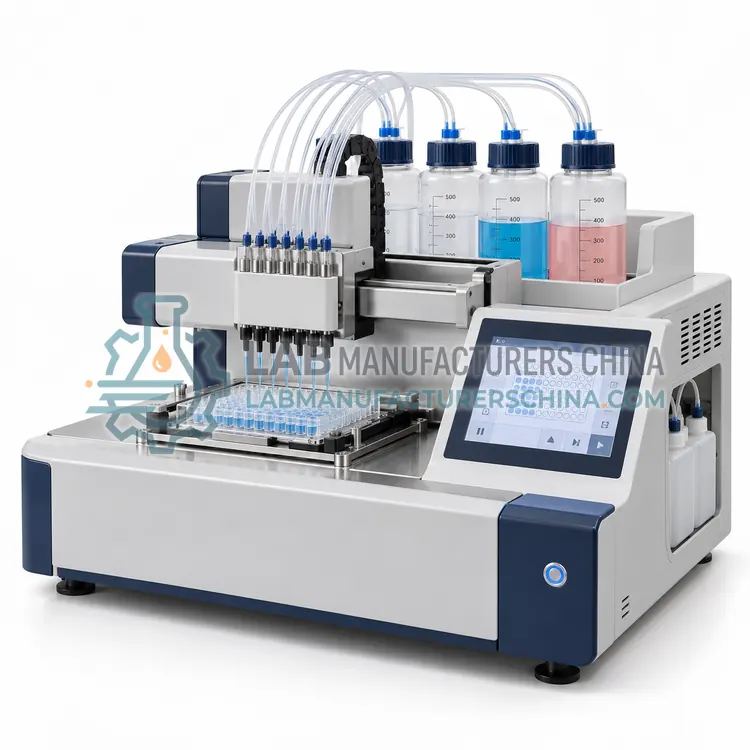
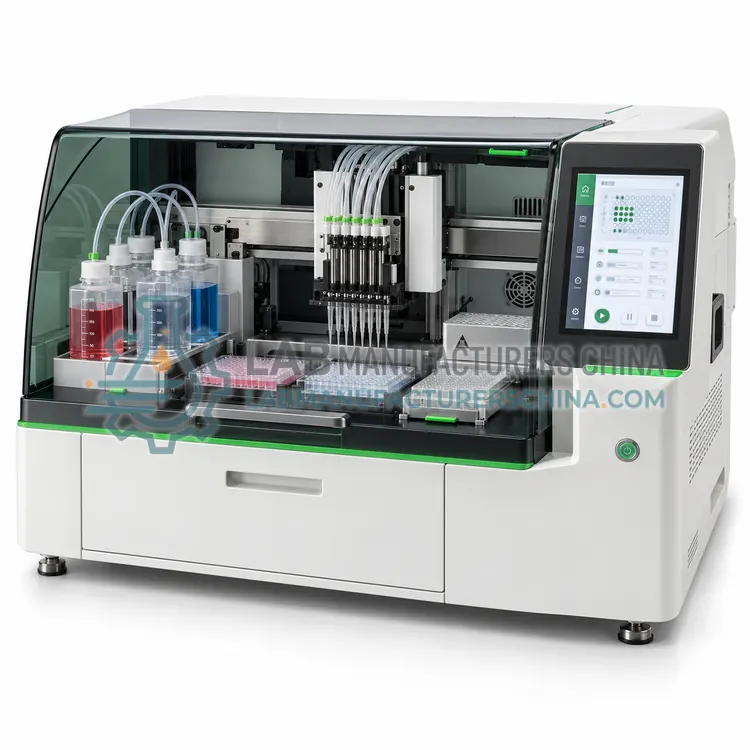
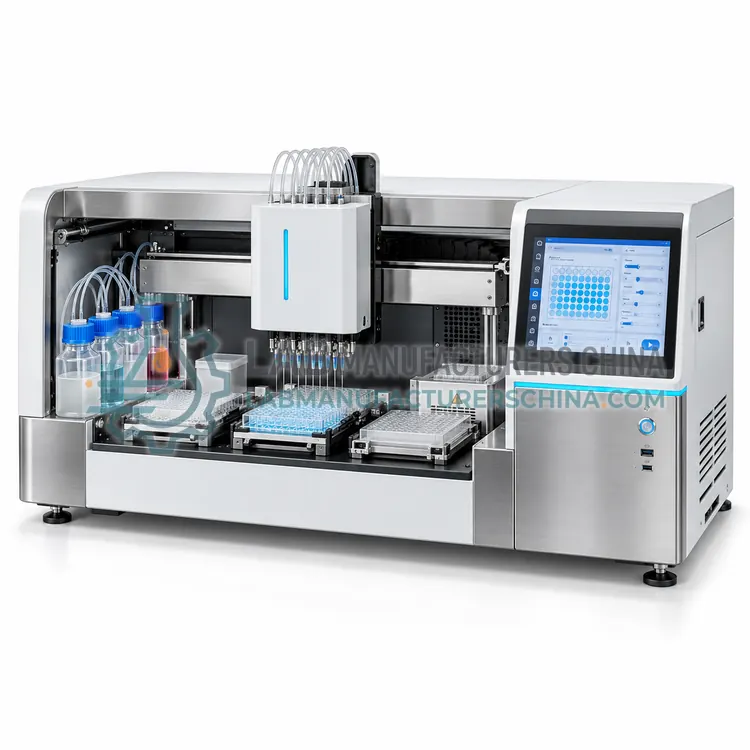
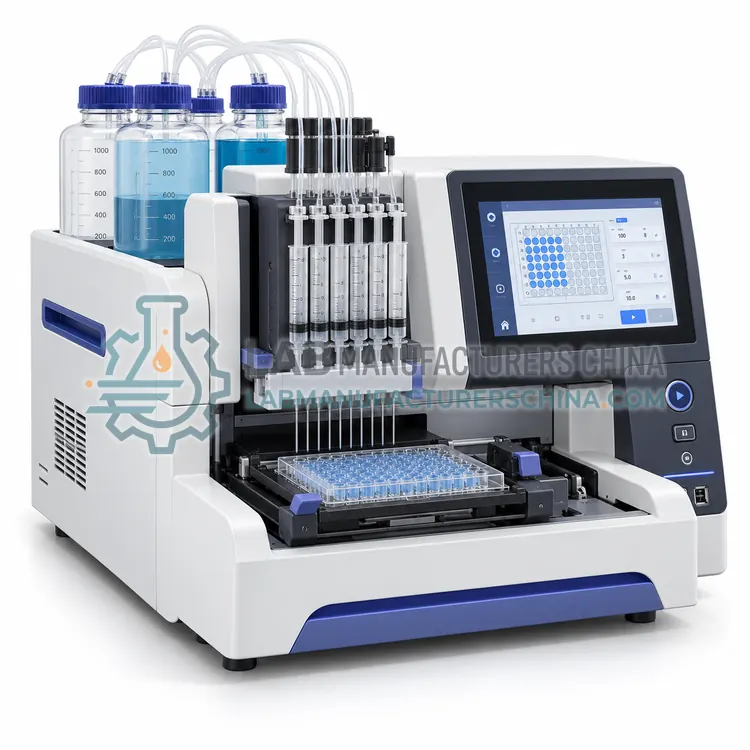
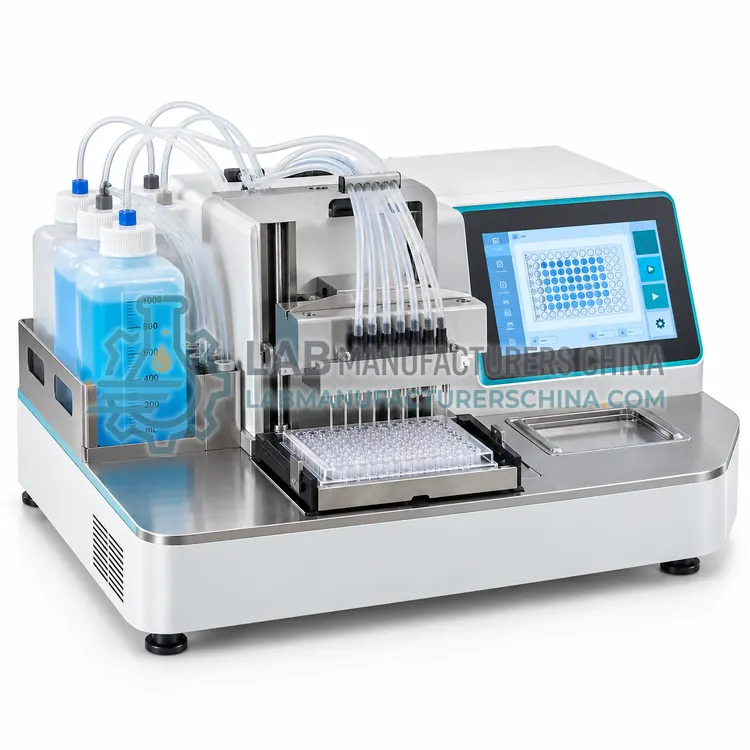
A peristaltic microplate reagent dispenser pumps liquid through flexible tubing with a multi-channel head to fill rows or whole plates with buffers, substrates or stop solutions. It is an economical workhorse for ELISA and general assay reagent addition.
What is the Peristaltic Microplate Reagent Dispenser?
A peristaltic microplate reagent dispenser pumps liquid through flexible tubing with a multi-channel head to fill rows or whole plates with buffers, substrates or stop solutions. It is an economical workhorse for ELISA and general assay reagent addition.
Overview
This variant uses a peristaltic pump that compresses silicone or other elastomeric tubing with rollers, feeding an 8-, 12- or 16-channel cassette or a single dispense tip. Volume is set by the number of pump steps and typically spans 1 to 2,500 microliters per well. Since liquid contacts only the disposable tubing and cassette, there is little cleaning and changeover between reagents is fast. Accuracy is commonly within plus or minus 2 to 3 percent with a coefficient of variation of about 2 percent above 10 microliters, but pulsatility and tubing wear reduce accuracy at very small volumes. Plate carrier positioning or a hand-held head fills the plate in under 30 seconds. Priming volumes waste some reagent. Tubing must be replaced periodically as elasticity changes, and is not compatible with all solvents.
How does it work?
Microplate dispensers move liquid from a reservoir to the wells through tubing and a dispensing head. Peristaltic dispensers squeeze flexible tubing with rollers, delivering volume proportional to pump rotation, and they keep the liquid path disposable. Syringe dispensers use a precision plunger to aspirate and dispense volume with high accuracy. Solenoid valve systems pressurize a reagent line and open a microvalve for a precisely timed pulse, delivering nanoliter to microliter volumes, and piezoelectric systems eject droplets by a voltage-driven pressure wave for non-contact dispensing. Multi-channel heads of 8, 16 or 96 nozzles fill rows, columns or entire plates, and plate carriers move wells beneath the nozzles. Priming, backflush and cleaning cycles prevent carryover, and volume accuracy depends on viscosity, tubing and temperature.
What are the key features?
- Disposable tubing and cassette remove cleaning between reagents
- Dispense volume from 1 to 2,500 microliters per well
- 8-, 12- or 16-channel cassettes for rows or whole plates
- Fill time under 30 seconds for a 96-well plate
- Programmable volumes stored for repeat protocols
- Low purchase cost and simple maintenance
What are the technical specifications?
A typical peristaltic microplate reagent dispenser configuration offers dispense volume of 1–2,500 µL/well, accuracy of ±2–3% (≥ 10 µL), precision (CV) of ≤ 2% (≥ 10 µL), channels of 8, 12 or 16, plate formats of 6- to 384-well and fill time (96-well) of < 30 s. Values are indicative of the product class; the exact figures for each configuration are confirmed on the quotation and the calibration documents supplied with the instrument.
Which applications is it used for?
The Peristaltic Microplate Reagent Dispenser is used in ELISA substrate and stop solution addition, buffer and diluent dispensing, bacterial medium filling, staining solution addition and routine assay reagent addition. Across the wider Microplate Dispensers class, laboratories also deploy it for ELISA reagent and substrate addition, cell seeding and media addition and high-throughput screening reagent dispensing.
Which standards and certifications apply?
Relevant standards and methods include ISO 8655 (piston-operated volumetric apparatus, gravimetric method), ANSI/SLAS 1-2004 to 4-2004, IEC 61010-1, IEC 61010-2-081 and IEC 61326-1. Certification candidates for this model are CE, ISO 9001 manufacturing and RoHS; each is to be confirmed for the specific configuration before shipment, and certificates are supplied only where they have been issued.
Prime every line before use and flush with water or an appropriate solvent after each run to prevent crystallization and cross-contamination. Verify dispensed volume gravimetrically or photometrically with dye at installation and at least annually, across all channels and at your working volumes. Replace peristaltic tubing according to its life, typically after a set number of hours, because wear changes volume. Avoid air bubbles by degassing liquids and checking connections. Use tubing rated for your reagents, and follow biosafety rules when dispensing infectious materials. Keep a log of maintenance and calibration for quality records.
How do I select the right Peristaltic Microplate Reagent Dispenser?
Choose this variant for bulk reagent addition where cost, simplicity and fast changeover matter. It is less suited for nanoliter volumes, cells or solvent-rich liquids. In an RFQ specify volume range, accuracy target at your working volume, channel count, plate formats and tubing chemical compatibility.
How does it compare with other Microplate Dispensers variants?
Choose a dispenser by dispensed volume range, accuracy, liquids and throughput. Peristaltic models are economical and simple for buffers and substrates at 5 to 2,000 microliters, while syringe models give better accuracy for varied reagents. Non-contact valve or piezo systems suit nanoliter volumes and 1536-well plates. For cell suspensions, select gentle, low-shear paths with mixing to keep cells suspended. Compare coefficient of variation at your typical volume, dead volume and cleaning procedure, because expensive reagents are lost in tubing. Check plate formats, number of channels, reagent bottles and whether the system integrates into an automation line. Confirm chemical compatibility of tubing and seals with solvents such as DMSO or ethanol.
Full specifications
| Dispense volume | 1–2,500 µL/well |
|---|---|
| Accuracy | ±2–3% (≥ 10 µL) |
| Precision (CV) | ≤ 2% (≥ 10 µL) |
| Channels | 8, 12 or 16 |
| Plate formats | 6- to 384-well |
| Fill time (96-well) | < 30 s |
| Reagent bottles | 1–2 |
| Dead volume | 1–3 mL (priming) |
| Tubing material | Silicone or PharMed-type elastomer |
| Power supply | 100–240 V AC, 50/60 Hz |
Indicative values for this product class. Final specifications are confirmed on the quotation and in the calibration documents supplied with the instrument.
Applications
- ELISA substrate and stop solution addition
- Buffer and diluent dispensing
- Bacterial medium filling
- Staining solution addition
- Routine assay reagent addition
Key features
- Disposable tubing and cassette remove cleaning between reagents
- Dispense volume from 1 to 2,500 microliters per well
- 8-, 12- or 16-channel cassettes for rows or whole plates
- Fill time under 30 seconds for a 96-well plate
- Programmable volumes stored for repeat protocols
- Low purchase cost and simple maintenance
Frequently asked questions about Peristaltic Microplate Reagent Dispenser
Tubing life depends on material and use, often several hundred hours of pumping, or sooner with aggressive reagents. Replace when volumes drift outside tolerance, tubing shows wear or flattening, or at the interval recommended by the supplier.
Accuracy degrades at very low volumes because of pulsation and tubing variability. For volumes below about 5 microliters, syringe, valve or piezo dispensers provide more reliable precision.
Priming typically consumes 1 to 3 milliliters of reagent to fill the tubing and manifold. Shorter tubing and low-dead-volume cassettes reduce waste, which matters for expensive substrates.
A microplate dispenser automatically adds reagents, buffers, substrates or cell suspensions to plate wells in precise volumes. It replaces repetitive pipetting, shortens dispensing time and lowers well-to-well variation in ELISA, cell assays and screening.
Typical dispensers achieve a coefficient of variation of 1 to 5 percent depending on volume, liquid and mechanism. Syringe and piezo systems generally reach the lowest values, and accuracy should be verified at your working volume.
Yes, if the mechanism and materials are suitable. Positive-displacement syringe and valve systems with solvent-resistant seals handle viscous or DMSO-containing liquids better than peristaltic tubing, but calibrate volume for each liquid.
Related models