Parallel Multi-Vessel Fermenter
平行多罐发酵系统
- SKU LAF-0002
- Laboratory Fermenters
- CE (to be confirmed)
- ISO 9001 manufacturing (to be confirmed)
- 21 CFR Part 11 software documentation (to be confirmed)
Price on request — FOB / CIF quoted per order
Prices depend on configuration, quantity and destination port.
Key specifications
| Vessel count | 4–48 |
|---|---|
| Working volume per vessel | 100–500 mL |
| Temperature range | Ambient +5 to 60 °C |
| pH control | Individual per vessel |
| Dissolved oxygen control | Individual per vessel |
| Agitation | 100–1,200 rpm, magnetic or overhead |
Request a quote Download brochure · to be provided
By Lab Manufacturers China Technical TeamLast reviewed Standards: ISO 9001, EU GMP Annex 1, 21 CFR Part 11
What is the Parallel Multi-Vessel Fermenter?
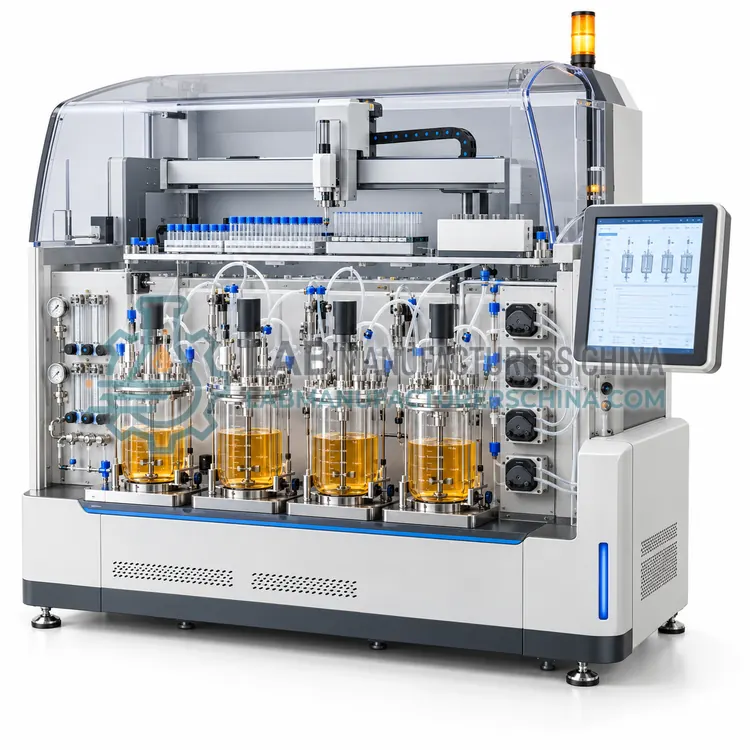
A parallel multi-vessel fermenter runs several independently controlled small vessels at once, letting laboratories compare strains or conditions in a single experiment. It saves time and material in strain and media screening.
What is the Parallel Multi-Vessel Fermenter?
A parallel multi-vessel fermenter runs several independently controlled small vessels at once, letting laboratories compare strains or conditions in a single experiment. It saves time and material in strain and media screening.
Overview
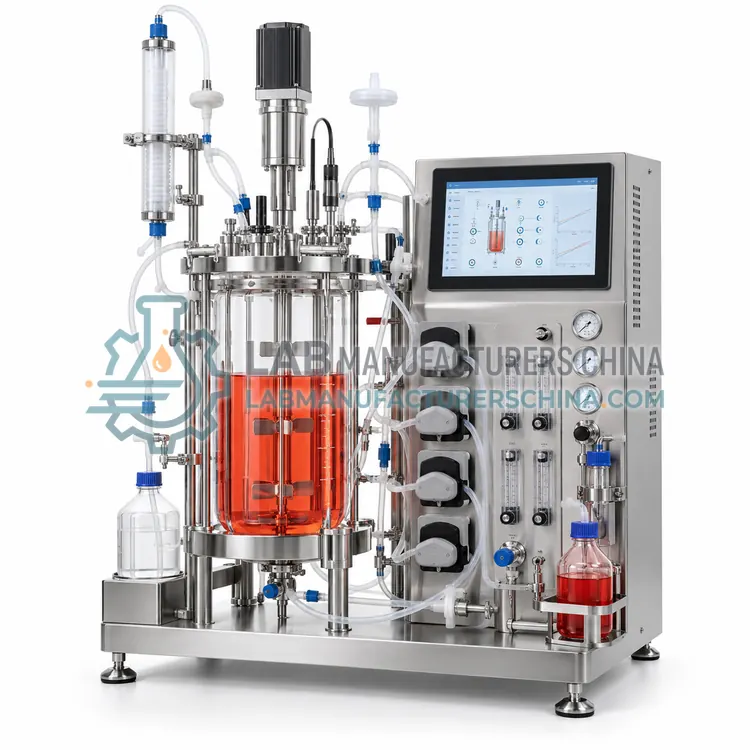
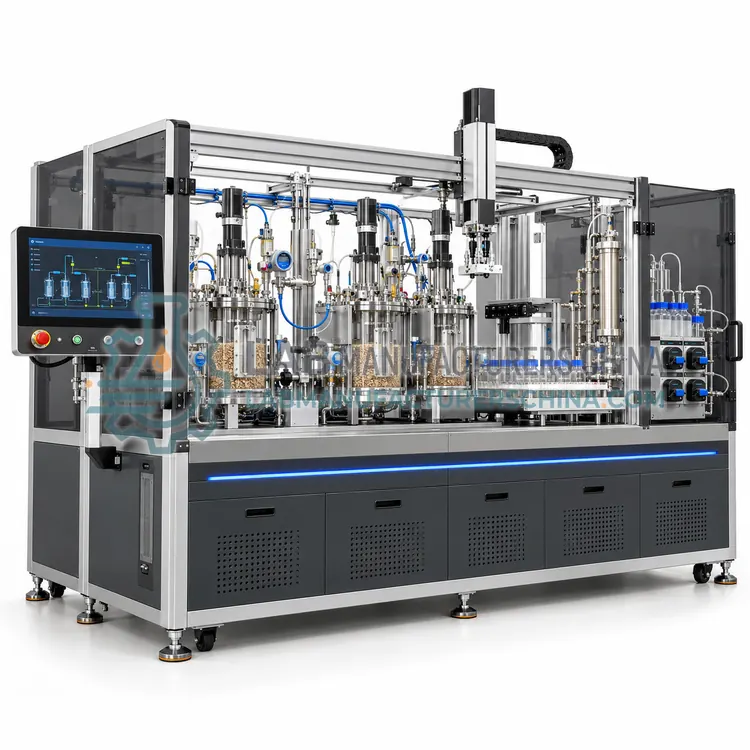
A parallel multi-vessel fermenter places four to forty-eight small vessels on one platform, each with its own agitator, gas supply, temperature control and pH and dissolved oxygen loops, so that every vessel can follow a different recipe. Shared software coordinates calibration, start and sampling, and presents overlays that let users compare growth curves and product titres directly. Small working volumes, often 100 to 500 millilitres, reduce medium and inoculum consumption, which matters when testing rare or expensive strains. Vessels may be glass, small stainless or single-use, and some systems add automated liquid handling for sampling or feed. Because each vessel is independently controlled, the comparison is valid, but the laboratory must still ensure consistent inoculation and calibration across all vessels for results to be comparable.
How does it work?
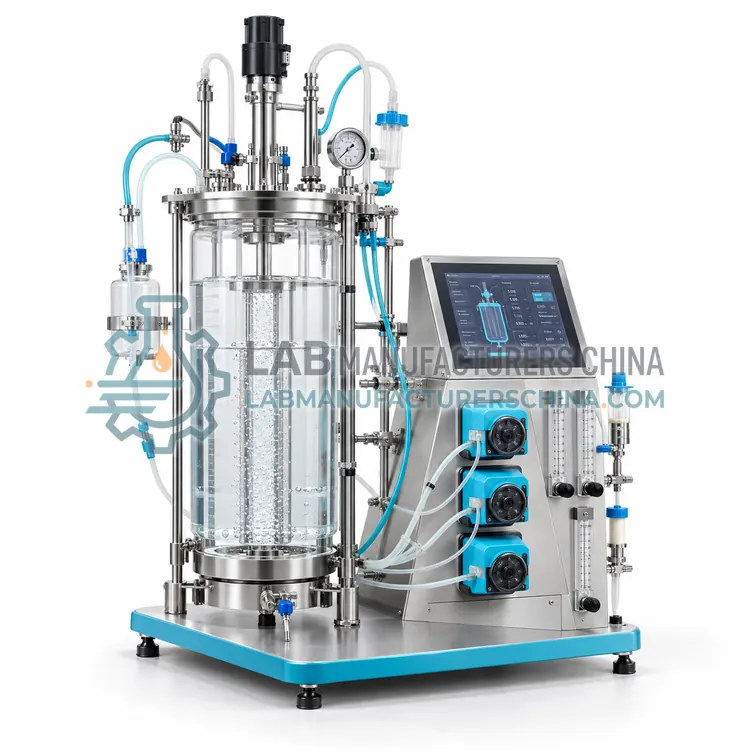
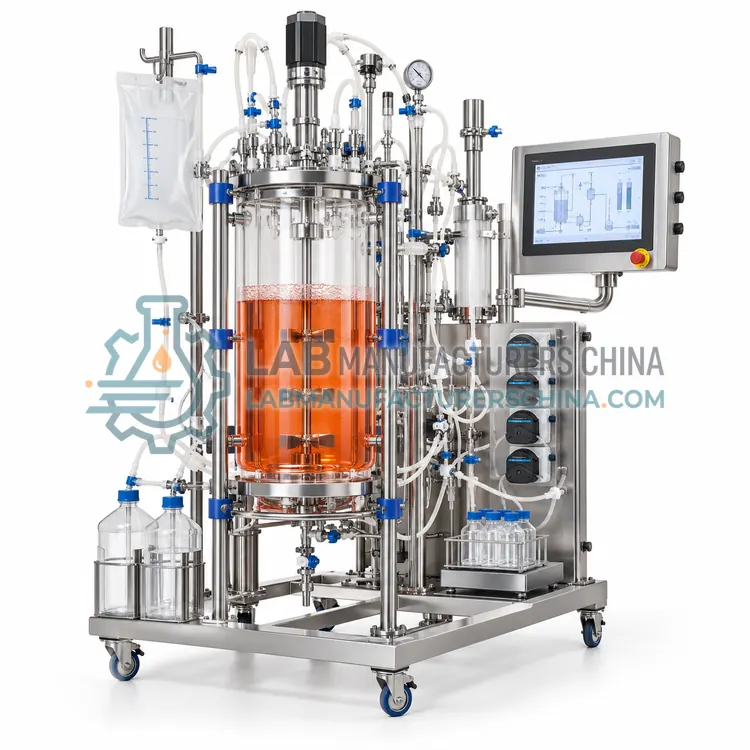
A laboratory fermenter provides a sterile, mixed and aerated liquid medium in which sensors measure and controllers regulate the conditions that determine growth and product formation. Agitation by a top- or bottom-driven impeller disperses oxygen and nutrients, and air or enriched oxygen is sparged through the liquid and vented through a condenser and exhaust filter. Temperature is held by a water jacket or heating blanket, pH is corrected by dosing acid or base, and dissolved oxygen is maintained by adjusting stirrer speed, gas flow or gas composition through cascade control. Foam is managed with antifoam or a mechanical breaker, and feed pumps add carbon source in fed-batch mode. Small working volumes allow many experiments with limited material, and glass or small stainless vessels let operators observe the culture and change configuration quickly.
What are the key features?
- 4 to 48 independently controlled vessels
- Individual agitation, aeration and pH loops
- Shared software with overlay comparison
- Small working volumes reduce material use
- Optional automated sampling and feed
What are the technical specifications?
A typical parallel multi-vessel fermenter configuration offers vessel count of 4–48, working volume per vessel of 100–500 mL, temperature range of Ambient +5 to 60 °C, pH control of Individual per vessel, dissolved oxygen control of Individual per vessel and agitation of 100–1,200 rpm, magnetic or overhead. Values are indicative of the product class; the exact figures for each configuration are confirmed on the quotation and the calibration documents supplied with the instrument.
Which applications is it used for?
The Parallel Multi-Vessel Fermenter is used in strain and clone screening, design of experiments studies, media optimization and parallel process development. Across the wider Laboratory Fermenters class, laboratories also deploy it for strain screening and selection, media and feed optimization and process development and scale-up studies.
Which standards and certifications apply?
Relevant standards and methods include ISO 9001, EU GMP Annex 1, 21 CFR Part 11, USP <87>, USP <88>, IEC 61010-1 and ICH Q11. Certification candidates for this model are CE, ISO 9001 manufacturing and 21 CFR Part 11 software documentation; each is to be confirmed for the specific configuration before shipment, and certificates are supplied only where they have been issued.
Verify sterilization of the vessel, headplate and lines before inoculation, and confirm that filters and sampling ports are intact. Calibrate pH and dissolved oxygen probes before each run and check their response with standards. Record setpoints, deviations and offline measurements such as cell count and glucose, since these support interpretation and scale-up. Keep an aseptic technique for sampling to avoid contamination, and discard runs that show contamination rather than continuing. Clean probes and vessels promptly, avoid damaging electrode membranes and follow the manufacturer guidance for autoclaving. For process development records, keep batch logs that link conditions to outcomes and note any equipment changes.
How do I select the right Parallel Multi-Vessel Fermenter?
Choose a parallel system when many conditions must be compared under independent control. In an RFQ specify vessel count and volume, control loops per vessel, agitation and aeration capability, vessel material, automation of sampling and feed, and the comparison and recording software provided.
How does it compare with other Laboratory Fermenters variants?
Choose the vessel volume from the amount of material and the number of conditions you must test, keeping headspace of about 20 to 30 percent for foam and aeration. Decide between glass, which allows observation and quick reconfiguration, and small stainless steel, which tolerates higher pressure and repeated sterilization. List the control loops you need, the number of sensor and feed ports and whether cascade control, exhaust gas analysis or redox measurement matter. If you screen many conditions, a parallel multi-vessel system with independent control saves time and material. Choose a single-use format when cleaning between experiments would slow you down. Confirm that the control software records batch profiles and exports data, and that you can scale the geometry and control strategy to pilot and production vessels.
Full specifications
| Vessel count | 4–48 |
|---|---|
| Working volume per vessel | 100–500 mL |
| Temperature range | Ambient +5 to 60 °C |
| pH control | Individual per vessel |
| Dissolved oxygen control | Individual per vessel |
| Agitation | 100–1,200 rpm, magnetic or overhead |
| Vessel material | Glass, stainless steel or single-use |
| Control | Central software with independent recipes |
Indicative values for this product class. Final specifications are confirmed on the quotation and in the calibration documents supplied with the instrument.
Applications
- Strain and clone screening
- Design of experiments studies
- Media optimization
- Parallel process development
Key features
- 4 to 48 independently controlled vessels
- Individual agitation, aeration and pH loops
- Shared software with overlay comparison
- Small working volumes reduce material use
- Optional automated sampling and feed
Frequently asked questions about Parallel Multi-Vessel Fermenter
The number follows from the factors you are testing and the replicates you need. A design of experiments with three or four variables quickly needs eight to sixteen vessels, while simpler screening may need four. Working volume per vessel usually falls as vessel count rises.
They are comparable if inoculation density, calibration and mixing conditions are consistent across vessels. Laboratories standardize inoculum preparation, calibrate probes as a batch and verify that temperature and gas delivery match before starting a comparative run.
Yes. Each vessel is independently controlled, so strains, media, temperature, pH and feed profiles can differ while the software coordinates start times and recording. This is what makes parallel screening efficient compared with running vessels sequentially.
It cultivates microorganisms at small scale under controlled conditions for strain screening, media optimization and process development. Results from these experiments define the parameters that are then reproduced in pilot and production vessels during scale-up.
Enough to assay the product and repeat measurements, plus headspace of about 20 to 30 percent. A 1 to 10 litre vessel suits most laboratory work, but conditions that need many parallel tests often benefit from several smaller vessels rather than one large one.
Glass allows direct observation of the culture, foam and color, and its smooth surface is easy to clean and sterilize by autoclaving. It also lets operators see mixing and aeration behavior, which helps when developing a process before moving to stainless steel.
Related models