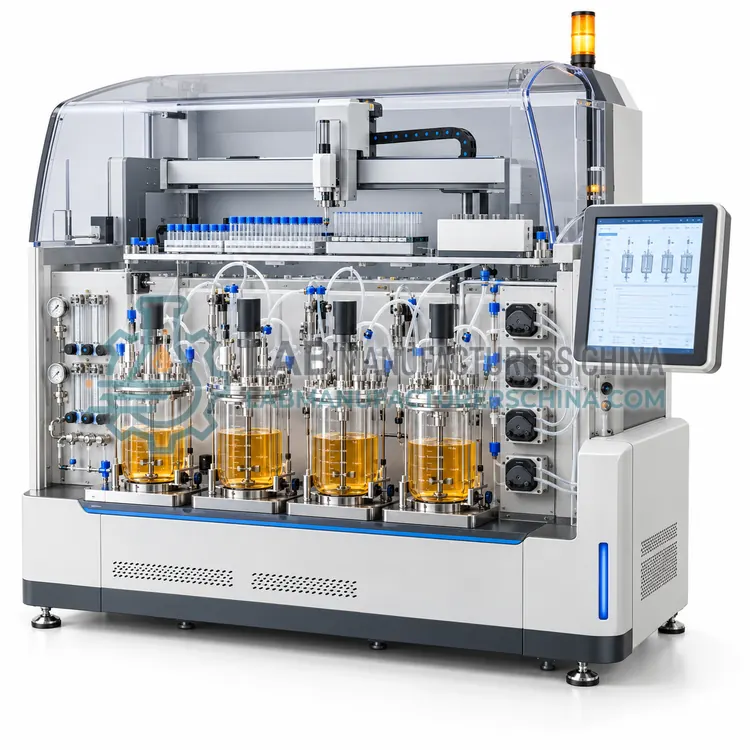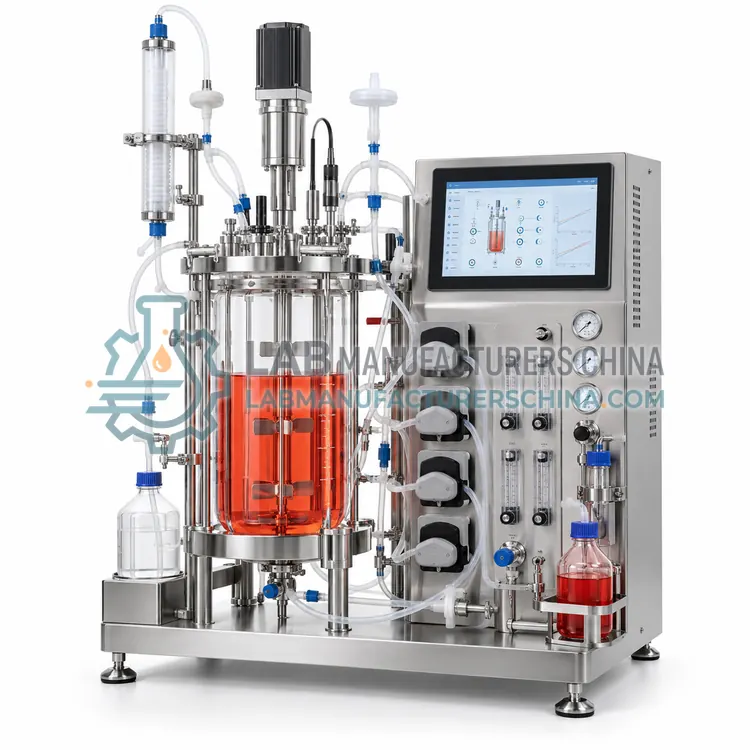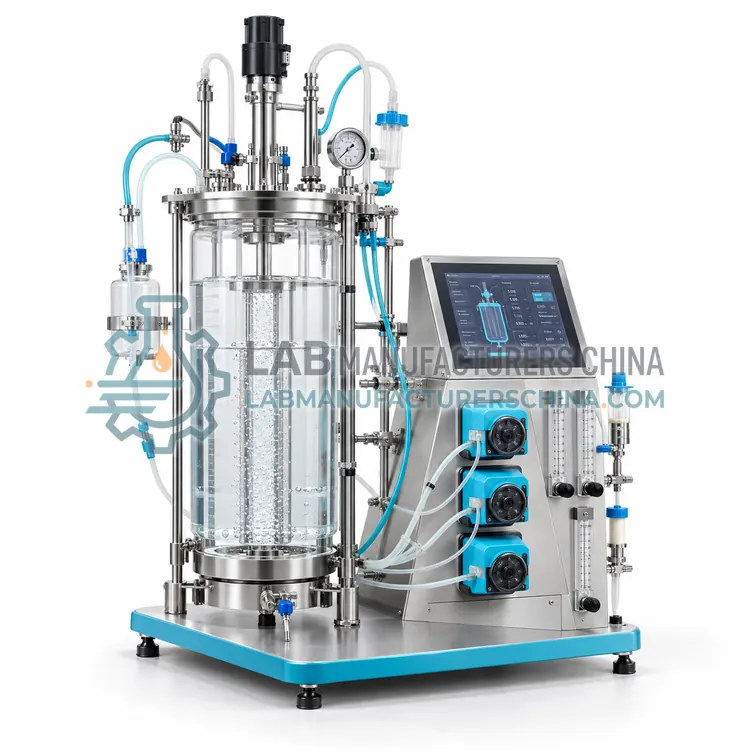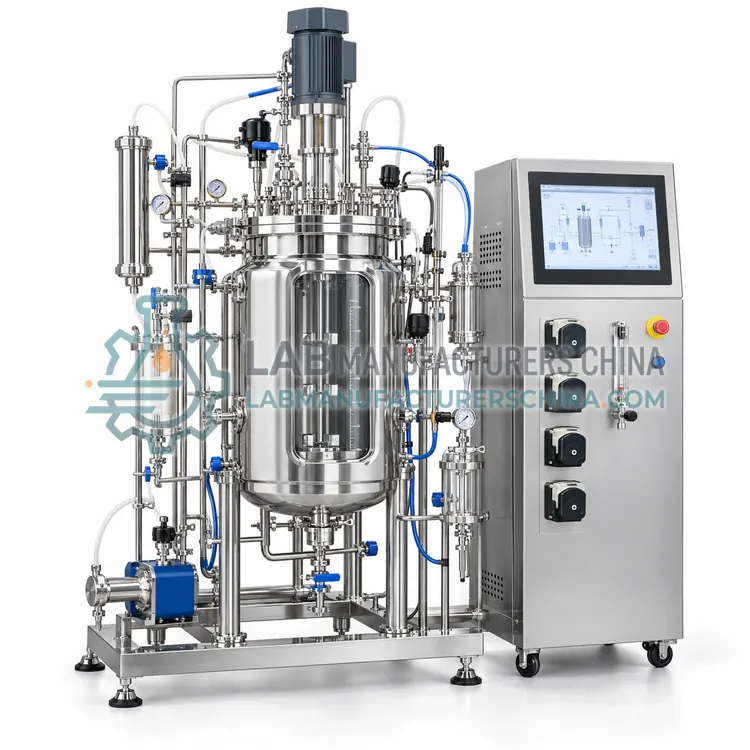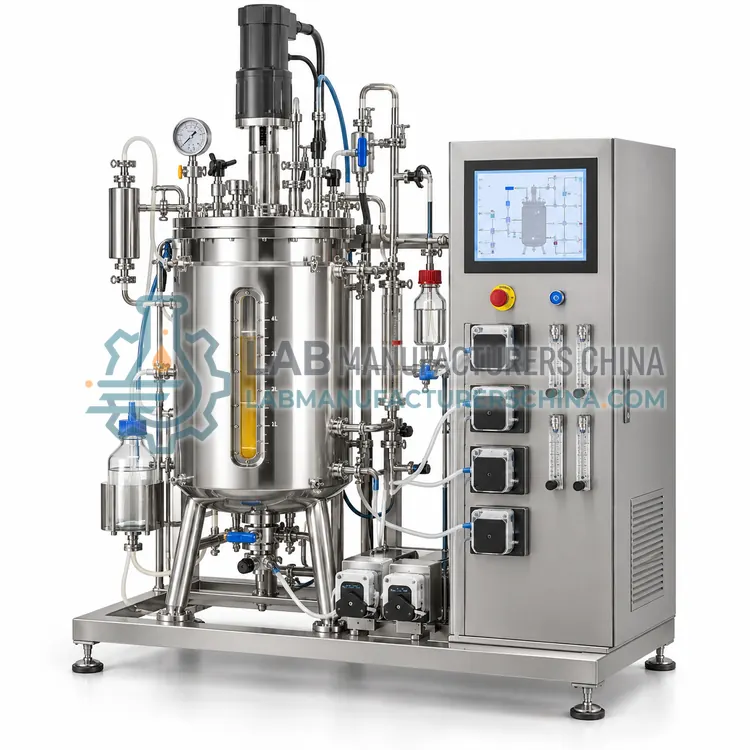
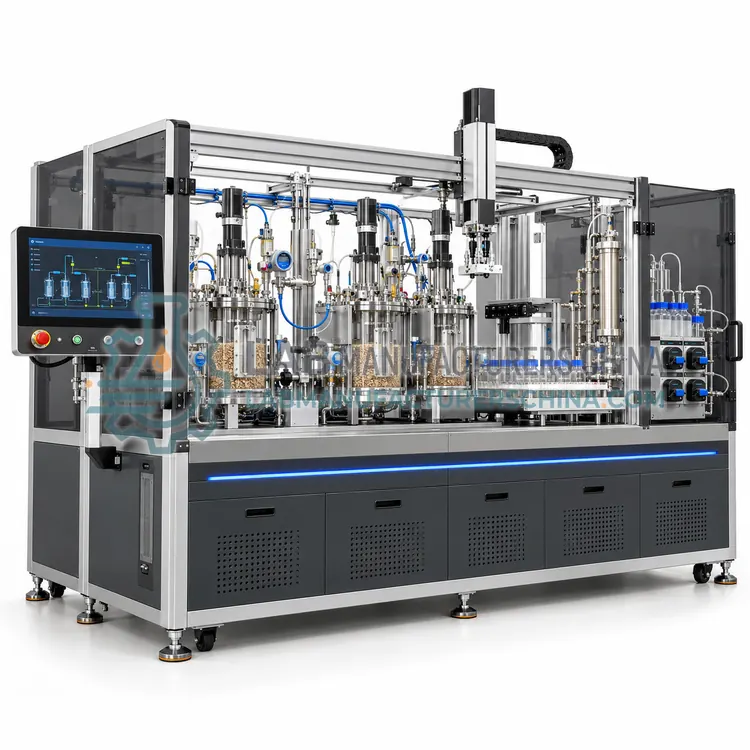
Solid-State Fermentation System
固态发酵系统
- SKU LAF-0005
- Laboratory Fermenters
- CE (to be confirmed)
- ISO 9001 manufacturing (to be confirmed)
- IEC 61010-1 compliance (to be confirmed)
Price on request — FOB / CIF quoted per order
Prices depend on configuration, quantity and destination port.
Key specifications
| Substrate capacity | 1–100 kg |
|---|---|
| Temperature range | 20–60 °C |
| Aeration | Forced air through the bed |
| Mixing | Periodic turning or continuous agitation |
| Humidity control | Relative humidity 40–95% |
| Vessel format | Tray, drum or stirred bed |
Request a quote Download brochure · to be provided
By Lab Manufacturers China Technical TeamLast reviewed Standards: ISO 9001, EU GMP Annex 1, 21 CFR Part 11
What is the Solid-State Fermentation System?
A solid-state fermentation system cultivates microorganisms on moist solid substrates rather than in liquid, controlling temperature, humidity and aeration. It suits filamentous fungi, enzymes and products that benefit from low water activity.
What is the Solid-State Fermentation System?
A solid-state fermentation system cultivates microorganisms on moist solid substrates rather than in liquid, controlling temperature, humidity and aeration. It suits filamentous fungi, enzymes and products that benefit from low water activity.
Overview
A solid-state fermentation system grows microorganisms on a moist solid substrate such as grains, brans or inert supports. Because there is little free water, the substrate must be mixed or turned periodically to distribute nutrients and remove metabolic heat, and the chamber controls temperature by water jackets, air circulation or gentle agitation. Forced aeration through the bed supplies oxygen and removes carbon dioxide, and humidity control prevents drying. Designs range from shallow trays in a temperature-controlled room to stirred-tank and rotating-drum reactors with integrated control. Sterilization of the substrate, usually by steam, precedes inoculation with a spore or cell suspension. Solid-state systems are used for enzymes, organic acids, traditional fermented foods and some fungal metabolites, and they offer high product concentration with lower water and downstream volume than submerged culture.
How does it work?
A laboratory fermenter provides a sterile, mixed and aerated liquid medium in which sensors measure and controllers regulate the conditions that determine growth and product formation. Agitation by a top- or bottom-driven impeller disperses oxygen and nutrients, and air or enriched oxygen is sparged through the liquid and vented through a condenser and exhaust filter. Temperature is held by a water jacket or heating blanket, pH is corrected by dosing acid or base, and dissolved oxygen is maintained by adjusting stirrer speed, gas flow or gas composition through cascade control. Foam is managed with antifoam or a mechanical breaker, and feed pumps add carbon source in fed-batch mode. Small working volumes allow many experiments with limited material, and glass or small stainless vessels let operators observe the culture and change configuration quickly.
What are the key features?
- Cultivation on moist solid substrate
- Temperature control by jacket or air circulation
- Forced aeration through the substrate bed
- Periodic mixing or turning for heat removal
- Humidity control to prevent drying
What are the technical specifications?
A typical solid-state fermentation system configuration offers substrate capacity of 1–100 kg, temperature range of 20–60 °C, aeration of Forced air through the bed, mixing of Periodic turning or continuous agitation, humidity control of Relative humidity 40–95% and vessel format of Tray, drum or stirred bed. Values are indicative of the product class; the exact figures for each configuration are confirmed on the quotation and the calibration documents supplied with the instrument.
Which applications is it used for?
The Solid-State Fermentation System is used in enzyme production by fungi, traditional fermented food research, organic acid and metabolite production and bioremediation and composting studies. Across the wider Laboratory Fermenters class, laboratories also deploy it for strain screening and selection, media and feed optimization and process development and scale-up studies.
Which standards and certifications apply?
Relevant standards and methods include ISO 9001, EU GMP Annex 1, 21 CFR Part 11, USP <87>, USP <88>, IEC 61010-1 and ICH Q11. Certification candidates for this model are CE, ISO 9001 manufacturing and IEC 61010-1 compliance; each is to be confirmed for the specific configuration before shipment, and certificates are supplied only where they have been issued.
Verify sterilization of the vessel, headplate and lines before inoculation, and confirm that filters and sampling ports are intact. Calibrate pH and dissolved oxygen probes before each run and check their response with standards. Record setpoints, deviations and offline measurements such as cell count and glucose, since these support interpretation and scale-up. Keep an aseptic technique for sampling to avoid contamination, and discard runs that show contamination rather than continuing. Clean probes and vessels promptly, avoid damaging electrode membranes and follow the manufacturer guidance for autoclaving. For process development records, keep batch logs that link conditions to outcomes and note any equipment changes.
How do I select the right Solid-State Fermentation System?
Choose solid-state fermentation when the organism or product performs best on a solid substrate. In an RFQ specify substrate capacity, vessel format, temperature and humidity ranges, aeration and mixing method, sterilization procedure and control and recording features.
How does it compare with other Laboratory Fermenters variants?
Choose the vessel volume from the amount of material and the number of conditions you must test, keeping headspace of about 20 to 30 percent for foam and aeration. Decide between glass, which allows observation and quick reconfiguration, and small stainless steel, which tolerates higher pressure and repeated sterilization. List the control loops you need, the number of sensor and feed ports and whether cascade control, exhaust gas analysis or redox measurement matter. If you screen many conditions, a parallel multi-vessel system with independent control saves time and material. Choose a single-use format when cleaning between experiments would slow you down. Confirm that the control software records batch profiles and exports data, and that you can scale the geometry and control strategy to pilot and production vessels.
Full specifications
| Substrate capacity | 1–100 kg |
|---|---|
| Temperature range | 20–60 °C |
| Aeration | Forced air through the bed |
| Mixing | Periodic turning or continuous agitation |
| Humidity control | Relative humidity 40–95% |
| Vessel format | Tray, drum or stirred bed |
| Sterilization | Steam sterilization of substrate |
| Control | Microprocessor with data logging |
Indicative values for this product class. Final specifications are confirmed on the quotation and in the calibration documents supplied with the instrument.
Applications
- Enzyme production by fungi
- Traditional fermented food research
- Organic acid and metabolite production
- Bioremediation and composting studies
Key features
- Cultivation on moist solid substrate
- Temperature control by jacket or air circulation
- Forced aeration through the substrate bed
- Periodic mixing or turning for heat removal
- Humidity control to prevent drying
Frequently asked questions about Solid-State Fermentation System
Some fungi and enzymes perform better at low water activity, product concentrations can be higher, and water use and downstream volume are lower than in submerged culture. It also mirrors traditional processes such as koji and certain food fermentations.
Metabolic heat is removed by forced air through the bed and by periodic mixing or turning that exposes fresh surface. Temperature control through jackets or room conditioning adds capacity, and sensors placed within the bed confirm the actual conditions.
Substrates are usually sterilized with steam, either in the reactor vessel or in a separate autoclave before loading. The cooling step and inoculation are carried out aseptically, and water content is adjusted to the target for the organism.
It cultivates microorganisms at small scale under controlled conditions for strain screening, media optimization and process development. Results from these experiments define the parameters that are then reproduced in pilot and production vessels during scale-up.
Enough to assay the product and repeat measurements, plus headspace of about 20 to 30 percent. A 1 to 10 litre vessel suits most laboratory work, but conditions that need many parallel tests often benefit from several smaller vessels rather than one large one.
Glass allows direct observation of the culture, foam and color, and its smooth surface is easy to clean and sterilize by autoclaving. It also lets operators see mixing and aeration behavior, which helps when developing a process before moving to stainless steel.
Related models