Powder-Induction High-Shear Mixer
粉体吸入式高剪切混合器
- SKU HSM-0005
- High-Shear Mixers
- CE (to be confirmed)
- RoHS (to be confirmed)
- ISO 9001 manufacturing (to be confirmed)
Price on request — FOB / CIF quoted per order
Prices depend on configuration, quantity and destination port.
Key specifications
| Batch volume | 5–500 L |
|---|---|
| Rotor speed | 3,000–12,000 rpm |
| Induction rate | 1–50 kg/min |
| Motor power | 1.5–15 kW |
| Viscosity range | Up to 20,000 mPa·s |
| Powder feed | Hopper with valve or hose |
Request a quote Download brochure · to be provided
By Lab Manufacturers China Technical TeamLast reviewed Standards: IEC 61010-1, EN ISO 12100, ISO 13320
What is the Powder-Induction High-Shear Mixer?
A powder-induction high-shear mixer uses the vacuum created by the rotor-stator to draw powders directly into the liquid below the surface. It prevents lumps and dust when dissolving gums, starches, polymers and pigments.
What is the Powder-Induction High-Shear Mixer?
A powder-induction high-shear mixer uses the vacuum created by the rotor-stator to draw powders directly into the liquid below the surface. It prevents lumps and dust when dissolving gums, starches, polymers and pigments.
Overview
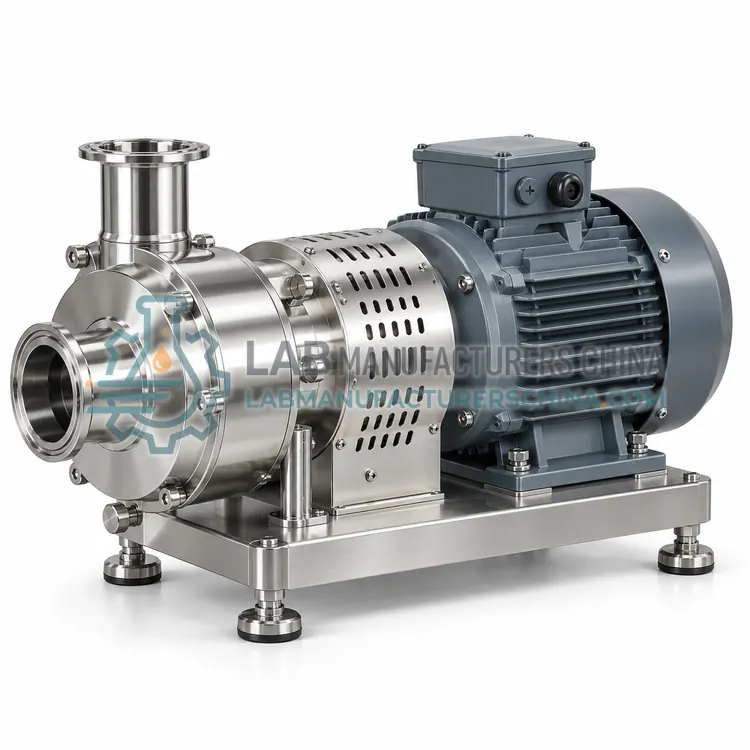
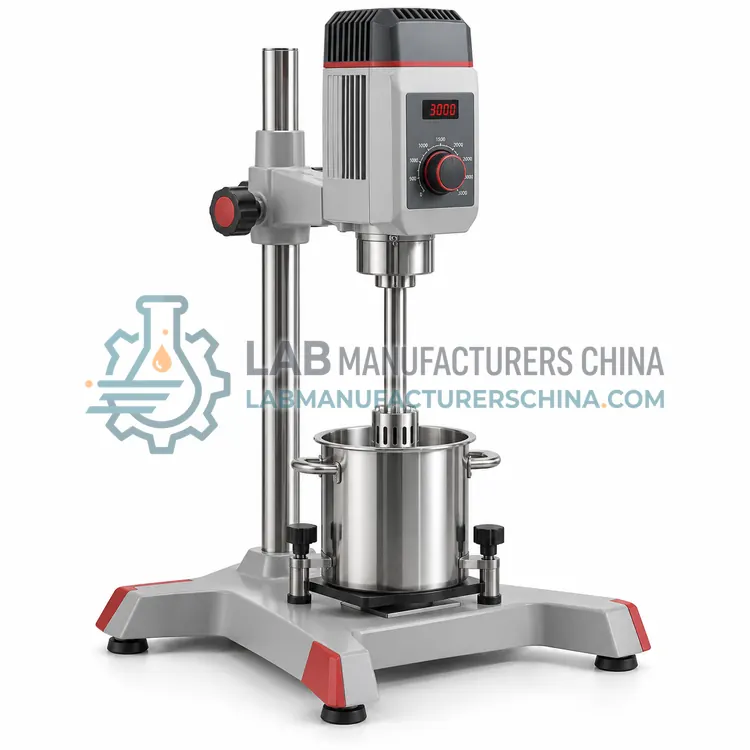
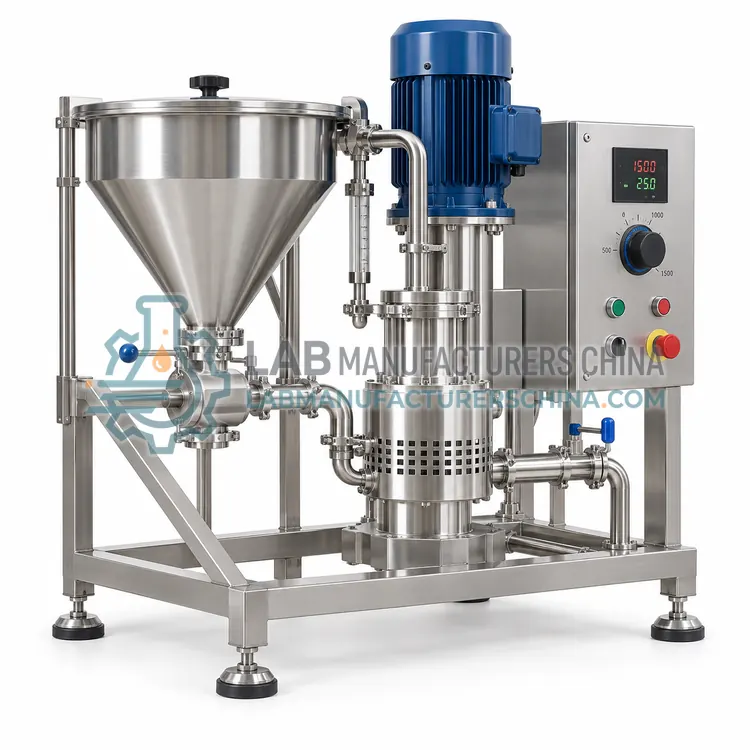
In the powder-induction mixer, the rotor-stator head creates a suction at an inlet port that is connected by a hose or hopper to a powder source. Powder is drawn into the liquid at the point of highest shear, so each particle is wetted individually before it can form a lump. The design handles hydrocolloids such as xanthan, carbomer and cellulose derivatives, starches, proteins and pigments. Batch volumes are 5 to 500 L, with speeds of 3,000 to 12,000 rpm and induction rates from 1 to 50 kg/min depending on size. The vessel can be open or closed, and vacuum can assist powder feeding. Laboratory models are mounted on stands, while pilot versions include a hopper, valve and dust extraction. The mixer shortens dissolution time and improves dust control compared with surface addition.
How does it work?
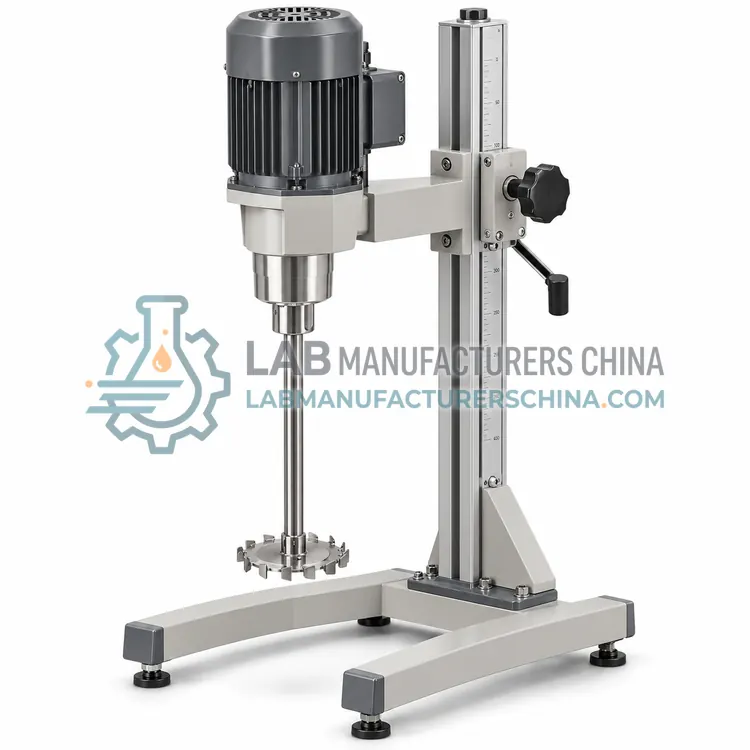
A high-shear mixer rotates a rotor at high tip speed, commonly 10 to 40 m/s, inside or next to a fixed stator. Fluid is drawn axially into the rotor, accelerated outward, and forced through the narrow gap between rotor and stator, typically 0.2 to 1 mm, and through slots or holes in the stator. In the gap the fluid experiences very high shear rates, often above 20,000 s⁻¹, plus turbulence and cavitation, which break droplets and particles and wet powders. Disperser-type heads use a toothed or saw-tooth blade in an open vessel. Main components are the motor and drive, the mixing head with interchangeable generators, a shaft with seals, a vessel or inline housing, and speed control. Results depend on tip speed, gap, generator geometry, viscosity and batch time.
What are the key features?
- Suction inlet draws powder below the liquid surface
- Prevents lumps when dissolving gums and polymers
- Induction rate of 1–50 kg/min depending on size
- Hopper, hose and valve options for controlled feeding
- Open or closed vessel with vacuum-assisted feeding
- Reduces dust exposure compared with surface addition
What are the technical specifications?
A typical powder-induction high-shear mixer configuration offers batch volume of 5–500 L, rotor speed of 3,000–12,000 rpm, induction rate of 1–50 kg/min, motor power of 1.5–15 kW, viscosity range of Up to 20,000 mPa·s and powder feed of Hopper with valve or hose. Values are indicative of the product class; the exact figures for each configuration are confirmed on the quotation and the calibration documents supplied with the instrument.
Which applications is it used for?
The Powder-Induction High-Shear Mixer is used in hydrocolloid and gum dissolution, starch and protein dispersion, polymer solutions, pigment and filler addition and beverage and food ingredient mixing. Across the wider High-Shear Mixers class, laboratories also deploy it for emulsion and cream preparation, pigment and filler dispersion and pharmaceutical suspension development.
Which standards and certifications apply?
Relevant standards and methods include IEC 61010-1, EN ISO 12100, ISO 13320, ASTM E2651 and GB 4793.1. Certification candidates for this model are CE, RoHS and ISO 9001 manufacturing; each is to be confirmed for the specific configuration before shipment, and certificates are supplied only where they have been issued.
Secure the mixer on a stable stand or clamp and keep the head fully immersed before start-up to avoid air entrainment and dry running of the seal. Use guards and emergency stops, and never operate with loose hair or clothing near the shaft. Keep the gap between rotor and stator clean, since worn generators lose shear efficiency and should be inspected regularly. Flush or clean-in-place between batches to avoid cross-contamination. Control temperature, since shear heats the product, and use jacketed vessels or cooling where needed. Sanitary seals and polished surfaces are important for pharmaceutical and food work. Comply with IEC 61010-1 and machinery safety standards, and record speed, time and temperature for batch documentation.
How do I select the right Powder-Induction High-Shear Mixer?
Choose the powder-induction design when dissolving hydrocolloids, polymers or other powders that tend to form lumps or dust. A plain batch mixer is sufficient for liquid-only work. In the RFQ, specify powder type, induction rate, batch volume, viscosity and dust control needs.
How does it compare with other High-Shear Mixers variants?
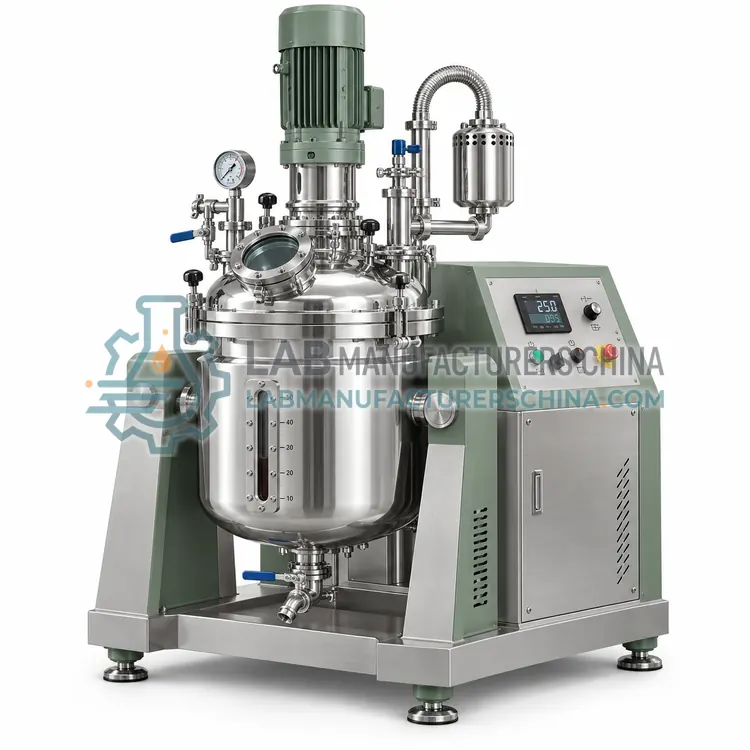
Select a high-shear mixer by batch size, viscosity, target particle or droplet size and process type. Batch rotor-stator mixers suit volumes from 0.1 to 100 L and offer interchangeable generator heads. Inline models process continuous or recirculated flow and give narrower size distributions. Vacuum emulsifiers combine shear with degassing and heating for cosmetics and ointments. Dispersers suit pigment and filler wetting in coatings and inks. Powder-induction designs draw powders into the liquid to prevent lumps. Check tip speed, motor power, generator options such as coarse, medium and fine slots, and materials of construction such as 316L stainless steel. Consider cleanability, sanitary design and seals if the products are pharmaceutical or food grade. Verify noise levels and safety guarding, and ask for trials if particle size specifications are critical.
Full specifications
| Batch volume | 5–500 L |
|---|---|
| Rotor speed | 3,000–12,000 rpm |
| Induction rate | 1–50 kg/min |
| Motor power | 1.5–15 kW |
| Viscosity range | Up to 20,000 mPa·s |
| Powder feed | Hopper with valve or hose |
| Vessel type | Open or closed, with optional vacuum |
| Material | Stainless steel 316L |
| Dust control | Closed feeding, optional extraction |
| Speed control | Variable-frequency drive |
| Power supply | 380 V three-phase |
Indicative values for this product class. Final specifications are confirmed on the quotation and in the calibration documents supplied with the instrument.
Applications
- Hydrocolloid and gum dissolution
- Starch and protein dispersion
- Polymer solutions
- Pigment and filler addition
- Beverage and food ingredient mixing
Key features
- Suction inlet draws powder below the liquid surface
- Prevents lumps when dissolving gums and polymers
- Induction rate of 1–50 kg/min depending on size
- Hopper, hose and valve options for controlled feeding
- Open or closed vessel with vacuum-assisted feeding
- Reduces dust exposure compared with surface addition
Frequently asked questions about Powder-Induction High-Shear Mixer
The rotating head creates a suction at the inlet that pulls powder into the liquid at the shear zone. Each particle is wetted individually, which prevents lumps from forming on the surface.
Hydrocolloids and sticky powders are the main application, but very fine or cohesive powders may need a vibratory feeder or controlled addition rate to avoid blocking the inlet.
Yes, because powder enters below the surface through a closed path, dust exposure is lower than when powder is poured into the vessel. Add extraction at the hopper for the best control.
A high-shear mixer applies intense mechanical shear with a rotor-stator or disperser head to reduce droplet and particle size. It is used in pharmaceutical, cosmetic, food, chemical and coating laboratories to make emulsions, suspensions and dispersions.
A high-shear mixer uses a rotor-stator at atmospheric pressure, while a high-pressure homogenizer forces fluid through a valve at hundreds of bar. Homogenizers reach finer droplet sizes but are more complex.
Laboratory models run at 3,000 to 26,000 rpm, giving tip speeds up to about 40 m/s. Dispersers run at lower speeds, 500 to 6,000 rpm, with larger discs.
Related models