Planetary Centrifugal Mixer
行星离心混合器
- SKU PLM-0001
- Planetary Mixers
- CE (to be confirmed)
- RoHS (to be confirmed)
- ISO 9001 manufacturing (to be confirmed)
Price on request — FOB / CIF quoted per order
Prices depend on configuration, quantity and destination port.
Key specifications
| Orbital speed | 400–2,500 rpm |
|---|---|
| Rotation ratio | Fixed, reverse direction |
| Container capacity | 10 g–2 kg |
| Mixing time | 30 s–10 min per cycle |
| Centrifugal acceleration | Up to about 500 G |
| Viscosity range | Up to 1,000,000 mPa·s |
Request a quote Download brochure · to be provided
By Lab Manufacturers China Technical TeamLast reviewed Standards: IEC 61010-1, EN ISO 12100, ISO 3219
What is the Planetary Centrifugal Mixer?
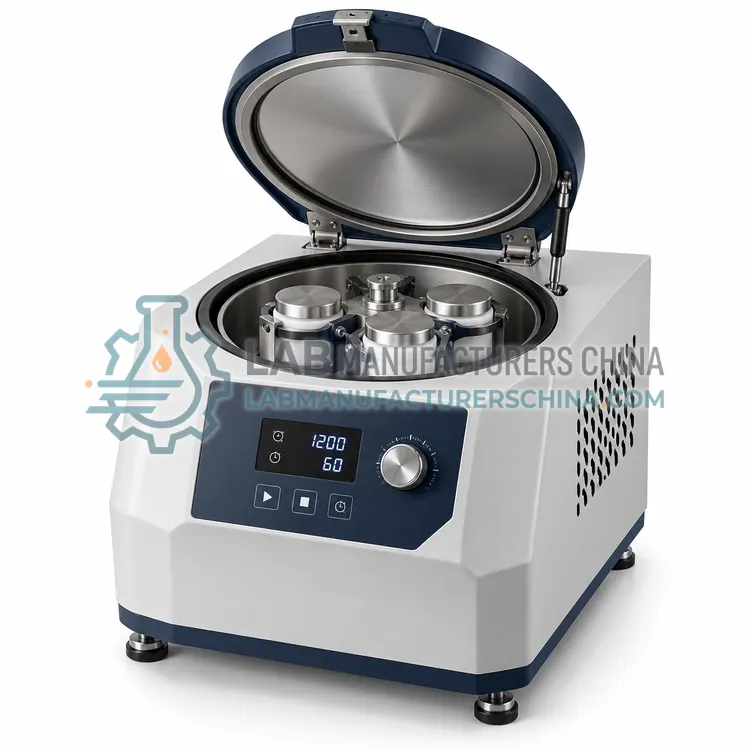
A planetary centrifugal mixer spins a sealed container on an orbiting arm while rotating it in the opposite direction, mixing and degassing in seconds to minutes without blades. It suits small-batch, high-viscosity formulations of pastes, resins and slurries.
What is the Planetary Centrifugal Mixer?
A planetary centrifugal mixer spins a sealed container on an orbiting arm while rotating it in the opposite direction, mixing and degassing in seconds to minutes without blades. It suits small-batch, high-viscosity formulations of pastes, resins and slurries.
Overview
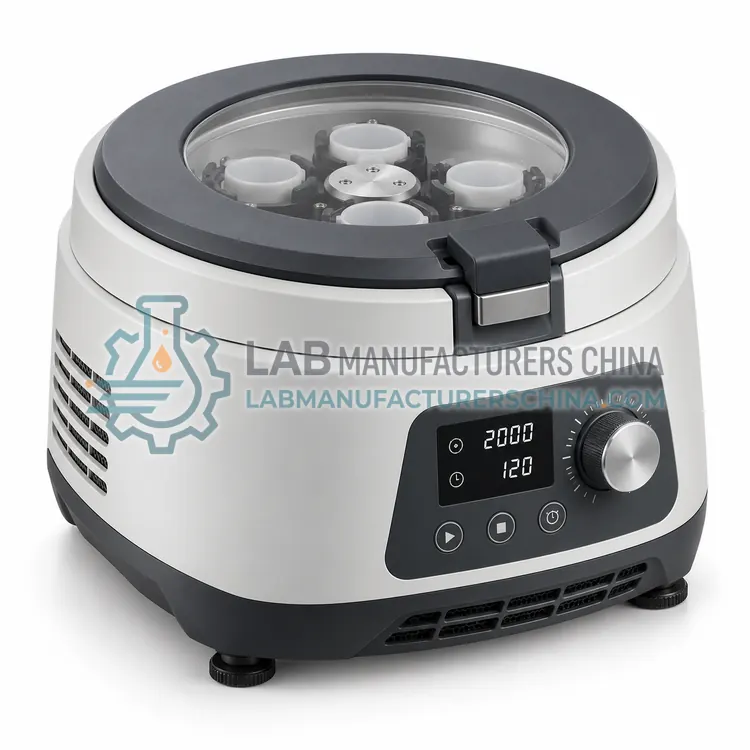
The planetary centrifugal mixer uses a container holder on an arm, which orbits at 400 to 2,500 rpm while the holder spins at a fixed ratio in the opposite direction. The combined motion generates strong centrifugal acceleration, often 300 to 500 G, that mixes components and drives out air bubbles simultaneously. Container capacity ranges from about 10 g to 2 kg, with disposable or reusable cups. Mixing cycles take 30 seconds to 10 minutes, and programs store orbit speed, rotation speed, time and ramp. No blade contacts the material, so cross-contamination and cleaning are minimal. Models are benchtop, weigh 30 to 120 kg and must be balanced precisely. The technology is well suited to epoxy, silicone, conductive pastes, dental materials and small battery slurry batches. It is less suited to large volumes or materials with large particulates that separate under centrifugal force.
How does it work?
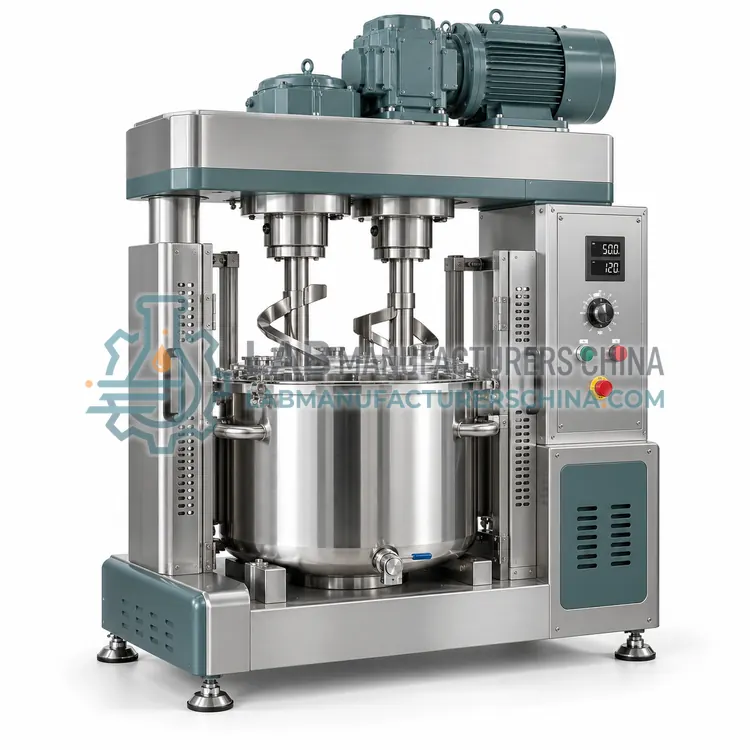
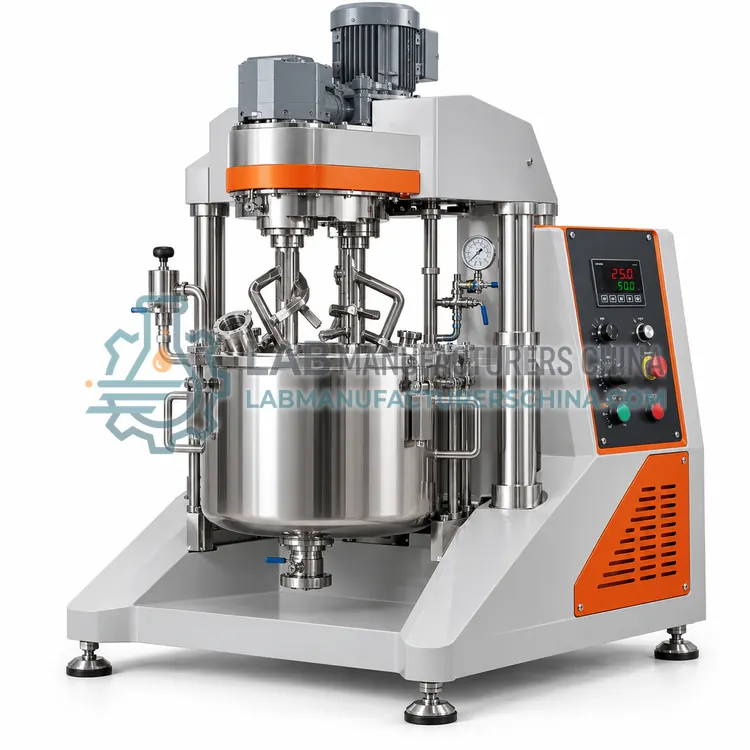
A planetary mixer moves the mixing element in a planetary pattern: it rotates about its own axis while also orbiting around the vessel center, like a planet around the sun. In double planetary mixers, two blades orbit and rotate inside a stationary bowl, sweeping the full volume and wall, which gives thorough blending of high-viscosity materials up to several hundred thousand mPa·s. In planetary centrifugal mixers, a sealed container is spun on an orbital arm while also rotating in the opposite direction, so centrifugal force mixes and removes air without a blade. Vacuum options lower pressure to remove entrapped bubbles. Key components include the drive motor and gearbox, the blades or container holder, a bowl with optional jacket, a lid, speed control and, where fitted, a vacuum pump and heating or cooling system.
What are the key features?
- Bladeless mixing and degassing in a single sealed-container cycle
- Orbital speed up to about 2,500 rpm with reverse rotation
- Program memory for speed, time and ramp of each recipe
- Container sizes from 10 g cups to 2 kg vessels
- Automatic imbalance detection to protect bearings
- Minimal cleaning because no blade touches the material
What are the technical specifications?
A typical planetary centrifugal mixer configuration offers orbital speed of 400–2,500 rpm, rotation ratio of Fixed, reverse direction, container capacity of 10 g–2 kg, mixing time of 30 s–10 min per cycle, centrifugal acceleration of Up to about 500 G and viscosity range of Up to 1,000,000 mPa·s. Values are indicative of the product class; the exact figures for each configuration are confirmed on the quotation and the calibration documents supplied with the instrument.
Which applications is it used for?
The Planetary Centrifugal Mixer is used in epoxy and silicone mixing, conductive paste preparation, small-batch battery slurries, dental and medical materials and adhesive degassing. Across the wider Planetary Mixers class, laboratories also deploy it for lithium-ion battery slurry preparation, adhesive and sealant mixing and cosmetic cream and gel formulation.
Which standards and certifications apply?
Relevant standards and methods include IEC 61010-1, EN ISO 12100, ISO 3219, ASTM D2196 and GB/T 15706. Certification candidates for this model are CE, RoHS and ISO 9001 manufacturing; each is to be confirmed for the specific configuration before shipment, and certificates are supplied only where they have been issued.
Install the mixer on a rigid, level floor or bench sized for its weight and vibration. Verify power supply and cooling water or compressed air needs before delivery. Balance containers precisely in planetary centrifugal models, because imbalance causes vibration and bearing wear. Inspect seals and O-rings on vacuum models and clean blades, bowl and lid between batches to avoid cross-contamination. Use materials compatible with solvents, acids or abrasive fillers. Fit guards and interlocks that stop the drive when the lid or safety cover is opened, in line with IEC 61010-1 and machinery safety practice. Keep a maintenance log for gearbox oil, seals and calibration of speed and temperature sensors.
How do I select the right Planetary Centrifugal Mixer?
Choose a planetary centrifugal mixer for batches under about 2 kg where fast, clean, bladeless mixing and degassing are needed. For larger batches or shear-sensitive fillers, a double planetary mixer is better. In the RFQ, state batch size, viscosity range, container type and whether vacuum is required.
How does it compare with other Planetary Mixers variants?
Start with the viscosity range and batch size. Planetary centrifugal mixers handle small batches from a few grams to about 2 kg and are quick, with no blade to clean and minimal contamination. Double planetary mixers handle working volumes from 1 L to 100 L or more and are preferred for very high viscosity pastes and slurries. Decide whether vacuum is required for degassing, for example in battery electrodes, silicone and epoxy. Specify heating or cooling needs through a jacketed bowl, plus material compatibility such as stainless steel 316L or ceramic coatings. Check speed range, torque and whether variable orbit and rotation ratios are available. For regulated products, consider cleanability, contact materials and documentation. Safety interlocks and explosion-proof options matter where flammable solvents are used.
Full specifications
| Orbital speed | 400–2,500 rpm |
|---|---|
| Rotation ratio | Fixed, reverse direction |
| Container capacity | 10 g–2 kg |
| Mixing time | 30 s–10 min per cycle |
| Centrifugal acceleration | Up to about 500 G |
| Viscosity range | Up to 1,000,000 mPa·s |
| Program memory | Up to 50 programs |
| Imbalance detection | Automatic stop |
| Motor power | 0.75–3 kW |
| Power supply | 200–240 V, 50/60 Hz |
| Weight | 30–120 kg |
Indicative values for this product class. Final specifications are confirmed on the quotation and in the calibration documents supplied with the instrument.
Applications
- Epoxy and silicone mixing
- Conductive paste preparation
- Small-batch battery slurries
- Dental and medical materials
- Adhesive degassing
Key features
- Bladeless mixing and degassing in a single sealed-container cycle
- Orbital speed up to about 2,500 rpm with reverse rotation
- Program memory for speed, time and ramp of each recipe
- Container sizes from 10 g cups to 2 kg vessels
- Automatic imbalance detection to protect bearings
- Minimal cleaning because no blade touches the material
Frequently asked questions about Planetary Centrifugal Mixer
The strong centrifugal acceleration pushes denser material outward and forces lighter air bubbles toward the center and out of the material. The effect is faster than stirring and does not add air.
Materials with large or dense particles may separate under high G-force. Use lower speeds and test the recipe, or choose a double planetary mixer for abrasive or coarse fillers.
Yes, containers must be rated for the speed and fit the holder tightly. Use the supplier's recommended cups and do not exceed the stated fill volume to prevent leaks and imbalance.
A planetary mixer moves blades or containers on two axes at once, rotating and orbiting, to blend viscous materials. It is used in battery, coatings, adhesives, cosmetics and pharmaceutical laboratories to prepare pastes, slurries and gels.
A planetary centrifugal mixer spins a sealed container with no blade and handles grams to 2 kg quickly. A double planetary mixer uses two blades in a fixed bowl and handles 1 to 100 L of very viscous material.
Vacuum is needed when entrapped air or volatiles must be removed to avoid voids, for example in battery slurries, silicone, epoxy and optical resins. Without vacuum, bubbles may remain in the final product.