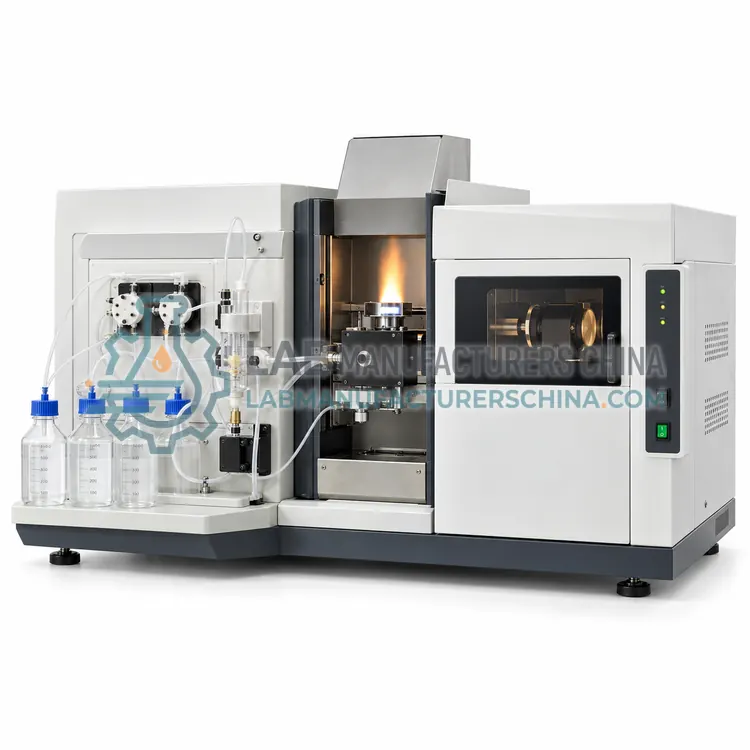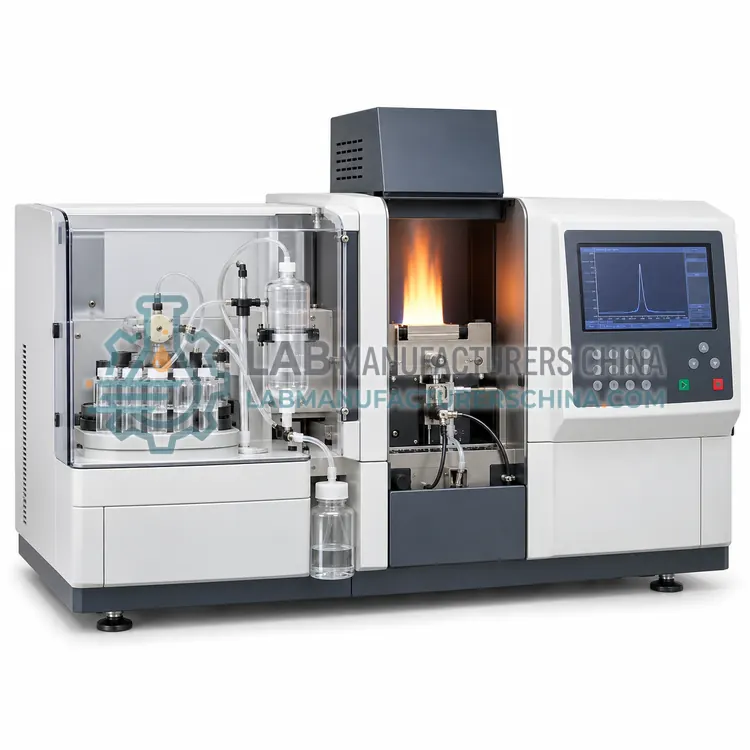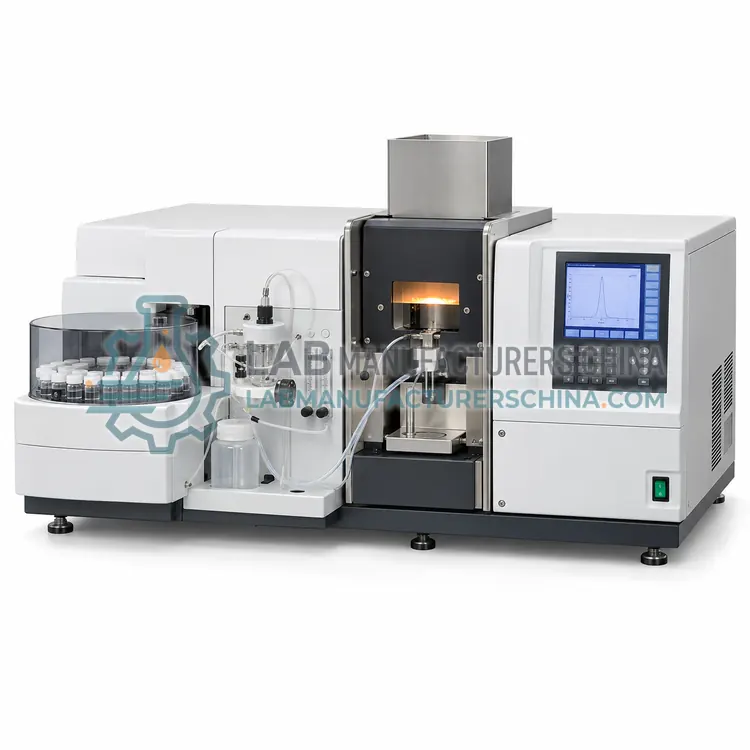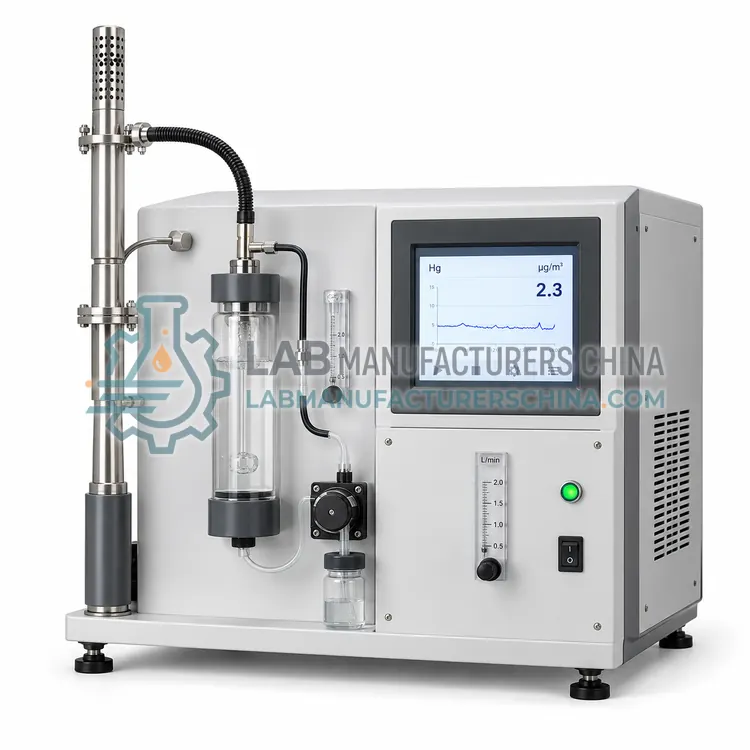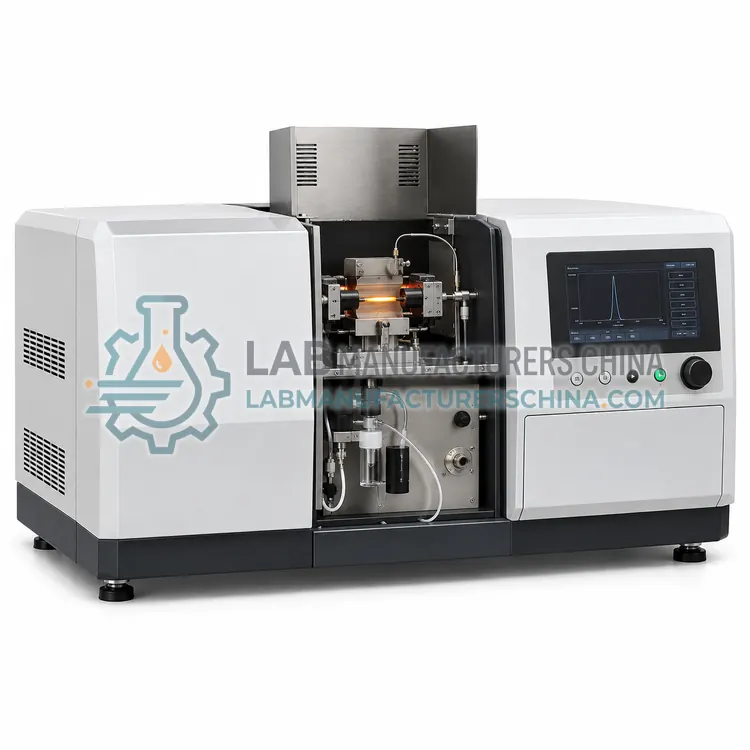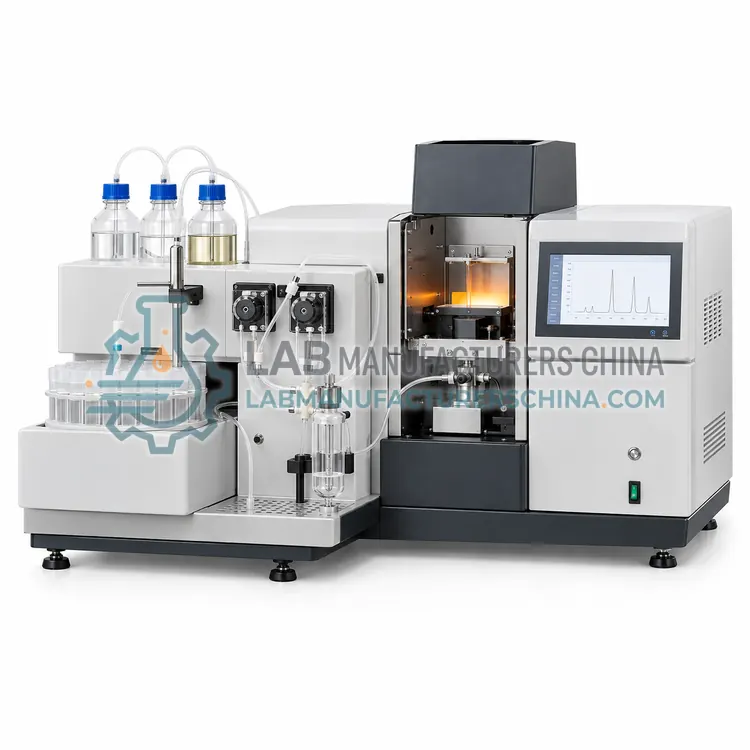
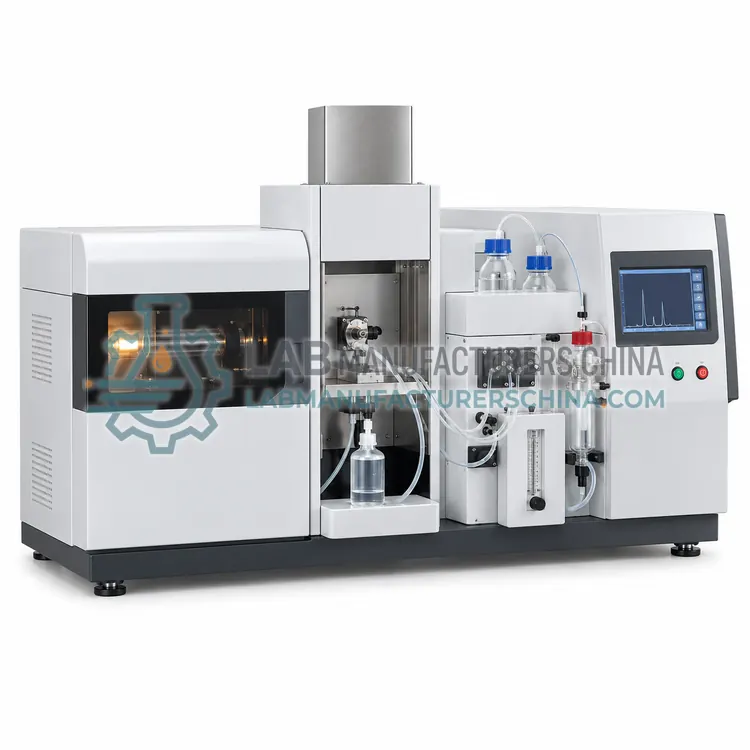
Hydride Generation AAS with Cold Vapor Mercury Module
带冷原子汞模块的氢化物发生原子吸收光谱仪
- SKU HGA-0004
- Hydride Generation AAS
- CE (to be confirmed)
- ISO 9001 manufacturing (to be confirmed)
- IEC 61010-1 safety compliance (to be confirmed)
Price on request — FOB / CIF quoted per order
Prices depend on configuration, quantity and destination port.
Key specifications
| Elements | As, Se, Sb, Bi, Sn, Hg |
|---|---|
| Mercury detection limit | 0.01–0.1 µg/L |
| Hydride detection limit | 0.05–0.5 µg/L |
| Mercury reductant | tin chloride or borohydride |
| Hydride reductant | 0.5–2% sodium borohydride |
| Absorption cell | quartz, ambient or heated |
Request a quote Download brochure · to be provided
By Lab Manufacturers China Technical TeamLast reviewed Standards: Ph. Eur. 2.2.22 Atomic absorption spectrometry, USP <852> Atomic Absorption Spectroscopy, ISO 11969 Water quality — Determination of arsenic by AAS
What is the Hydride Generation AAS with Cold Vapor Mercury Module?
This system combines hydride generation for arsenic, selenium and related elements with a cold vapor module for mercury. It is chosen by laboratories that must measure both mercury and hydride-forming elements on one instrument.
What is the Hydride Generation AAS with Cold Vapor Mercury Module?
This system combines hydride generation for arsenic, selenium and related elements with a cold vapor module for mercury. It is chosen by laboratories that must measure both mercury and hydride-forming elements on one instrument.
Overview
The hydride manifold generates volatile hydrides for arsenic, selenium, antimony, bismuth and tin, while the cold vapor mode reduces mercury to elemental vapor with tin chloride or sodium borohydride and sweeps it into an unheated or lightly heated absorption cell. The two modes share the carrier gas supply, gas-liquid separator and quartz cell, with reagents and sometimes plumbing changed between them. Software stores separate methods and calibration for each mode, and switching is scheduled to avoid cross-contamination. Mercury detection limits reach 0.01 to 0.1 micrograms per litre, comparable to dedicated mercury analyzers, while hydride elements retain their usual performance. This combined capability is common in environmental, food and geological laboratories that monitor mercury alongside arsenic and selenium.
How does it work?
The sample is mixed with acid and sodium borohydride, which reduces the analyte to a volatile covalent hydride such as arsine or selenide. A carrier gas sweeps the hydride into a heated quartz tube or a small flame, where it decomposes into free atoms. The atoms absorb light from an element-specific hollow-cathode lamp, and absorbance follows the Beer-Lambert law. Because the hydride is separated from the liquid matrix before atomization, most interferents remain behind, which gives high sensitivity and low background. Mercury can be determined by cold vapor generation without heating because it is already volatile. Reaction conditions such as acid type and concentration, borohydride concentration, flow rates and reaction temperature must be tightly controlled, and interfering ions such as copper and nickel are masked or removed. Calibration uses aqueous standards treated in the same way as samples.
What are the key features?
- Hydride generation for As, Se, Sb, Bi and Sn
- Cold vapor mode for mercury
- Shared gas-liquid separator and quartz cell
- Separate methods and calibration per mode
- Scheduled changeover to avoid contamination
- Mercury detection limits down to 0.01 µg/L
What are the technical specifications?
A typical hydride generation aas with cold vapor mercury module configuration offers elements of As, Se, Sb, Bi, Sn, Hg, mercury detection limit of 0.01–0.1 µg/L, hydride detection limit of 0.05–0.5 µg/L, mercury reductant of tin chloride or borohydride, hydride reductant of 0.5–2% sodium borohydride and absorption cell of quartz, ambient or heated. Values are indicative of the product class; the exact figures for each configuration are confirmed on the quotation and the calibration documents supplied with the instrument.
Which applications is it used for?
The Hydride Generation AAS with Cold Vapor Mercury Module is used in mercury and arsenic in fish and seafood, mercury, arsenic and selenium in water, mercury in soil and sediment surveys and food and geological multi-element trace programs. Across the wider Hydride Generation AAS class, laboratories also deploy it for arsenic and selenium in drinking water, arsenic and mercury in rice, fish and seafood and antimony and tin in packaging material migration.
Which standards and certifications apply?
Relevant standards and methods include Ph. Eur. 2.2.22 Atomic absorption spectrometry, USP <852> Atomic Absorption Spectroscopy, ISO 11969 Water quality — Determination of arsenic by AAS, US EPA Method 7062 Arsenic by hydride generation, US EPA Method 7473 Mercury in solids and solutions and IEC 61010-1. Certification candidates for this model are CE, ISO 9001 manufacturing and IEC 61010-1 safety compliance; each is to be confirmed for the specific configuration before shipment, and certificates are supplied only where they have been issued.
Hydride generation uses sodium borohydride solutions that must be prepared fresh or kept cooled, and reactions can release hydrogen gas, so ventilation is required. Acid and reductant concentrations, tubing lengths and gas flows affect the yield and must be fixed in the method. Interfering elements are controlled with masking agents such as thiourea or by separation. Quartz cells cloud with use and need periodic cleaning or replacement, and their temperature affects atomization efficiency. Because the technique measures a transient or steady signal from a gas, blank contamination from reagents is a common problem; ultrapure reagents and method blanks are essential. Install the system on the flame or furnace instrument with the correct gas supply and waste handling.
How do I select the right Hydride Generation AAS with Cold Vapor Mercury Module?
Select this combined system when mercury and hydride-forming elements are both required and instrument budget or bench space favors one platform. Specify the element list, detection limits and expected sample numbers. Plan for mode changeover and separate quality control, since cross-contamination between mercury and hydride manifolds must be excluded.
How does it compare with other Hydride Generation AAS variants?
Choose a hydride generation system when the target elements are arsenic, selenium, antimony, bismuth, tin, tellurium or mercury and detection limits around 0.01 to 0.5 micrograms per litre are required at moderate cost. Continuous-flow designs offer stable signals and good throughput, flow-injection designs use less reagent and allow fast transient measurements, and batch systems are cheapest but slowest. If mercury is also required, add a cold vapor module or select an instrument with both modes. Multi-element configurations reduce time when several hydride-forming elements are measured together. For very low detection limits on arsenic and selenium, compare with ICP-MS, which may offer lower limits at higher cost.
Full specifications
| Elements | As, Se, Sb, Bi, Sn, Hg |
|---|---|
| Mercury detection limit | 0.01–0.1 µg/L |
| Hydride detection limit | 0.05–0.5 µg/L |
| Mercury reductant | tin chloride or borohydride |
| Hydride reductant | 0.5–2% sodium borohydride |
| Absorption cell | quartz, ambient or heated |
| Carrier gas | argon, 200–400 mL/min |
| Changeover time | 10–30 min |
| Measurement time | 30–60 s per sample |
| Interface | USB / RS-232 |
Indicative values for this product class. Final specifications are confirmed on the quotation and in the calibration documents supplied with the instrument.
Applications
- Mercury and arsenic in fish and seafood
- Mercury, arsenic and selenium in water
- Mercury in soil and sediment surveys
- Food and geological multi-element trace programs
Key features
- Hydride generation for As, Se, Sb, Bi and Sn
- Cold vapor mode for mercury
- Shared gas-liquid separator and quartz cell
- Separate methods and calibration per mode
- Scheduled changeover to avoid contamination
- Mercury detection limits down to 0.01 µg/L
Frequently asked questions about Hydride Generation AAS with Cold Vapor Mercury Module
No, mercury is already atomic after reduction, so the vapor is measured in an unheated or slightly warmed cell of sufficient path length. Heating the cell would not improve sensitivity and could cause baseline instability. Atomic fluorescence detection is also used for the same cold vapor.
The manifold is flushed with acid and blank solution during changeover, and dedicated reagent lines are used for mercury and hydride chemistry where possible. A blank and standard are run after switching. Where contamination risk is high, some laboratories keep separate instruments for mercury and hydride elements.
Tin chloride reduces mercury to elemental vapor in acidic solution and is the classic reagent. Sodium borohydride also works and is convenient when the same manifold serves hydride generation, but it can generate more hydrogen gas. Reagent choice affects sensitivity and interferences and is fixed in the method.
The technique suits elements that form volatile covalent hydrides with sodium borohydride: arsenic, selenium, antimony, bismuth, tin and tellurium. Mercury is measured by cold vapor generation using a reduction step instead. Other elements require flame, graphite furnace or plasma techniques because they do not form suitable hydrides.
The volatile hydride is separated from the liquid matrix in a gas-liquid separator, so most matrix components never reach the atomizer. This removes spectral and chemical interferences from the bulk sample and lowers background. Interferents that also form volatile species, or that suppress the reaction, still need masking or removal.
Sodium borohydride hydrolyzes in water and loses reducing power over time, which reduces hydride yield and sensitivity. Stabilized alkaline solutions are used to slow decomposition, and some laboratories prepare fresh daily or keep the reagent cooled. A reagent blank and standard check confirm that the reductant is still active.