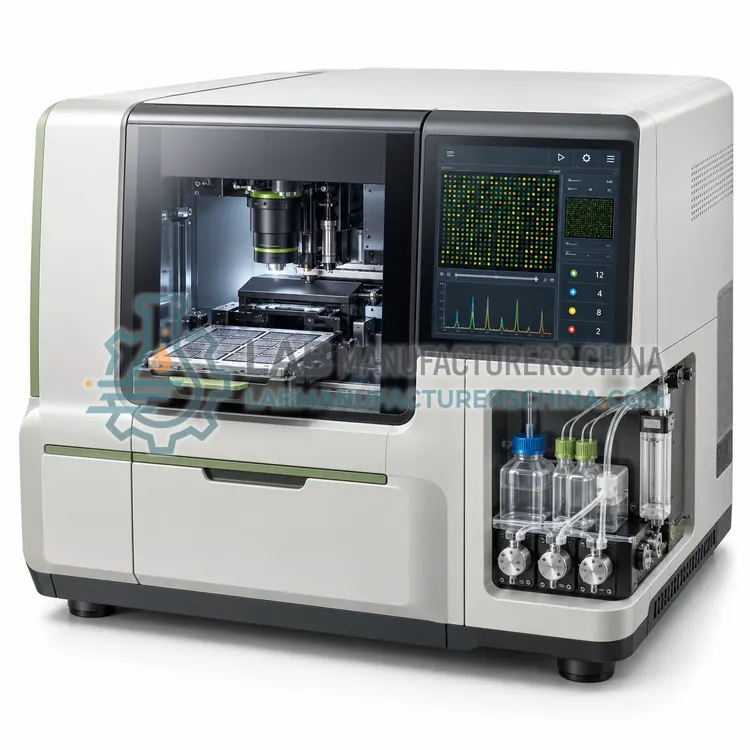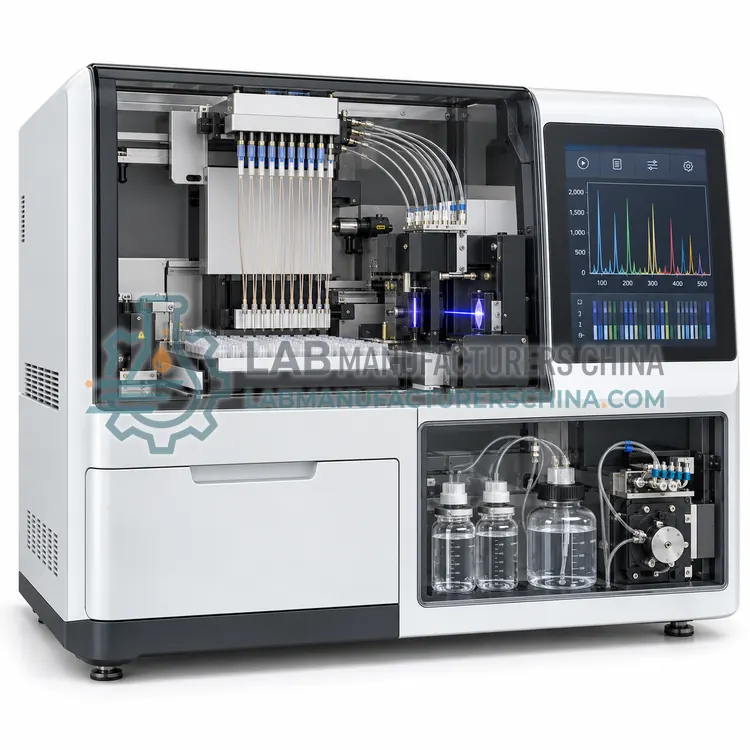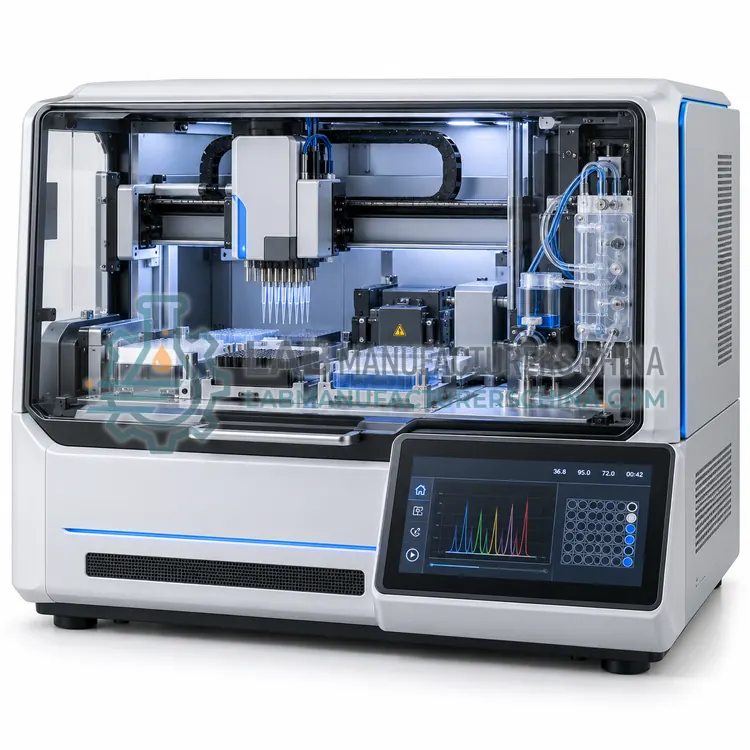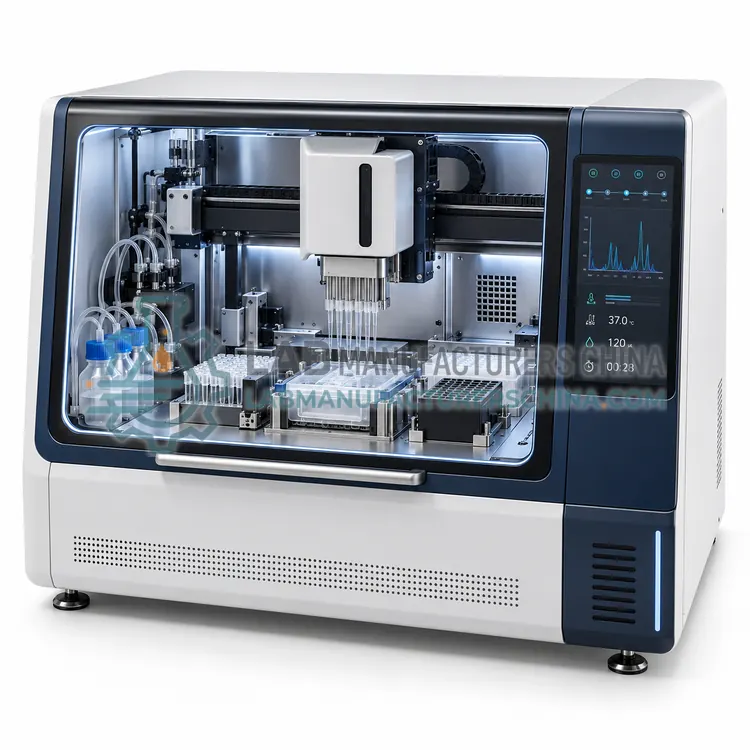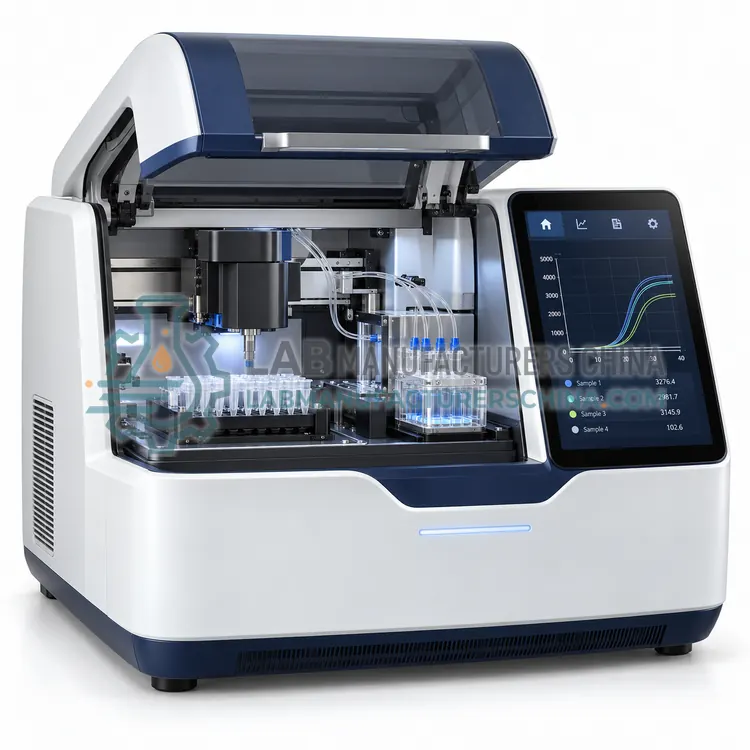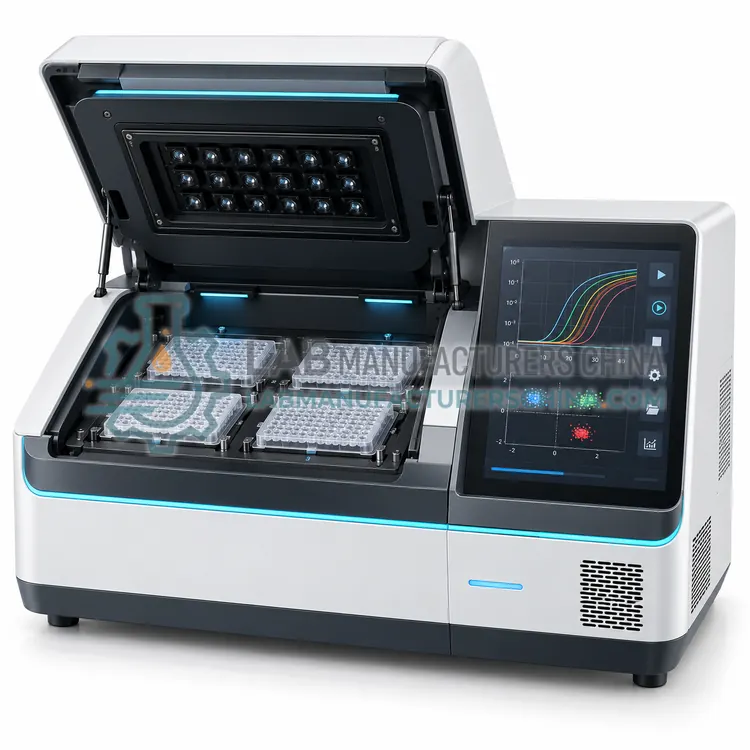
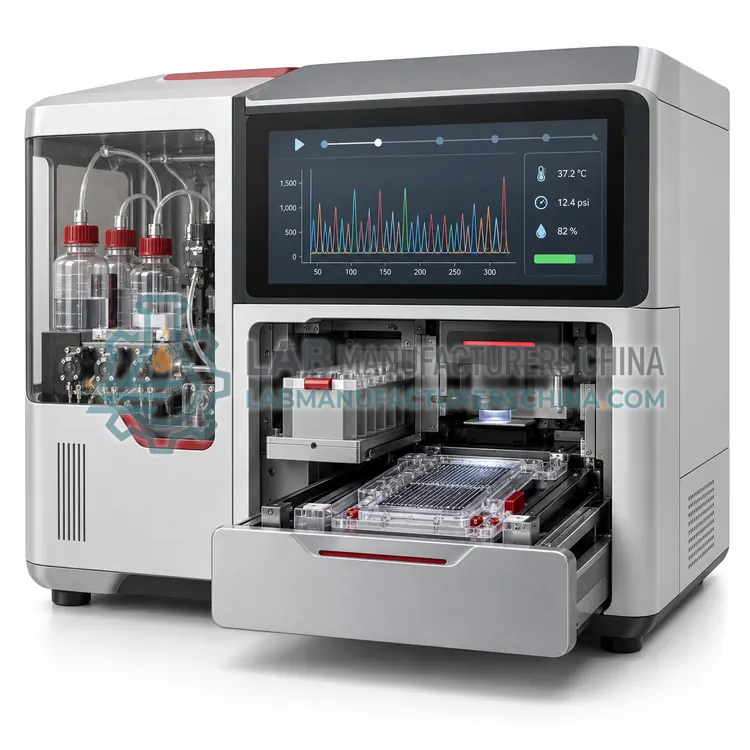
Targeted Sequencing Genotyping System
靶向测序基因分型系统
- SKU GES-0004
- Genotyping Systems
- CE (to be confirmed)
- ISO 9001 manufacturing (to be confirmed)
- IEC 61010-1 safety (to be confirmed)
- ISO 15189 (to be confirmed)
Price on request — FOB / CIF quoted per order
Prices depend on configuration, quantity and destination port.
Key specifications
| Target loci per panel | 50–5,000 |
|---|---|
| Coverage depth | 100–1,000x per locus |
| Samples per flow cell | dozens to hundreds with indexing |
| Read length | 150–300 bp paired end |
| DNA input | 10–100 ng |
| Variant detection limit | approx. 1–5% allele fraction (depth dependent) |
Request a quote Download brochure · to be provided
By Lab Manufacturers China Technical TeamLast reviewed Standards: ISO 20395, ISO 15189, CLSI MM01
What is the Targeted Sequencing Genotyping System?
A targeted sequencing genotyping system reads defined genomic regions at high depth and scores variants from the alignment, covering thousands of loci per sample while also revealing unexpected variants and low-frequency alleles that probe-based methods cannot detect.
What is the Targeted Sequencing Genotyping System?
A targeted sequencing genotyping system reads defined genomic regions at high depth and scores variants from the alignment, covering thousands of loci per sample while also revealing unexpected variants and low-frequency alleles that probe-based methods cannot detect.
Overview
The workflow amplifies or captures defined regions with pooled primers or hybridisation probes, attaches indexes by PCR, and sequences the amplicons on a benchtop short-read instrument. Software aligns reads, scores variants at the target positions and reports coverage depth per locus, so genotype confidence is documented rather than assumed. Panels typically cover 50 to several thousand loci with 100–1,000x depth per position, and reduced coverage requirements allow dozens to hundreds of samples per flow cell. The same data can reveal copy number changes, unexpected variants and low-frequency alleles below 1%, which distinguishes this approach from allele-specific PCR and arrays. Turnaround is one to three days including library preparation, and the main labour is in primer or probe panel design, sample pooling and bioinformatics settings that must be fixed before routine use.
How does it work?
Genotyping always compares a measured signal with a known allele pattern. Allele-specific real-time PCR uses two probes labelled with different fluorophores that match each allele, and the ratio of signal from the two channels, plotted against a reference, classifies the sample as homozygous, heterozygous or no call. SNP arrays work by hybridising fragmented, amplified DNA to immobilised probes and reading fluorescence intensity for each allele. Capillary fragment analysis amplifies short tandem repeats or microsatellites and sizes the products, so allele lengths are scored from the electropherogram. Targeted sequencing reads the variant positions directly, which allows discovery of unexpected variants and detection of low-frequency alleles. Across all methods, the quality metrics of cluster separation or coverage depth determine which calls are accepted, and laboratories usually include positive and negative controls in each batch.
What are the key features?
- Panels of 50 to several thousand target loci
- Coverage depth of 100–1,000x per position
- Variant calling with documented per-locus depth and quality
- Detection of unexpected variants and low-frequency alleles
- Indexed multiplexing of dozens to hundreds of samples
- Integrated copy number and variant reporting
What are the technical specifications?
A typical targeted sequencing genotyping system configuration offers target loci per panel of 50–5,000, coverage depth of 100–1,000x per locus, samples per flow cell of dozens to hundreds with indexing, read length of 150–300 bp paired end, DNA input of 10–100 ng and variant detection limit of approx. 1–5% allele fraction (depth dependent). Values are indicative of the product class; the exact figures for each configuration are confirmed on the quotation and the calibration documents supplied with the instrument.
Which applications is it used for?
The Targeted Sequencing Genotyping System is used in clinical gene panel testing, agrigenomic trait and pedigree panels, antimicrobial resistance marker screening and cell line and sample identity checks. Across the wider Genotyping Systems class, laboratories also deploy it for clinical variant and pharmacogenomic testing, crop and livestock marker-assisted selection and cell line authentication and STR profiling.
Which standards and certifications apply?
Relevant standards and methods include ISO 20395, ISO 15189, CLSI MM01, ISO 17025 and IEC 61010-1. Certification candidates for this model are CE, ISO 9001 manufacturing, IEC 61010-1 safety and ISO 15189; each is to be confirmed for the specific configuration before shipment, and certificates are supplied only where they have been issued.
Genotyping results depend heavily on DNA quality, so extract samples with a consistent method and check concentration and purity before starting. Real-time PCR genotyping needs validated primers and probes and a thermocycler with calibrated optics; arrays and sequencers need controlled temperature and humidity plus a scanner with consistent gain settings. Run positive controls for each genotype and a no-template control in every batch, and re-run ambiguous calls on an independent method rather than re-reading the same data. Cell line authentication should be repeated whenever a line is re-established or a stock is replaced. In clinical use, genotyping assays fall under ISO 15189 and require documented validation of limit of detection, precision and specificity for each reported genotype.
How do I select the right Targeted Sequencing Genotyping System?
Select targeted sequencing when the panel must cover many loci, when unexpected variants matter, or when alleles occur below the detection limit of probes and arrays. Specify panel content, coverage depth, samples per run, variant detection limit, analysis pipeline and how much validation the supplier provides for your loci.
How does it compare with other Genotyping Systems variants?
Start with the number of variants and samples. If you score a few known markers in many samples, real-time PCR with allele-specific probes gives the lowest cost per data point and a simple workflow. For hundreds of thousands of markers across a population, arrays provide the highest call rate per sample but need a scanner, and custom arrays have long lead times. Capillary fragment analysis remains the reference for short tandem repeat markers in cell line authentication, forensic work and plant breeding. Targeted sequencing suits panels where you want both known and unexpected variants, or where alleles occur at low frequency in mixed samples. Check multiplexing limits, DNA input, turnaround time, analysis software, genotype-calling algorithm transparency and the ability to re-analyse raw data under your own rules.
Full specifications
| Target loci per panel | 50–5,000 |
|---|---|
| Coverage depth | 100–1,000x per locus |
| Samples per flow cell | dozens to hundreds with indexing |
| Read length | 150–300 bp paired end |
| DNA input | 10–100 ng |
| Variant detection limit | approx. 1–5% allele fraction (depth dependent) |
| Turnaround time | approx. 1–3 days |
| Library preparation | Multiplex PCR or hybridisation capture |
| Analysis | On-board or server alignment and variant calling |
| Dimensions (W x D x H) | approx. 600 x 550 x 600 mm (sequencer) |
Indicative values for this product class. Final specifications are confirmed on the quotation and in the calibration documents supplied with the instrument.
Applications
- Clinical gene panel testing
- Agrigenomic trait and pedigree panels
- Antimicrobial resistance marker screening
- Cell line and sample identity checks
Key features
- Panels of 50 to several thousand target loci
- Coverage depth of 100–1,000x per position
- Variant calling with documented per-locus depth and quality
- Detection of unexpected variants and low-frequency alleles
- Indexed multiplexing of dozens to hundreds of samples
- Integrated copy number and variant reporting
Frequently asked questions about Targeted Sequencing Genotyping System
Germline genotype calls usually need 30–100x at the locus, while somatic or mixed samples need 500–1,000x to detect alleles near 1%. Required depth also depends on whether the panel is used for clinical reporting.
Yes. Indexed libraries are pooled so a single flow cell can carry dozens or hundreds of samples, balanced by the required depth. Pooling too many samples reduces per-locus depth and increases no-calls, so calculate expected depth before choosing batch size.
Validate each reported locus for accuracy, precision, limit of detection and analytical specificity against a reference method, and document the bioinformatics pipeline settings and reference genome version. Repeatability studies should include independent DNA extractions and separate runs.
Genotyping determines which alleles a sample carries at selected positions. Uses include clinical diagnosis of inherited conditions, pharmacogenomic guidance, crop and livestock breeding selection, cell line authentication, microbial strain typing and seed variety verification.
Real-time PCR assays typically multiplex 1–6 markers per reaction but can be run in 384-well plates for thousands of data points per day. Arrays score from a few thousand to several million markers per sample, while targeted panels cover tens to thousands of loci.
A no-call is a sample the calling algorithm cannot classify, usually because DNA quality is poor, the signal falls outside cluster boundaries or an unexpected variant affects the probe. Re-extract or re-quantify the sample and repeat, or confirm by sequencing.
Related models