HEPA-Ventilated Garment Cabinet
HEPA 通风洁净服柜
- SKU GCA-0002
- Garment Cabinets
- CE (to be confirmed)
- ISO 9001 manufacturing (to be confirmed)
Price on request — FOB / CIF quoted per order
Prices depend on configuration, quantity and destination port.
Key specifications
| Filter grade | H13 HEPA |
|---|---|
| Internal cleanliness | ISO 5 at rest |
| Airflow | 200–600 m3/h |
| Internal pressure | +5 to +15 Pa |
| Width | 900–1800 mm |
| Capacity | 6–16 hangers |
Request a quote Download brochure · to be provided
By Lab Manufacturers China Technical TeamLast reviewed Standards: ISO 14644-1 (cleanroom classification), ISO 14644-5 (cleanroom operations), EU GMP Annex 1 (sterile manufacturing)
What is the HEPA-Ventilated Garment Cabinet?
A HEPA-ventilated garment cabinet circulates filtered air over stored garments and maintains positive internal pressure. It is used for ISO 6–7 gowning where garments must stay particle-free. It suits ISO 6–7 gowning rooms.
What is the HEPA-Ventilated Garment Cabinet?
A HEPA-ventilated garment cabinet circulates filtered air over stored garments and maintains positive internal pressure. It is used for ISO 6–7 gowning where garments must stay particle-free. It suits ISO 6–7 gowning rooms.
Overview
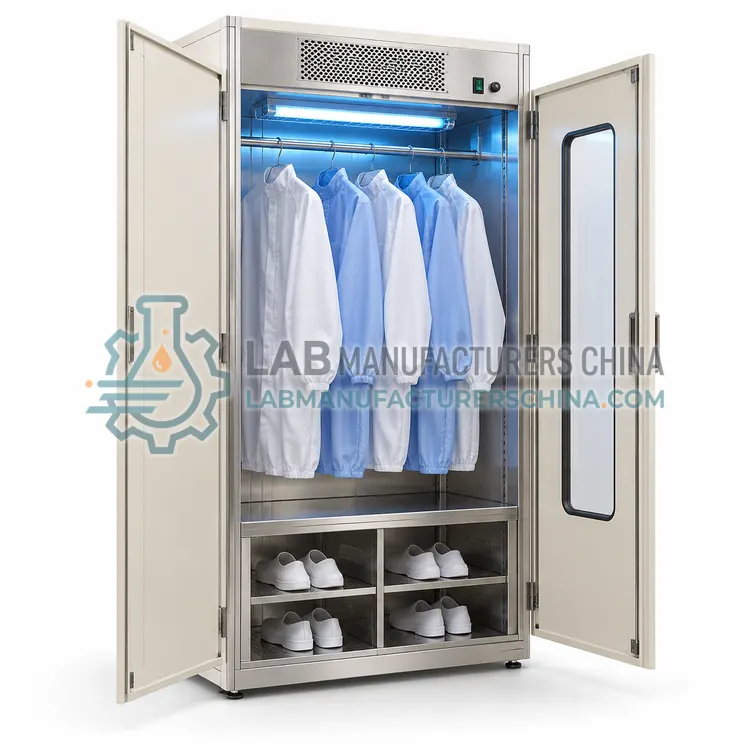
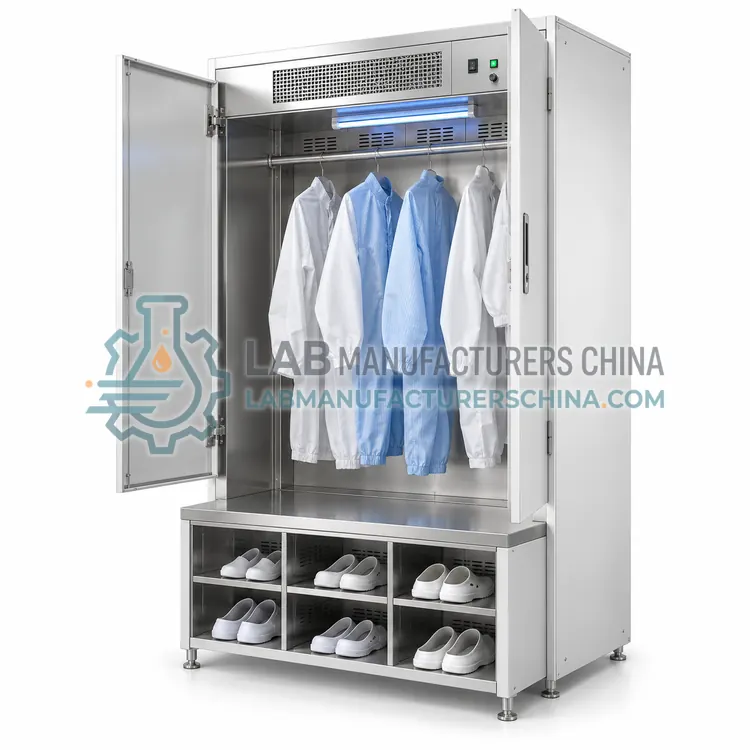
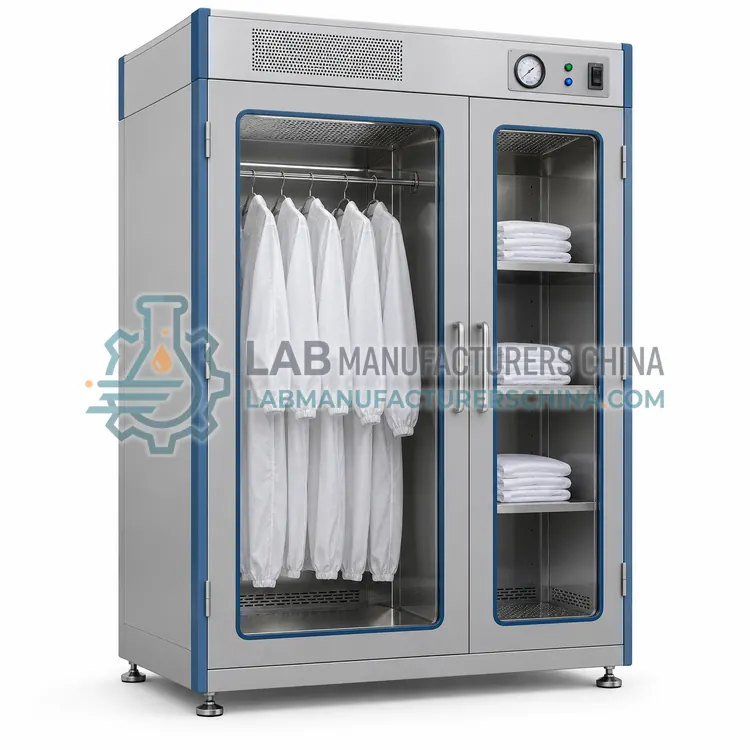
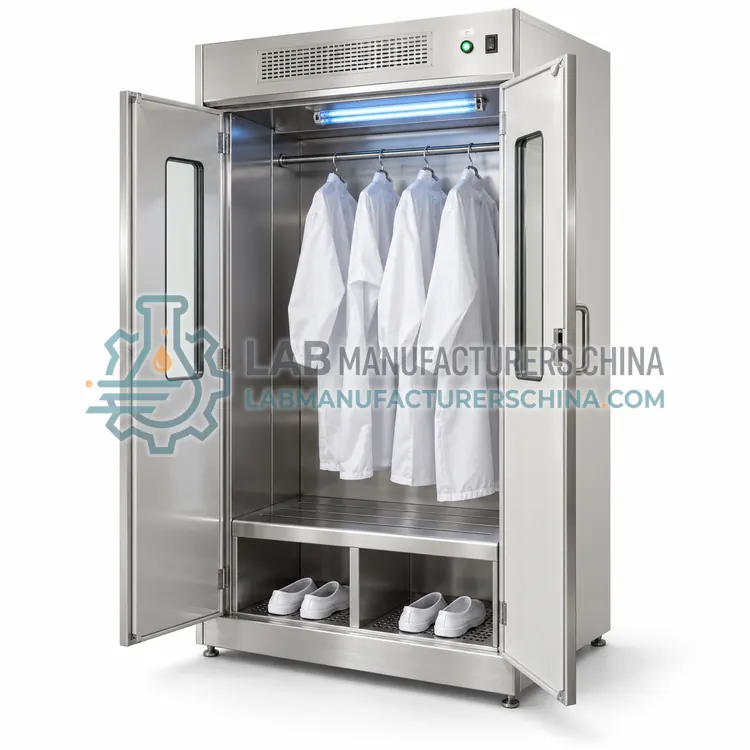
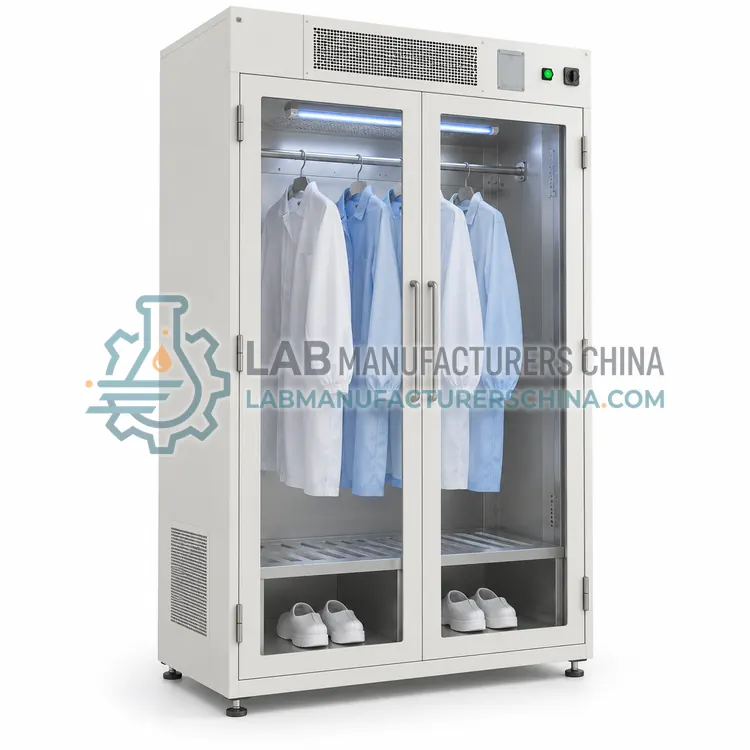
A fan filter unit on top takes room air through a prefilter and H13 HEPA filter and delivers it downward over hanging garments, with air exiting through perforated side or bottom panels. The interior achieves ISO 5 at rest when filters are sound, and positive pressure of about 5–15 Pa prevents dust entry. Airflow is about 200–600 m3/h with noise below 55 dB(A). Construction is 304 stainless steel with glass doors, and a differential pressure gauge monitors filter loading. Standard widths are 900–1800 mm with 6–16 hanger positions. Units include interior LED lighting, and electrical supply is 220 V at 100–250 W.
How does it work?
A garment cabinet provides enclosed storage with controlled airflow so that garments remain dry and particle-free. Basic units have stainless steel or powder-coated steel shelves and hangers with louvred or perforated doors. Ventilated versions draw room air through a prefilter and HEPA filter and circulate it over the garments, keeping positive pressure inside so dust cannot enter. UV-C lamps at 254 nm irradiate hanging garments for surface disinfection, with timers and door switches for safety. Some units include heated drying or nitrogen purge for sterile garments. Doors are glazed for visibility, and interiors are smooth for wipe-down. Units are sized for 1 to 6 persons and supplied as single or multi-door freestanding cabinets.
What are the key features?
- Top fan filter unit with H13 HEPA
- Internal positive pressure of 5–15 Pa
- ISO 5 conditions inside at rest
- Glass doors with interior LED lighting
- Differential pressure gauge for filter loading
- 304 stainless steel construction
What are the technical specifications?
A typical hepa-ventilated garment cabinet configuration offers filter grade of H13 HEPA, internal cleanliness of ISO 5 at rest, airflow of 200–600 m3/h, internal pressure of +5 to +15 Pa, width of 900–1800 mm and capacity of 6–16 hangers. Values are indicative of the product class; the exact figures for each configuration are confirmed on the quotation and the calibration documents supplied with the instrument.
Which applications is it used for?
The HEPA-Ventilated Garment Cabinet is used in sterile garment storage, ISO 6–7 gowning, biopharma suites and electronics cleanrooms. Across the wider Garment Cabinets class, laboratories also deploy it for gowning rooms, pharmaceutical production and electronics cleanrooms.
Which standards and certifications apply?
Relevant standards and methods include ISO 14644-1 (cleanroom classification), ISO 14644-5 (cleanroom operations), EU GMP Annex 1 (sterile manufacturing), GB 50073 (cleanroom design code), IEST-RP-CC003 (garment system considerations) and IEC 61010-1. Certification candidates for this model are CE and ISO 9001 manufacturing; each is to be confirmed for the specific configuration before shipment, and certificates are supplied only where they have been issued.
Place garment cabinets in the gowning vestibule or clean-side change room, away from draughts and wet areas. Clean the exterior and interior with cleanroom-compatible disinfectants at defined intervals, and replace prefilters every 3–6 months. UV lamps lose intensity after about 8000 hours and do not treat shadowed fabric folds, so they supplement and do not replace laundering. Define garment rotation, cleaning and sterilization cycles, and log them. Do not hang wet garments, and avoid storing personal items in the cabinet. Verify that airflow does not raise particles within the gowning room.
How do I select the right HEPA-Ventilated Garment Cabinet?
Use the HEPA model when garments must stay particle-free between uses, such as before entry to ISO 6–7 rooms. RFQ: width, hanger count, filter grade, pressure requirement and power. Final selection should be confirmed against the facility design specification and supplier test data.
How does it compare with other Garment Cabinets variants?
Choose by the cleanliness of garments to store and the risk of contamination. For general ISO 7–8 areas, a ventilated steel cabinet may suffice; for sterile or ISO 5–6 garments, use HEPA-ventilated or sterile-purged units. Count the garments per shift and choose the number of compartments or hanger positions, noting coverall volume of about 0.05 m3 per garment. Check door type, glazing and locks, as well as whether UV disinfection is helpful. Verify materials, stainless steel 304 for pharma and powder-coated steel for electronics. Confirm dimensions for gowning-room layout, typical widths 600–1800 mm, and the electrical supply.
Full specifications
| Filter grade | H13 HEPA |
|---|---|
| Internal cleanliness | ISO 5 at rest |
| Airflow | 200–600 m3/h |
| Internal pressure | +5 to +15 Pa |
| Width | 900–1800 mm |
| Capacity | 6–16 hangers |
| Noise level | ≤ 55 dB(A) |
| Door | Tempered glass, lockable |
| Material | 304 stainless steel |
| Power supply | 220 V, 50 Hz, 100–250 W |
Indicative values for this product class. Final specifications are confirmed on the quotation and in the calibration documents supplied with the instrument.
Applications
- Sterile garment storage
- ISO 6–7 gowning
- Biopharma suites
- Electronics cleanrooms
Key features
- Top fan filter unit with H13 HEPA
- Internal positive pressure of 5–15 Pa
- ISO 5 conditions inside at rest
- Glass doors with interior LED lighting
- Differential pressure gauge for filter loading
- 304 stainless steel construction
Frequently asked questions about HEPA-Ventilated Garment Cabinet
No. HEPA filtration keeps garments particle-free but does not kill microbes. Sterile garments need validated sterilization before storage. Confirm sterilization separately.
Yes. Continuous operation is typical to keep positive pressure and cleanliness. Power use is low, about 100–250 W. Power use remains low.
Usually every 3–5 years depending on loading, with prefilters changed every 3–6 months. Replace if leak testing fails or differential pressure exceeds the limit.
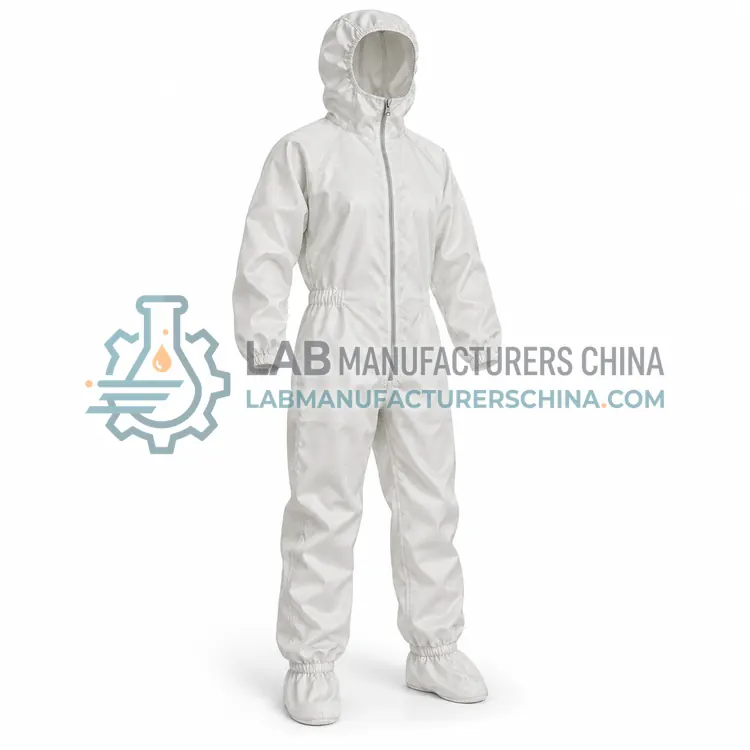
A garment cabinet is an enclosed, ventilated or filtered cabinet that stores cleanroom coveralls, hoods and boots between uses. Some versions add UV-C disinfection or HEPA air to keep garments free of particles.
UV-C reduces microbes on exposed fabric surfaces but does not penetrate folds or shaded areas. It supplements laundering and sterilization but does not replace validated garment sterilization.
Capacity is usually 1 to 6 persons, or 6–30 hangers, depending on width. A typical 1200 mm double-door cabinet holds around 10–12 coveralls on hangers.
Related models