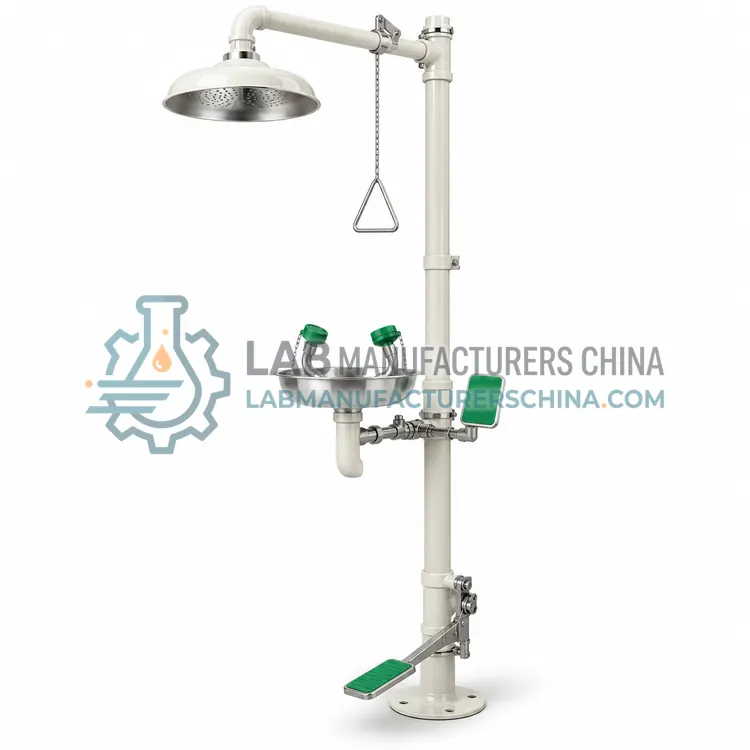
Combination Emergency Shower and Eyewash Station
紧急淋浴洗眼组合设备
- SKU ESH-0001
- Emergency Showers
- CE (to be confirmed)
- ISO 9001 manufacturing (to be confirmed)
Price on request — FOB / CIF quoted per order
Prices depend on configuration, quantity and destination port.
Key specifications
| Type | Combination shower and eyewash |
|---|---|
| Shower flow | 75–115 L/min |
| Eyewash flow | 1.5–2 L/min per eye |
| Water temperature | 16–38 °C tepid |
| Shower head height | 2000–2400 mm |
| Eyewash height | 800–1100 mm |
Request a quote Download brochure · to be provided
By Lab Manufacturers China Technical TeamLast reviewed Standards: ANSI/ISEA Z358.1 (emergency eyewash and shower equipment), EN 15154-1 (body showers for laboratories), EN 15154-2 (eyewash)
What is the Combination Emergency Shower and Eyewash Station?
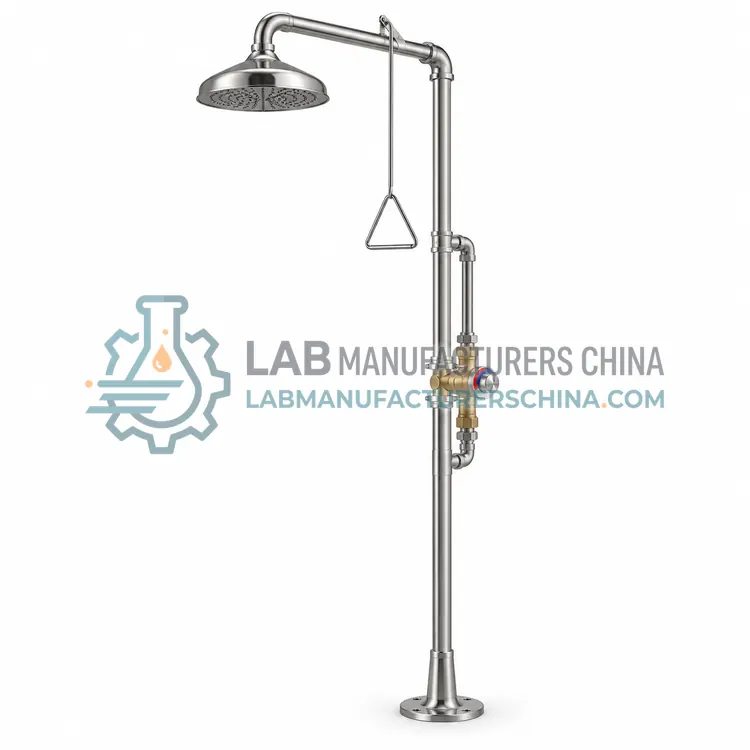
A combination emergency shower and eyewash station covers whole-body and eye exposure in one floor-mounted unit. It is the most common layout where a single location serves both hazards with efficient space use.
What is the Combination Emergency Shower and Eyewash Station?
A combination emergency shower and eyewash station covers whole-body and eye exposure in one floor-mounted unit. It is the most common layout where a single location serves both hazards with efficient space use.
Overview
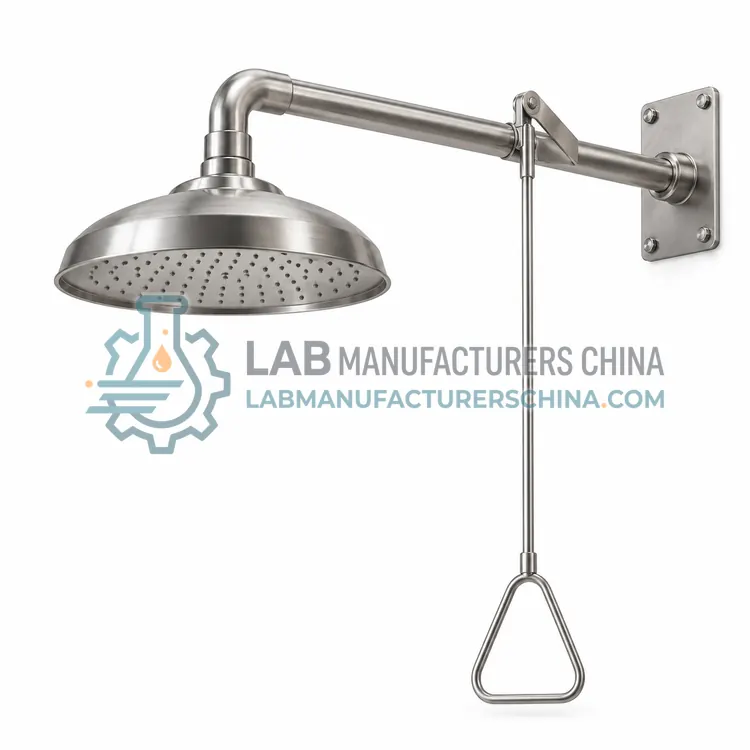
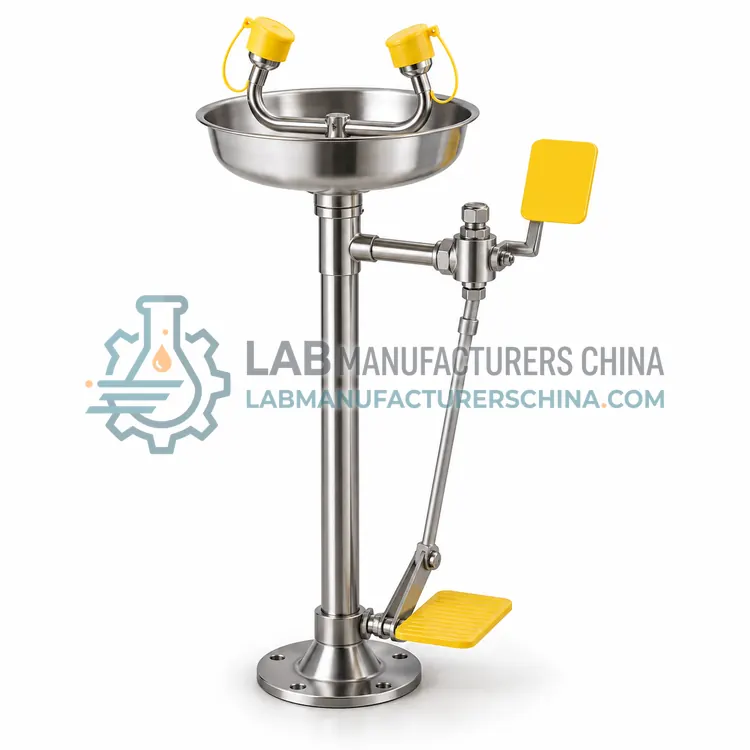
The unit combines an overhead drench shower head on a column with a pair of eyewash heads at about 800–1100 mm. Water is supplied through a stay-open shower valve and a separate eyewash valve, so each function can be used independently. The shower delivers 75–115 L/min, and the eyewash about 1.5–2 L/min per eye with a 15-minute supply. The column is usually galvanised or stainless steel, and the shower head is 2000–2400 mm above the floor, with spray covering a diameter of 500–900 mm. A floor drain and clear area are required. The eyewash should be within 10 seconds of hazards and the shower reachable without obstruction, and both should be activated weekly.
How does it work?
An emergency shower is a fixed deluge device that floods the user with water at a controlled rate, temperature and pattern so that chemicals are diluted and washed from skin, hair and clothing. Water comes from a dedicated supply through a stay-open valve, so once the user pulls the handle both hands are free. The shower head distributes the flow over the body, and the column height and spray diameter are specified so a standing person is fully covered. Flow is typically 75–115 L/min at a pressure of 1.5–3.0 bar, and water should be tepid, roughly 16–38 °C, because cold water can prevent a casualty from staying under the shower long enough. A floor drain and a clear area around the unit are part of the installation, and combination units add eyewash heads at working height.
What are the key features?
- Overhead drench shower plus twin eyewash heads
- Shower flow 75–115 L/min
- Eyewash 1.5–2 L/min per eye for 15 min
- Stay-open valves for both functions
- Shower head at 2000–2400 mm
- Galvanised or stainless steel column
What are the technical specifications?
A typical combination emergency shower and eyewash station configuration offers type of Combination shower and eyewash, shower flow of 75–115 L/min, eyewash flow of 1.5–2 L/min per eye, water temperature of 16–38 °C tepid, shower head height of 2000–2400 mm and eyewash height of 800–1100 mm. Values are indicative of the product class; the exact figures for each configuration are confirmed on the quotation and the calibration documents supplied with the instrument.
Which applications is it used for?
The Combination Emergency Shower and Eyewash Station is used in general chemical laboratories, pharmaceutical QC, teaching laboratories and battery and plating areas. Across the wider Emergency Showers class, laboratories also deploy it for chemical laboratories, battery and plating areas and pharmaceutical and QC laboratories.
Which standards and certifications apply?
Relevant standards and methods include ANSI/ISEA Z358.1 (emergency eyewash and shower equipment), EN 15154-1 (body showers for laboratories), EN 15154-2 (eyewash), DIN 12899 (emergency safety showers), ISO 3864 (safety signage) and GB/T 38144 (emergency shower and eyewash). Certification candidates for this model are CE and ISO 9001 manufacturing; each is to be confirmed for the specific configuration before shipment, and certificates are supplied only where they have been issued.
Activate every shower weekly to flush stagnant water and verify that the valve opens fully and stays open, and inspect annually for flow, temperature, spray pattern and height against ANSI/ISEA Z358.1 or EN 15154. Keep the approach clear of stored equipment, since an obstructed shower cannot be used in an emergency. Maintain tepid water within the required range, and check the mixing valve or heater regularly. Provide a floor drain or containment so contaminated water does not spread, and confirm the unit is not used for any other purpose. Record weekly and annual checks, and train staff on locations and on flushing for at least 15 minutes before seeking medical help.
How do I select the right Combination Emergency Shower and Eyewash Station?
Choose the combination unit where both body and eye exposure are possible in one location. Confirm flow, temperature and coverage, and plan the drain. RFQ: hazards, supply pressure and temperature, shower head height, drain and placement.
How does it compare with other Emergency Showers variants?
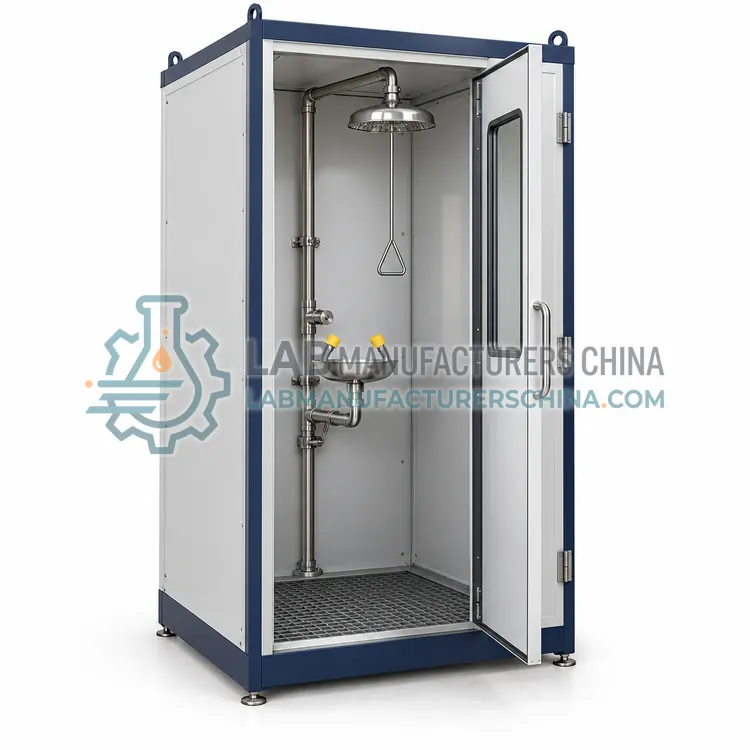
Choose the type by the hazard and the room. A floor-mounted drench shower suits general laboratories, while a wall-mounted unit saves floor space where the wall is rated for the load. A combination shower and eyewash covers whole-body and eye exposure in one unit, which is often the most efficient layout. Add a tempered water supply where the incoming water is too cold, since cold water discourages full 15-minute flushing. For strong corrosives, heat-sensitive chemicals or large spill risks, an enclosed booth with a curtain or drainage keeps contaminated water contained. Confirm access within 10 seconds' travel of hazards, on the same level, unobstructed, and verify flow, temperature and spray coverage at commissioning. Provide signage and a floor drain.
Full specifications
| Type | Combination shower and eyewash |
|---|---|
| Shower flow | 75–115 L/min |
| Eyewash flow | 1.5–2 L/min per eye |
| Water temperature | 16–38 °C tepid |
| Shower head height | 2000–2400 mm |
| Eyewash height | 800–1100 mm |
| Spray diameter | 500–900 mm |
| Supply pressure | 1.5–3.0 bar |
| Material | Galvanised or stainless steel |
| Valve type | Stay-open, hands free |
Indicative values for this product class. Final specifications are confirmed on the quotation and in the calibration documents supplied with the instrument.
Applications
- General chemical laboratories
- Pharmaceutical QC
- Teaching laboratories
- Battery and plating areas
Key features
- Overhead drench shower plus twin eyewash heads
- Shower flow 75–115 L/min
- Eyewash 1.5–2 L/min per eye for 15 min
- Stay-open valves for both functions
- Shower head at 2000–2400 mm
- Galvanised or stainless steel column
Frequently asked questions about Combination Emergency Shower and Eyewash Station
They can run at the same time, but the eyewash should be positioned so it can also be used alone for eye-only exposure. Separate stay-open valves let each function operate independently.
At about 800–1100 mm above the floor, forward of the column so a user can bend over them, and within 10 seconds of hazards. Confirm they are not blocked by the shower column.
A floor drain sized for the combined flow, so contaminated water leaves the area rather than pooling, since a slippery floor increases the risk of falls during an emergency.
Within 10 seconds' travel of the hazard, about 15–20 m, on the same level and along an unobstructed path. The hazard and shower should not be separated by a door the casualty must open.
Because very cold water can cause shock and discourage a casualty from remaining for the full 15 minutes. ANSI/ISEA Z358.1 specifies tepid water, roughly 16–38 °C, for effective decontamination.
Activate weekly to flush the line and confirm the valve opens and stays open, and inspect annually for flow, temperature, spray pattern and height. Record both checks for audit and insurance.
Related models