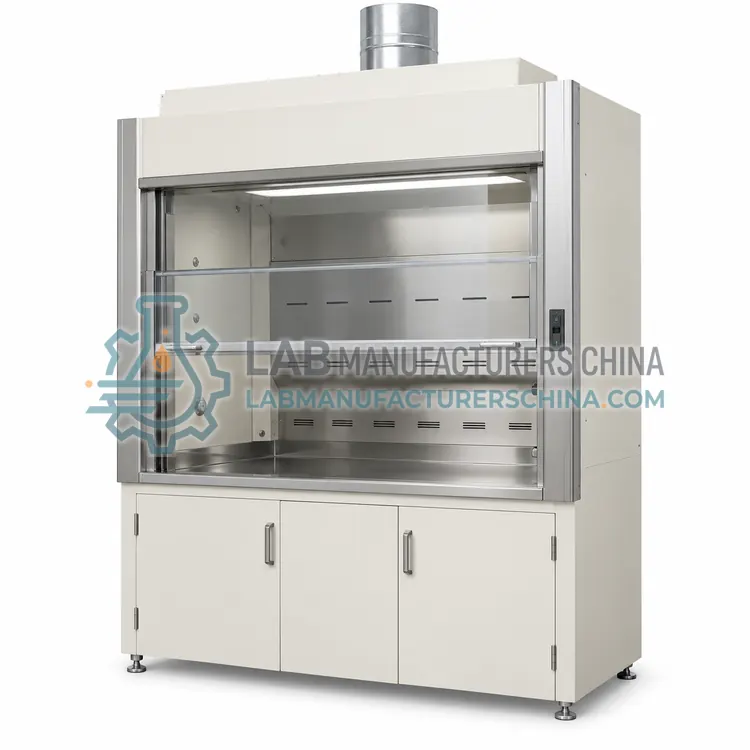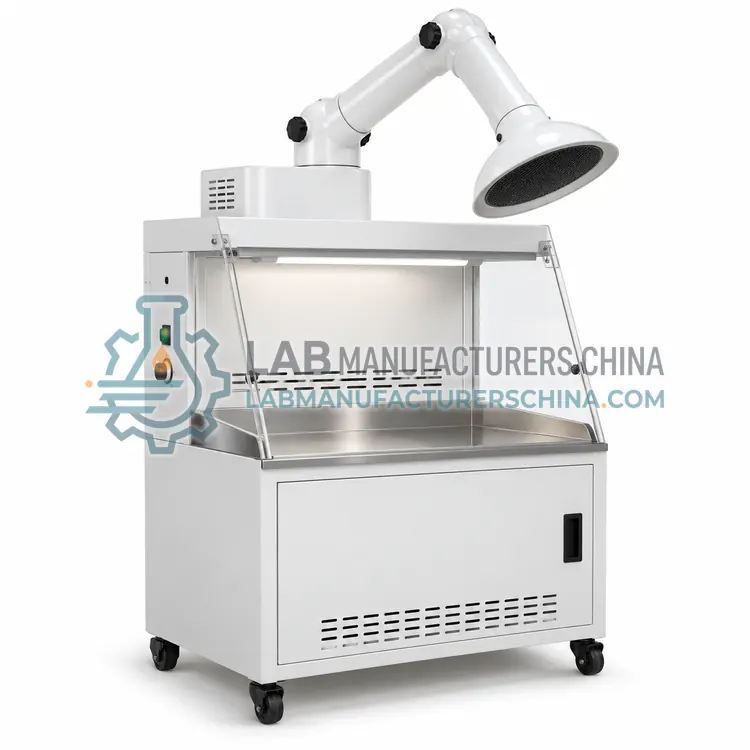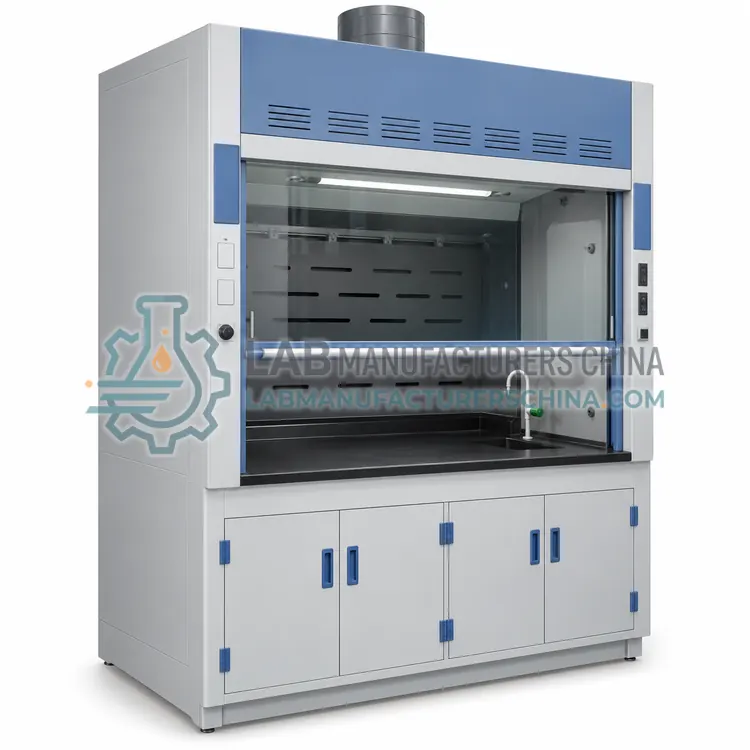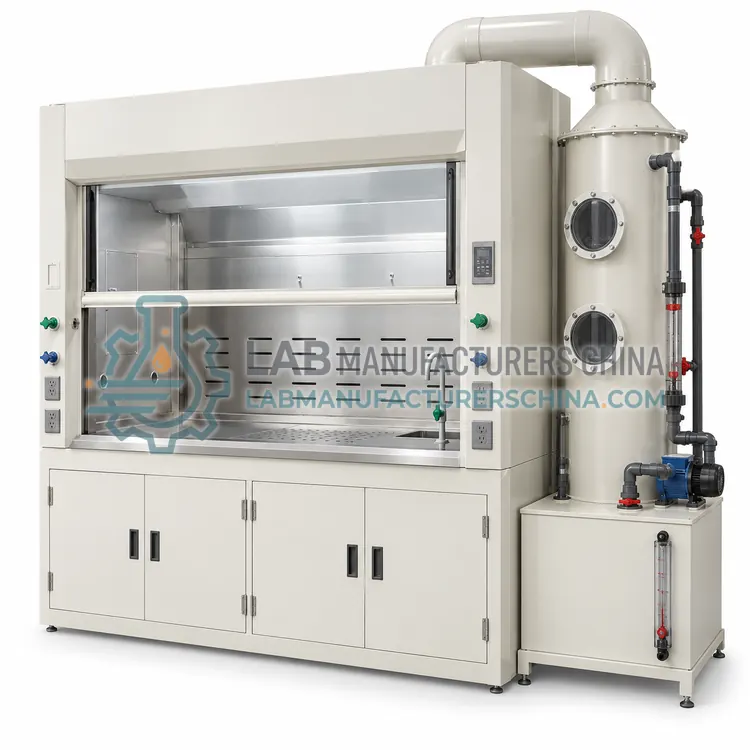
HEPA and Carbon Ductless Fume Hood
HEPA 与活性炭无管道通风柜
- SKU DUC-0002
- Ductless Fume Hoods
- CE (to be confirmed)
- ISO 9001 manufacturing (to be confirmed)
Price on request — FOB / CIF quoted per order
Prices depend on configuration, quantity and destination port.
Key specifications
| Filter stages | Prefilter, carbon, HEPA |
|---|---|
| HEPA grade | H13 or H14 |
| Airflow | 300–700 m3/h |
| Face velocity | 0.4–0.5 m/s |
| Carbon mass | 5–15 kg |
| Width | 600–1200 mm |
Request a quote Download brochure · to be provided
By Lab Manufacturers China Technical TeamLast reviewed Standards: ASHRAE 110 (testing performance of laboratory fume hoods), AFNOR NF X 15-211 (ductless fume cupboards), ISO 14644-1
What is the HEPA and Carbon Ductless Fume Hood?
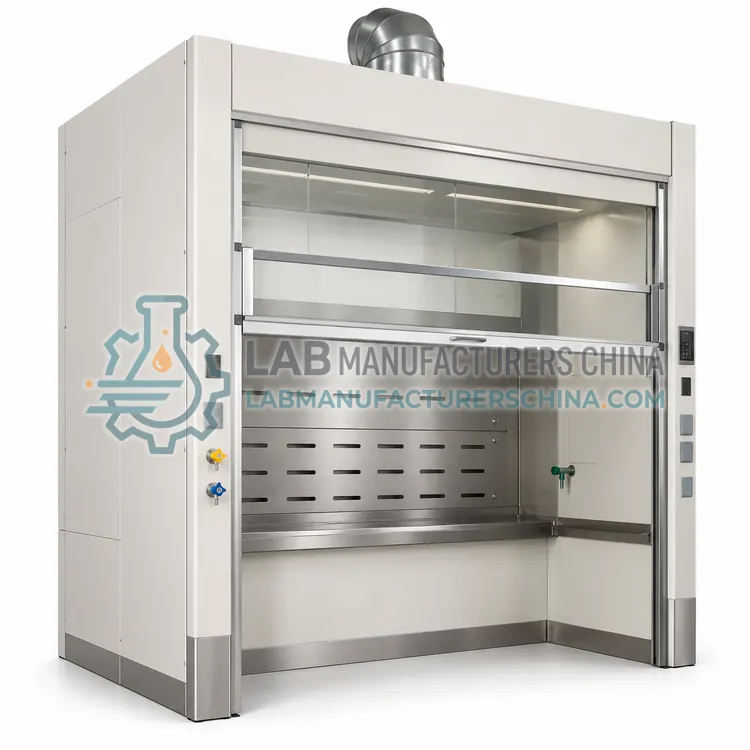
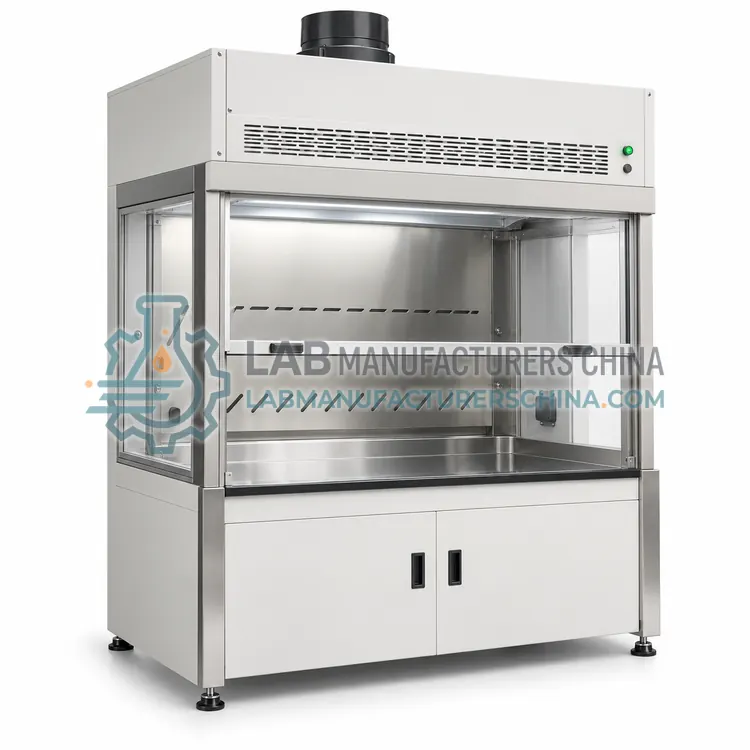
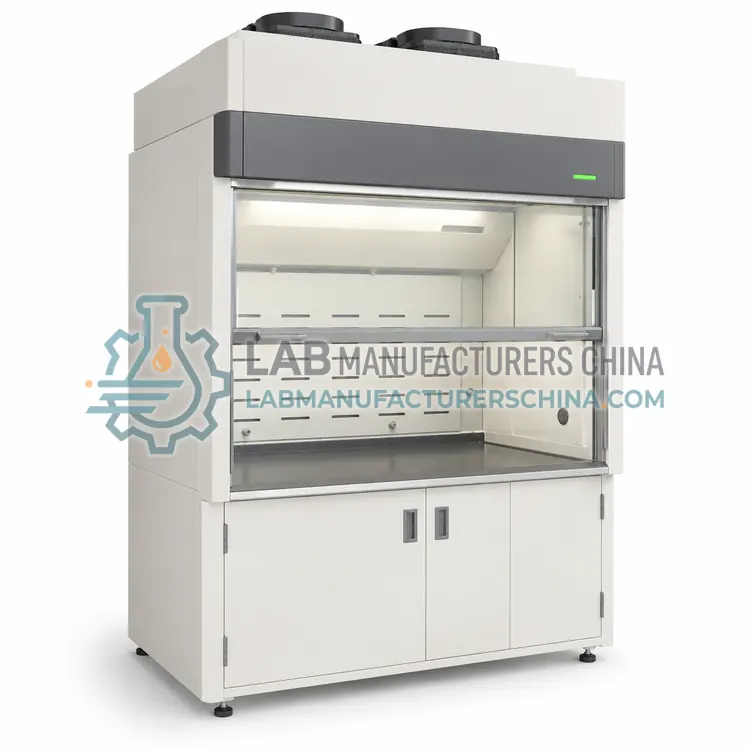
A combined HEPA and carbon ductless hood filters both particulates and organic vapours in a two-stage design. It suits work with powders and solvents, such as weighing and dissolving, in small laboratories.
What is the HEPA and Carbon Ductless Fume Hood?
A combined HEPA and carbon ductless hood filters both particulates and organic vapours in a two-stage design. It suits work with powders and solvents, such as weighing and dissolving, in small laboratories.
Overview
Air passes through a prefilter, a carbon bed and a final H13 or H14 HEPA filter, which captures particles including carbon dust. The HEPA stage is typically 99.95–99.995 % efficient at the most penetrating particle size. Airflow is 300–700 m3/h with face velocity of 0.4–0.5 m/s. Differential pressure sensors indicate filter loading, and gas sensors can signal carbon breakthrough. The body is polypropylene or epoxy steel with a sliding or vertical sash. The design is well suited to handling fine powders, such as weighing active pharmaceutical ingredients, along with solvents. It is not suited to high-potency compounds without a specific risk assessment, since a hood is not a containment device equal to an isolator.
How does it work?
A ductless fume hood uses a fan to pull room air through the sash opening at 0.4–0.5 m/s across the work area, then through one or more filter stages before discharge back into the room. A prefilter removes dust, and activated carbon beds adsorb organic vapours through physical adsorption. Chemically impregnated carbon or specialist media can capture acids, ammonia or formaldehyde. A HEPA stage can be added for particles. Sensors or timers indicate filter saturation, and airflow monitors ensure correct face velocity. Because filters have finite capacity, the hood is limited to known chemicals in limited quantities, and filter selection must match the vapour. The body is typically polypropylene or epoxy-coated steel, with lighting and a control panel.
What are the key features?
- Prefilter, carbon bed and H13/H14 HEPA stages
- HEPA efficiency 99.95–99.995 %
- Differential pressure sensor for filter loading
- Optional gas sensor for carbon breakthrough
- Airflow 300–700 m3/h at 0.4–0.5 m/s
- Suited to powder and solvent work
What are the technical specifications?
A typical hepa and carbon ductless fume hood configuration offers filter stages of Prefilter, carbon, HEPA, HEPA grade of H13 or H14, airflow of 300–700 m3/h, face velocity of 0.4–0.5 m/s, carbon mass of 5–15 kg and width of 600–1200 mm. Values are indicative of the product class; the exact figures for each configuration are confirmed on the quotation and the calibration documents supplied with the instrument.
Which applications is it used for?
The HEPA and Carbon Ductless Fume Hood is used in weighing of powders, pharmaceutical compounding, solvent dissolution and laboratory teaching. Across the wider Ductless Fume Hoods class, laboratories also deploy it for teaching laboratories, quality control and pharmacies.
Which standards and certifications apply?
Relevant standards and methods include ASHRAE 110 (testing performance of laboratory fume hoods), AFNOR NF X 15-211 (ductless fume cupboards), ISO 14644-1, EN 14175-1 (fume cupboards, vocabulary), GB/T 34269 and IEC 61010-1. Certification candidates for this model are CE and ISO 9001 manufacturing; each is to be confirmed for the specific configuration before shipment, and certificates are supplied only where they have been issued.
Establish a chemical register before purchase and have the supplier confirm filter compatibility in writing. Change filters at the recommended interval or sooner if gas sensors or odour indicate breakthrough, because carbon saturation is sudden at the end of life. Test airflow and filter seals on installation and at least every 6–12 months, keeping records for audit. Place the hood away from doors and air currents, and with clearance to allow filter replacement. Dispose of used filters as hazardous waste. Train users to restrict quantities, keep sashes low and never use the hood for chemicals outside the compatibility list.
How do I select the right HEPA and Carbon Ductless Fume Hood?
Choose the combined hood for mixed powder and solvent tasks in small quantities. Do not use it for highly potent compounds without a risk assessment. RFQ: chemical and powder list, filter grade, monitoring needs and quantities.
How does it compare with other Ductless Fume Hoods variants?
Select by the chemicals used. Every application needs a chemical compatibility assessment from the supplier to match filter media, and the assessment should include quantities, frequency and breakthrough behaviour. Choose an activated carbon filter for organic solvents, impregnated carbon for acids or amines, and HEPA for particulates. Consider filter monitoring, such as gas sensors that signal breakthrough, rather than timers alone. Choose width, typically 600–1500 mm, noise level, and whether a base cabinet for storage is required. Ductless hoods are not suitable for unknown, high-volume or highly toxic chemicals, or for heated perchloric acid. Confirm local regulations on recirculating air, since some jurisdictions restrict their use.
Full specifications
| Filter stages | Prefilter, carbon, HEPA |
|---|---|
| HEPA grade | H13 or H14 |
| Airflow | 300–700 m3/h |
| Face velocity | 0.4–0.5 m/s |
| Carbon mass | 5–15 kg |
| Width | 600–1200 mm |
| Body material | PP or epoxy steel |
| Differential pressure range | 0–500 Pa |
| Noise level | ≤ 58 dB(A) |
| Power supply | 220 V, 50 Hz, 200–450 W |
Indicative values for this product class. Final specifications are confirmed on the quotation and in the calibration documents supplied with the instrument.
Applications
- Weighing of powders
- Pharmaceutical compounding
- Solvent dissolution
- Laboratory teaching
Key features
- Prefilter, carbon bed and H13/H14 HEPA stages
- HEPA efficiency 99.95–99.995 %
- Differential pressure sensor for filter loading
- Optional gas sensor for carbon breakthrough
- Airflow 300–700 m3/h at 0.4–0.5 m/s
- Suited to powder and solvent work
Frequently asked questions about HEPA and Carbon Ductless Fume Hood
It captures particles and carbon dust, which carbon alone does not. It is useful when weighing powders or where dust could be released from the carbon bed.
Not without a dedicated risk assessment. A fume hood is not a containment device equal to an isolator or powder-containment hood, so use appropriate equipment for potent compounds.
A DOP or PAO aerosol scan at installation and annually checks for leaks. Replace the filter if penetration exceeds the limit or airflow cannot be restored.
A ductless fume hood filters air through activated carbon or HEPA media and returns it to the room, so it needs no duct. It is used for low-volume work with known chemicals where ducting is impractical.
Only those compatible with the installed filter, for example organic vapours with activated carbon or acids with impregnated carbon. Unknown, highly toxic or large-volume chemicals require a ducted hood.
Replace at the supplier's recommended interval or when a gas sensor or odour signals breakthrough, often every 6–24 months depending on use. Saturation is sudden, so do not extend intervals.
Related models