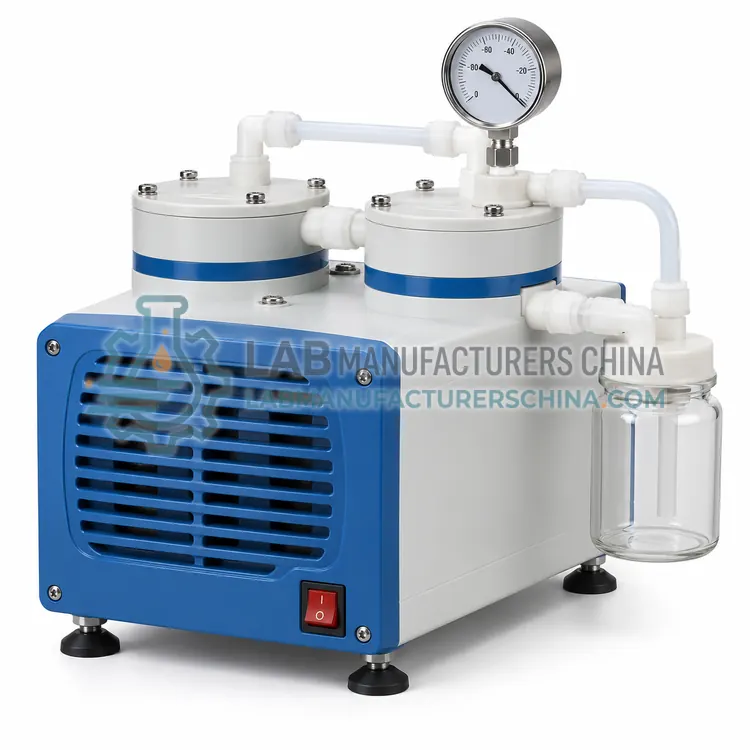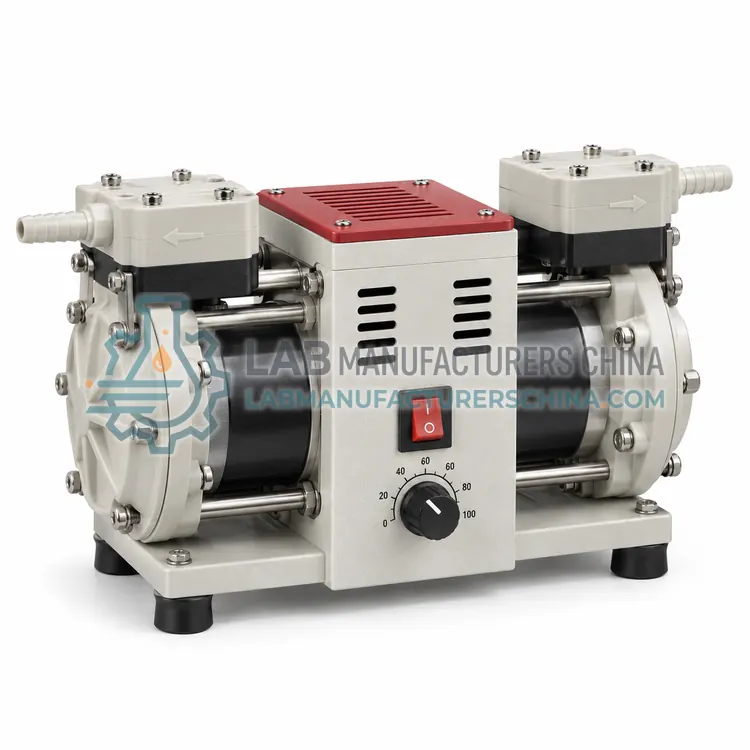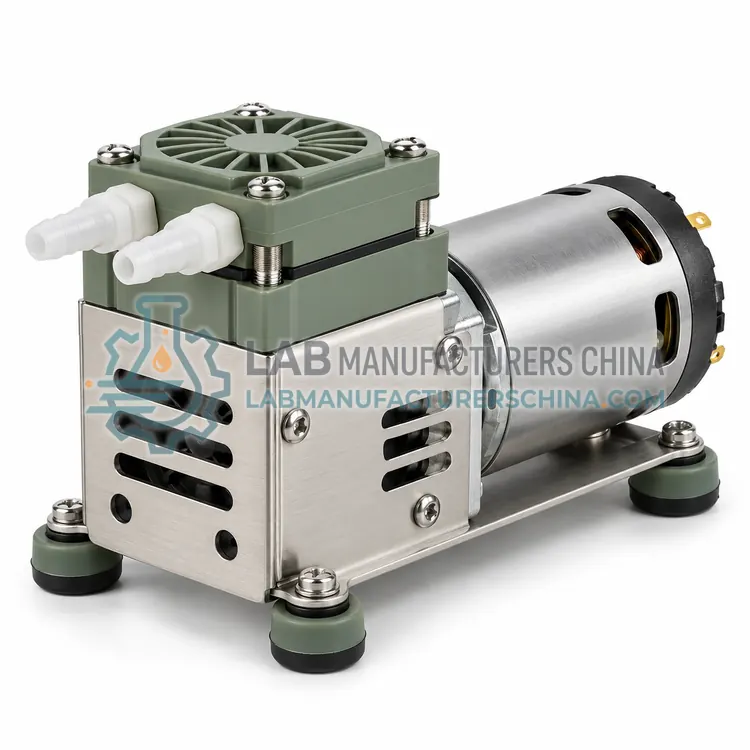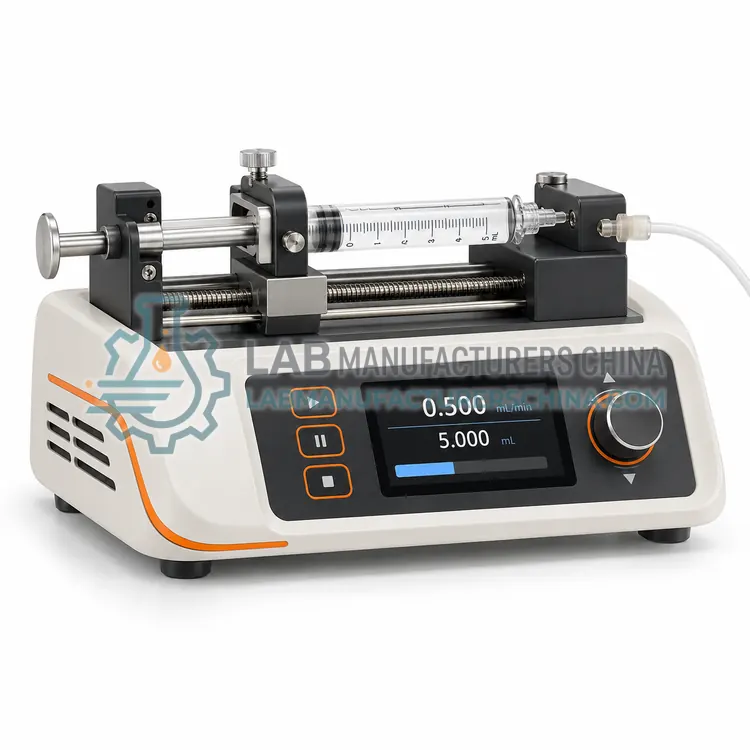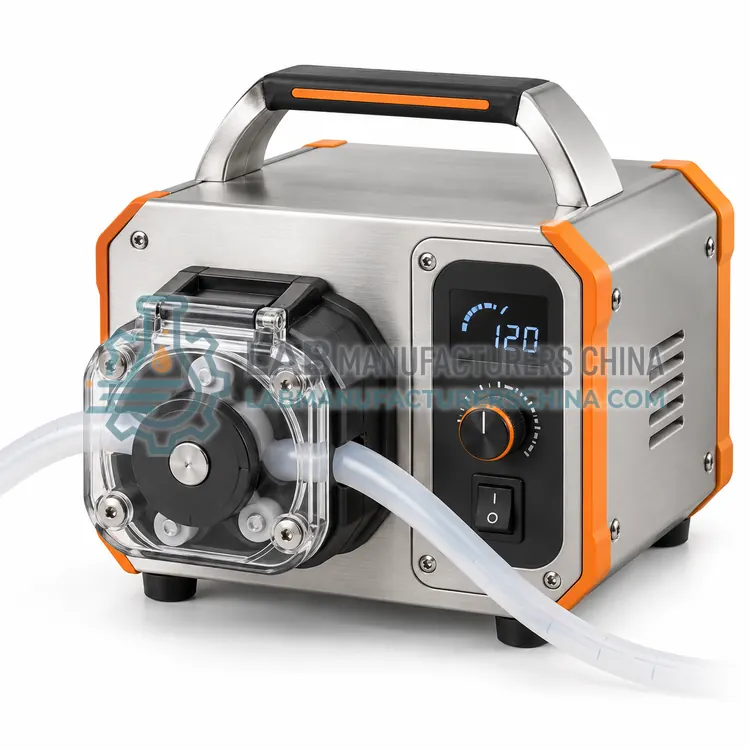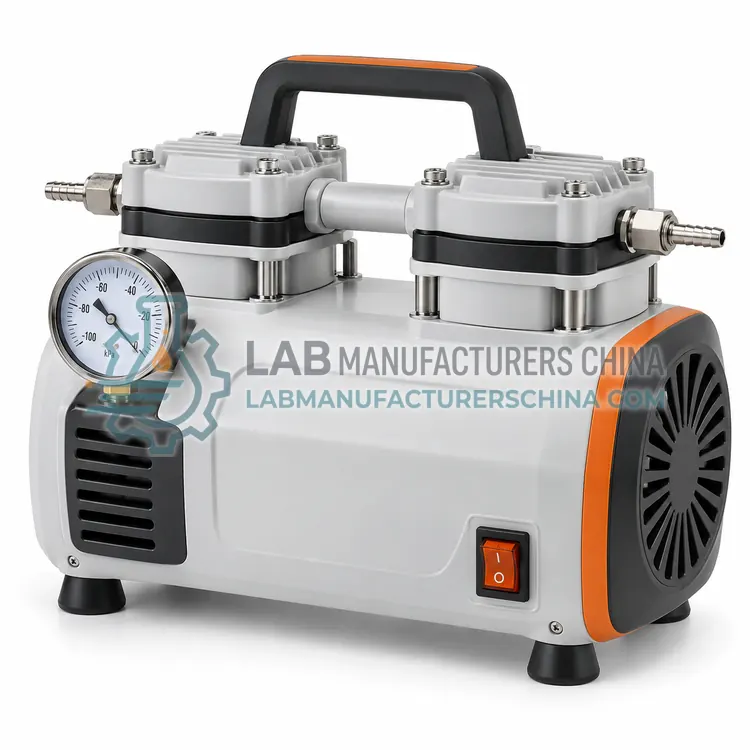
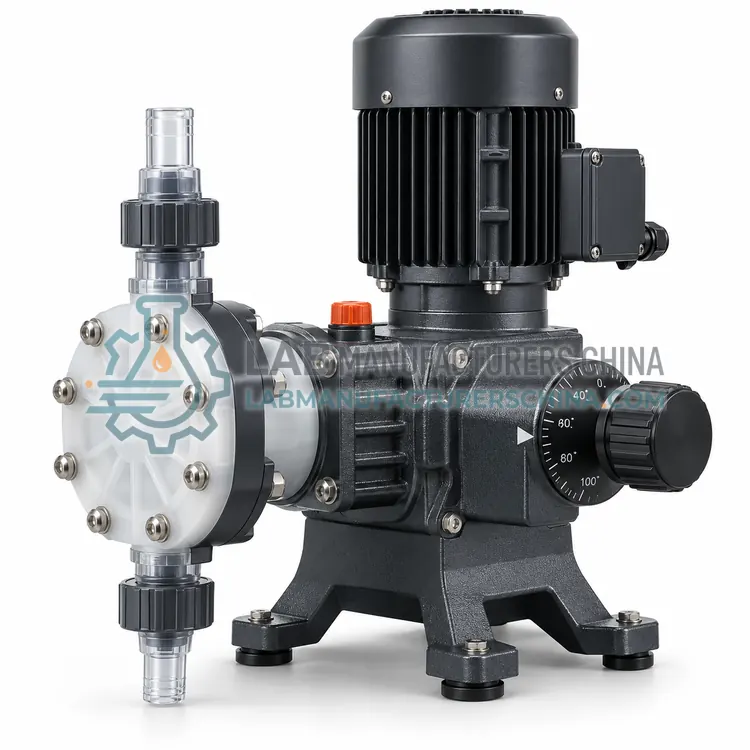
Diaphragm Metering Pump
隔膜计量泵
- SKU DIP-0004
- Diaphragm Pumps
- CE (to be confirmed)
- RoHS (to be confirmed)
- ISO 9001 manufacturing (to be confirmed)
Price on request — FOB / CIF quoted per order
Prices depend on configuration, quantity and destination port.
Key specifications
| Flow range | 0.01 mL/min–10 L/h |
|---|---|
| Discharge pressure | 2–16 bar |
| Stroke adjustment | 1:100 range |
| Dosing accuracy | ± 1–2 % |
| Head material | PTFE, PVDF or stainless steel |
| Diaphragm material | PTFE or EPDM |
Request a quote Download brochure · to be provided
By Lab Manufacturers China Technical TeamLast reviewed Standards: IEC 61010-1, IEC 61326-1, ISO 21360
What is the Diaphragm Metering Pump?
A diaphragm metering pump delivers accurate, adjustable doses of liquid against pressure, with a sealed head that prevents leaks. It is used for reagent addition, pH control and continuous dosing in laboratory and pilot systems.
What is the Diaphragm Metering Pump?
A diaphragm metering pump delivers accurate, adjustable doses of liquid against pressure, with a sealed head that prevents leaks. It is used for reagent addition, pH control and continuous dosing in laboratory and pilot systems.
Overview
The metering pump uses a diaphragm driven by a stepper motor or solenoid, with stroke length and stroke frequency adjusted to set the dose. Flow ranges from microliters per minute to several liters per hour, and discharge pressures of 2 to 16 bar are common, depending on head design. Because the head is sealed by the diaphragm, there are no dynamic seals in contact with the fluid, which eliminates leakage and suits toxic or expensive reagents. Manual, analog and digital control options allow integration with a process controller or PID loop, and some models accept a 4–20 mA or pulse signal proportional to flow. Wetted materials include PTFE, PVDF and stainless steel for chemical compatibility. Applications include continuous reagent dosing, pH and chlorine control, and addition of nutrients or inhibitors in fermentation and flow chemistry.
How does it work?
A diaphragm pump uses a flexible membrane that reciprocates inside a small chamber. On the suction stroke the membrane moves back, the inlet check valve opens and fluid fills the chamber. On the discharge stroke the membrane pushes forward, the outlet valve opens and fluid is expelled while the inlet closes. An eccentric cam or a solenoid drives the membrane, and the valves control direction. Because the fluid never contacts the drive, these pumps are oil-free and tolerate corrosive gases and liquids when the wetted parts are made from PTFE, EPDM or stainless steel. Multiple heads can be connected in series to increase pressure or in parallel to increase flow. In liquid service they are self-priming, can run dry and handle small solids. Typical parameters are flow rate, pressure or vacuum, wetted materials and number of heads.
What are the key features?
- Adjustable stroke length and frequency for accurate dosing
- Sealed diaphragm head with no dynamic seals
- Discharge pressure of 2–16 bar depending on head
- Manual, analog and digital control options
- Accepts 4–20 mA or pulse proportional signals
- Wetted materials in PTFE, PVDF or stainless steel
What are the technical specifications?
A typical diaphragm metering pump configuration offers flow range of 0.01 mL/min–10 L/h, discharge pressure of 2–16 bar, stroke adjustment of 1:100 range, dosing accuracy of ± 1–2 %, head material of PTFE, PVDF or stainless steel and diaphragm material of PTFE or EPDM. Values are indicative of the product class; the exact figures for each configuration are confirmed on the quotation and the calibration documents supplied with the instrument.
Which applications is it used for?
The Diaphragm Metering Pump is used in reagent and nutrient dosing, pH and chlorine control, fermentation feed addition, flow chemistry reagent injection and water treatment chemical dosing. Across the wider Diaphragm Pumps class, laboratories also deploy it for vacuum filtration and aspiration, gas sampling and transfer and reagent and buffer transfer.
Which standards and certifications apply?
Relevant standards and methods include IEC 61010-1, IEC 61326-1, ISO 21360, ISO 9001 and GB 4793.1. Certification candidates for this model are CE, RoHS and ISO 9001 manufacturing; each is to be confirmed for the specific configuration before shipment, and certificates are supplied only where they have been issued.
Install the pump so that the inlet line is short and wide, and keep the pump below the liquid level where possible to help priming. Fit a filter on the inlet to protect the valves from particles, and a trap when pumping condensable vapors. Replace diaphragms and check valves as consumables, because cracks or worn seats cause flow loss and premature failure. Clean wetted parts with compatible solvents and avoid abrasive cleaning. For hazardous gases, exhaust to a safe location. Follow IEC 61010-1 for electrical safety, and verify flow or vacuum against a reference when the pump is used in regulated methods. Record part numbers, service intervals and calibration data so that maintenance and results stay traceable.
How do I select the right Diaphragm Metering Pump?
Choose a metering pump when precise, leak-free dosing against pressure is needed. For transfer or high flow, a double-diaphragm pump is better. In the RFQ, state dose rate, pressure, chemical compatibility, control signal and accuracy requirement.
How does it compare with other Diaphragm Pumps variants?
Decide first whether you need vacuum, gas transfer or liquid transfer, since the head design differs. For vacuum and aspiration, choose a diaphragm pump with adequate free-air flow and the ultimate pressure your process needs. For liquid transfer, check the maximum discharge pressure, suction lift and ability to run dry. Match wetted materials to the fluid: PTFE and EPDM suit most solvents and acids, while stainless steel or PTFE-lined heads handle aggressive media. Choose the number of heads for the required flow and pressure, and consider double-diaphragm designs for higher pressure and smoother flow. Confirm the control interface, noise level and duty cycle for continuous instrument use. Specify calibration or flow verification where the pump is part of a metering system.
Full specifications
| Flow range | 0.01 mL/min–10 L/h |
|---|---|
| Discharge pressure | 2–16 bar |
| Stroke adjustment | 1:100 range |
| Dosing accuracy | ± 1–2 % |
| Head material | PTFE, PVDF or stainless steel |
| Diaphragm material | PTFE or EPDM |
| Control signal | Manual, 4–20 mA or pulse |
| Suction lift | Up to about 2 m water |
| Power supply | 220–240 V, 50/60 Hz |
Indicative values for this product class. Final specifications are confirmed on the quotation and in the calibration documents supplied with the instrument.
Applications
- Reagent and nutrient dosing
- pH and chlorine control
- Fermentation feed addition
- Flow chemistry reagent injection
- Water treatment chemical dosing
Key features
- Adjustable stroke length and frequency for accurate dosing
- Sealed diaphragm head with no dynamic seals
- Discharge pressure of 2–16 bar depending on head
- Manual, analog and digital control options
- Accepts 4–20 mA or pulse proportional signals
- Wetted materials in PTFE, PVDF or stainless steel
Frequently asked questions about Diaphragm Metering Pump
By changing stroke length, stroke frequency or both. Many controllers accept a 4–20 mA or pulse signal so the rate can follow a process variable such as pH or flow.
No dynamic seal touches the fluid, because the diaphragm separates the drive from the head. This makes the design leak-free in normal operation, which is important for toxic or costly reagents.
Typically 1 to 2 percent of set rate after calibration, with good repeatability. Accuracy depends on the suction conditions, so keep the inlet flooded and free of air bubbles.
A diaphragm pump uses a flexing membrane and check valves to move fluid, giving higher pressure and good gas handling. A peristaltic pump compresses tubing so only the tube contacts the fluid, which is better for sterile transfer and easier cleaning.
Yes, most liquid diaphragm pumps tolerate dry running without damage, which is one of their main advantages. Avoid prolonged dry running only if the diaphragm material or valves are not rated for it.
PTFE heads with PTFE or EPDM diaphragms resist most acids, bases and solvents. For very aggressive media, choose a PTFE-lined pump head and confirm compatibility for each chemical and temperature.
Related models