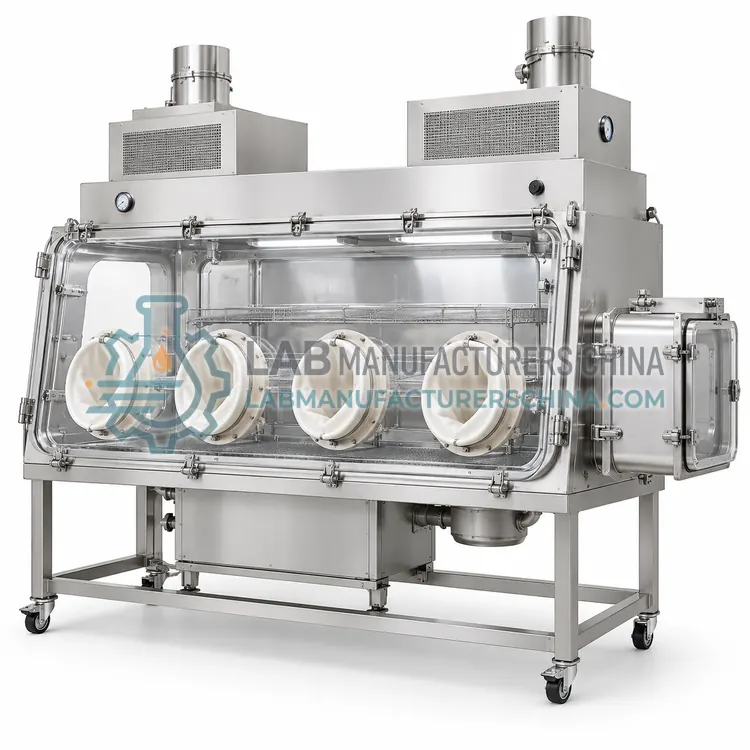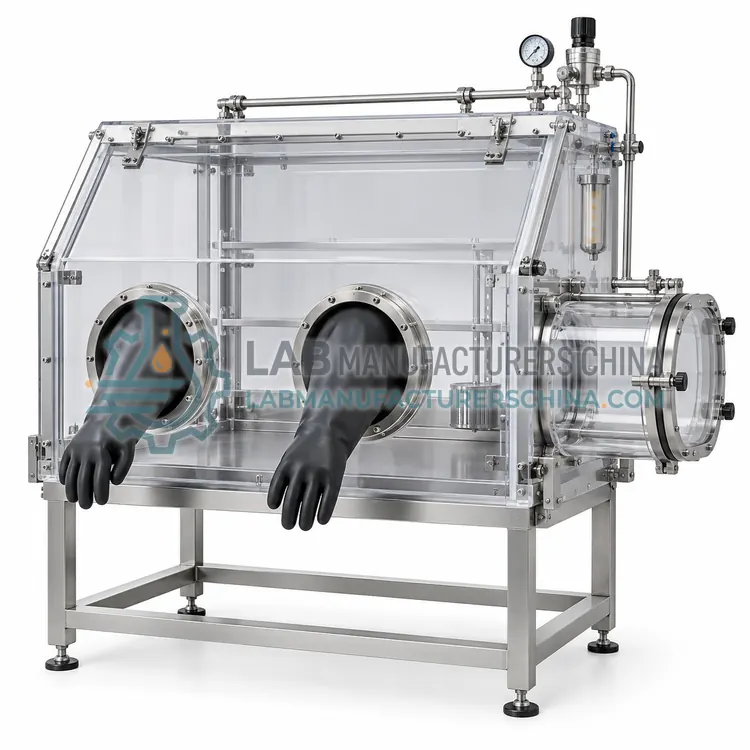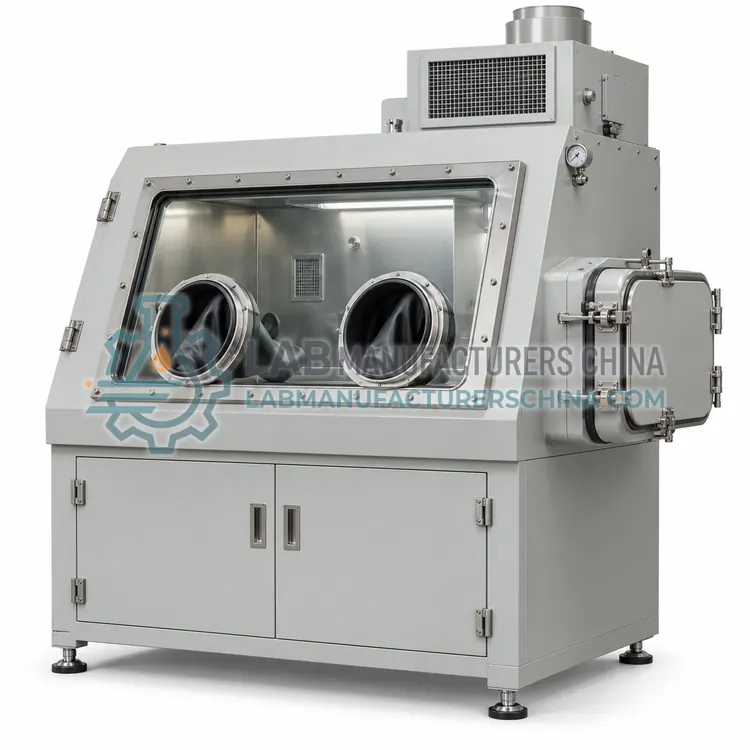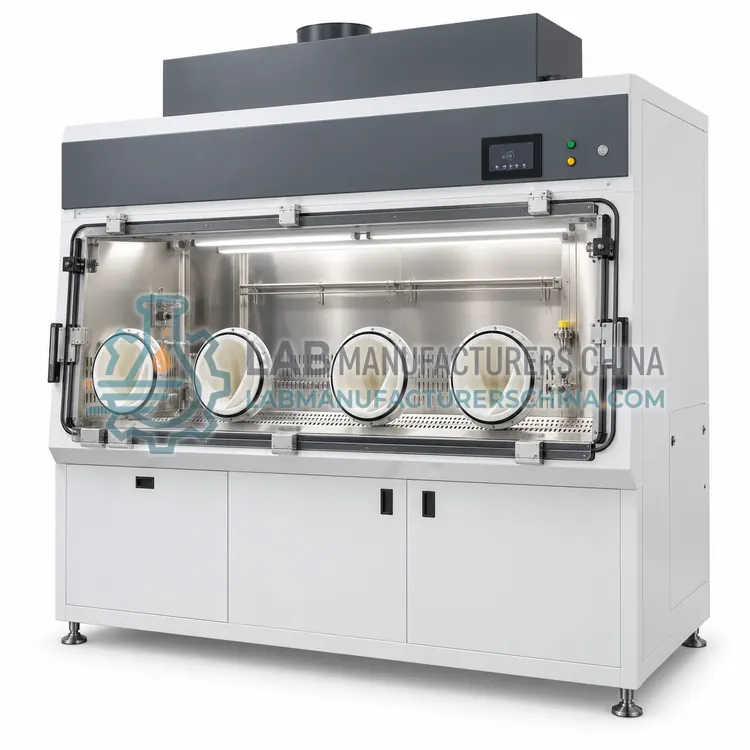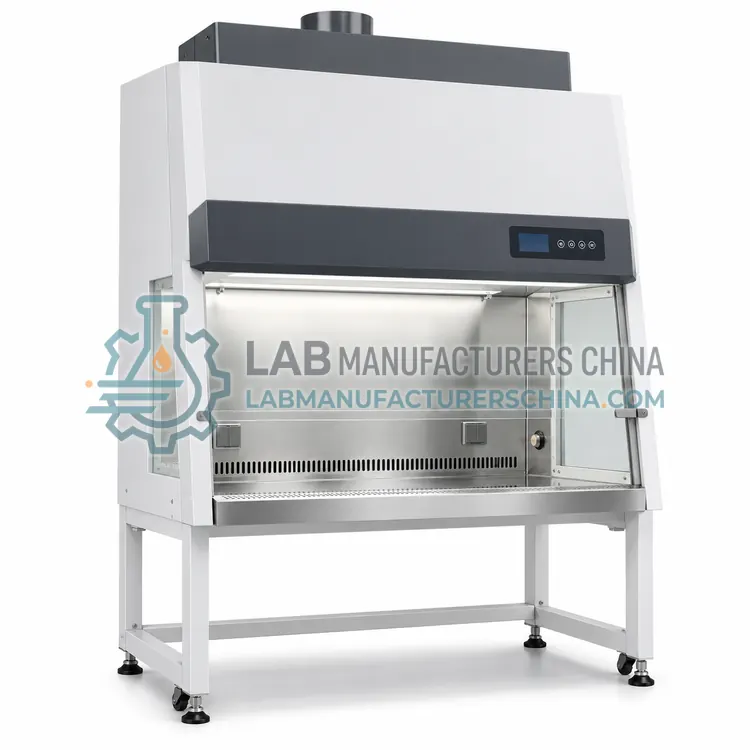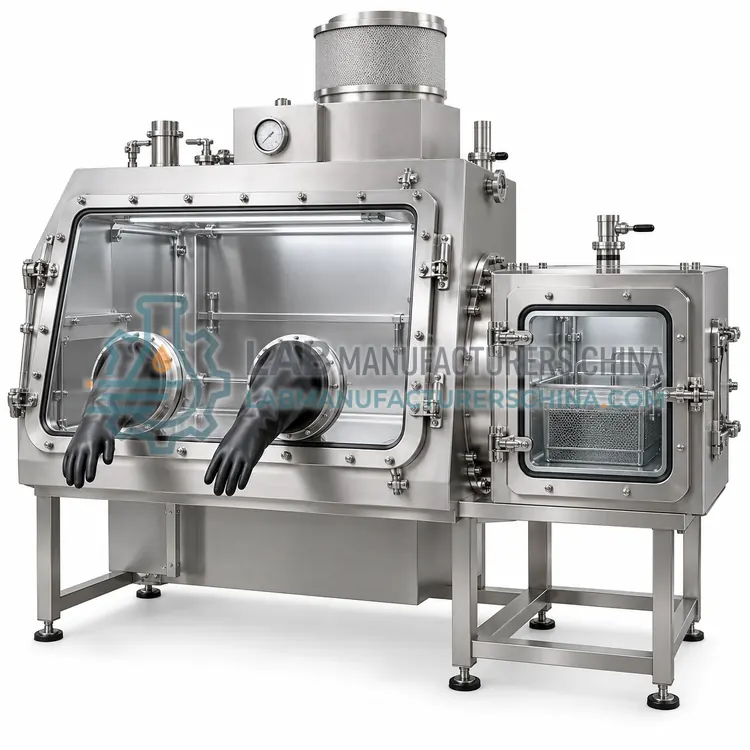
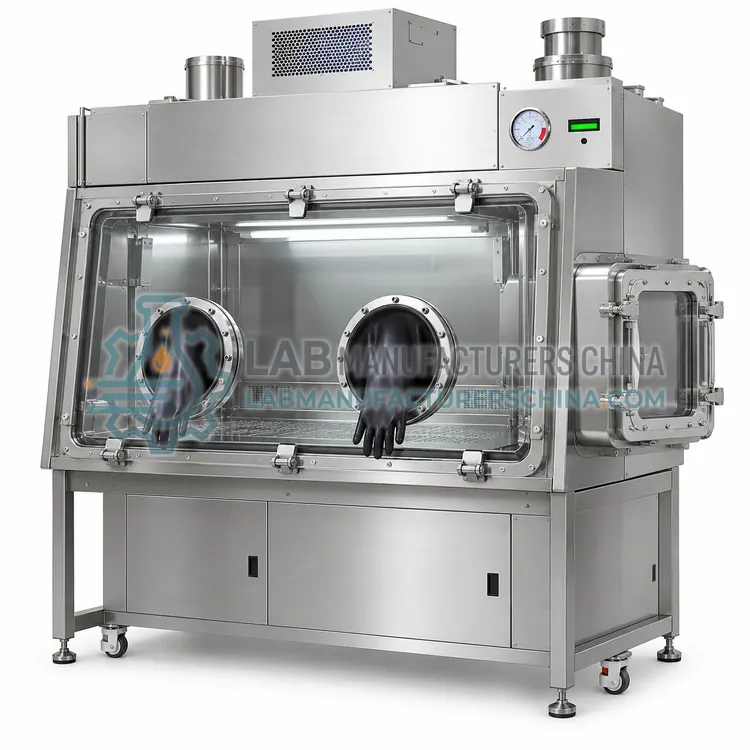
Class III Glovebox Biosafety Cabinet
III 级手套箱生物安全柜
- SKU CLN-0001
- Class III Cabinets
- CE (to be confirmed)
- ISO 9001 manufacturing (to be confirmed)
Price on request — FOB / CIF quoted per order
Prices depend on configuration, quantity and destination port.
Key specifications
| Cabinet class | Class III |
|---|---|
| Negative pressure | 100–200 Pa below room |
| Exhaust filtration | Double HEPA H14 |
| Supply filtration | HEPA H14 |
| Glove ports | 2–4, long gauntlet |
| Enclosure material | Welded 304 or 316L stainless |
Request a quote Download brochure · to be provided
By Lab Manufacturers China Technical TeamLast reviewed Standards: EN 12469 (biosafety cabinets), NSF/ANSI 49 (biosafety cabinetry), ISO 10648-2 (glovebox leak tightness)
What is the Class III Glovebox Biosafety Cabinet?
A Class III glovebox biosafety cabinet is a gas-tight, negative-pressure enclosure operated through integral gloves. It provides the highest containment for Risk Group 4 work with double HEPA-filtered exhaust and sealed transfer ports.
What is the Class III Glovebox Biosafety Cabinet?
A Class III glovebox biosafety cabinet is a gas-tight, negative-pressure enclosure operated through integral gloves. It provides the highest containment for Risk Group 4 work with double HEPA-filtered exhaust and sealed transfer ports.
Overview
The enclosure is welded stainless steel with a large polycarbonate or glass viewing panel and 2–4 glove ports fitted with long gloves. Interior pressure is held at 100–200 Pa below the room, and both supply and exhaust pass two HEPA filters, giving protection even if one filter fails. Supply air is HEPA filtered, and all operations are performed through the gloves so the barrier is never broken. A double-door pass-through hatch and usually a dunk tank or steriliser connection allow material transfer. Interior lighting, a pressure gauge and an alarm for loss of negative pressure are standard. Working volume is limited, and the operator reaches the whole interior through the gloves, so tasks are planned for reach and dexterity. The unit is leak tested as well as airflow tested during certification.
How does it work?
A Class III cabinet is a sealed enclosure operated through long gauntlet gloves bonded to the front panel, so the operator never breaks the barrier. The interior is held at negative pressure of at least 100–200 Pa relative to the room, and all supply and exhaust air passes two HEPA filters, with the exhaust filter usually preceded by an incinerator or other treatment for the most hazardous agents. Because the enclosure is gas-tight, it is tested for leak tightness as well as airflow. Materials enter and leave through double-door pass-throughs, a dunk tank or a steriliser so the seal is never opened directly. A double HEPA exhaust protects against filter failure, and the exhausted air is monitored. Internal lighting, glove ports and a transfer hatch are standard. The design removes operator exposure risk but requires careful procedures for glove changes, pass-through cycles and decontamination.
What are the key features?
- Gas-tight welded stainless enclosure
- Negative pressure 100–200 Pa below room
- Double HEPA filtration on exhaust
- 2–4 glove ports with integrated gloves
- Double-door pass-through hatch
- Negative pressure alarm and gauge
What are the technical specifications?
A typical class iii glovebox biosafety cabinet configuration offers cabinet class of Class III, negative pressure of 100–200 Pa below room, exhaust filtration of Double HEPA H14, supply filtration of HEPA H14, glove ports of 2–4, long gauntlet and enclosure material of Welded 304 or 316L stainless. Values are indicative of the product class; the exact figures for each configuration are confirmed on the quotation and the calibration documents supplied with the instrument.
Which applications is it used for?
The Class III Glovebox Biosafety Cabinet is used in risk Group 4 pathogen culture, aerosol challenge studies, high-containment diagnostics and radionuclide handling. Across the wider Class III Cabinets class, laboratories also deploy it for risk Group 4 pathogen work, highly pathogenic virus culture and aerosol challenge and animal studies.
Which standards and certifications apply?
Relevant standards and methods include EN 12469 (biosafety cabinets), NSF/ANSI 49 (biosafety cabinetry), ISO 10648-2 (glovebox leak tightness), ISO 14644-1 (cleanroom classification), EU GMP Annex 1 (sterile manufacturing) and GB 19489 (biosafety laboratory requirements). Certification candidates for this model are CE and ISO 9001 manufacturing; each is to be confirmed for the specific configuration before shipment, and certificates are supplied only where they have been issued.
Verify leak tightness and airflow at installation and at least annually, since a gas-tight cabinet depends on intact gaskets, glove seals and weld integrity. Follow a defined glove inspection and replacement schedule, checking for pinholes before each session and replacing at the first sign of wear. Do not open the enclosure to the room; use pass-throughs and decontamination cycles for all material movement. Confirm the exhaust fan is dedicated and interlocked, with alarms for loss of negative pressure. Provide a written decontamination procedure using a validated agent, and record every cycle. Confirm the room pressure relationship and make-up air so that the cabinet does not disturb the surrounding laboratory. Train operators on emergency procedures, including power or exhaust failure.
How do I select the right Class III Glovebox Biosafety Cabinet?
Choose the standard Class III glovebox for complete isolation of hazardous agents. Confirm glove count and reach for the tasks, the pass-through arrangement and the exhaust treatment. RFQ: agent, working volume, glove layout, exhaust treatment and leak test standard.
How does it compare with other Class III Cabinets variants?
Class III cabinets are chosen when a risk assessment identifies Risk Group 4 agents or operations that must be completely isolated from the operator and the environment. Select the glove system and number of glove ports for the manual tasks, and the pass-through arrangement, such as a double-door hatch, dunk tank or connected autoclave. Confirm the negative pressure setpoint, the double HEPA exhaust and any required exhaust treatment such as incineration. Check that the room has the exhaust and make-up air capacity, and that the cabinet can be leak tested to ISO 10648-2 or the applicable standard. Decide whether atmosphere control is needed for anaerobic work, and whether lead shielding is required for radionuclide use. Plan decontamination and glove replacement procedures before installation.
Full specifications
| Cabinet class | Class III |
|---|---|
| Negative pressure | 100–200 Pa below room |
| Exhaust filtration | Double HEPA H14 |
| Supply filtration | HEPA H14 |
| Glove ports | 2–4, long gauntlet |
| Enclosure material | Welded 304 or 316L stainless |
| Viewing panel | Polycarbonate or laminated glass |
| Pass-through | Double-door hatch |
| Leak tightness | Tested to ISO 10648-2 |
| Alarm | Low negative pressure |
Indicative values for this product class. Final specifications are confirmed on the quotation and in the calibration documents supplied with the instrument.
Applications
- Risk Group 4 pathogen culture
- Aerosol challenge studies
- High-containment diagnostics
- Radionuclide handling
Key features
- Gas-tight welded stainless enclosure
- Negative pressure 100–200 Pa below room
- Double HEPA filtration on exhaust
- 2–4 glove ports with integrated gloves
- Double-door pass-through hatch
- Negative pressure alarm and gauge
Frequently asked questions about Class III Glovebox Biosafety Cabinet
The double stage protects against filter failure, since the second filter catches anything the first passes. It is required for the most hazardous agents, along with exhaust monitoring and often additional treatment.
Typically two to four, depending on the width of the unit and whether two operators work together. More ports improve access but each one is a potential leak path requiring inspection.
Use a validated gaseous or liquid agent through the pass-through or a dedicated port, following the manufacturer's procedure. After decontamination, ventilate and verify before opening or servicing the enclosure.
It is gas-tight and operated through gloves, so the operator is never exposed. Interior pressure is negative, both supply and exhaust are double HEPA filtered, and materials pass through sealed transfer ports rather than an open sash.
For Risk Group 4 agents and operations that must be completely isolated, when a risk assessment shows operator and environmental protection cannot be achieved by a Class II cabinet with safe procedures.
The sealed enclosure is pressure tested to ISO 10648-2 or the applicable standard, checking that pressure decay is within limits. Glove seals, gaskets and welded joints are the usual leak paths and are inspected during certification.
Related models