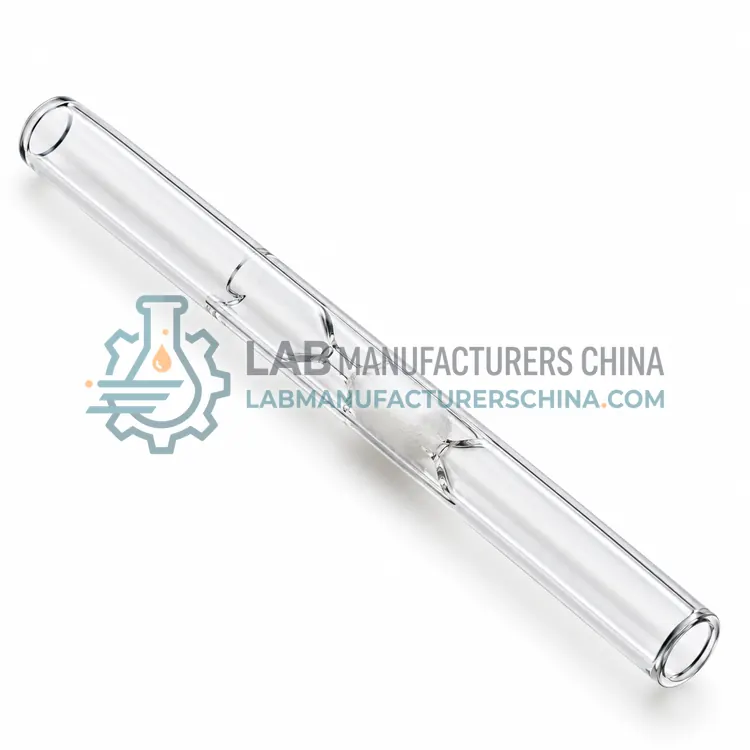
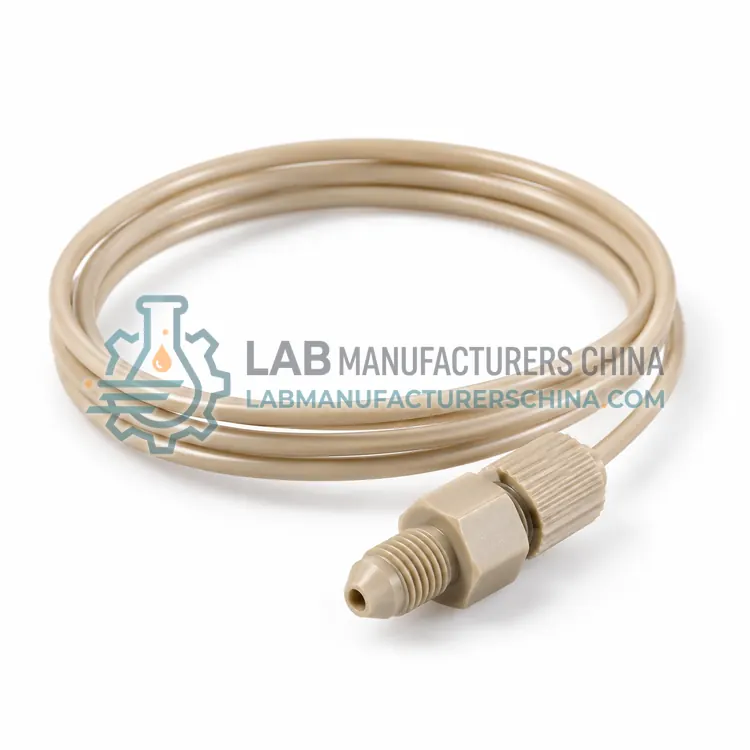
PEEK Tubing and Fittings
PEEK 管路和接头
- SKU CHC-0004
- Chromatography Consumables
- CE (to be confirmed)
- ISO 9001 manufacturing (to be confirmed)
Price on request — FOB / CIF quoted per order
Prices depend on configuration, quantity and destination port.
Key specifications
| Material | PEEK polymer |
|---|---|
| Outer diameter | 1/16 inch |
| Inner diameter | 0.05–0.5 mm |
| Pressure limit | ≈ 400 bar |
| Temperature limit | ≈ 100 °C |
| Fittings | Finger-tight or two-piece |
Request a quote Download brochure · to be provided
By Lab Manufacturers China Technical TeamLast reviewed Standards: USP <621> (chromatography), USP <467> (residual solvents), USP <788> (particulate matter in injections)
What is the PEEK Tubing and Fittings?
PEEK tubing and fittings form an inert flow path in liquid chromatography, avoiding metal contact and corrosion. They are used for ion analysis and high-salt mobile phases. Narrow tubing reduces peak dispersion.
What is the PEEK Tubing and Fittings?
PEEK tubing and fittings form an inert flow path in liquid chromatography, avoiding metal contact and corrosion. They are used for ion analysis and high-salt mobile phases. Narrow tubing reduces peak dispersion.
Overview
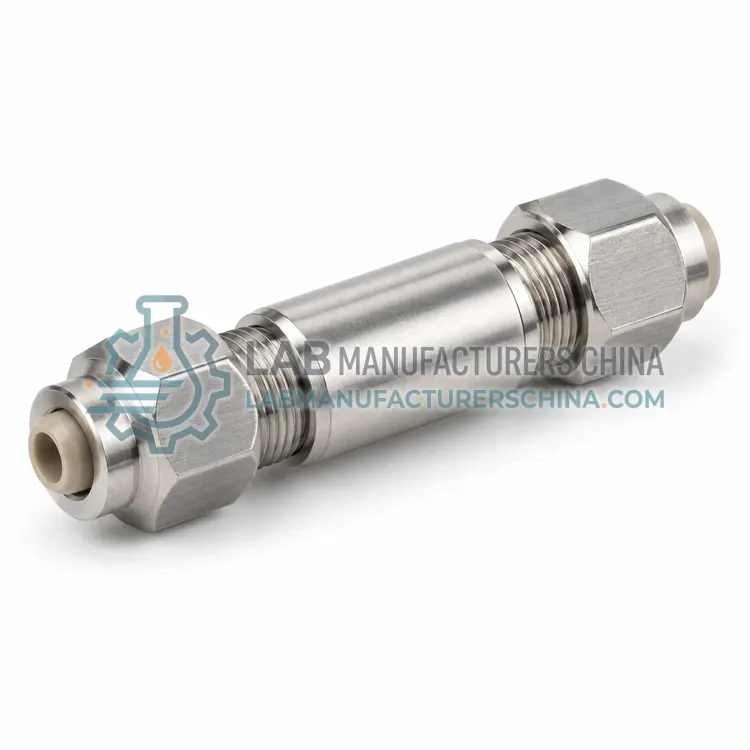
PEEK tubing is a polymer tube, usually 1/16 inch outside diameter with internal diameters from 0.05 to 0.5 mm, connected with finger-tight or two-piece fittings and ferrules. It is chemically resistant, flexible and electrically non-conductive, so it avoids the metal interaction and corrosion that stainless steel can cause with ion chromatography, high-salt mobile phases and metal-sensitive analytes. Tubing internal diameter controls extra-column volume and therefore peak dispersion, so narrow tubing is used for UHPLC and wider tubing where pressure is less critical. PEEK has pressure and temperature limits, typically up to about 400 bar and 100 °C, and it swells slightly in some solvents such as dichloromethane, which can affect fittings. Correct cutting, square ends and clean installation are essential to avoid leaks and dead volume.
How does it work?
Chromatography consumables work by providing a clean, inert flow path and by protecting the analytical column from particulates, involatile residues and reactive analytes. In gas chromatography, the inlet liner holds the injected sample while it vaporises, and its geometry, packing and deactivation affect peak shape and whether involatile material reaches the column; a septum seals the inlet and must reseal after many injections without bleeding siloxanes. In liquid chromatography, frits at the column ends retain the packing while allowing liquid through, and the pore size must be fine enough not to let particles pass but coarse enough to avoid high pressure. PEEK tubing and fittings replace stainless steel where metal interaction or salt corrosion matters. Guard cartridges add a small length of similar packing before the analytical column so contaminants are retained there and the expensive column lasts longer.
What are the key features?
- 1/16 inch OD, 0.05–0.5 mm ID
- Chemically resistant and flexible
- Electrically non-conductive
- Avoids metal interaction
- Pressure limit about 400 bar
- Finger-tight or two-piece fittings
What are the technical specifications?
A typical peek tubing and fittings configuration offers material of PEEK polymer, outer diameter of 1/16 inch, inner diameter of 0.05–0.5 mm, pressure limit of ≈ 400 bar, temperature limit of ≈ 100 °C and fittings of Finger-tight or two-piece. Values are indicative of the product class; the exact figures for each configuration are confirmed on the quotation and the calibration documents supplied with the instrument.
Which applications is it used for?
The PEEK Tubing and Fittings is used in ion chromatography, high-salt mobile phases, metal-sensitive analytes and UHPLC narrow-bore systems. Across the wider Chromatography Consumables class, laboratories also deploy it for gas chromatography injection, liquid chromatography and UHPLC and ion chromatography.
Which standards and certifications apply?
Relevant standards and methods include USP <621> (chromatography), USP <467> (residual solvents), USP <788> (particulate matter in injections), ISO/IEC 17025 (testing and calibration laboratories) and USP <1058> (analytical instrument qualification). Certification candidates for this model are CE and ISO 9001 manufacturing; each is to be confirmed for the specific configuration before shipment, and certificates are supplied only where they have been issued.
Replace liners, septa and guard cartridges on a schedule based on injection count and sample cleanliness, not only when performance visibly degrades, since contamination develops gradually. Keep a log of replacements and the symptoms that prompted them, such as peak tailing, carry-over or pressure rise. Check the exact part number and dimensions, because a wrong ferrule or liner can leak, leak air into the detector or damage the injection port. Handle frits and liners with clean tools to avoid contamination, and never reuse a liner from one method in another without cleaning and inspection. Confirm that PEEK fittings are used within their pressure and temperature range, and store parts in their packaging. Verify that new lots do not introduce ghost peaks before routine use.
How do I select the right PEEK Tubing and Fittings?
Choose PEEK for inert and metal-free flow paths, with the narrowest tubing that your pressure allows. RFQ: system pressure, mobile phase, internal diameter, fitting type and temperature. Provide system pressure, mobile phase, internal diameter and temperature.
How does it compare with other Chromatography Consumables variants?
Match each consumable to the instrument, the method and the analytes. For GC, choose a liner with a geometry and packing suited to the injection mode, split or splitless, and deactivated for active analytes; choose a septum with the right temperature limit and bleed characteristics for the analyte concentrations and run length. For LC, choose frits of the correct porosity and material, and PEEK or titanium fittings for ion analysis and high-salt mobile phases. Add a guard cartridge that matches the analytical column chemistry, and replace it before contamination reaches the column. Confirm the dimensions, thread types and pressures before ordering, because fittings and frits are not interchangeable between systems. Where trace analysis is done, request lot information and test blanks to confirm low background.
Full specifications
| Material | PEEK polymer |
|---|---|
| Outer diameter | 1/16 inch |
| Inner diameter | 0.05–0.5 mm |
| Pressure limit | ≈ 400 bar |
| Temperature limit | ≈ 100 °C |
| Fittings | Finger-tight or two-piece |
| Ferrule | PEEK or stainless |
| Conductivity | Non-conductive |
| Extra-column volume | Set by inner diameter |
| Use | Inert LC flow path |
Indicative values for this product class. Final specifications are confirmed on the quotation and in the calibration documents supplied with the instrument.
Applications
- Ion chromatography
- High-salt mobile phases
- Metal-sensitive analytes
- UHPLC narrow-bore systems
Key features
- 1/16 inch OD, 0.05–0.5 mm ID
- Chemically resistant and flexible
- Electrically non-conductive
- Avoids metal interaction
- Pressure limit about 400 bar
- Finger-tight or two-piece fittings
Frequently asked questions about PEEK Tubing and Fittings
It sets the extra-column volume, which causes peak dispersion. Narrow tubing gives sharper peaks and is used in UHPLC, while wider tubing reduces pressure and suits conventional HPLC.
It is rated to about 400 bar and 100 °C, and it swells slightly in some solvents such as dichloromethane. Beyond these conditions, stainless steel or another material should be considered.
Usually because the tube end is not cut square, the ferrule is not seated or the fitting is over- or under-tightened. A clean square cut and correct assembly prevent leaks and dead volume.
By injection count and sample cleanliness, often every 50–200 injections for dirty samples and less often for clean ones. Symptoms such as peak tailing, carry-over or reduced response indicate it is overdue.
Septum material can bleed siloxanes or other compounds at inlet temperature, and these appear as peaks, especially in trace analysis. Low-bleed septa and a temperature suited to the septum reduce the problem.
Typically 0.2–2 µm, fine enough to retain the packing and block particles but coarse enough to avoid excessive back pressure. The frit material must be compatible with the mobile phase.
Related models