Upright -80 °C Laboratory Freezer
立式 -80 °C 实验室冷冻箱
- SKU CFZ-0001
- -80°C Freezers
- CE (to be confirmed)
- ISO 9001 manufacturing (to be confirmed)
- IEC 61010-2-011 test report (to be confirmed)
Price on request — FOB / CIF quoted per order
Prices depend on configuration, quantity and destination port.
Key specifications
| Temperature range | -50 to -86 °C |
|---|---|
| Net capacity | 300-700 L |
| Refrigeration system | Two-stage cascade |
| Insulation thickness | 100-150 mm polyurethane or VIP |
| Inner doors | 3-6 |
| Ambient rating | 10-32 °C |
Request a quote Download brochure · to be provided
By Lab Manufacturers China Technical TeamLast reviewed Standards: IEC 61010-2-011, IEC 60335-2-89, ENERGY STAR Laboratory Grade Freezers
What is the Upright -80 °C Laboratory Freezer?
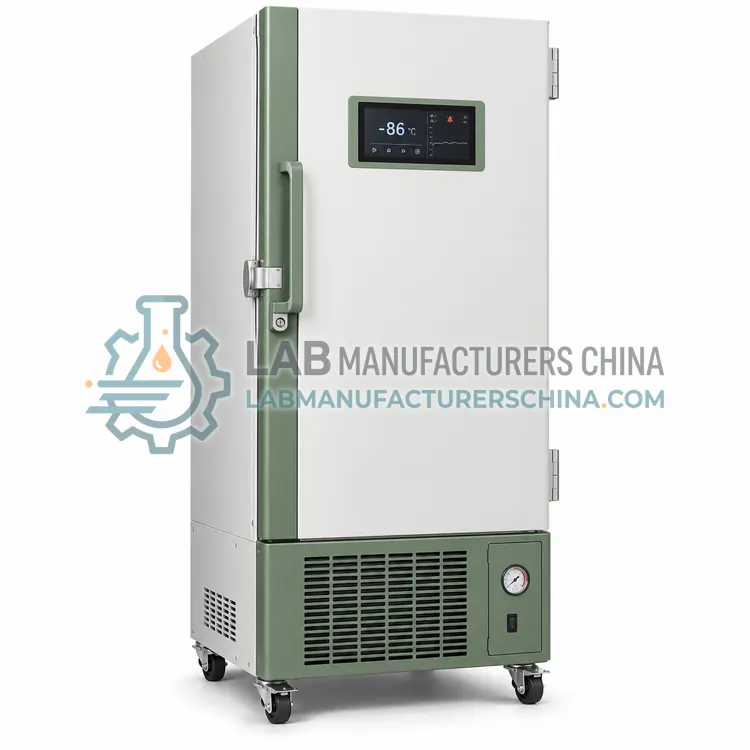
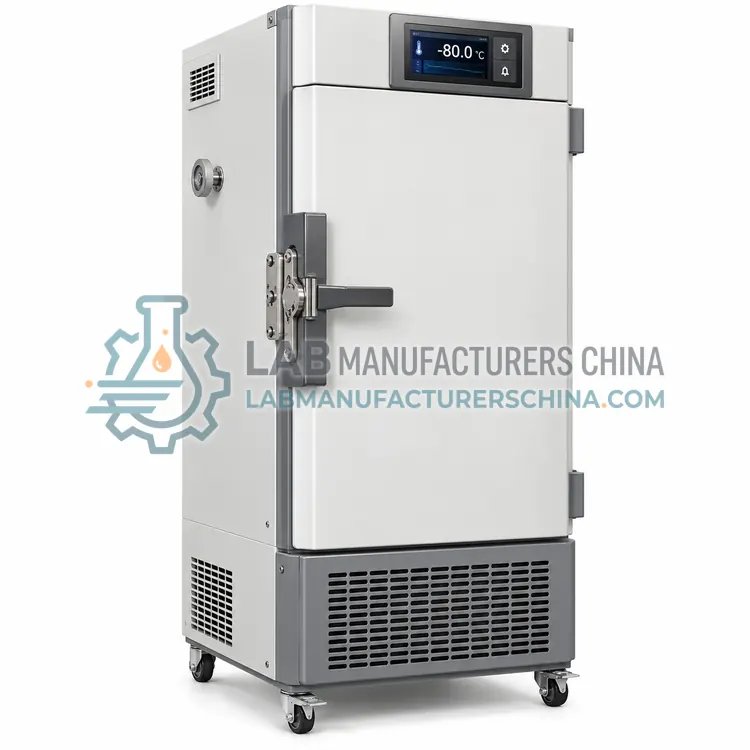
An upright cascade freezer with multiple inner doors and adjustable shelves, holding -60 to -86 °C. It is the most common -80 °C format for laboratories needing organized, rack-based access to boxes of nucleic acids, proteins and cell samples.
What is the Upright -80 °C Laboratory Freezer?
An upright cascade freezer with multiple inner doors and adjustable shelves, holding -60 to -86 °C. It is the most common -80 °C format for laboratories needing organized, rack-based access to boxes of nucleic acids, proteins and cell samples.
Overview
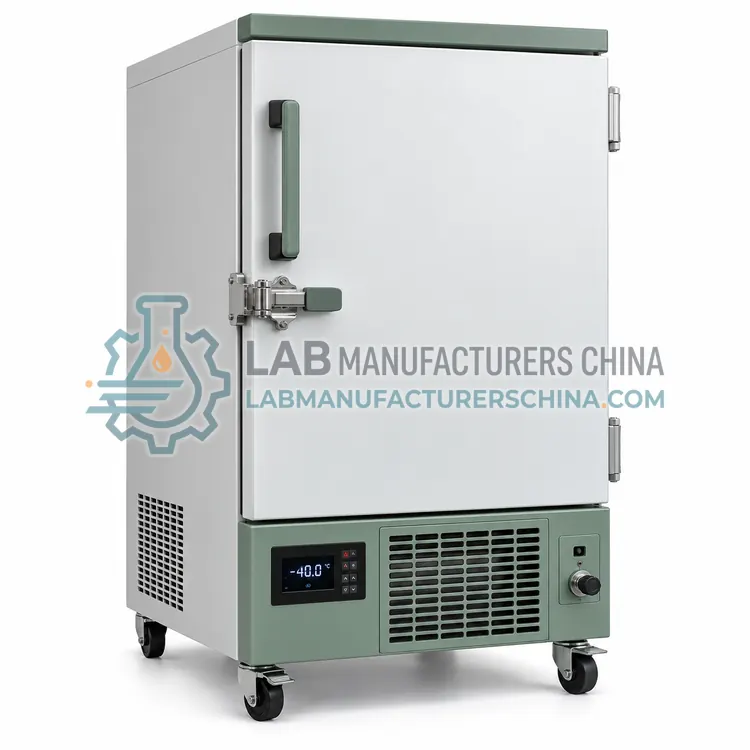
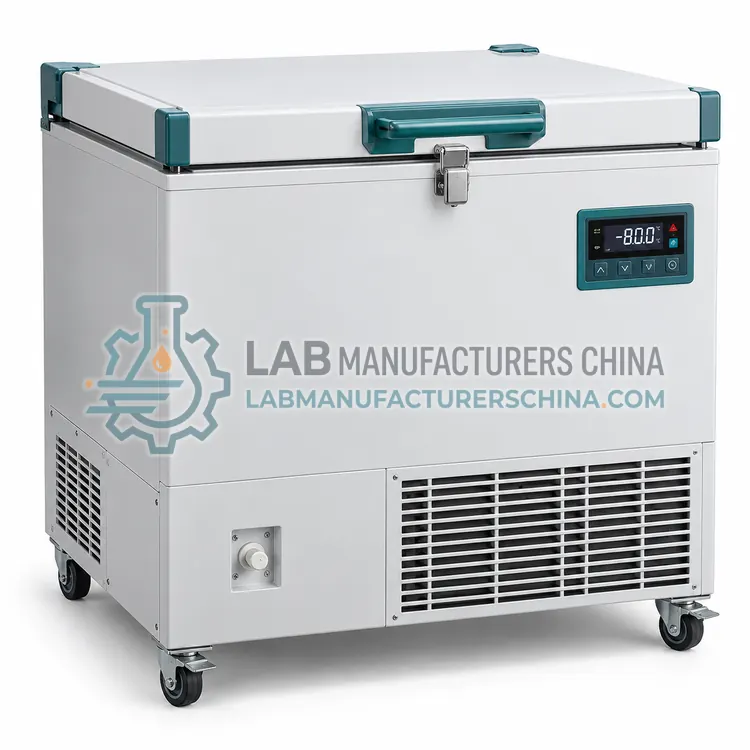
The upright -80 °C freezer stands 1.8 to 2.0 m tall with a footprint of about 0.7 to 1.0 m by 0.8 to 1.0 m and net volumes of 300 to 700 L. Multiple inner doors reduce cold loss when one shelf is accessed, and shelves or racks hold standard 2-inch cryoboxes in organized positions. Cascade refrigeration with two compressors reaches set point in around 6 to 8 hours and maintains -80 °C at 25 °C ambient. Foam or vacuum-insulated walls, typically 100 mm or more, limit heat gain. The touchscreen or LED controller shows temperature and alarm status, and the design includes a pressure-relief port and lockable door handle. Because upright units lose more cold on door opening than chest units, limit access time and use organized rack maps.
How does it work?
A -80 °C freezer needs a much larger temperature lift than a -20 °C unit, which a single refrigerant cannot provide efficiently. Most models use a two-stage cascade. A high-stage circuit with a refrigerant such as R404A cools the condenser of a low-stage circuit, which uses a low-boiling refrigerant such as R508B or R170 blends and reaches evaporator temperatures near -95 °C. Some designs use a single-stage compressor with a mixed-refrigerant blend and an internal heat exchanger. Thick polyurethane foam or vacuum insulation panels, often 100 to 150 mm, reduce heat gain, and multiple inner doors limit cold loss. A microprocessor controller reads a platinum resistance sensor and modulates the compressors, while independent alarm circuits monitor temperature, door status, power and battery. A pressure-equalization port prevents the vacuum that forms after the door closes from locking the door.
What are the key features?
- Multiple inner doors limit cold loss when a single shelf is accessed.
- Two-stage cascade refrigeration holds -80 °C at 25 °C ambient.
- Racks and boxes organize standard 2-inch cryoboxes by position.
- Pressure-equalization port releases the door soon after closing.
- Controller records alarms for temperature, door, power and battery.
- Lockable outer door and handle restrict access.
What are the technical specifications?
A typical upright -80 °c laboratory freezer configuration offers temperature range of -50 to -86 °C, net capacity of 300-700 L, refrigeration system of Two-stage cascade, insulation thickness of 100-150 mm polyurethane or VIP, inner doors of 3-6 and ambient rating of 10-32 °C. Values are indicative of the product class; the exact figures for each configuration are confirmed on the quotation and the calibration documents supplied with the instrument.
Which applications is it used for?
The Upright -80 °C Laboratory Freezer is used in DNA and RNA archives, protein and enzyme storage, cell line banks and clinical specimen storage. Across the wider -80°C Freezers class, laboratories also deploy it for nucleic acid and protein storage, biobank and clinical specimen archives and cell line and tissue preservation.
Which standards and certifications apply?
Relevant standards and methods include IEC 61010-2-011, IEC 60335-2-89, ENERGY STAR Laboratory Grade Freezers, ASHRAE 72, ISO 20387, GB/T 21151 and CLSI QMS. Certification candidates for this model are CE, ISO 9001 manufacturing and IEC 61010-2-011 test report; each is to be confirmed for the specific configuration before shipment, and certificates are supplied only where they have been issued.
Install on a level floor with 200 to 300 mm of clearance at the rear and sides, and keep room temperature at or below 32 °C, because compressors lose capacity in hot rooms. Connect to a dedicated circuit, ideally on emergency power. After transport let the freezer stand upright for 24 hours before starting, and allow 4 to 8 hours to reach set point before loading. Load in stages to avoid temperature spikes. Clean the condenser filter monthly and defrost or remove door frost as needed. Calibrate the display against a reference thermometer yearly and map temperature under load for regulated use. Test alarms and backup systems quarterly, and dispose of or service refrigerants by certified technicians.
How do I select the right Upright -80 °C Laboratory Freezer?
Select the upright format when users need organized shelf-level access and floor space is limited. Chest units are more efficient for rarely accessed archives. In an RFQ give net volume or box count, refrigerant type, ambient limits, inner door count, alarm outputs and backup port requirements.
How does it compare with other -80°C Freezers variants?
Begin with how long samples are stored and how valuable they are. For DNA, RNA, proteins and cells kept for years, -80 °C is the widely used standard, and irreplaceable collections justify redundant monitoring and backup cooling. Choose upright units for organized access, chest units for lower energy and steadier temperature, and under-counter units for small volumes. Compare capacity in box positions rather than liters. Review energy consumption per day, since a -80 °C freezer can use 8 to 20 kWh daily, and check noise and heat rejection for the room. Evaluate pull-down and recovery times, number of inner doors, alarm options, remote monitoring and backup ports for CO2 or LN2. Plan a spare freezer or free space equal to one unit, and confirm ambient rating and electrical supply.
Full specifications
| Temperature range | -50 to -86 °C |
|---|---|
| Net capacity | 300-700 L |
| Refrigeration system | Two-stage cascade |
| Insulation thickness | 100-150 mm polyurethane or VIP |
| Inner doors | 3-6 |
| Ambient rating | 10-32 °C |
| Pull-down time | 6-8 h from 25 °C to -80 °C, empty |
| Box capacity (2-inch) | About 200-500 boxes |
| Noise level | Below 55 dB(A) |
| Power consumption | About 10-18 kWh/day |
Indicative values for this product class. Final specifications are confirmed on the quotation and in the calibration documents supplied with the instrument.
Applications
- DNA and RNA archives
- Protein and enzyme storage
- Cell line banks
- Clinical specimen storage
Key features
- Multiple inner doors limit cold loss when a single shelf is accessed.
- Two-stage cascade refrigeration holds -80 °C at 25 °C ambient.
- Racks and boxes organize standard 2-inch cryoboxes by position.
- Pressure-equalization port releases the door soon after closing.
- Controller records alarms for temperature, door, power and battery.
- Lockable outer door and handle restrict access.
Frequently asked questions about Upright -80 °C Laboratory Freezer
An empty unit usually needs 6 to 8 hours from 25 °C to reach -80 °C. Allow additional time before loading samples, and load in stages to avoid temperature spikes.
A 500 L unit typically holds 300 to 400 standard 2-inch boxes depending on rack layout. Use the maker's rack drawing to confirm positions rather than liters.
Vacuum insulation panels give thinner walls, more internal volume per footprint and lower heat gain, which can reduce energy use. They cost more and require careful handling, so weigh savings against price.
It preserves nucleic acids, proteins, cell lines, serum, tissue and clinical specimens for long periods. At -80 °C, enzymatic and chemical degradation slows greatly, so samples remain usable for years in research, biobanking and diagnostic laboratories.
Typical upright units use about 8 to 20 kWh per day, depending on volume, insulation, ambient temperature and door openings. Chest and vacuum-insulated models tend to be lower. Compare measured daily consumption under a standard test method.
Warm air that enters during opening cools and contracts quickly, creating a partial vacuum. A pressure-equalization port or a few minutes of waiting allows air to enter and releases the door. Do not force it.
Related models
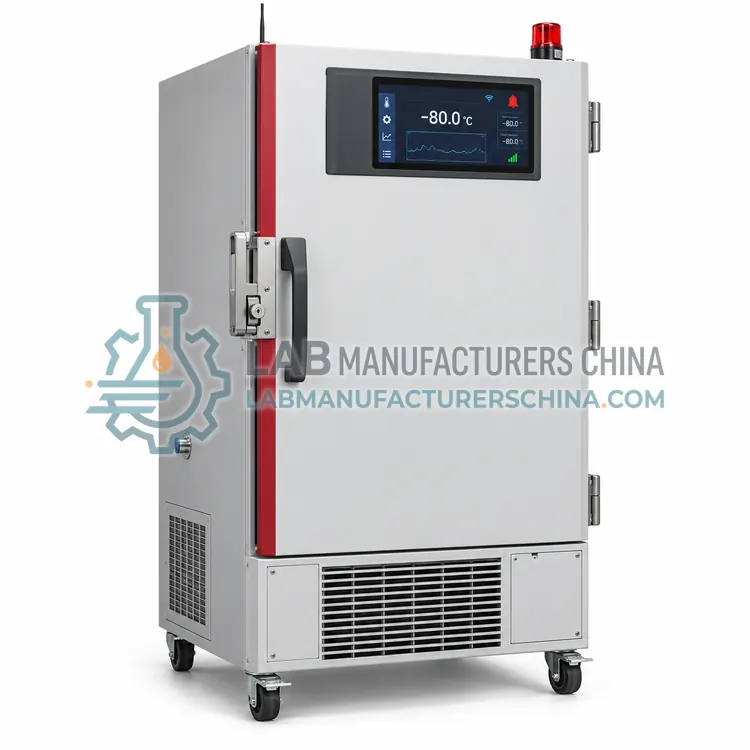
-80 °C Freezer with Automated Monitoring and Remote Alarm
带自动监控和远程报警的 -80 °C 冷冻箱
- CE (to be confirmed)
- +2