Automated Cell Washing and Media Exchange System
自动细胞洗涤与换液系统
- SKU CEP-0004
- Cell Processing
- CE (to be confirmed)
- ISO 13485 manufacturing (to be confirmed)
- ISO 9001 manufacturing (to be confirmed)
- IEC 61010-2-020 safety (to be confirmed)
Price on request — FOB / CIF quoted per order
Prices depend on configuration, quantity and destination port.
Key specifications
| Sample volume | 10–2,000 mL |
|---|---|
| Recovery | above 90% (typical) |
| Viability | above 90% (typical) |
| Concentration factor | up to approx. 20x |
| Separation method | Spinning membrane or counterflow centrifugation |
| Processing time | approx. 20–60 min |
Request a quote Download brochure · to be provided
By Lab Manufacturers China Technical TeamLast reviewed Standards: IEC 61010-1, IEC 61010-2-010, IEC 61010-2-020
What is the Automated Cell Washing and Media Exchange System?
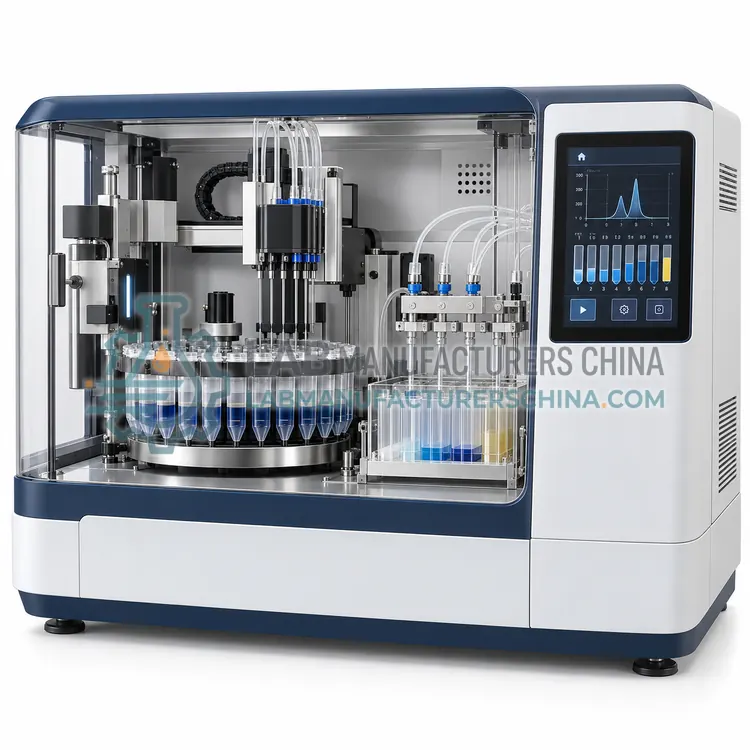
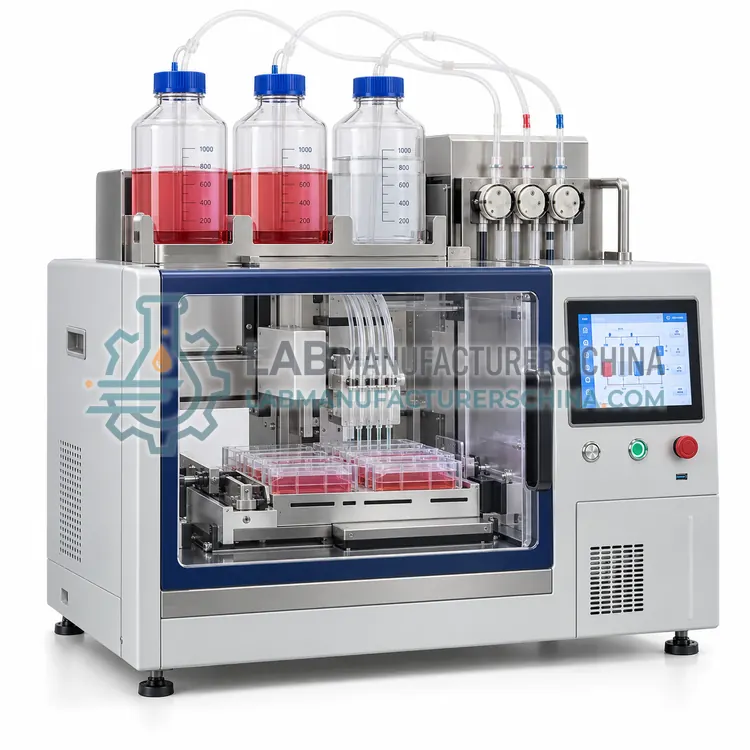
An automated cell washing and media exchange system centrifuges, washes and resuspends cells in a closed fluid path, concentrating cultures and removing cryoprotectant, antibodies or serum with reproducible recovery for regulated cell processing.
What is the Automated Cell Washing and Media Exchange System?
An automated cell washing and media exchange system centrifuges, washes and resuspends cells in a closed fluid path, concentrating cultures and removing cryoprotectant, antibodies or serum with reproducible recovery for regulated cell processing.
Overview
The instrument typically uses a spinning membrane, a counterflow centrifuge or a staged chamber to separate cells from the liquid phase without pelleting them in a tube, so shear and pellet compaction are limited. Buffer, medium or wash solution is added from sterile bags through a closed circuit, and the final product is collected in a bag or vial. Programme steps define volume, flow rate, g-force and dilution factor, and the system logs them for traceability. Typical recovery is above 90% with viability maintained above 90% for well-optimised protocols, and processing time is 20–60 minutes depending on volume. Because the circuit is closed and single-use, the risk of contamination and operator exposure is much lower than with open centrifugation.
How does it work?
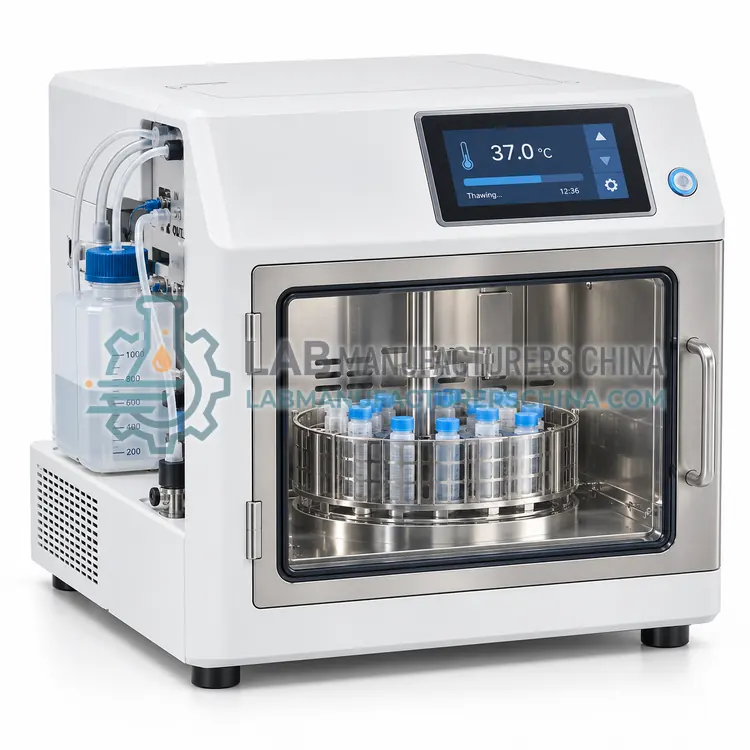
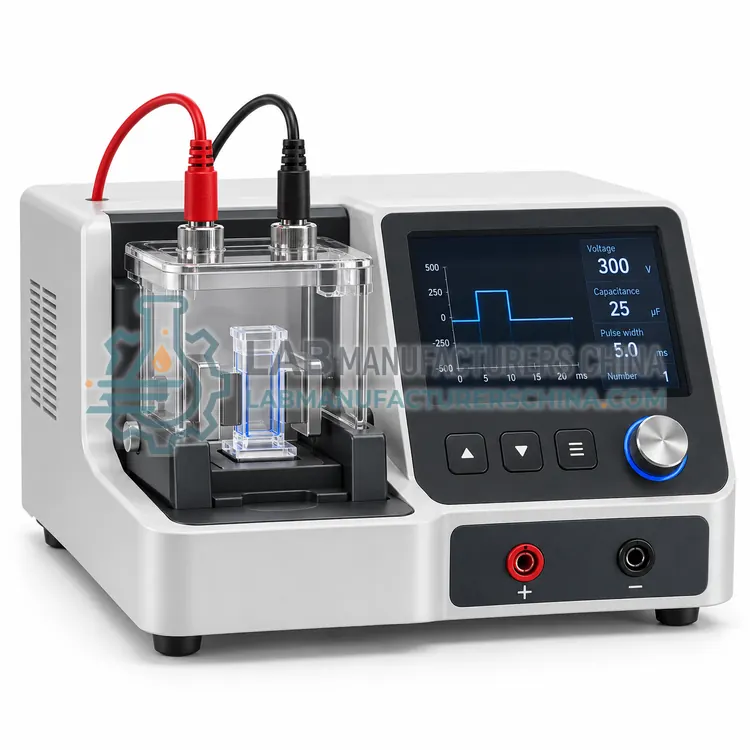
Each processing step addresses a different physical or biological barrier. Electroporation applies a brief electric pulse that transiently increases membrane permeability so plasmid DNA, RNA or protein can enter the cytoplasm or nucleus; efficiency depends on field strength, pulse shape and buffer conductivity. Thawing instruments warm frozen vials under controlled heat transfer so that cells pass quickly through the temperature range where ice recrystallisation damages membranes. Tissue dissociation combines enzymatic digestion with controlled mechanical shear, using a heater-shaker, a gentleMACS-style rotor or a closed automated chamber, to release single cells while limiting DNA release that causes clumping. Media exchange systems centrifuge, resuspend and wash cells in a closed circuit for concentration and formulation. Vibrating microtomes cut living tissue into slices with minimal damage, preserving neural circuitry for electrophysiology and explant culture.
What are the key features?
- Closed single-use fluid path with sterile bag connections
- Spinning membrane or counterflow separation without pelleting
- Programmable volume, flow rate, g-force and dilution
- Recovery above 90% with viability maintained above 90%
- Removal of cryoprotectant, antibodies or serum proteins
- Process logging for traceability in regulated workflows
What are the technical specifications?
A typical automated cell washing and media exchange system configuration offers sample volume of 10–2,000 mL, recovery of above 90% (typical), viability of above 90% (typical), concentration factor of up to approx. 20x, separation method of Spinning membrane or counterflow centrifugation and processing time of approx. 20–60 min. Values are indicative of the product class; the exact figures for each configuration are confirmed on the quotation and the calibration documents supplied with the instrument.
Which applications is it used for?
The Automated Cell Washing and Media Exchange System is used in cryoprotectant removal after thawing, cell therapy product formulation and concentration, antibody removal after magnetic selection and media exchange in closed culture processes. Across the wider Cell Processing class, laboratories also deploy it for transfection of primary cells and cell lines, recovery of cryopreserved cell stocks and primary tissue dissociation for cell culture.
Which standards and certifications apply?
Relevant standards and methods include IEC 61010-1, IEC 61010-2-010, IEC 61010-2-020, ISO 20387, USP <1046> and ISO 13485. Certification candidates for this model are CE, ISO 13485 manufacturing, ISO 9001 manufacturing and IEC 61010-2-020 safety; each is to be confirmed for the specific configuration before shipment, and certificates are supplied only where they have been issued.
Keep consumables sterile and single-use where possible, and use aseptic technique for anything that will be cultured. Electroporation cuvettes must be clean and the buffer free of salts that cause arcing; verify pulse delivery by checking the time constant, and monitor temperature because excessive Joule heating kills cells. Dissociation protocols should be stopped as soon as single cells are released, since prolonged enzyme exposure cleaves surface antigens and reduces viability. Cells are sensitive to repeated centrifugation, so minimise steps and use gentle speeds. Validate each new protocol against a reference method, recording recovery, viability and marker expression, and check the quality of tissue slicing with a viability stain such as calcein AM. Maintain temperature-controlled equipment within tolerance and document calibration.
How do I select the right Automated Cell Washing and Media Exchange System?
Select a closed washing system when the process must be aseptic, traceable and reproducible, or when large volumes must be handled without open centrifugation. Specify volume range, recovery expectations, concentration factor, fluid path closure and process logging.
How does it compare with other Cell Processing variants?
Choose by the cell type and the downstream assay. For transfection, compare electroporation with chemical or lipid methods: electroporation suits hard-to-transfect primary cells and suspension lines but needs optimisation of pulse conditions and cell numbers. For tissue work, decide between enzymatic digestion with mechanical shear for solid tissue and gentler dissociation when surface markers or viability are critical. For neural tissue, vibrating microtomes and automated slicers preserve viability better than blade homogenisation. Thawing and media exchange instruments should be selected for closed processing, traceability and reproducibility between operators when regulated workflows are involved. Across all of these, the decisive parameters are sheared-cell percentage, recovery, viability, sterility, sample capacity and the availability of validated protocols for your specific cell type.
Full specifications
| Sample volume | 10–2,000 mL |
|---|---|
| Recovery | above 90% (typical) |
| Viability | above 90% (typical) |
| Concentration factor | up to approx. 20x |
| Separation method | Spinning membrane or counterflow centrifugation |
| Processing time | approx. 20–60 min |
| Flow rate | 10–200 mL/min |
| Fluid path | Closed, sterile single-use set |
| Data logging | Programme steps, volumes and recovery record |
| Dimensions (W x D x H) | approx. 600 x 600 x 700 mm |
Indicative values for this product class. Final specifications are confirmed on the quotation and in the calibration documents supplied with the instrument.
Applications
- Cryoprotectant removal after thawing
- Cell therapy product formulation and concentration
- Antibody removal after magnetic selection
- Media exchange in closed culture processes
Key features
- Closed single-use fluid path with sterile bag connections
- Spinning membrane or counterflow separation without pelleting
- Programmable volume, flow rate, g-force and dilution
- Recovery above 90% with viability maintained above 90%
- Removal of cryoprotectant, antibodies or serum proteins
- Process logging for traceability in regulated workflows
Frequently asked questions about Automated Cell Washing and Media Exchange System
The cells never leave the closed system, so sterility is maintained and operator exposure is reduced. Recovery and final volume are set by the programme, giving reproducible results between operators and shifts.
Above 90% for cells with good viability, with losses increasing if the suspension contains many dead cells, aggregates or debris. Recovery should be measured against the starting count for every batch.
Yes, provided the programmed dilution and wash volumes are followed. Removing DMSO promptly after thawing matters because it is toxic at 37 °C, so washing should follow thawing as quickly as practical.
A brief electric pulse transiently increases membrane permeability and drives charged molecules through the membrane. Efficiency depends on field strength, pulse duration and buffer conductivity, and conditions must be optimised for each cell type to balance uptake against cell death.
Cells must pass quickly through the temperature range where ice recrystallisation damages membranes, so controlled rapid thawing improves recovery. Slow thawing lets small ice crystals grow, and prolonged exposure to the cryoprotectant at warm temperatures is also toxic.
Enzyme choice and concentration, digestion time, temperature and mechanical shear all matter. The goal is to release single cells with intact surface markers and high viability, so protocols should be stopped as soon as dissociation is complete.
Related models