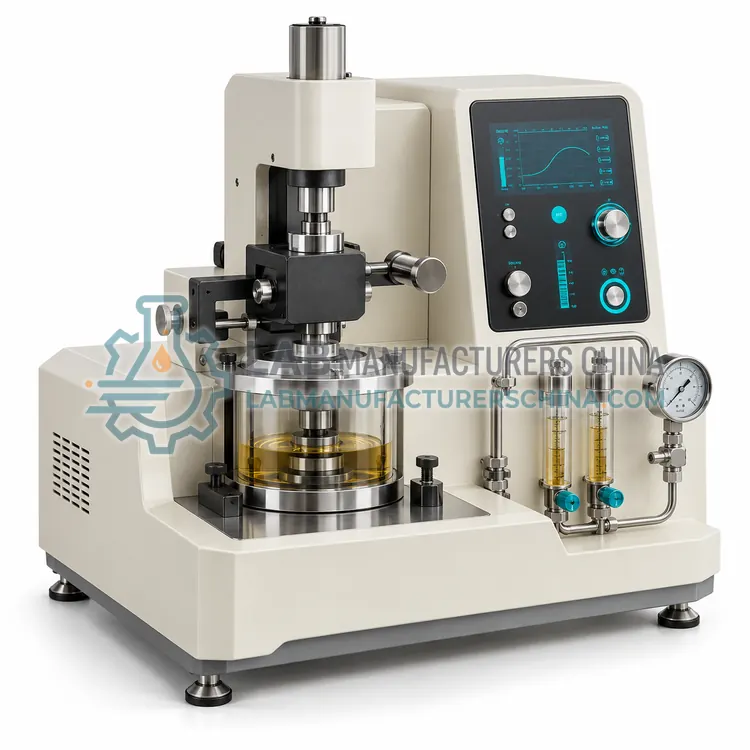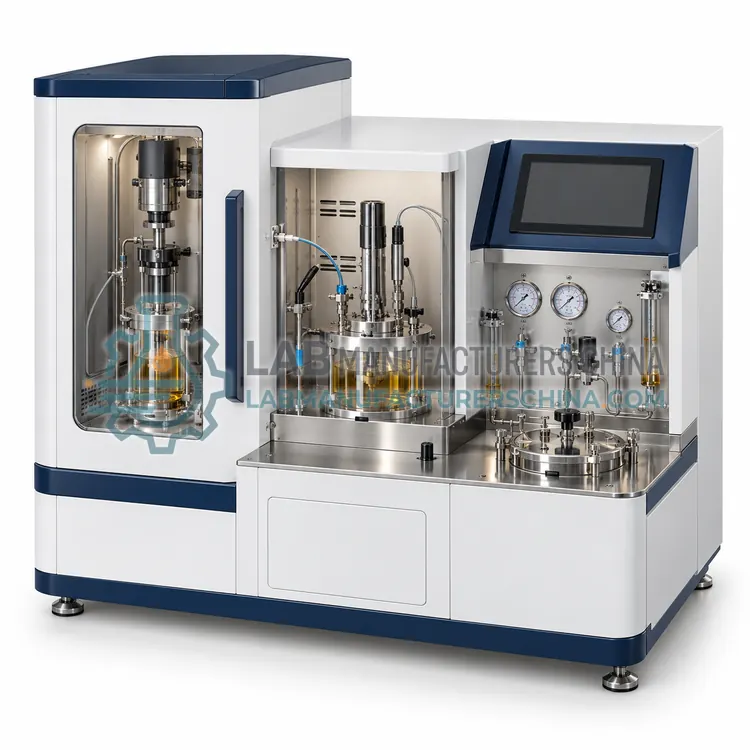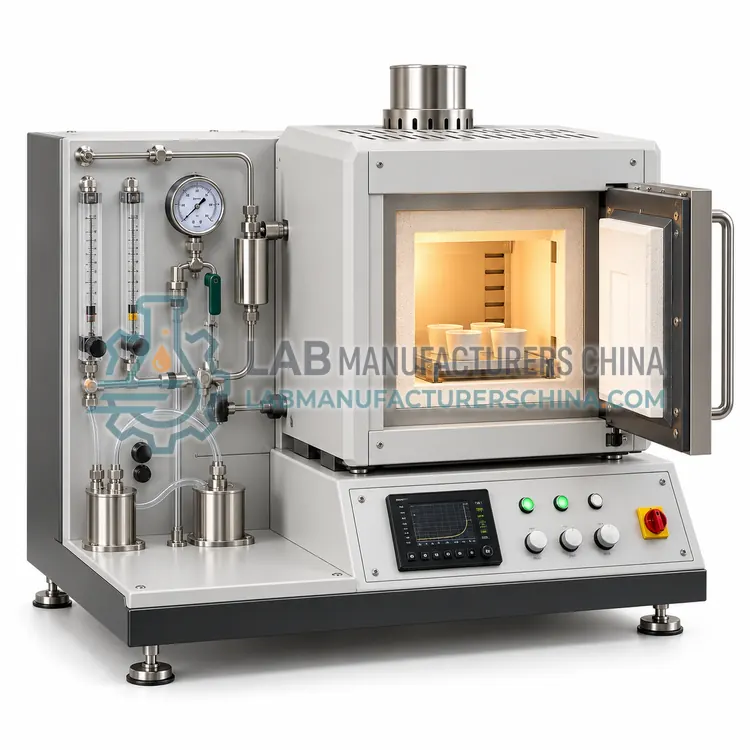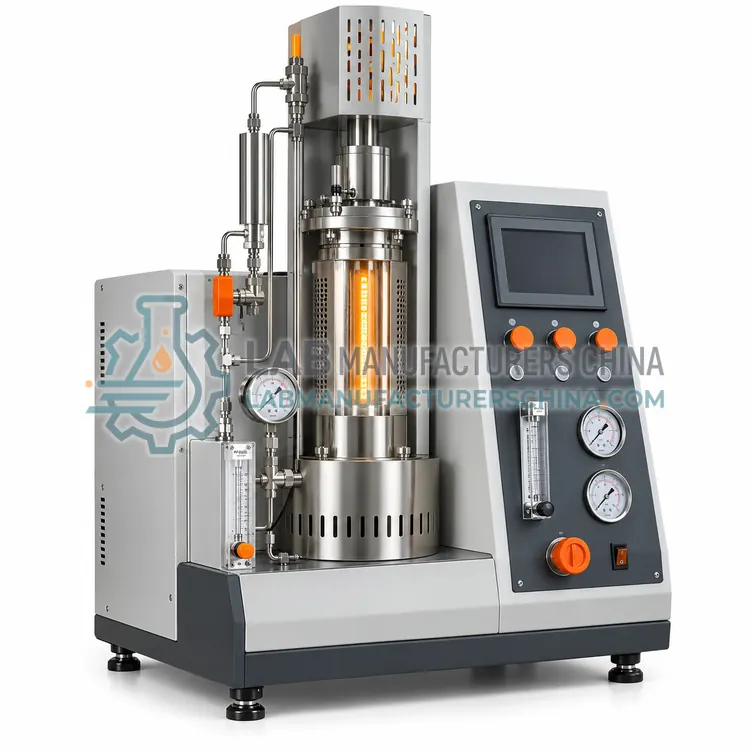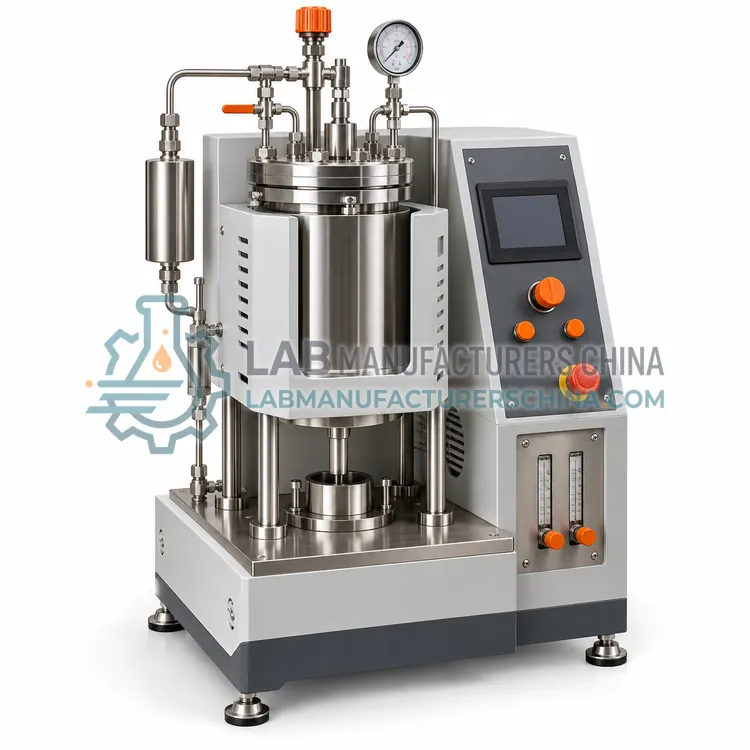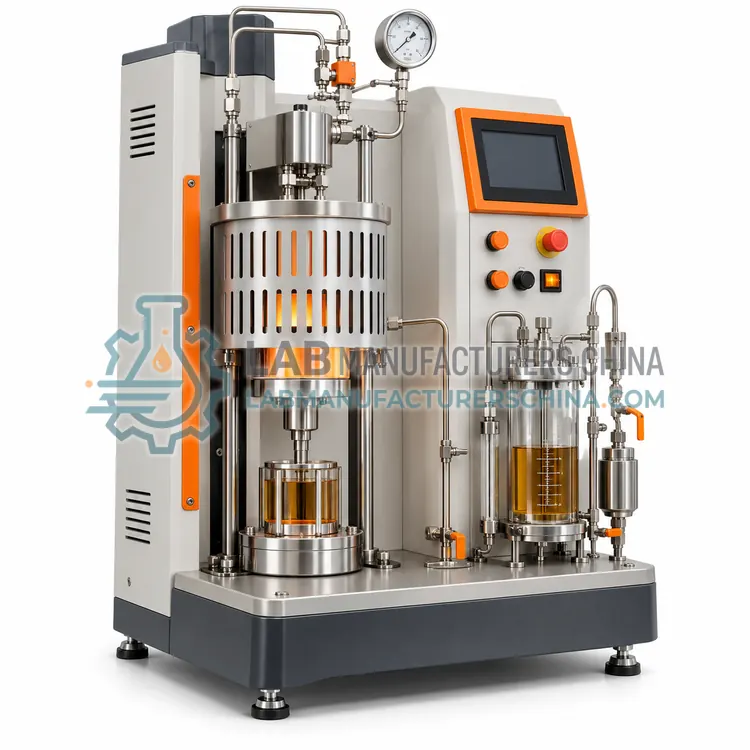
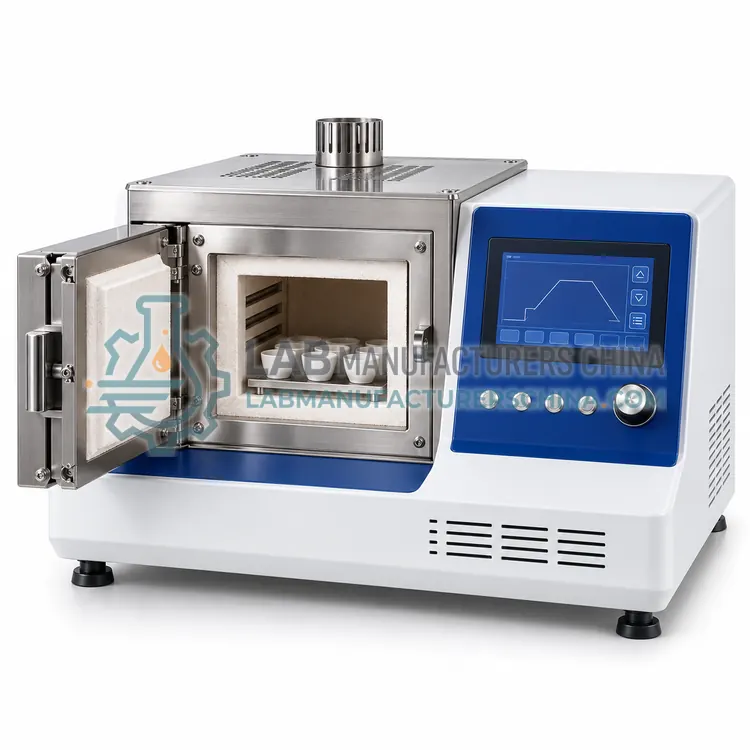
Programmable Muffle Furnace Ash Analyzer
程序控温箱式炉灰分分析仪
- SKU ASA-0001
- Ash Analyzers
- CE (to be confirmed)
- ISO 9001 manufacturing (to be confirmed)
Price on request — FOB / CIF quoted per order
Prices depend on configuration, quantity and destination port.
Key specifications
| Maximum temperature | 1000–1200 °C |
|---|---|
| Working temperature for ash | 815 ± 10 °C |
| Chamber volume | 5–30 L |
| Temperature uniformity | ± 5 °C at 815 °C |
| Heating rate | 5–10 °C/min programmable |
| Controller | 30-segment PID program |
Request a quote Download brochure · to be provided
By Lab Manufacturers China Technical TeamLast reviewed Standards: ASTM D3174, ISO 1171, GB/T 212
What is the Programmable Muffle Furnace Ash Analyzer?
A programmable muffle furnace ash analyzer heats weighed crucibles through a controlled temperature ramp to 815 °C and holds them until constant mass, giving the reference gravimetric ash result. It is the basis for acceptance testing.
What is the Programmable Muffle Furnace Ash Analyzer?
A programmable muffle furnace ash analyzer heats weighed crucibles through a controlled temperature ramp to 815 °C and holds them until constant mass, giving the reference gravimetric ash result. It is the basis for acceptance testing.
Overview
This is the classical apparatus for ash determination, built as a laboratory instrument with a programmable controller, thermocouple, ceramic fiber insulation and, usually, a multi-segment ramp program that dries, ignites and then holds the sample. Crucibles are placed in the chamber, heated to 815 °C in air, held for the time the method states and then cooled in a desiccator before weighing on a balance reading to 0.1 mg. Furnaces vary in chamber volume from a few liters to about 30 L and in maximum temperature from 1000 to 1200 °C, though 815 °C is the working point for ash. Because it is the reference method, results are accepted for contracts and for calibrating faster instrumental analyzers. Its limits are manual handling, a total cycle of two to four hours and the need for temperature verification at the sample position.
How does it work?
Ash is the inorganic residue that remains after complete combustion of the organic matter in coal. The reference method burns a weighed sample in air in a muffle furnace at 815 °C, holds it until constant mass and reweighs the residue. Programmable furnaces implement this with controlled heating ramps and, in automated versions, a carousel or robot that moves crucibles to a balance. Thermogravimetric analyzers combine furnace and balance so mass loss is recorded continuously, and the residual mass at the end of the program is reported as ash. X-ray fluorescence analyzers irradiate a pressed or loose sample and relate mineral element intensities to ash through calibrations built on coals of similar rank. Dual-energy gamma transmission units measure the attenuation difference between low-energy and high-energy gamma beams across a coal layer on a conveyor, which depends on average atomic number and therefore on ash.
What are the key features?
- Multi-segment programmable temperature ramp to 815 °C
- Chamber volume from about 5 to 30 L
- Ceramic fiber insulation with low exterior surface temperature
- Type K or N thermocouple with over-temperature protection
- Door interlock and forced air exhaust connection
- Digital controller with soak timer and repeat programs
What are the technical specifications?
A typical programmable muffle furnace ash analyzer configuration offers maximum temperature of 1000–1200 °C, working temperature for ash of 815 ± 10 °C, chamber volume of 5–30 L, temperature uniformity of ± 5 °C at 815 °C, heating rate of 5–10 °C/min programmable and controller of 30-segment PID program. Values are indicative of the product class; the exact figures for each configuration are confirmed on the quotation and the calibration documents supplied with the instrument.
Which applications is it used for?
The Programmable Muffle Furnace Ash Analyzer is used in reference ash determination for coal contracts, calibration of rapid ash analyzers, ash in coke and solid biofuels and proficiency testing laboratories. Across the wider Ash Analyzers class, laboratories also deploy it for coal washing plant ash control, power station coal quality checks and contract ash limit verification.
Which standards and certifications apply?
Relevant standards and methods include ASTM D3174, ISO 1171, GB/T 212, ASTM D7582, ASTM D4326, ISO 18122 and IEC 61010-1. Certification candidates for this model are CE and ISO 9001 manufacturing; each is to be confirmed for the specific configuration before shipment, and certificates are supplied only where they have been issued.
Locate ashing furnaces under an extraction hood, because combustion gases and fine ash leave the crucibles and heat the surrounding air. Check furnace temperature uniformity at the working set point, not only at the controller, and verify it annually with a calibrated thermocouple. Use crucibles of a specified material and pre-ignite them so that blanks are stable, and handle cooled crucibles in a desiccator to avoid moisture pickup. Confirm that the balance used has sufficient resolution for the sample mass and is checked with traceable weights. For instrumental analyzers, keep the calibration updated with reference coals covering your rank and ash range, and re-verify it after any hardware service, since drift turns into systematic bias in reported ash.
How do I select the right Programmable Muffle Furnace Ash Analyzer?
Select the programmable muffle furnace as the reference instrument for acceptance testing and for calibrating faster analyzers. Specify chamber volume for your crucible throughput, maximum temperature, temperature uniformity at 815 °C, ramp programming and fume extraction, and ask for a uniformity test report.
How does it compare with other Ash Analyzers variants?
Begin with the basis your contract cites, because ashing temperature, atmosphere and holding time differ between methods and results are not interchangeable. Then decide between the reference gravimetric approach and rapid instrumental prediction. Gravimetric muffle furnaces are accurate and inexpensive but slow and labor-intensive; macro thermogravimetric analyzers automate the whole sequence and handle large batches; X-ray fluorescence analyzers give near-instant results and also report sulfur and mineral elements, but must be calibrated for the coal ranks you test. Gamma transmission units work on-line or at high throughput on a coarse feed and suit process control rather than acceptance testing. Finally check sample mass and particle size requirements, crucible handling, temperature uniformity, data output and whether repeatability meets the tolerance your specification allows.
Full specifications
| Maximum temperature | 1000–1200 °C |
|---|---|
| Working temperature for ash | 815 ± 10 °C |
| Chamber volume | 5–30 L |
| Temperature uniformity | ± 5 °C at 815 °C |
| Heating rate | 5–10 °C/min programmable |
| Controller | 30-segment PID program |
| Sample mass | About 1 g air-dried coal |
| Cycle time | 2–4 h including cooling |
| Power supply | 220/380 V, 3–6 kW |
Indicative values for this product class. Final specifications are confirmed on the quotation and in the calibration documents supplied with the instrument.
Applications
- Reference ash determination for coal contracts
- Calibration of rapid ash analyzers
- Ash in coke and solid biofuels
- Proficiency testing laboratories
Key features
- Multi-segment programmable temperature ramp to 815 °C
- Chamber volume from about 5 to 30 L
- Ceramic fiber insulation with low exterior surface temperature
- Type K or N thermocouple with over-temperature protection
- Door interlock and forced air exhaust connection
- Digital controller with soak timer and repeat programs
Frequently asked questions about Programmable Muffle Furnace Ash Analyzer
The heating, soaking and cooling sequence usually takes two to four hours, depending on the program and the number of crucibles. Automated thermogravimetric or carousel instruments shorten the operator time rather than the furnace time itself.
Pre-ignition removes moisture and volatile matter from new crucibles so blanks are constant, and desiccator cooling prevents the hot ash from absorbing atmospheric moisture, which would make the mass reading drift upward.
Some laboratories use the same chamber for both when the controller offers the required programs, but volatile matter needs a covered crucible and a shorter, lower-temperature exposure, so separate furnaces are often kept to avoid cross-contamination.
Ash is the inorganic residue left after the combustible matter is completely burned, reported as a percentage of the sample mass on a stated basis. It affects calorific value, boiler slagging and the cost of transport and disposal.
The standard methods specify 815 °C to burn off carbon completely while avoiding loss of mineral matter or fusion of the ash, which would change the result. Temperature must be verified at the sample position, not only at the controller.
X-ray fluorescence and gamma analyzers report ash in seconds to minutes and suit process control, but they are secondary methods calibrated against the furnace reference. Acceptance testing still relies on gravimetric ashing under the cited standard.
Related models