Anaerobic Workstation
厌氧工作站
- SKU ANS-0004
- Anaerobic Systems
- CE (to be confirmed)
- ISO 9001 manufacturing (to be confirmed)
- IEC 61010-1 compliance (to be confirmed)
Price on request — FOB / CIF quoted per order
Prices depend on configuration, quantity and destination port.
Key specifications
| Working volume | 300–1,200 L |
|---|---|
| Oxygen level | Below 5 ppm (working) |
| Atmosphere | N2 base with 5% CO2, 5–10% H2 |
| Temperature range | Ambient +5 to 45 °C |
| Temperature control | Internal incubator, ±0.5 °C |
| Airlock | Automatic purge cycle |
Request a quote Download brochure · to be provided
By Lab Manufacturers China Technical TeamLast reviewed Standards: ISO 15213, ISO 7937, ISO 11133
What is the Anaerobic Workstation?
An anaerobic workstation is a sealed chamber with gloves and an airlock that lets operators plate, subculture and inspect samples under a continuously anaerobic atmosphere. It suits clinical and research laboratories working with slow-growing anaerobes.
What is the Anaerobic Workstation?
An anaerobic workstation is a sealed chamber with gloves and an airlock that lets operators plate, subculture and inspect samples under a continuously anaerobic atmosphere. It suits clinical and research laboratories working with slow-growing anaerobes.
Overview
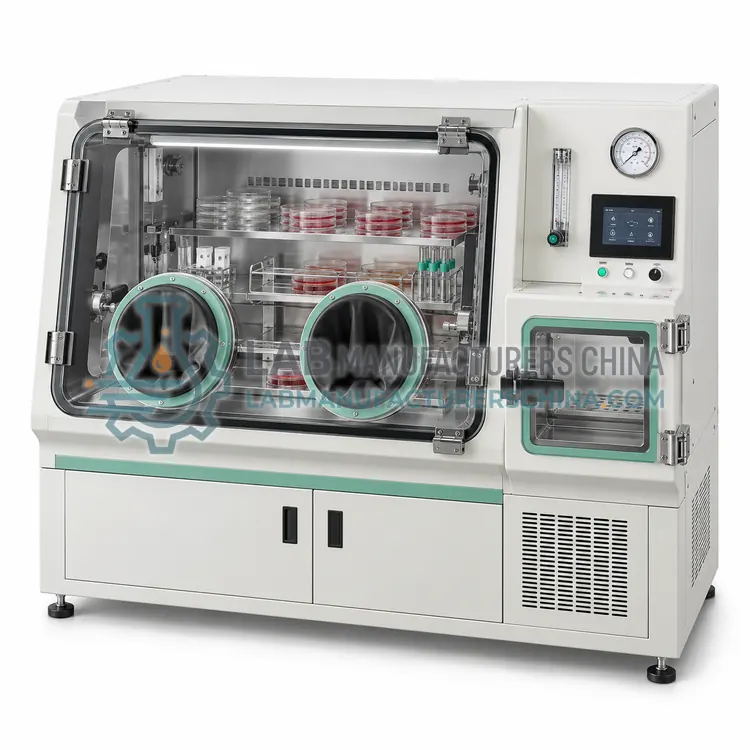
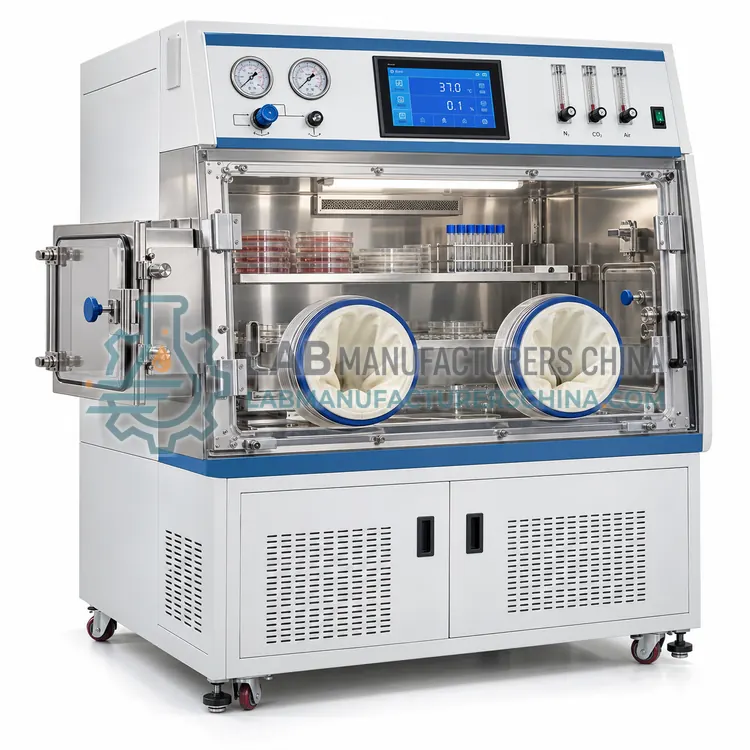
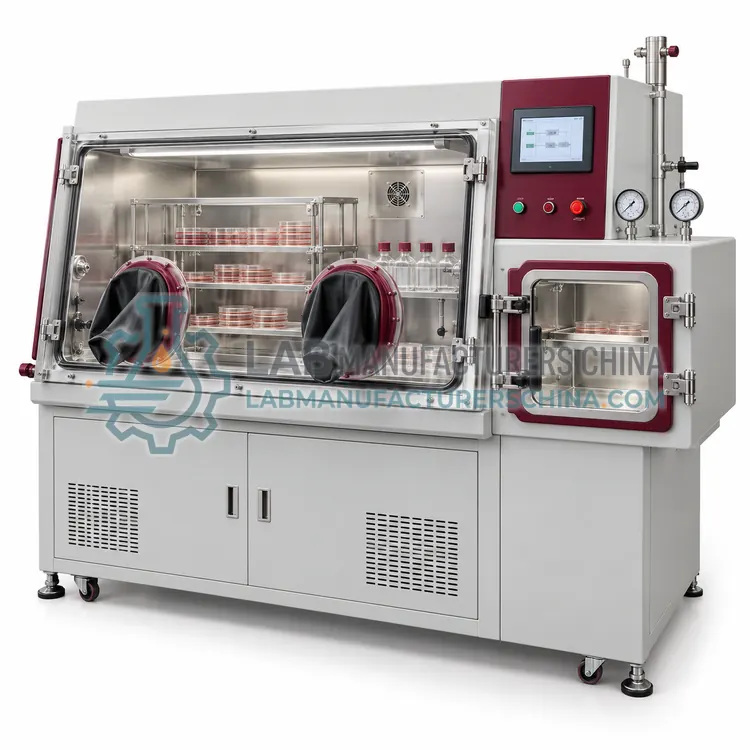
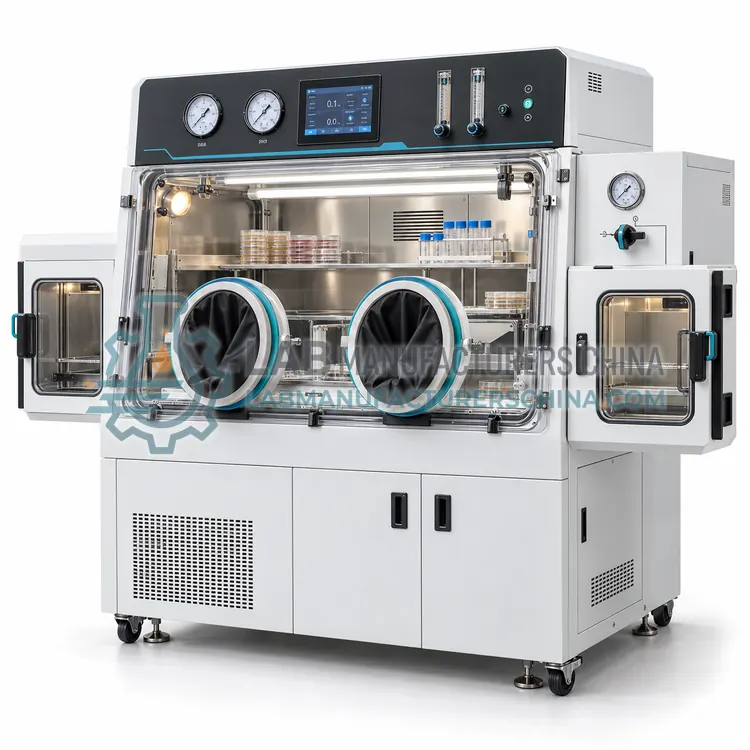
An anaerobic workstation keeps a working volume permanently anaerobic so that samples never contact air. A nitrogen, hydrogen and carbon dioxide atmosphere is circulated through a catalyst, and an airlock transfers plates, samples and equipment in and out without breaking the internal atmosphere. Gloves or sleeves built into the front panel allow the operator to handle plates, loop cultures and read results while observing through a clear window. Many workstations include a small internal incubator or warming plate, gas and vacuum ports, internal lighting and a shelf system, so a full anaerobic workflow happens in one place. Some designs provide two chambers, one for handling and one for incubation, or a separate entry chamber. They are costlier and consume more gas than jars or incubators but greatly reduce the oxygen exposure and handling time for strict anaerobes.
How does it work?
Anaerobic systems remove oxygen and hold a reduced environment. Sealed jars and flexible bags use a gas-generating sachet that reacts with water to consume oxygen and release carbon dioxide and hydrogen, while a palladium catalyst combines residual hydrogen with oxygen to form water. Larger chambers repeatedly flush the working volume with a nitrogen, hydrogen and carbon dioxide mixture and circulate the atmosphere through the catalyst to keep oxygen below a few parts per million. Methylene blue or resazurin indicators confirm anaerobiosis by color change, and an anaerobic incubator maintains both the atmosphere and a precise temperature. Airlocks let plates and samples enter without introducing air, and gloves or sleeves allow manipulation inside the chamber.
What are the key features?
- Permanently anaerobic working volume with catalyst circulation
- Gloves or sleeves for direct manipulation inside the chamber
- Airlock for samples, plates and equipment
- Internal incubator, warming plate and shelving
- Continuous oxygen monitoring with alarm
What are the technical specifications?
A typical anaerobic workstation configuration offers working volume of 300–1,200 L, oxygen level of Below 5 ppm (working), atmosphere of N2 base with 5% CO2, 5–10% H2, temperature range of Ambient +5 to 45 °C, temperature control of Internal incubator, ±0.5 °C and airlock of Automatic purge cycle. Values are indicative of the product class; the exact figures for each configuration are confirmed on the quotation and the calibration documents supplied with the instrument.
Which applications is it used for?
The Anaerobic Workstation is used in clinical culture of strict anaerobes, anaerobic antimicrobial susceptibility testing, microbiome research and food and environmental anaerobe isolation. Across the wider Anaerobic Systems class, laboratories also deploy it for clinical microbiology of anaerobic infections, food microbiology and spoilage testing and environmental and water analysis.
Which standards and certifications apply?
Relevant standards and methods include ISO 15213, ISO 7937, ISO 11133, CLSI M11 and IEC 61010-1. Certification candidates for this model are CE, ISO 9001 manufacturing and IEC 61010-1 compliance; each is to be confirmed for the specific configuration before shipment, and certificates are supplied only where they have been issued.
Place gas-generating jars and bags in an incubator at the required temperature and record the start time, because anaerobiosis develops over one to two hours. Check catalyst activity regularly, since saturated palladium stops working and must be regenerated by heating. Replace indicators each run and keep a log. For chambers and workstations, verify oxygen readings with an independent analyzer, monitor gas supply and pressure, replace gloves when they leak and schedule catalyst and filter service. Avoid introducing large volumes of air through the airlock too quickly. Include anaerobic systems in routine equipment qualification and follow IEC 61010-1 for electrical safety.
How do I select the right Anaerobic Workstation?
Choose a workstation when operators must handle strict anaerobes continuously, as in clinical isolation and susceptibility testing. In an RFQ specify working volume, oxygen level and monitoring, glove and port configuration, internal incubation, airlock design, gas consumption and service access.
How does it compare with other Anaerobic Systems variants?
Choose by the number of samples, the duration of work and how much manipulation is needed. Anaerobic jars and bag systems suit occasional plates and small batches at low cost, with jars supporting stacked plates and bags giving a single-use option. Anaerobic incubators handle routine plate volumes with temperature control but little access during incubation. Workstations and glove boxes allow continuous plating, subculture and identification under a controlled atmosphere, which is essential for clinical anaerobe work and for slow-growing organisms. Confirm the oxygen level achieved and how it is monitored, the catalyst and indicator system, temperature range and uniformity, airlock and port capacity, gas consumption, and whether an internal incubator is included. For regulated laboratories, ask for validation and calibration documentation.
Full specifications
| Working volume | 300–1,200 L |
|---|---|
| Oxygen level | Below 5 ppm (working) |
| Atmosphere | N2 base with 5% CO2, 5–10% H2 |
| Temperature range | Ambient +5 to 45 °C |
| Temperature control | Internal incubator, ±0.5 °C |
| Airlock | Automatic purge cycle |
| Oxygen monitoring | Continuous sensor with alarm |
| Gloves | Sleeve port, replaceable pairs |
| Gas supply | Pre-mixed cylinder or N2/CO2/H2 separately |
Indicative values for this product class. Final specifications are confirmed on the quotation and in the calibration documents supplied with the instrument.
Applications
- Clinical culture of strict anaerobes
- Anaerobic antimicrobial susceptibility testing
- Microbiome research
- Food and environmental anaerobe isolation
Key features
- Permanently anaerobic working volume with catalyst circulation
- Gloves or sleeves for direct manipulation inside the chamber
- Airlock for samples, plates and equipment
- Internal incubator, warming plate and shelving
- Continuous oxygen monitoring with alarm
Frequently asked questions about Anaerobic Workstation
The two overlap. A workstation usually includes an integrated incubator and a defined handling zone suited to routine plating and culture work, while a glove box emphasizes complete separation and may serve chemical or material work as well. Configuration and internal volume are the practical differences.
Well-maintained workstations hold oxygen below about 5 to 10 parts per million during operation. The level depends on catalyst activity, glove and port integrity, airlock discipline and gas quality, so it is monitored continuously and checked with an independent analyzer.
Operators need training in airlock procedures, glove integrity checks, catalyst and gas handling, and aseptic technique inside the chamber. Poor technique is a common cause of oxygen ingress and contamination, so most laboratories document training and keep operating procedures with the instrument.
It provides an oxygen-free environment for growing and handling obligate anaerobes such as Clostridium and Bacteroides. Uses include clinical cultures of anaerobic infections, food spoilage testing, environmental sulfite-reducing bacteria counts, sterility testing and research on gut microbiota.
A sachet or gas generator reacts with water to consume oxygen and release carbon dioxide and hydrogen, and a palladium catalyst combines the hydrogen with residual oxygen to form water. An indicator strip or solution turns colorless when the atmosphere is suitably reduced.
A jar is a sealed batch container used mainly for incubation, so plates are placed and read after incubation. A workstation or glove box is a larger chamber with an airlock and gloves that allows continuous plating, subculture and inspection while the atmosphere stays anaerobic.
Related models