Modular Automated Hematology Workcell
模块化自动化血液学工作单元
- SKU AHS-0003
- Automated Hematology Systems
- CE (to be confirmed)
- ISO 13485 manufacturing (to be confirmed)
- NMPA class II registration (to be confirmed)
Price on request — FOB / CIF quoted per order
Prices depend on configuration, quantity and destination port.
Key specifications
| Configuration | Two to four analyzers with common middleware |
|---|---|
| Combined throughput | 120–240 samples/h |
| Work distribution | Rule-based routing with load balancing |
| Redundancy | Automatic failover to remaining analyzers |
| Interface | Single LIS connection through middleware |
| Quality control | Cumulative QC charts across modules |
Request a quote Download brochure · to be provided
By Lab Manufacturers China Technical TeamLast reviewed Standards: ISO 15189, CLSI H26-A2, CLSI AUTO10
What is the Modular Automated Hematology Workcell?
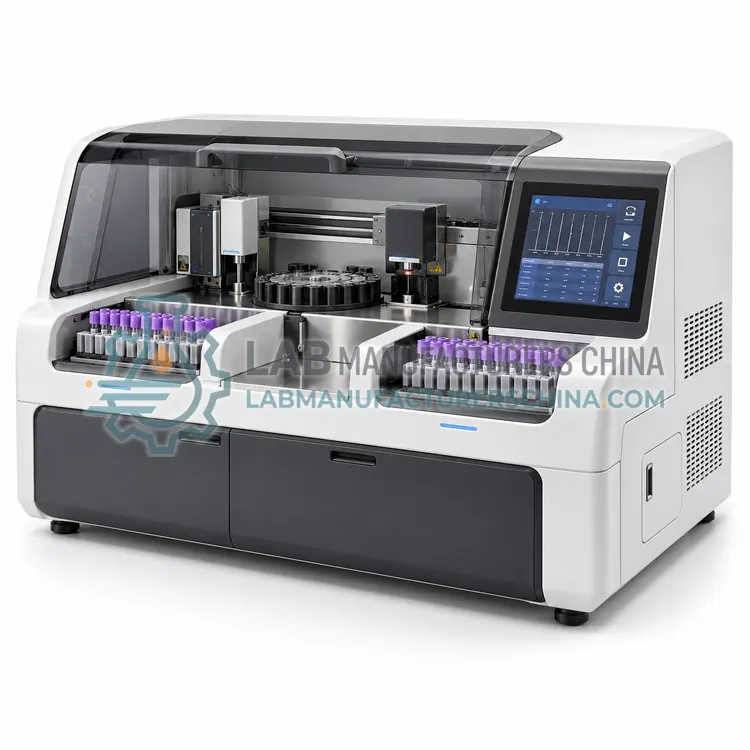
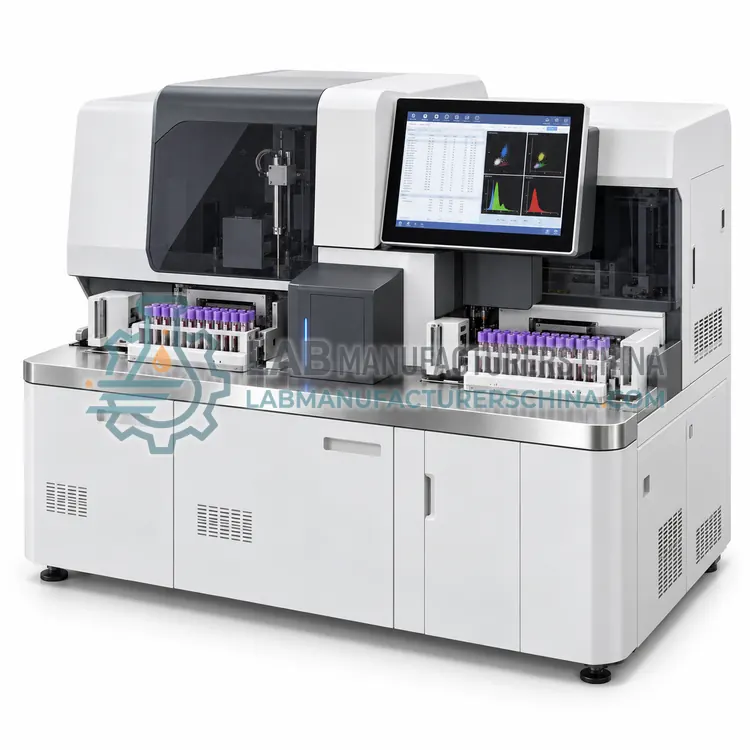
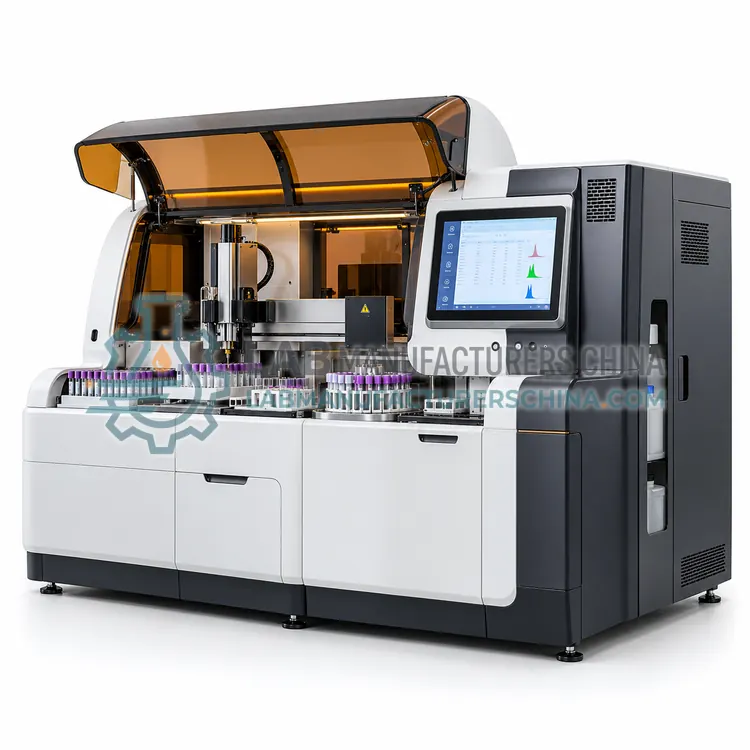
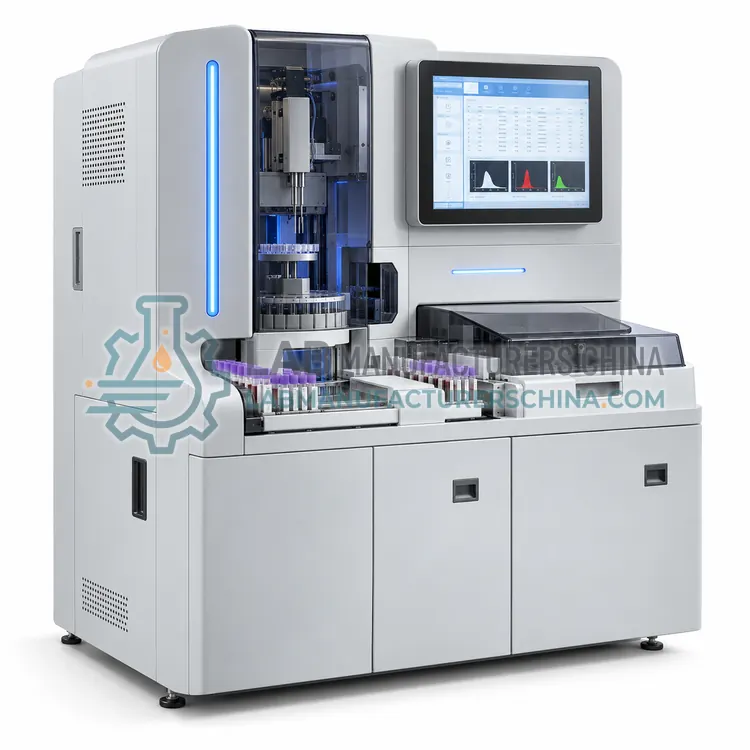
A modular hematology workcell groups two or more analyzers under shared middleware so that workload can be split, backed up or scaled in steps. It suits laboratories that need automation without a full conveyor track and want expansion without replacing the first analyzer.
What is the Modular Automated Hematology Workcell?
A modular hematology workcell groups two or more analyzers under shared middleware so that workload can be split, backed up or scaled in steps. It suits laboratories that need automation without a full conveyor track and want expansion without replacing the first analyzer.
Overview
Rather than moving tubes along a conveyor, this configuration uses a shared loader or adjacent loaders, a common middleware layer, and a rule set that assigns each sample to a specific analyzer, for example routine work to one unit and STAT or pediatric samples to another. Worklists are balanced automatically, and if one analyzer is down the middleware redirects work to the remaining unit. Because modules are identical or compatible, calibration, quality control and reagent management can be harmonised, and the laboratory can add a third module as volume grows. The workcell requires network redundancy, a coordinated interface to the LIS, and clear operating rules for which analyzer is used when part of the system is unavailable.
How does it work?
An automated hematology system is an assembly of modules rather than a single instrument. The analytical module performs impedance counting and laser flow cytometry to produce the complete blood count and five-part differential. Pre-analytical elements include a bulk loader, a centrifuge or mixing station, and a barcode-driven sorter that directs tubes according to their test orders. Post-analytical elements include a slide maker and stainer that prepares films for samples meeting defined review criteria, a digital morphology scanner that takes images of the films, and middleware that applies review rules, routes work between instruments and manages quality control across the system. Communication uses barcode identification and HL7 or ASTM interfaces to the laboratory information system, so that a tube is measured, reviewed and reported with minimal manual handling, while the middleware records which rules were applied to each result.
What are the key features?
- Two or more harmonised analyzers under common middleware
- Rule-based workload splitting between analyzers
- Automatic redirection of work when one module is unavailable
- Shared calibrators, controls and reagent logistics
- Stepwise expansion by adding another module
- Central reporting and quality control overview
What are the technical specifications?
A typical modular automated hematology workcell configuration offers configuration of Two to four analyzers with common middleware, combined throughput of 120–240 samples/h, work distribution of Rule-based routing with load balancing, redundancy of Automatic failover to remaining analyzers, interface of Single LIS connection through middleware and quality control of Cumulative QC charts across modules. Values are indicative of the product class; the exact figures for each configuration are confirmed on the quotation and the calibration documents supplied with the instrument.
Which applications is it used for?
The Modular Automated Hematology Workcell is used in mid-size hospital laboratories scaling up, laboratories consolidating several stand-alone analyzers, sites needing redundancy without a track and teaching and reference laboratories with variable workload. Across the wider Automated Hematology Systems class, laboratories also deploy it for high-volume hospital hematology laboratories, consolidated core laboratory workflows and reference laboratories with remote morphology review.
Which standards and certifications apply?
Relevant standards and methods include ISO 15189, CLSI H26-A2, CLSI AUTO10, CLSI EP05, CLSI H20-A2, IEC 61010-1 and IEC 61010-2-101. Certification candidates for this model are CE, ISO 13485 manufacturing and NMPA class II registration; each is to be confirmed for the specific configuration before shipment, and certificates are supplied only where they have been issued.
Installation requires a stable environment with controlled temperature, low dust, adequate floor loading for track sections and uninterruptible power for the controller and middleware server. Verify each module separately before validating the integrated workflow, including barcode read rates, routing accuracy, slide quality and image capture. Document review rules and test them against a representative sample set before go-live, because rule errors affect patient results. Plan daily cleaning of probes and tracks, weekly flow cell and optics checks, slide stainer reagent replacement and periodic replacement of pneumatic parts. Keep a downtime procedure that allows analysis to continue on a stand-alone analyzer if the track or middleware fails, and treat all samples, films and waste as biohazardous.
How do I select the right Modular Automated Hematology Workcell?
Choose a workcell when you need more throughput or redundancy but not the cost and complexity of a full track. Specify how many modules you plan initially and how many later, the routing rules, and the expected behaviour if the middleware server fails. Confirm that the analyzers can be upgraded to a track connection later, and that the supplier supports common middleware rather than separate interfaces per analyzer.
How does it compare with other Automated Hematology Systems variants?
Choose an automated hematology system when daily counts exceed several hundred, when film review consumes significant technologist time, or when the laboratory wants to consolidate hematology with other disciplines on a track. Compare systems by which modules are integrated, whether film preparation is triggered automatically by analyzer flags, whether digital images are stored for remote review, and how middleware handles reflex rules. Check throughput of the loader and the analyzer together, because the slower module sets the pace. Confirm reagent and consumable logistics for each module, the floor space and service clearances required, the validation workload at installation, and whether the supplier can support middleware changes locally. Plan the workflow and review rules before purchase, not after.
Full specifications
| Configuration | Two to four analyzers with common middleware |
|---|---|
| Combined throughput | 120–240 samples/h |
| Work distribution | Rule-based routing with load balancing |
| Redundancy | Automatic failover to remaining analyzers |
| Interface | Single LIS connection through middleware |
| Quality control | Cumulative QC charts across modules |
| Footprint | 3–5 m² for two analyzers with loaders |
| Power supply | AC 100–240 V, 50/60 Hz per module |
| Network | Redundant LAN connection to middleware server |
Indicative values for this product class. Final specifications are confirmed on the quotation and in the calibration documents supplied with the instrument.
Applications
- Mid-size hospital laboratories scaling up
- Laboratories consolidating several stand-alone analyzers
- Sites needing redundancy without a track
- Teaching and reference laboratories with variable workload
Key features
- Two or more harmonised analyzers under common middleware
- Rule-based workload splitting between analyzers
- Automatic redirection of work when one module is unavailable
- Shared calibrators, controls and reagent logistics
- Stepwise expansion by adding another module
- Central reporting and quality control overview
Frequently asked questions about Modular Automated Hematology Workcell
Yes, typically substantially less, because no conveyor modules, divert stations or lengthy installation are required. The trade-off is that tubes must be loaded on each analyzer and there is no automatic transport between disciplines, so decisions about workstation layout and staffing matter more.
The middleware collects control results from each analyzer and plots them on cumulative charts, which makes it easier to detect systematic differences between modules. Laboratories should compare control means across analyzers and investigate any bias before assuming results are interchangeable.
Combining different models is possible only when the supplier supports the interface and the laboratory validates the comparability of results, including reference intervals for the differential. In practice, harmonised models from one platform simplify calibration, reagents and staff training considerably.
A typical configuration includes a loader or track connection, one or two hematology analyzers, a slide maker and stainer, optionally a digital morphology scanner, and middleware that applies review rules and routes samples. Centrifuges and sorters may be added when the system is part of a wider core laboratory track.
No, but it changes it. Automated systems prepare and stain films on demand, and digital scanning can present images to a technologist at a remote workstation. The medical decision to review morphology and the interpretation of the film remain human tasks, guided by documented rules agreed with the clinical service.
Each module is verified individually for precision, carryover and accuracy, and the integrated workflow is then validated for barcode reading, routing, film quality and data flow to the LIS. The laboratory also tests its review rules on a representative set of normal and abnormal samples, including known abnormal cases.
Related models
Automated Hematology Analyzer with Integrated Body Fluid Module
带集成体液模块的自动化血液分析仪
- CE (to be confirmed)
- +2