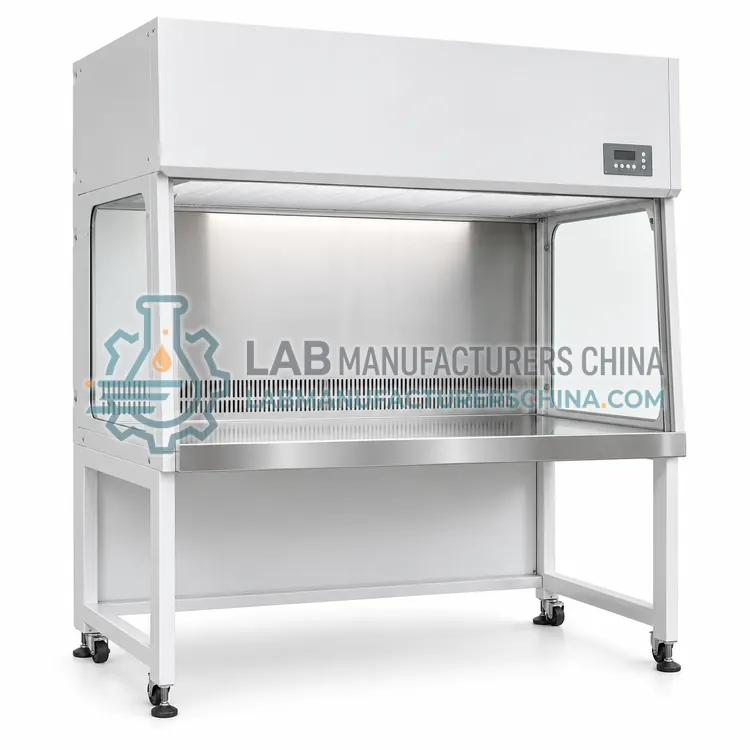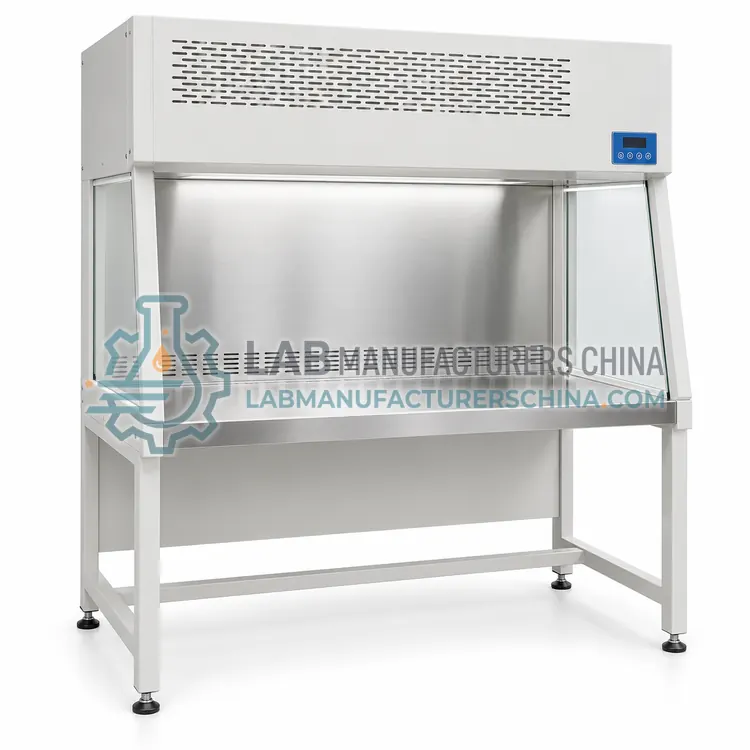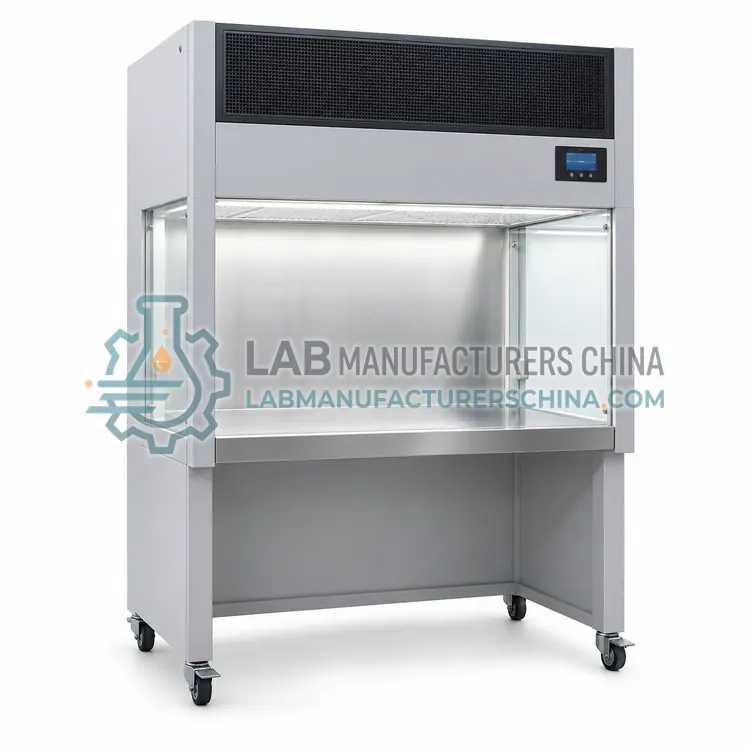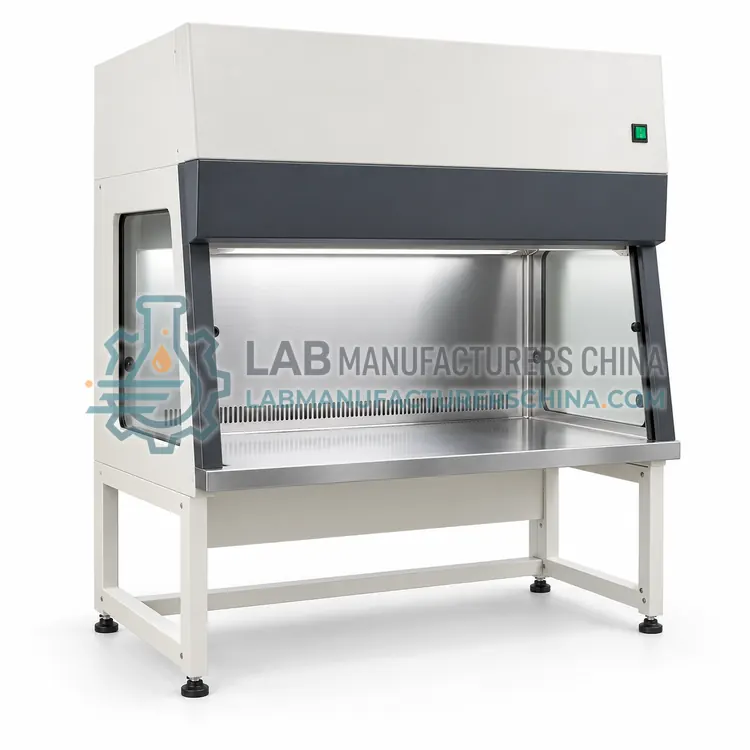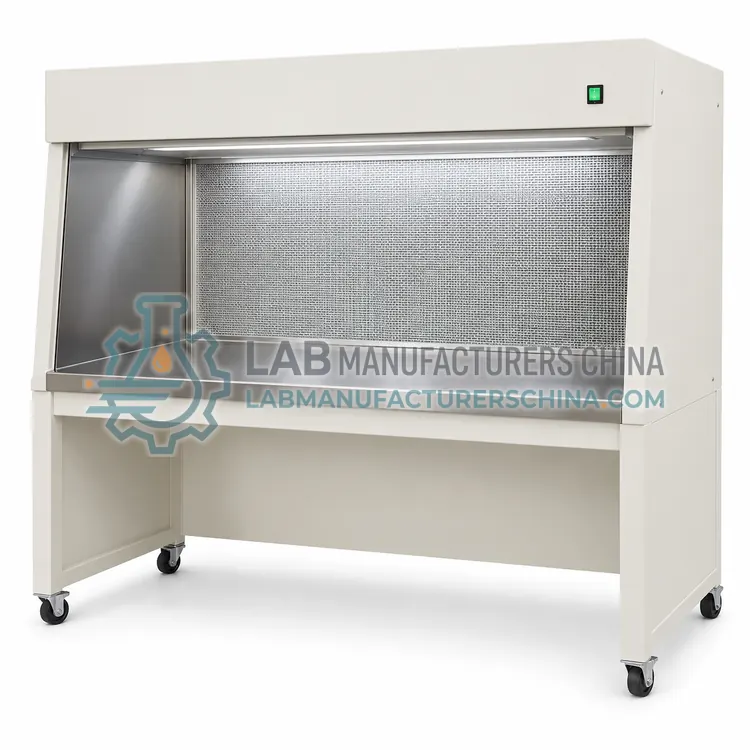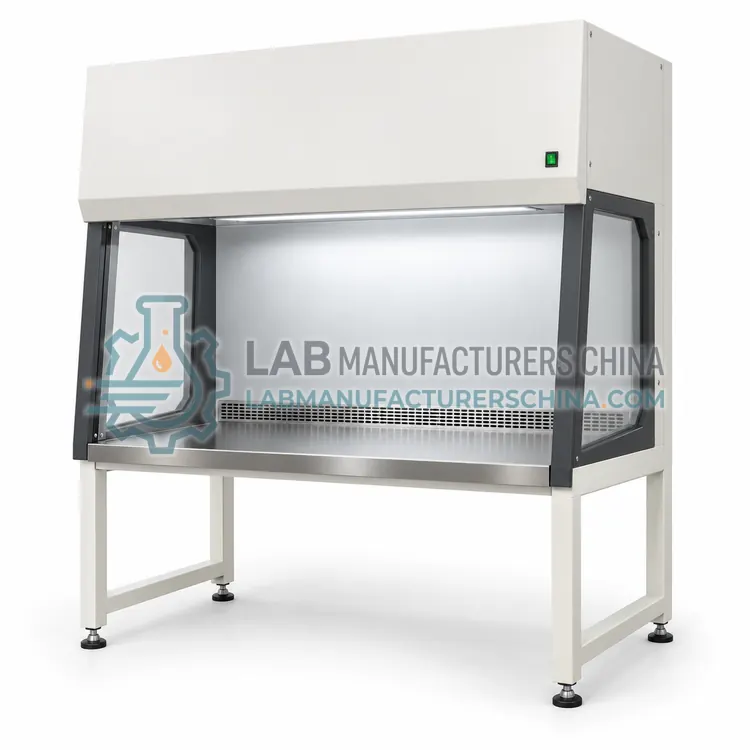
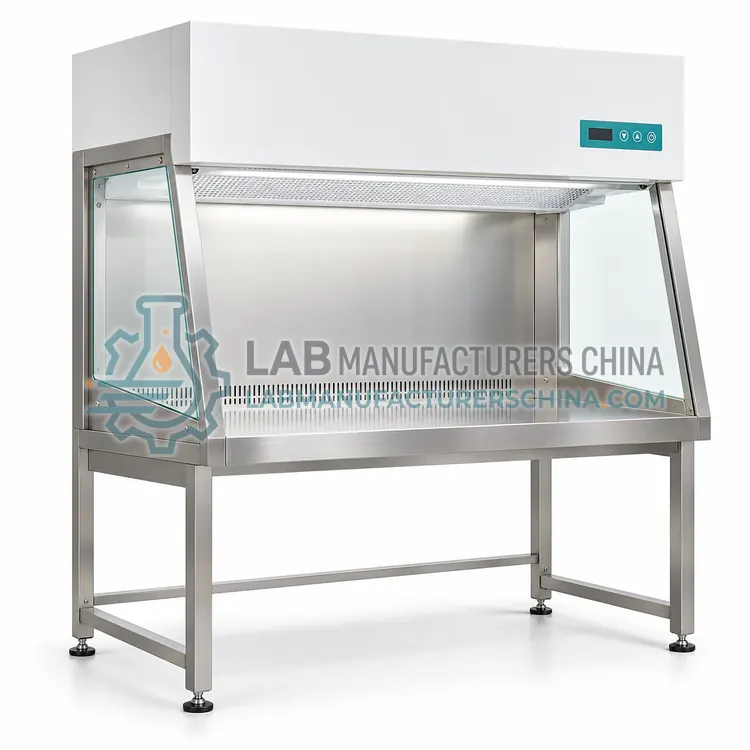
Vertical Laminar Flow Clean Bench
垂直层流洁净工作台
- SKU VLF-0001
- Vertical Laminar Flow
- CE (to be confirmed)
- ISO 9001 manufacturing (to be confirmed)
Price on request — FOB / CIF quoted per order
Prices depend on configuration, quantity and destination port.
Key specifications
| Flow direction | Vertical, top to work surface |
|---|---|
| Filter class | HEPA H14, ≥ 99.97 % at 0.3 µm |
| Downflow velocity | 0.3–0.5 m/s |
| Cleanliness | ISO 5 at work surface |
| Width | 900–1800 mm |
| Height | 1000–1300 mm |
Request a quote Download brochure · to be provided
By Lab Manufacturers China Technical TeamLast reviewed Standards: ISO 14644-1 (cleanroom classification), ISO 14644-3 (test methods), IEST-RP-CC002 (unidirectional flow clean-air devices)
What is the Vertical Laminar Flow Clean Bench?
A vertical laminar flow clean bench is an open workstation with HEPA air descending from the top over the work surface. It gives ISO 5 product protection and handles taller items better than horizontal flow.
What is the Vertical Laminar Flow Clean Bench?
A vertical laminar flow clean bench is an open workstation with HEPA air descending from the top over the work surface. It gives ISO 5 product protection and handles taller items better than horizontal flow.
Overview
The bench is typically 900–1800 mm wide, 600–750 mm deep and 1000–1300 mm high, with a HEPA H14 filter in the top plenum and a diffuser that produces a uniform downward stream at 0.3–0.5 m/s. Work is placed on a stainless or laminate surface, and air leaves the front of the working volume to the room, or is captured for ducted or recirculating versions. A pressure gauge shows filter loading, and lighting is positioned so it does not disturb the flow. Because the downward stream sweeps particles away from above, the bench suits cell culture, plating and assembly of taller parts. It is not a containment device, so work generating hazardous aerosols or chemical vapour requires a different cabinet.
How does it work?
In a vertical laminar flow cabinet, room air is drawn through a prefilter and a HEPA filter located at the top, and a plenum and diffuser distribute it as a unidirectional stream that descends at 0.3–0.5 m/s over the work zone. Particles shed by the work are swept downward and away rather than towards the operator, and because the flow is vertical, taller items disturb it less than in a horizontal cabinet. Air leaves at the front of the work area and may be exhausted to the room or ducted, and some models recirculate most of the air. The supply filter removes at least 99.97 % of 0.3 µm particles for HEPA and 99.999 % for ULPA, giving ISO 5 or better at the work surface. Face velocity, filter integrity and particle counts are verified, and the cabinet must be sited away from draughts that could break the laminar stream.
What are the key features?
- Open workstation with top HEPA supply
- HEPA H14 at 99.97 % for 0.3 µm particles
- Downflow velocity 0.3–0.5 m/s
- Height 1000–1300 mm for taller work
- Stainless or laminate work surface
- Pressure gauge for filter loading
What are the technical specifications?
A typical vertical laminar flow clean bench configuration offers flow direction of Vertical, top to work surface, filter class of HEPA H14, ≥ 99.97 % at 0.3 µm, downflow velocity of 0.3–0.5 m/s, cleanliness of ISO 5 at work surface, width of 900–1800 mm and height of 1000–1300 mm. Values are indicative of the product class; the exact figures for each configuration are confirmed on the quotation and the calibration documents supplied with the instrument.
Which applications is it used for?
The Vertical Laminar Flow Clean Bench is used in cell culture and plating, electronic assembly, optical inspection and tall part handling. Across the wider Vertical Laminar Flow class, laboratories also deploy it for cell culture and sterile handling, electronics and semiconductor assembly and media preparation and plating.
Which standards and certifications apply?
Relevant standards and methods include ISO 14644-1 (cleanroom classification), ISO 14644-3 (test methods), IEST-RP-CC002 (unidirectional flow clean-air devices), EN 1822 (HEPA and ULPA filters), EU GMP Annex 1 (sterile manufacturing) and GB 50073 (cleanroom design code). Certification candidates for this model are CE and ISO 9001 manufacturing; each is to be confirmed for the specific configuration before shipment, and certificates are supplied only where they have been issued.
Site the cabinet away from doors, air diffusers and people traffic, since draughts above about 0.2 m/s disturb the downward stream. Verify filter integrity and face velocity at installation and at least annually, and change prefilters every 3–6 months. Place tall items so they do not block the diffuser, and keep the front opening clear so air can exit. Clean surfaces with compatible agents and avoid generating aerosols that load the filter. The cabinet protects the work rather than the operator, so do not use it for hazardous aerosols or chemical vapour. Record requalification results, and confirm the recirculated or ducted exhaust path meets room requirements.
How do I select the right Vertical Laminar Flow Clean Bench?
Choose this bench when work is tall or when downward flow is preferred so particles do not travel towards the operator. Confirm width, internal height and cleanliness target. RFQ: width, height, filter class, exhaust option and work type.
How does it compare with other Vertical Laminar Flow variants?
Choose vertical laminar flow when the work is tall, when the cabinet contains a central obstruction such as a jig, or when downward flow is preferred so that particles do not travel towards the operator. Decide whether the cabinet recirculates, exhausts to the room or is ducted, and select HEPA H14 for ISO 5 or ULPA for ISO 4 or better. Match internal height and working depth to the equipment, and consider a sash or partial front for increased operator comfort. For regulated or aseptic work, choose stainless steel with cleanable surfaces and documentation. Confirm face velocity and cleanliness at commissioning. Vertical designs are often preferred in cell culture and sterile handling where a downward draught over open vessels reduces contamination from above.
Full specifications
| Flow direction | Vertical, top to work surface |
|---|---|
| Filter class | HEPA H14, ≥ 99.97 % at 0.3 µm |
| Downflow velocity | 0.3–0.5 m/s |
| Cleanliness | ISO 5 at work surface |
| Width | 900–1800 mm |
| Height | 1000–1300 mm |
| Work surface | Stainless steel 304 |
| Exhaust | Front to room, ducted or recirculating |
| Pre-filter | Washable, G4 |
| Noise level | ≤ 62 dB(A) |
Indicative values for this product class. Final specifications are confirmed on the quotation and in the calibration documents supplied with the instrument.
Applications
- Cell culture and plating
- Electronic assembly
- Optical inspection
- Tall part handling
Key features
- Open workstation with top HEPA supply
- HEPA H14 at 99.97 % for 0.3 µm particles
- Downflow velocity 0.3–0.5 m/s
- Height 1000–1300 mm for taller work
- Stainless or laminate work surface
- Pressure gauge for filter loading
Frequently asked questions about Vertical Laminar Flow Clean Bench
The downward stream keeps particles from settling into open plates or vessels from above, which reduces contamination during plating and cell culture compared with an open horizontal stream.
About 1000–1300 mm in a typical open bench, though the usable space ends below the diffuser. Leave clearance so the laminar stream forms fully across the work zone.
Some vertical cabinets can be fitted with a partial sash or front screen for operator comfort and to limit draughts, provided it does not block the air exit. It is not a containment barrier.
Vertical flow sweeps particles downward and away from the operator and handles tall items better, since a central obstruction disturbs a horizontal stream more. It is often preferred for cell culture and sterile handling.
At the front of the work area, where it can exhaust to the room or be captured by a duct, or it can recirculate through the filter in models designed for that. The exit path must not be blocked.
No. It protects the work from particles and microbes. Aerosols and chemical vapour are not contained, so use a biosafety cabinet or fume hood when operator protection is required.
Related models