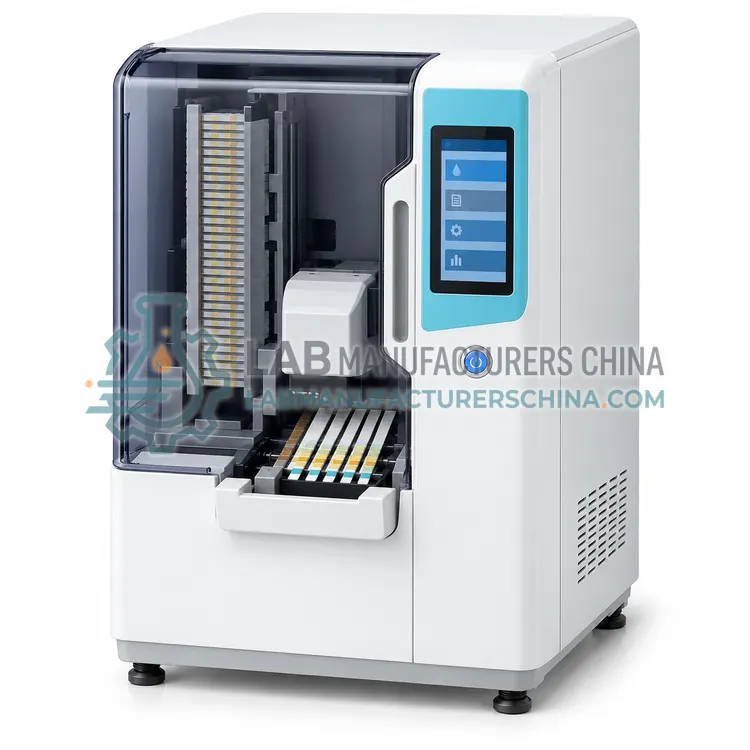
Automated Urine Strip Reader with Strip Feeder
带自动进条的尿条读取仪
- SKU USR-0002
- Urine Strip Readers
- CE (to be confirmed)
- ISO 13485 manufacturing (to be confirmed)
- NMPA class II registration (to be confirmed)
Price on request — FOB / CIF quoted per order
Prices depend on configuration, quantity and destination port.
Key specifications
| Throughput | 150–300 strips/h |
|---|---|
| Feeder capacity | 20–50 strips per batch |
| Reading interval | Fixed per strip type, typically 30–120 s |
| Measured parameters | Standard 10 parameters with optional microalbumin |
| Compensation | Colour and ascorbate compensation channels |
| Data storage | 10,000 results with worklist matching |
Request a quote Download brochure · to be provided
By Lab Manufacturers China Technical TeamLast reviewed Standards: ISO 15189, CLSI GP16, CLSI EP05
What is the Automated Urine Strip Reader with Strip Feeder?
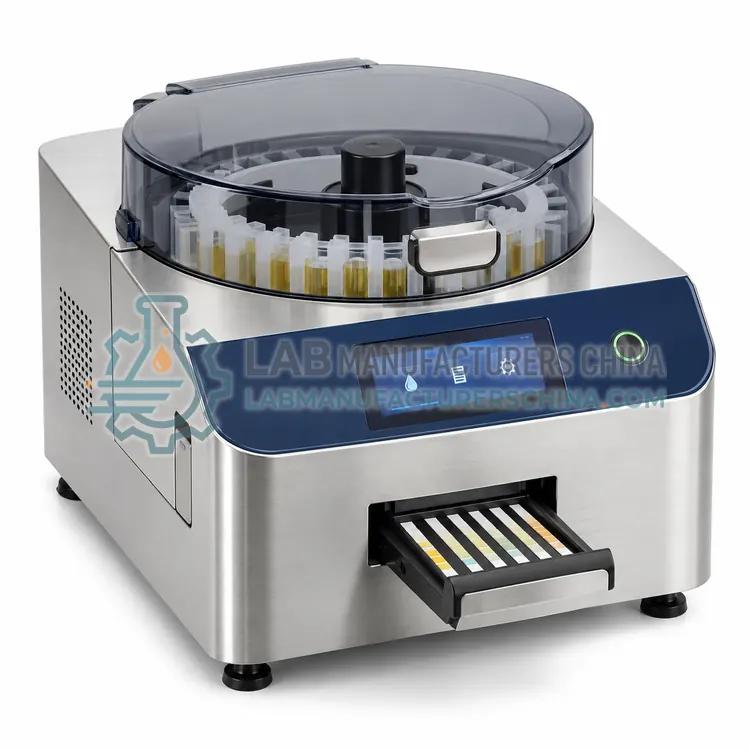
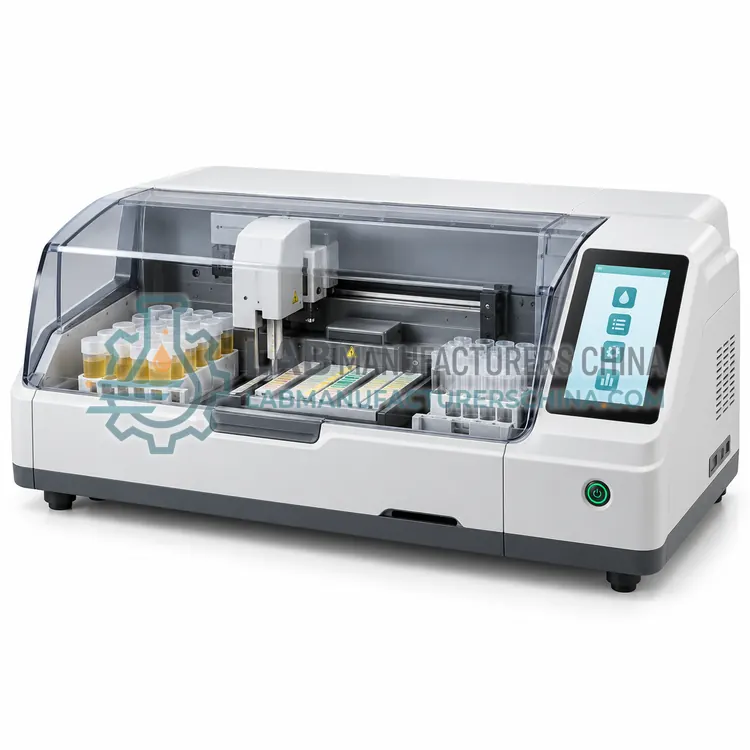
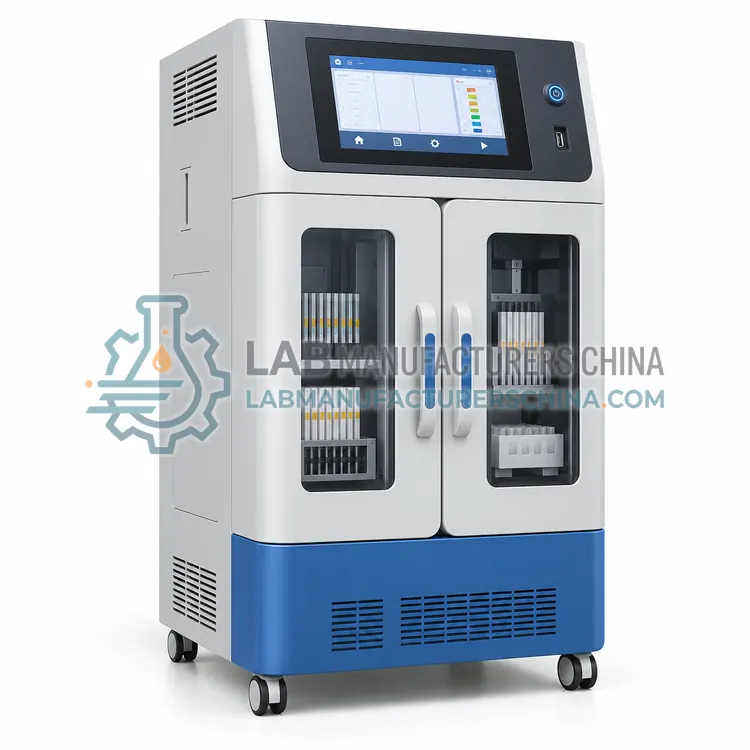
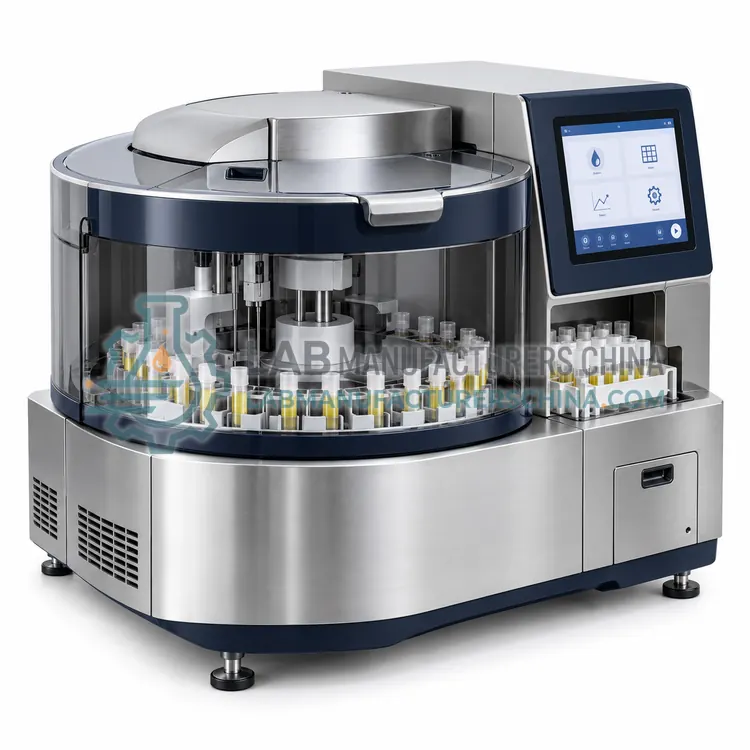
This reader accepts a rack or magazine of dipped strips and moves them one by one into the reading position without operator intervention, which shortens handling time and improves timing consistency. It suits hospital laboratories reading several hundred strips per day.
What is the Automated Urine Strip Reader with Strip Feeder?
This reader accepts a rack or magazine of dipped strips and moves them one by one into the reading position without operator intervention, which shortens handling time and improves timing consistency. It suits hospital laboratories reading several hundred strips per day.
Overview
The strip feeder holds a batch of strips that the operator has dipped and blotted, and a transport mechanism presents them to the optical head at fixed intervals, so each strip is read within the same time after dipping. Results are matched to sample identifiers by reading a barcode on the tube or by the position in the worklist, and the software links each strip to the correct patient record. Throughput reaches 150 to 300 strips per hour, and the instrument typically reports the ten standard parameters plus a comment when a pad result is out of the calibrated range. Because timing is controlled by the feeder, reproducibility is better than with manual reading, but strip quality and correct dipping remain operator responsibilities.
How does it work?
Each pad on a reagent strip contains reagents that change colour in proportion to the analyte concentration: glucose pads use a peroxidase-chromogen system, protein pads rely on the protein error of a pH indicator, blood pads detect the pseudoperoxidase activity of haemoglobin, leukocyte esterase cleaves an ester to release a diazonium-reactive compound, and nitrite is detected by diazotisation. The reader presses the strip against a light source and measures the light reflected from each pad with photodiodes or a camera at defined wavelengths, usually between 525 and 660 nanometres. A compensation pad or channel corrects for the intrinsic colour of the urine, and some instruments also compensate for ascorbic acid interference. The instrument converts reflectance into a category such as negative, trace, 1+, 2+, 3+ or a numeric value for pH and specific gravity.
What are the key features?
- Rack or magazine feeder holding a batch of dipped strips
- Fixed-interval transport to the optical reading position
- Consistent reading time for every strip in the batch
- Barcode matching of strips to sample identifiers
- Throughput of 150 to 300 strips per hour
- Comment or flag when a pad result exceeds the calibrated range
What are the technical specifications?
A typical automated urine strip reader with strip feeder configuration offers throughput of 150–300 strips/h, feeder capacity of 20–50 strips per batch, reading interval of Fixed per strip type, typically 30–120 s, measured parameters of Standard 10 parameters with optional microalbumin, compensation of Colour and ascorbate compensation channels and data storage of 10,000 results with worklist matching. Values are indicative of the product class; the exact figures for each configuration are confirmed on the quotation and the calibration documents supplied with the instrument.
Which applications is it used for?
The Automated Urine Strip Reader with Strip Feeder is used in hospital laboratory batch urinalysis, outpatient department high-volume screening, antenatal and occupational screening programmes and ward urine testing with worklist integration. Across the wider Urine Strip Readers class, laboratories also deploy it for routine urine chemistry screening in clinics, antenatal and pre-employment health checks and diabetes and renal clinic monitoring.
Which standards and certifications apply?
Relevant standards and methods include ISO 15189, CLSI GP16, CLSI EP05, CLSI POCT04, ISO 18113-1, IEC 61010-1 and IEC 61010-2-101. Certification candidates for this model are CE, ISO 13485 manufacturing and NMPA class II registration; each is to be confirmed for the specific configuration before shipment, and certificates are supplied only where they have been issued.
Read strips within the time stated in the instructions, because pad colour continues to develop and delays change results near category boundaries. Protect strips from moisture, heat and light, do not touch the pads and use them before expiry, since degraded strips give falsely negative results. Verify performance at installation with the manufacturer's calibration strip or reference panel, and run quality control material or a known urine sample each working day. Clean the reading window and strip carrier according to the manual, and check that the compensation channel is functioning, because a dirty window biases all reflectance readings. Treat urine as potentially infectious and decontaminate the strip carrier regularly.
How do I select the right Automated Urine Strip Reader with Strip Feeder?
Specify this variant when daily strip volume exceeds about one hundred and fifty strips and results must be matched to a worklist. In the RFQ confirm feeder capacity, the maximum time a strip may wait in the feeder before reading, whether worklist matching is automatic, and the residual volume of strips that must be dipped manually.
How does it compare with other Urine Strip Readers variants?
Decide first how many strips are read each day, because that determines whether a simple bench reader, an instrument with automatic strip feeding or a portable device is appropriate. Then check which parameters the reader measures and whether the report format matches what clinicians expect, especially if semiquantitative scales differ from other laboratories. Confirm the wavelengths and compensation features, since colour and ascorbate interference are the main sources of error, and check whether barcode or operator identification is supported for traceability. For portable and near-patient use, consider battery life, strip storage conditions and whether the device can transmit results. Confirm that the reagent strips specified for the reader are available locally and have an adequate shelf life.
Full specifications
| Throughput | 150–300 strips/h |
|---|---|
| Feeder capacity | 20–50 strips per batch |
| Reading interval | Fixed per strip type, typically 30–120 s |
| Measured parameters | Standard 10 parameters with optional microalbumin |
| Compensation | Colour and ascorbate compensation channels |
| Data storage | 10,000 results with worklist matching |
| Interfaces | LAN with HL7 or ASTM two-way communication |
| Barcode types | Code 128, code 39 |
| Power supply | AC 100–240 V, 50/60 Hz |
Indicative values for this product class. Final specifications are confirmed on the quotation and in the calibration documents supplied with the instrument.
Applications
- Hospital laboratory batch urinalysis
- Outpatient department high-volume screening
- Antenatal and occupational screening programmes
- Ward urine testing with worklist integration
Key features
- Rack or magazine feeder holding a batch of dipped strips
- Fixed-interval transport to the optical reading position
- Consistent reading time for every strip in the batch
- Barcode matching of strips to sample identifiers
- Throughput of 150 to 300 strips per hour
- Comment or flag when a pad result exceeds the calibrated range
Frequently asked questions about Automated Urine Strip Reader with Strip Feeder
Strips should be loaded only shortly before reading, because pad colour continues to develop and the feeder reads at a fixed interval after loading rather than after dipping. The manufacturer specifies the acceptable loading window, and exceeding it shifts results toward higher categories.
It removes timing variability and transcription errors when worklist matching is used, but dipping technique, blotting and strip storage remain manual. Results that look inconsistent with the clinical picture should still be verified by repeating the strip test or by a quantitative method.
Most feeders are designed for the strips of one manufacturer, and mixing lengths can cause jams or misaligned reading. If the laboratory uses more than one strip type, confirm that the instrument supports the corresponding carriers and calibration files.
The operator still dips and blots each strip, loads them in order and handles any out-of-range results, which may need verification or a quantitative method according to laboratory procedure. Timing and result matching are handled by the instrument.
A reader measures reflectance at defined wavelengths and compares it with stored calibration data, which removes some subjectivity in colour matching and prevents transcription errors when results are printed or transmitted. Visual reading is acceptable when the reader is unavailable, but requires trained staff and a printed colour chart.
Most measure glucose, protein, blood, leukocyte esterase, nitrite, ketones, bilirubin, urobilinogen, pH and specific gravity, and some add ascorbate, microalbumin, creatinine or calcium. The pad menu is determined by the strip used, so the reader must support the strips available in your market.
Strongly coloured urine changes the light reflected from every pad, which can shift several parameters in the same direction. Readers with a compensation pad or channel correct for this effect automatically, but very dark samples should be reported with a comment and the result verified by another method when clinically important.
Related models