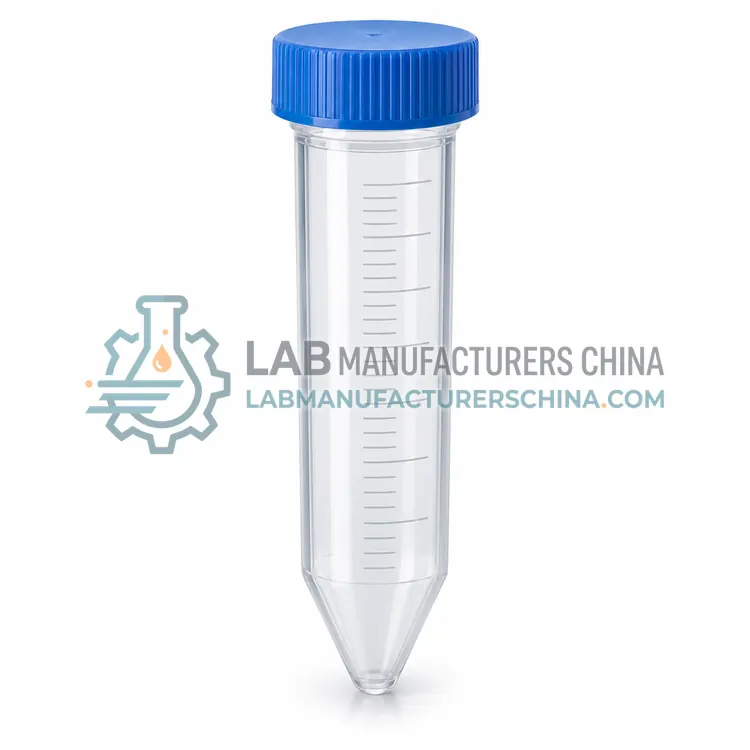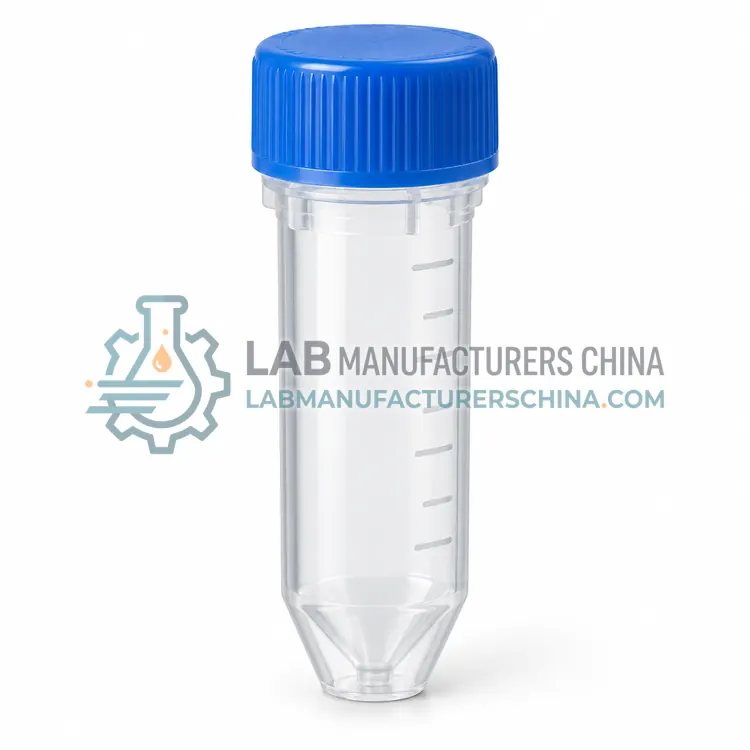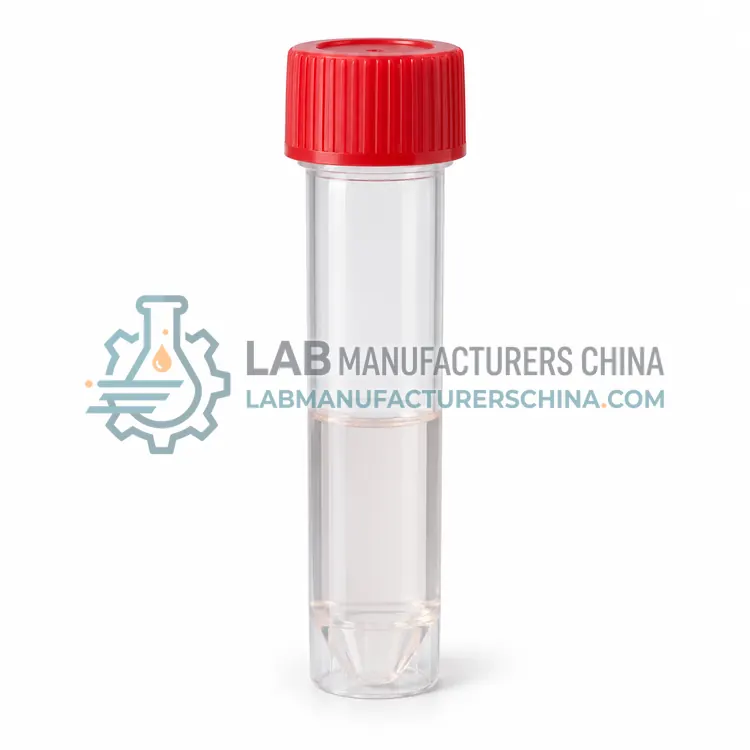
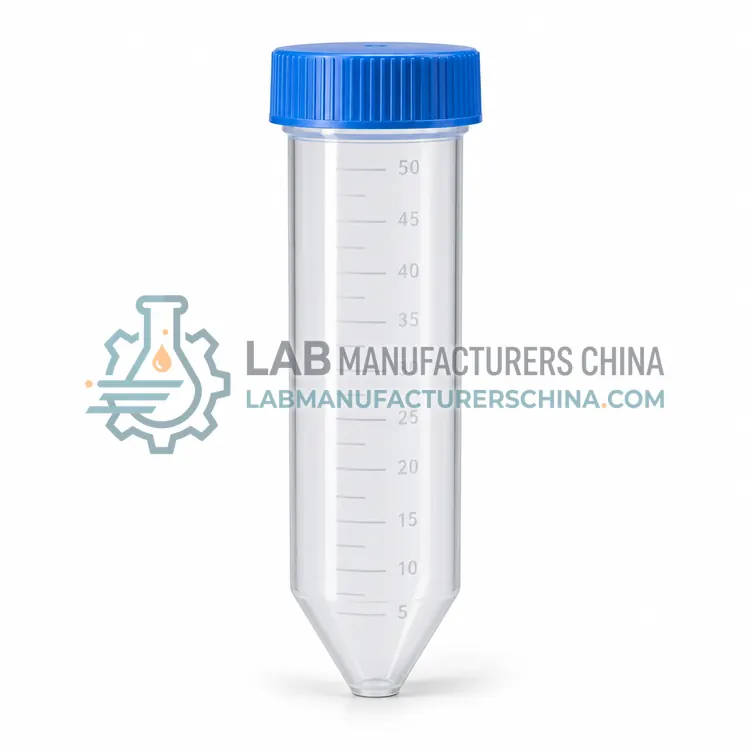
Conical Centrifuge Tube
锥形离心管
- SKU TUB-0002
- Tubes
- CE (to be confirmed)
- ISO 9001 manufacturing (to be confirmed)
Price on request — FOB / CIF quoted per order
Prices depend on configuration, quantity and destination port.
Key specifications
| Material | Polypropylene or polystyrene |
|---|---|
| Volume | 15, 50 or 250 mL |
| Max g force | 3000–12,000 × g |
| Base | Conical |
| Cap | Screw, sealing ring option |
| Max fill | ≈ 80 % of nominal |
Request a quote Download brochure · to be provided
By Lab Manufacturers China Technical TeamLast reviewed Standards: ISO 13485 (medical device quality management), ISO 10993 (biological evaluation of medical devices), EN ISO 11607 (packaging for terminally sterilized devices)
What is the Conical Centrifuge Tube?
A conical centrifuge tube has a tapered base that collects a pellet and a screw cap for sealing. It is used for cell pelleting, media and larger-volume centrifugation, with a screw cap for sealing.
What is the Conical Centrifuge Tube?
A conical centrifuge tube has a tapered base that collects a pellet and a screw cap for sealing. It is used for cell pelleting, media and larger-volume centrifugation, with a screw cap for sealing.
Overview
The tube is moulded from polypropylene or polystyrene in 15, 50 and sometimes 250 mL sizes, with a conical base, moulded graduations, a writing patch and a screw cap that may be flat or have a sealing ring. It is rated for 3000–12,000 × g depending on the model and fill level, and sterile, gamma-treated versions suit cell culture. The conical shape collects cells and precipitates into a compact pellet that can be resuspended, and the tapered wall lets the supernatant be poured off cleanly. Tubes fit standard conical racks and many rotors, and must be supported by an adapter for some centrifuges. Fill to the marked maximum, usually 80 % of nominal volume, and balance opposing tubes to avoid vibration and rotor damage.
How does it work?
A laboratory tube holds a sample and fits the device that processes it, so its material, size and closure are functional rather than incidental. Polypropylene tubes resist most reagents, tolerate autoclaving and are translucent, and are the usual choice for centrifuge and microcentrifuge work. Conical tubes have a graduated taper that collects a pellet at the bottom and lets the supernatant be poured off. Culture tubes have a round or flat bottom, a screw cap with a gas-permeable or sealed liner, and a size that fits racks and shakers, and some are treated for cell attachment. Cryogenic tubes have external or internal threads, a silicone or O-ring seal and a material that stays intact at −80 °C or in liquid nitrogen. Transport tubes combine a leak-proof screw cap with a sterile interior and often a barcode label for identification. Closure design determines whether a tube seals, breathes or vents.
What are the key features?
- Conical base for pellet collection
- Sizes 15, 50 and 250 mL
- Rated 3000–12,000 × g
- Screw cap with sealing ring option
- Moulded graduations and writing patch
- Sterile gamma-treated options
What are the technical specifications?
A typical conical centrifuge tube configuration offers material of Polypropylene or polystyrene, volume of 15, 50 or 250 mL, max g force of 3000–12,000 × g, base of Conical, cap of Screw, sealing ring option and max fill of ≈ 80 % of nominal. Values are indicative of the product class; the exact figures for each configuration are confirmed on the quotation and the calibration documents supplied with the instrument.
Which applications is it used for?
The Conical Centrifuge Tube is used in cell pelleting, media and buffer preparation, culture harvest and larger-volume centrifugation. Across the wider Tubes class, laboratories also deploy it for molecular biology and PCR, cell culture and pelleting and bacterial and yeast culture.
Which standards and certifications apply?
Relevant standards and methods include ISO 13485 (medical device quality management), ISO 10993 (biological evaluation of medical devices), EN ISO 11607 (packaging for terminally sterilized devices), USP <661> (plastic components and systems), ISO 11737 (sterilization of health care products) and USP <88> (biological reactivity tests). Certification candidates for this model are CE and ISO 9001 manufacturing; each is to be confirmed for the specific configuration before shipment, and certificates are supplied only where they have been issued.
Respect the maximum g force and volume limits marked on the tube, since overfilling or over-spinning causes leaks and breakage; fill conical tubes to the marked level and never exceed the rotor rating. Balance tubes within the centrifuge tolerance to avoid vibration and rotor damage. Close caps fully, and use the correct cap for the temperature and pressure, because a snap cap can open in a fast spin and a sealed cap can build pressure when heated. Keep sterile tubes in unopened packaging until use, and work in a clean area. Do not reuse single-use tubes for regulated or sterile work. Store tubes below their maximum temperature, and avoid prolonged exposure to sunlight, which embrittles some plastics. Label tubes so identity survives freezing and handling.
How do I select the right Conical Centrifuge Tube?
Choose conical tubes for cell work and larger volumes, with sterile gamma-treated types for culture and a g rating above your rotor. RFQ: volume, g rating, sterility, cap type and rotor compatibility. Provide volume, g rating and sterility needs.
How does it compare with other Tubes variants?
Choose the tube by the process it must survive. For small volumes, molecular work and centrifugation to 20,000 × g, use microcentrifuge tubes with a snap or screw cap that is certified nuclease-free. For cell pelleting and media work, use conical centrifuge tubes rated for the rotor g force, with sterile, gamma-treated options for culture. For bacterial or yeast culture, use culture tubes with the right closure: a vented cap for aerobic growth and a sealed cap for anaerobic or shaking work. For long-term storage, use cryogenic tubes rated for the temperature, with internal threads to reduce contamination risk or external threads for easier handling. For transport, use tubes with a leak-proof screw cap and a barcode, and confirm sterility and any transport regulation needs. Check material compatibility, fill volume and whether the tube must be free of pyrogens, DNase or RNase.
Full specifications
| Material | Polypropylene or polystyrene |
|---|---|
| Volume | 15, 50 or 250 mL |
| Max g force | 3000–12,000 × g |
| Base | Conical |
| Cap | Screw, sealing ring option |
| Max fill | ≈ 80 % of nominal |
| Graduations | Moulded |
| Sterility | Optional gamma treated |
| Adapter | May be required |
| Use | Cell pelleting and media |
Indicative values for this product class. Final specifications are confirmed on the quotation and in the calibration documents supplied with the instrument.
Applications
- Cell pelleting
- Media and buffer preparation
- Culture harvest
- Larger-volume centrifugation
Key features
- Conical base for pellet collection
- Sizes 15, 50 and 250 mL
- Rated 3000–12,000 × g
- Screw cap with sealing ring option
- Moulded graduations and writing patch
- Sterile gamma-treated options
Frequently asked questions about Conical Centrifuge Tube
Fill to about 80 % of the nominal volume, which is the maximum marked for centrifugation. Overfilling can crack the tube or leak, and underfilling below the rotor minimum can cause imbalance.
Some rotors hold them directly, while others need a conical adapter to support the tube. Check the rotor manual, since an unsupported tube can deform or fail under g force.
Yes at lower g forces, but polystyrene is more brittle than polypropylene and cracks if stressed or exposed to some solvents. For high g or solvent work, polypropylene is preferred.
It is the maximum relative centrifugal force the tube can withstand when correctly filled and closed. Exceeding it can cause the tube to crack, leak or fail, so match the tube rating to the rotor speed.
Use a screw cap for high-speed spins, transport, long-term storage and any work where leakage or aerosol release must be prevented. Snap caps suit quick, low-speed work and are faster to open.
Internal threads keep the sealing surface away from the sample so contamination is less likely, while external threads are easier to grip and open. Both must be rated for the storage temperature.
Related models