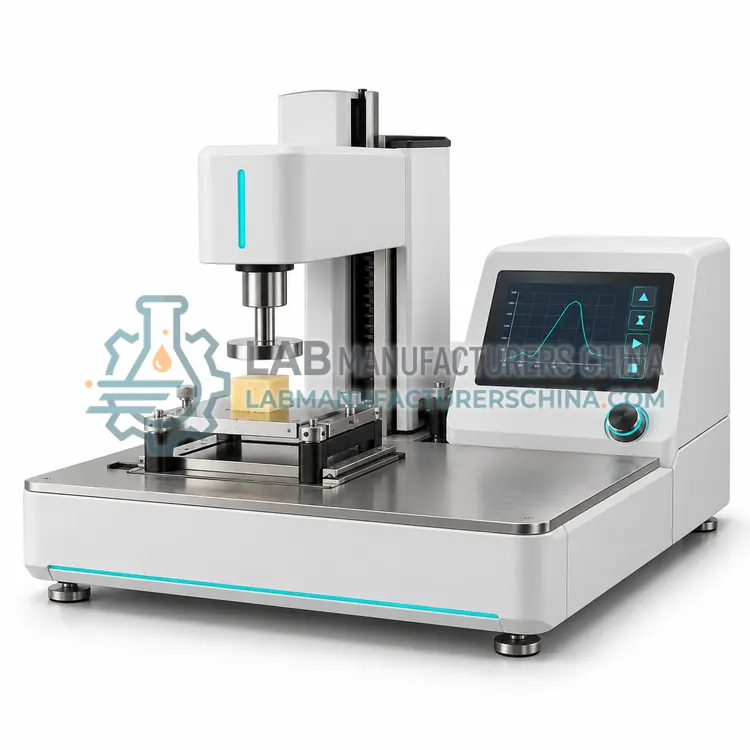
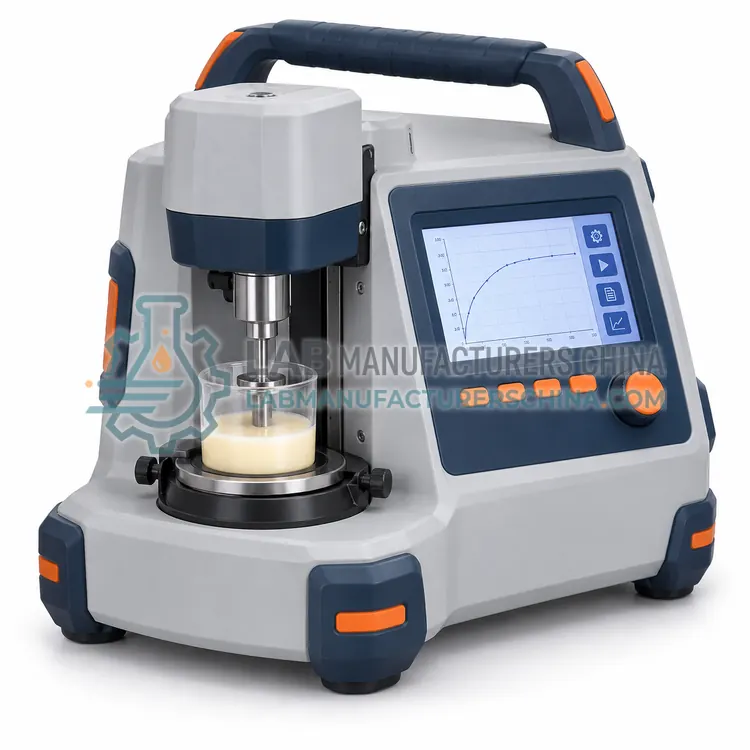
Rotational Rheometer for Food Rheology
食品流变旋转流变仪
- SKU TEA-0005
- Texture Analysis
- CE (to be confirmed)
- ISO 9001 manufacturing (to be confirmed)
Price on request — FOB / CIF quoted per order
Prices depend on configuration, quantity and destination port.
Key specifications
| Measuring principle | Controlled stress and controlled rate rotation |
|---|---|
| Torque range | 0.05 µNm–200 mNm |
| Shear rate range | 10⁻⁴–10³ s⁻¹ |
| Frequency range (oscillation) | 0.001–100 Hz |
| Temperature range | 0–200 °C, Peltier |
| Temperature accuracy | ±0.1 °C |
Request a quote Download brochure · to be provided
By Lab Manufacturers China Technical TeamLast reviewed Standards: ISO 11036, ISO 5530-1, ISO 5530-4
What is the Rotational Rheometer for Food Rheology?
A rotational rheometer measures viscosity, yield stress and viscoelastic moduli of food liquids, pastes, batters and gels under controlled shear and temperature. It provides fundamental data for formulation, process design and stability studies.
What is the Rotational Rheometer for Food Rheology?
A rotational rheometer measures viscosity, yield stress and viscoelastic moduli of food liquids, pastes, batters and gels under controlled shear and temperature. It provides fundamental data for formulation, process design and stability studies.
Overview
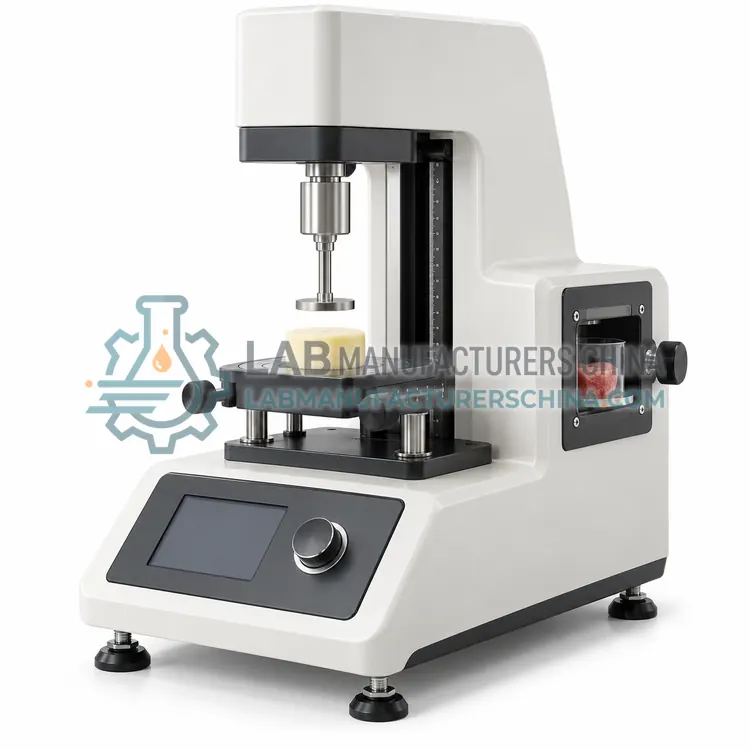
The instrument applies a defined shear rate or stress to a sample held between parallel plates, a cone and plate, or concentric cylinders, and measures the resulting torque. Flow curves give apparent viscosity and yield stress for pumping, filling and coating calculations, while oscillatory tests separate the elastic and viscous contributions and track gelation, melting and structure recovery. Temperature control with Peltier plates or a water jacket allows melting and crystallisation profiles to be measured, which is valuable for chocolate, butter and starch systems. Application-specific geometries and solvent traps reduce evaporation and wall slip. Because results are fundamental rather than empirical, rheometry supports scale-up calculations, pipeline design and shelf-life modelling.
How does it work?
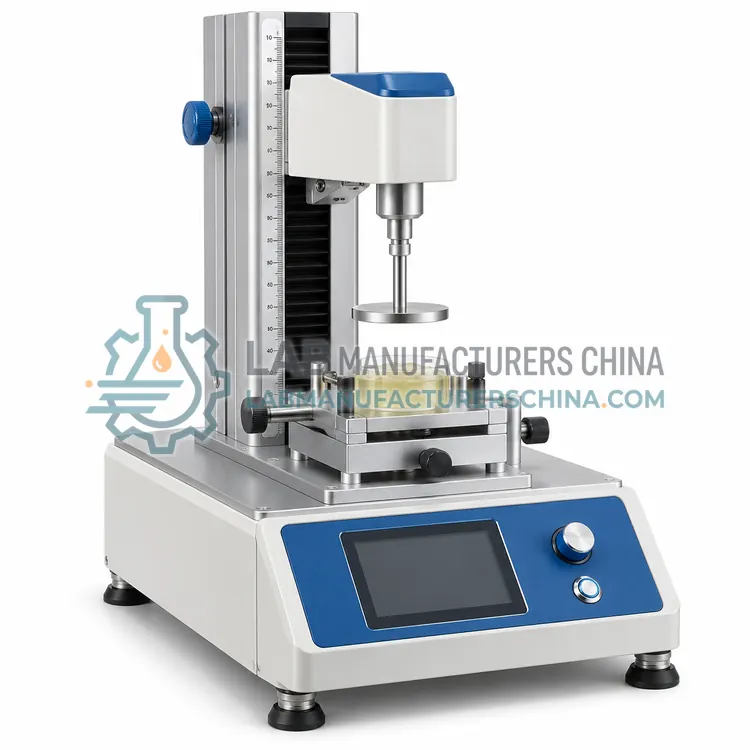
Texture instruments apply a controlled deformation to a sample and record the force and displacement over time. A load cell measures force while a moving arm compresses, penetrates, cuts, extrudes or pulls the sample, producing a curve whose features correspond to sensory attributes. Texture profile analysis uses two compression cycles to derive hardness, springiness, cohesiveness, chewiness and resilience. Penetration tests use a cone or cylinder probe to gauge firmness of gels, fruit and cheese. Dough instruments record the resistance of flour-water dough to mixing or stretching, which reflects gluten quality and processing behaviour. Rotational rheometers measure viscosity and viscoelastic moduli under controlled shear, giving fundamental data for liquids, pastes and batters.
What are the key features?
- Controlled shear rate and shear stress modes
- Oscillatory testing for elastic and viscous moduli
- Peltier temperature control from 0 to 200 °C
- Interchangeable parallel plate, cone and cylinder geometries
- Solvent trap and cover to limit evaporation
- Compliance software with method library and audit trail
What are the technical specifications?
A typical rotational rheometer for food rheology configuration offers measuring principle of Controlled stress and controlled rate rotation, torque range of 0.05 µNm–200 mNm, shear rate range of 10⁻⁴–10³ s⁻¹, frequency range (oscillation) of 0.001–100 Hz, temperature range of 0–200 °C, Peltier and temperature accuracy of ±0.1 °C. Values are indicative of the product class; the exact figures for each configuration are confirmed on the quotation and the calibration documents supplied with the instrument.
Which applications is it used for?
The Rotational Rheometer for Food Rheology is used in viscosity and yield stress of sauces and purees, chocolate melting and crystallisation profiles, batter and dough viscoelastic characterisation and hydrocolloid gelation and stabiliser selection. Across the wider Texture Analysis class, laboratories also deploy it for benchmarking texture against reference products, batch consistency control of baked and dairy goods and gel and dessert firmness specification.
Which standards and certifications apply?
Relevant standards and methods include ISO 11036, ISO 5530-1, ISO 5530-4, ISO 5492, AACC International Method 54-21 and ISO/IEC 17025. Certification candidates for this model are CE and ISO 9001 manufacturing; each is to be confirmed for the specific configuration before shipment, and certificates are supplied only where they have been issued.
Results depend strongly on sample preparation, so thickness, temperature and orientation must be controlled and documented. Probe selection, test speed and trigger force must be consistent, because small changes alter the measured values. Load cells need periodic calibration with traceable masses, and fixtures should be inspected for wear. Gel and dough methods follow standard procedures, including defined rest times and hydration, and deviations invalidate comparison with reference data. Keep control samples and historical curves to detect drift, and confirm that software records file names, parameters and operator identity for traceability.
How do I select the right Rotational Rheometer for Food Rheology?
Choose a rotational rheometer when you need fundamental viscosity or viscoelastic data rather than empirical texture values. Confirm the torque range covers your most delicate samples, and select geometries appropriate to your materials, since batters, gels and chocolate behave differently in each. Verify temperature control range and accuracy for melting or gelation work.
How does it compare with other Texture Analysis variants?
Start from the attribute you must control and the form of the sample. A texture profile analyser with interchangeable probes and a programmable arm covers most solid and semi-solid products and is the most versatile choice. Penetrometers are simpler and cheaper for routine firmness checks on fruit, cheese and gels. Gel strength testers are dedicated to standardised gel tests, where compliant fixtures and procedures matter. Dough testing instruments are specific to flour quality and bread, noodle or biscuit production. Rotational rheometers are needed when fundamental viscosity or viscoelastic data support development, process design or shelf-life modelling. Always confirm probe availability and validated test procedures for your product.
Full specifications
| Measuring principle | Controlled stress and controlled rate rotation |
|---|---|
| Torque range | 0.05 µNm–200 mNm |
| Shear rate range | 10⁻⁴–10³ s⁻¹ |
| Frequency range (oscillation) | 0.001–100 Hz |
| Temperature range | 0–200 °C, Peltier |
| Temperature accuracy | ±0.1 °C |
| Geometries | Parallel plate, cone-plate, concentric cylinder |
| Gap resolution | 0.1 µm |
| Normal force | 0.01–50 N |
| Software | Flow, oscillation, temperature ramp, audit trail |
Indicative values for this product class. Final specifications are confirmed on the quotation and in the calibration documents supplied with the instrument.
Applications
- Viscosity and yield stress of sauces and purees
- Chocolate melting and crystallisation profiles
- Batter and dough viscoelastic characterisation
- Hydrocolloid gelation and stabiliser selection
Key features
- Controlled shear rate and shear stress modes
- Oscillatory testing for elastic and viscous moduli
- Peltier temperature control from 0 to 200 °C
- Interchangeable parallel plate, cone and cylinder geometries
- Solvent trap and cover to limit evaporation
- Compliance software with method library and audit trail
Frequently asked questions about Rotational Rheometer for Food Rheology
Viscosity describes resistance to flow and energy dissipation, while elastic modulus describes stored energy and solid-like recovery. Many foods are viscoelastic, so both quantities are measured, usually through oscillatory tests that separate the two contributions.
Viscosity and structure change strongly with temperature, and food processes involve heating and cooling. Peltier control with ramps allows melting, crystallisation and gelation events to be tracked reproducibly, which supports process design and product specifications.
Parallel plates suit gels, pastes and soft solids and are easy to load, cone-plate geometry gives uniform shear for liquids, and concentric cylinders handle low-viscosity fluids. Large particles, wall slip and evaporation all influence the choice.
Texture profile analysis compresses a sample twice in a single test and analyses the force-time curve. From the two cycles it derives hardness, springiness, cohesiveness, chewiness and resilience, which correspond to sensory attributes perceived when the food is eaten.
Force depends on the dimensions, temperature and orientation of the sample, so a difference of a millimetre or a few degrees changes the result. Standardised cutting, conditioning and positioning are needed for reproducible and comparable measurements.
A penetrometer with a defined cylindrical or conical probe measures the force needed to push into the flesh, and handheld or bench versions exist. Magness-Taylor type probes are widely used for apples, pears and stone fruit.
Related models