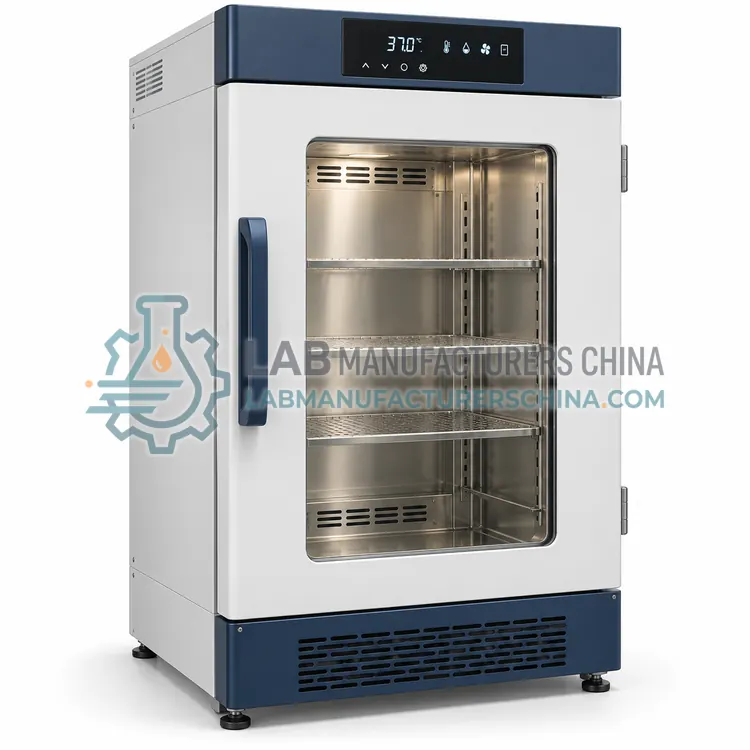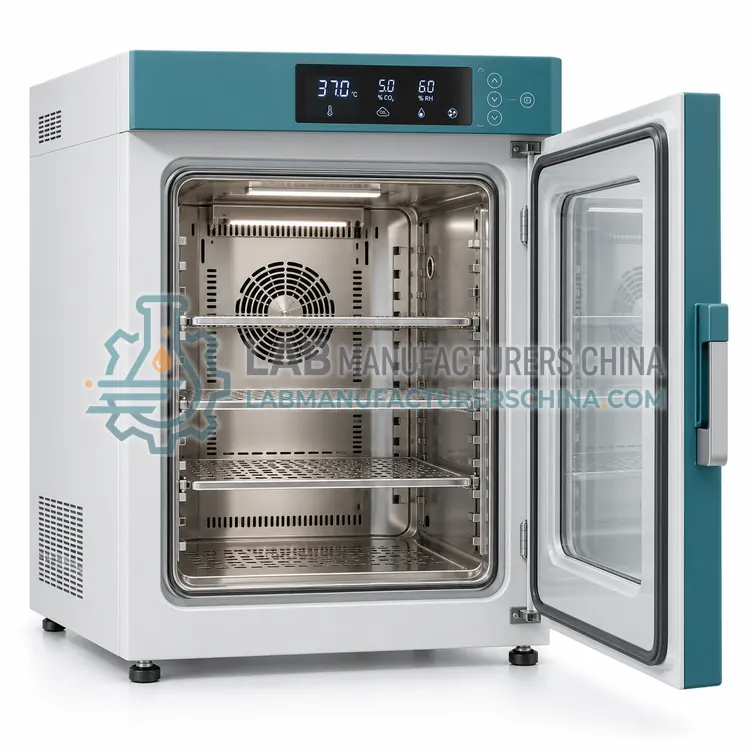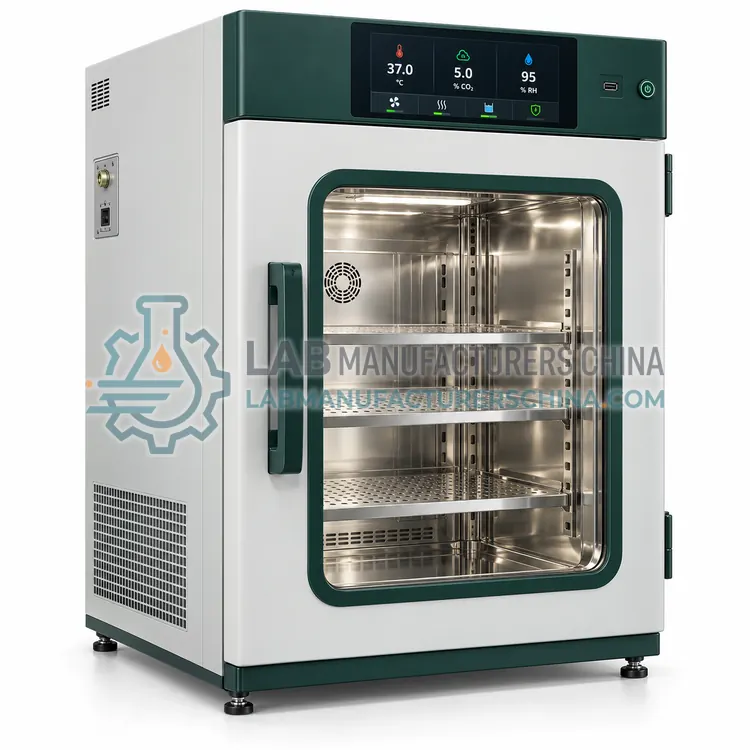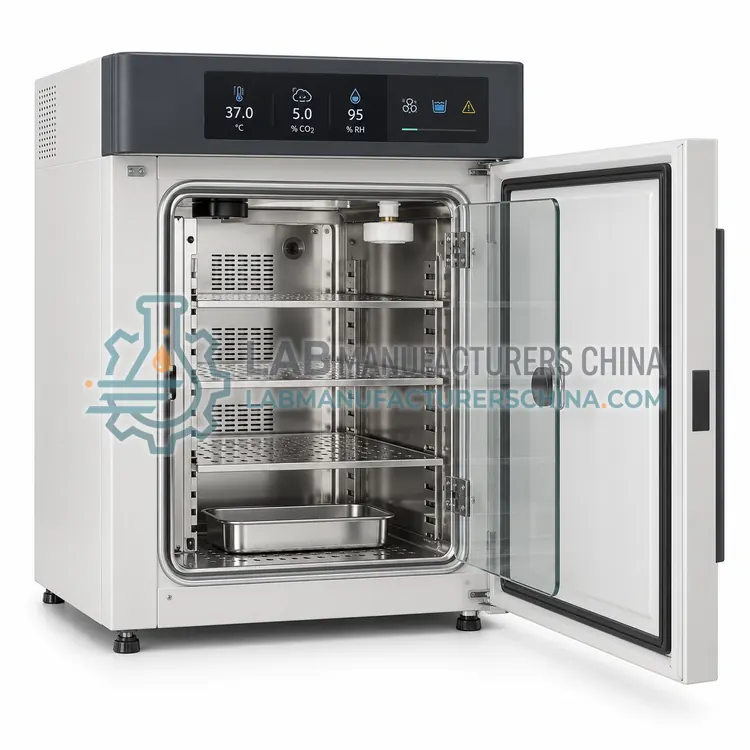
Large-Capacity Incubator
大容量培养箱
- SKU STI-0005
- Standard Incubators
- CE (to be confirmed)
- ISO 9001 manufacturing (to be confirmed)
- RoHS (to be confirmed)
Price on request — FOB / CIF quoted per order
Prices depend on configuration, quantity and destination port.
Key specifications
| Chamber volume | 300–1000+ L |
|---|---|
| Temperature range | RT+5 to 60 C |
| Temperature uniformity | ±1–2 C |
| Temperature fluctuation | ±0.3 C |
| Shelves supplied | 4–10 or trays |
| Convection | Forced, multi-zone |
Request a quote Download brochure · to be provided
By Lab Manufacturers China Technical TeamLast reviewed Standards: IEC 61010-1, IEC 61010-2-010, DIN 12880
What is the Large-Capacity Incubator?
A large-capacity incubator provides 300 to 1000 liters of temperature-controlled space for many samples at once. It is chosen when throughput is high and repeated door access would slow smaller units down.
What is the Large-Capacity Incubator?
A large-capacity incubator provides 300 to 1000 liters of temperature-controlled space for many samples at once. It is chosen when throughput is high and repeated door access would slow smaller units down.
Overview
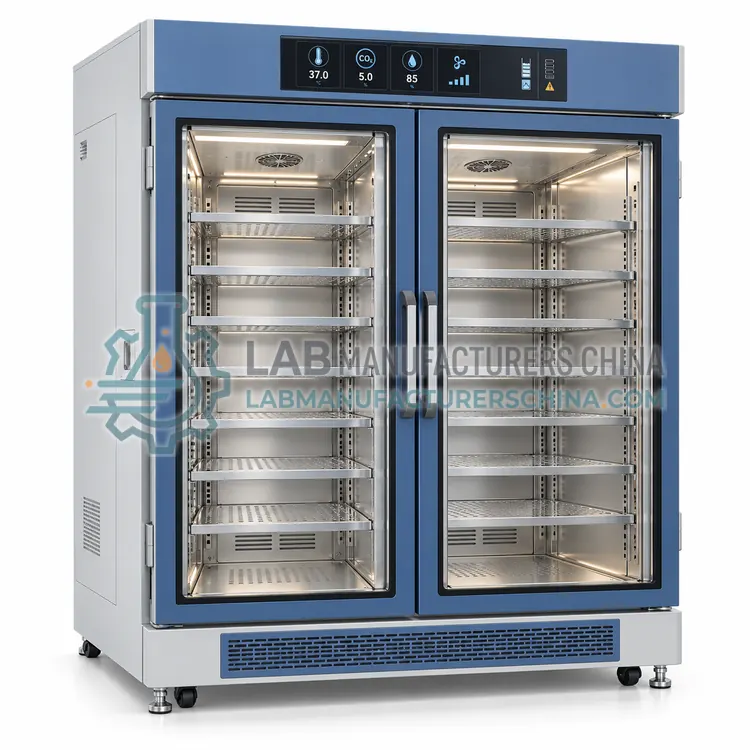
This incubator scales the chamber to 300 to 1000 liters or more, often floor standing with double doors or a wide opening and multiple shelves or trays. Forced-air circulation with multi-zone elements keeps large loads uniform, typically plus or minus 1 to 2 C, and recovery after door openings stays reasonable because power and airflow are high. Temperature reaches ambient plus 5 to 60 C. Digital or programmable controllers with alarms and data output are standard, and some models include casters and a sturdy frame for moving. Interior is stainless steel for cleaning. It serves high-throughput microbiology, food testing, sample conditioning and long incubations where many vessels must be held under the same conditions and bench space is not the limit.
How does it work?
A standard incubator holds temperature with heating elements or a water jacket around an insulated chamber. A Pt100 or thermistor sensor feeds a PID controller that switches the elements, and air circulates either naturally by convection or with a fan for tighter uniformity. Natural convection gives gentle conditions with little evaporation and no fan to disturb cultures, while forced air gives better uniformity and faster recovery after door openings. Shear layers of insulation and a gasketed door limit heat loss. Units work above ambient, typically 5 to 80 C, so no refrigeration is needed. Controls range from mechanical thermostats to digital PID units with timers, alarms and data output. Shelves or trays position the samples, and an inner glass door on some models lets operators view cultures without disturbing the chamber.
What are the key features?
- Chamber volume of 300 to 1000 liters or more
- Floor-standing with double doors or wide opening
- Multi-zone forced-air circulation
- Multiple shelves or trays
- Digital or programmable control with alarms
- Casters and sturdy frame for movement
What are the technical specifications?
A typical large-capacity incubator configuration offers chamber volume of 300–1000+ L, temperature range of RT+5 to 60 C, temperature uniformity of ±1–2 C, temperature fluctuation of ±0.3 C, shelves supplied of 4–10 or trays and convection of Forced, multi-zone. Values are indicative of the product class; the exact figures for each configuration are confirmed on the quotation and the calibration documents supplied with the instrument.
Which applications is it used for?
The Large-Capacity Incubator is used in high-throughput microbiology, food and beverage batch testing, long-term sample conditioning, industrial laboratory incubation and warehouse and production sample holding. Across the wider Standard Incubators class, laboratories also deploy it for bacterial and fungal culture, enzyme and biochemical assays and food and beverage microbiological testing.
Which standards and certifications apply?
Relevant standards and methods include IEC 61010-1, IEC 61010-2-010, DIN 12880, ISO 4833-1, ISO 6222 and ISO 9001. Certification candidates for this model are CE, ISO 9001 manufacturing and RoHS; each is to be confirmed for the specific configuration before shipment, and certificates are supplied only where they have been issued.
Place the incubator on a level bench away from sunlight, heat sources, doors and drafts, in a room with stable ambient temperature below about 30 C, and leave clearance for ventilation. Load shelves evenly and leave gaps so air can circulate. Do not overload, since dense loads slow recovery and widen gradients. Clean the chamber between batches with a mild disinfectant compatible with the interior, and avoid corrosive agents on stainless steel. Check the door gasket for wear and the sensor for drift at defined intervals, calibrating with a reference probe across the chamber. Keep temperature and maintenance records, especially when the incubator supports regulated work.
How do I select the right Large-Capacity Incubator?
Select the large-capacity incubator when many samples must be held together and repeated access to small units is a bottleneck. Confirm floor loading, door access, power and ventilation. In the RFQ, specify volume, shelf layout, temperature range, uniformity, recovery time and controller features.
How does it compare with other Standard Incubators variants?
Choose a standard incubator when the setpoint is above ambient and neither CO2 control nor refrigeration is needed. Set the temperature range with margin above the highest working temperature and confirm uniformity at that point, often plus or minus 0.5 to 2 C. Decide between natural and forced convection: natural suits microbiology and low-evaporation work, forced suits high-throughput and fast recovery. Match chamber volume to vessel count and shelf area. Consider the controller, choosing digital for reproducibility or programmable for stepped profiles, and check alarms, data output and door type. Confirm power, bench or floor placement and service access before ordering.
Full specifications
| Chamber volume | 300–1000+ L |
|---|---|
| Temperature range | RT+5 to 60 C |
| Temperature uniformity | ±1–2 C |
| Temperature fluctuation | ±0.3 C |
| Shelves supplied | 4–10 or trays |
| Convection | Forced, multi-zone |
| Recovery after door opening | 5–12 min |
| Heating power | 1.5–5 kW |
| Interior material | 304 stainless steel |
| Power supply | 220/380 V, 50/60 Hz |
Indicative values for this product class. Final specifications are confirmed on the quotation and in the calibration documents supplied with the instrument.
Applications
- High-throughput microbiology
- Food and beverage batch testing
- Long-term sample conditioning
- Industrial laboratory incubation
- Warehouse and production sample holding
Key features
- Chamber volume of 300 to 1000 liters or more
- Floor-standing with double doors or wide opening
- Multi-zone forced-air circulation
- Multiple shelves or trays
- Digital or programmable control with alarms
- Casters and sturdy frame for movement
Frequently asked questions about Large-Capacity Incubator
A 500-liter unit with four to six shelves typically holds several hundred plates or dozens of flasks, depending on vessel size and spacing. Even loading and gaps between items keep uniformity and recovery within specification.
Typically five to twelve minutes, because high power and strong airflow reheat the chamber, but a full load slows recovery. Grouping access, using inner doors or shelves and closing promptly keeps temperature histories consistent.
Most units use 1.5 to 5 kW depending on volume and top temperature. The largest may need 380 V three-phase supply with dedicated protection and ventilation, so the supply should be confirmed before installation.
On a level, rigid floor with clearance for ventilation, doors and service access, ideally in a room with stable temperature below 30 C. Keep it away from draughts and sunlight, and leave space to load and unload shelves safely.
It holds a set temperature above ambient to culture bacteria and fungi, incubate enzyme and immunoassays, condition samples and support food and clinical microbiology. Standard incubators have no CO2 control or refrigeration, unlike cell-culture and cooling models.
Most hold ambient plus 5 C up to 60 to 80 C. Common setpoints are 30 to 37 C for microbiology and enzyme work, and 55 to 60 C for some assays. Because they only heat, they cannot serve setpoints below room temperature.
Natural convection is gentle, minimizes evaporation and has no fan to disturb cultures, which suits plates and sensitive samples. Forced convection gives tighter uniformity and faster recovery, better for dense loads and high-throughput work where temperature consistency matters more.
Related models