Chemical Spill Kit
化学品泄漏处理包
- SKU SCO-0001
- Spill Control
- CE (to be confirmed)
- ISO 9001 manufacturing (to be confirmed)
Price on request — FOB / CIF quoted per order
Prices depend on configuration, quantity and destination port.
Key specifications
| Type | General chemical spill kit |
|---|---|
| Absorbent capacity | 5–50 L |
| Absorbent types | Pads, socks, loose |
| PPE included | Gloves, goggles |
| Waste handling | Bags, ties, labels |
| Tools | Scoop and scraper |
Request a quote Download brochure · to be provided
By Lab Manufacturers China Technical TeamLast reviewed Standards: OSHA 29 CFR 1910.120 (hazardous waste operations), EPA 40 CFR 264 (containment and storage standards), ISO 15190 (medical laboratories, safety requirements)
What is the Chemical Spill Kit?
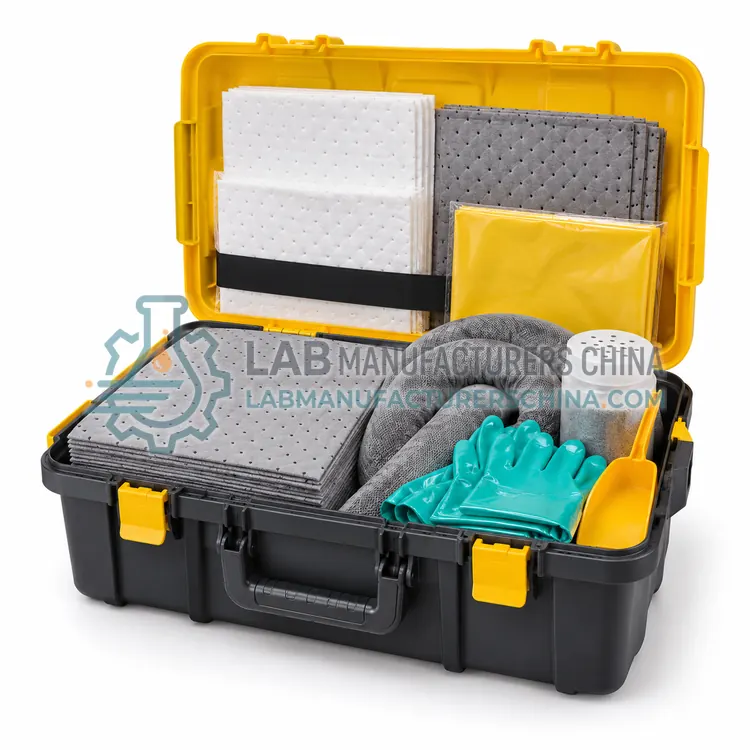
A chemical spill kit is a general-purpose pack of absorbents, gloves and waste bags for routine laboratory spills. It is sized to the largest container handled in the area, so it is always ready.
What is the Chemical Spill Kit?
A chemical spill kit is a general-purpose pack of absorbents, gloves and waste bags for routine laboratory spills. It is sized to the largest container handled in the area, so it is always ready.
Overview
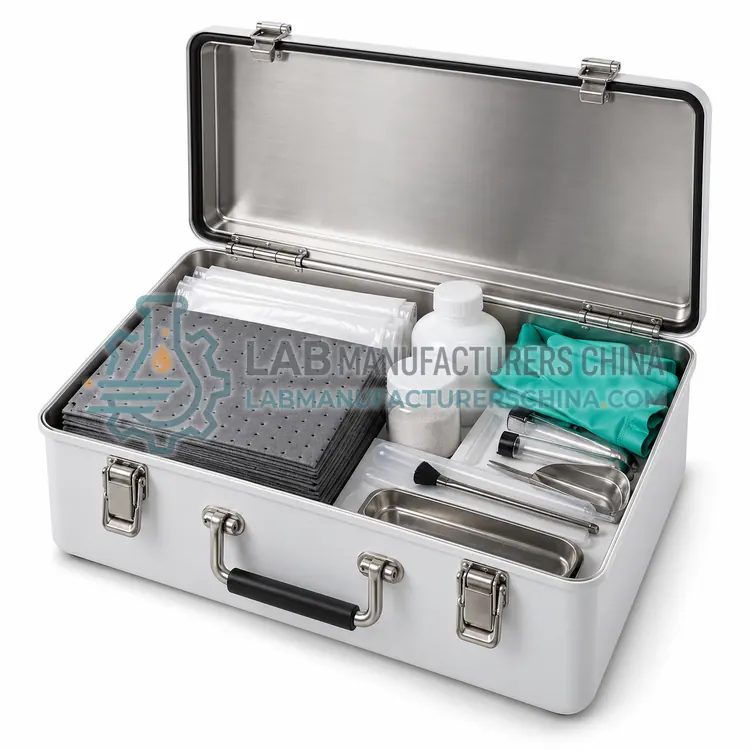
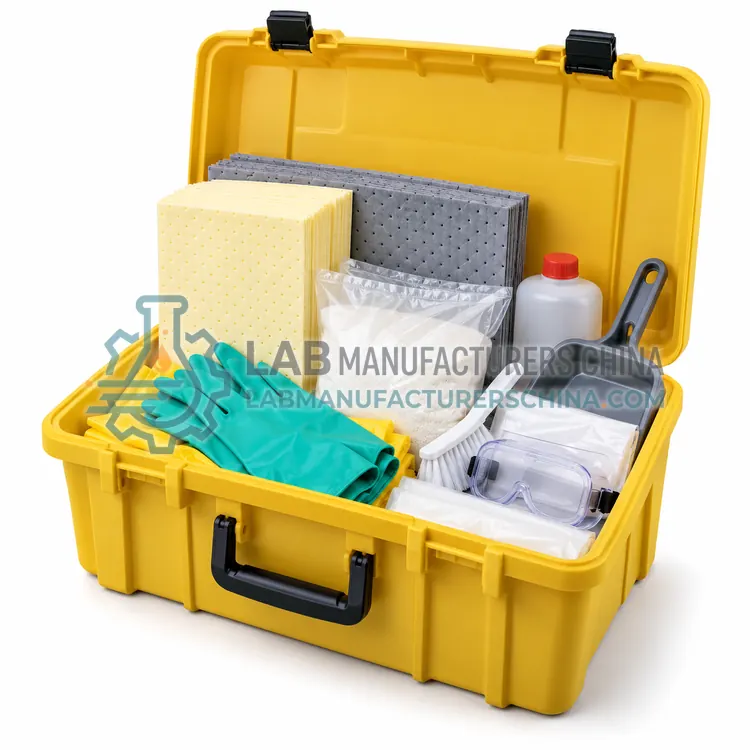
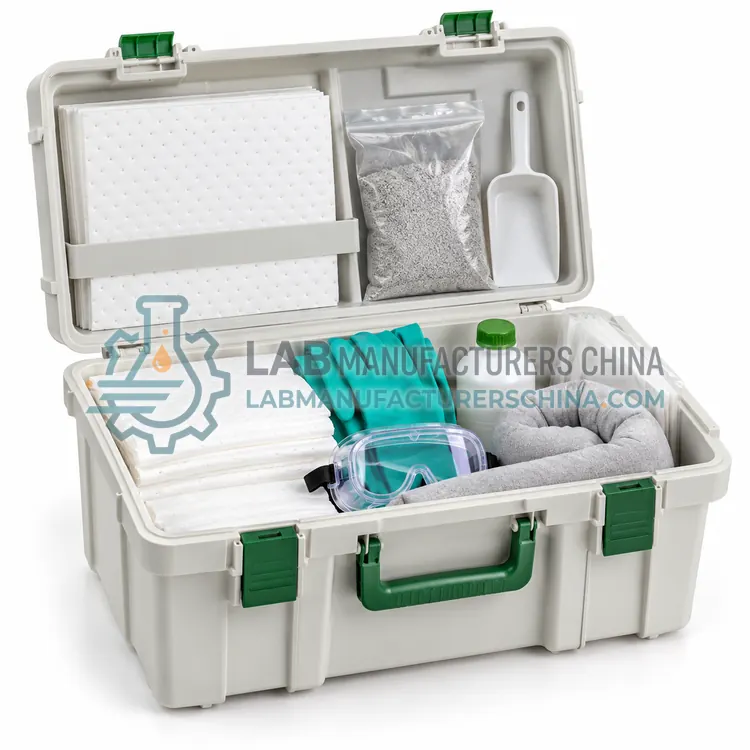
The kit is supplied in a wall-mounted cabinet, bag or wheeled bin and typically contains absorbent pads and socks, loose absorbent, nitrile gloves, safety goggles, a scoop and scraper, waste bags with ties and labels, and a procedural card. Absorbent capacity is stated in litres, commonly 5–50 L, and the contents suit aqueous and many solvent spills. The packaging keeps the contents clean and identifiable, and a wall cabinet or trolley keeps the kit near the risk. Contents should match the chemicals in the area, so a generic kit is a starting point rather than a final specification. Inspect quarterly, replace used items, and record the check on a label or log for audit purposes.
How does it work?
Spill control works by containing a release, then absorbing, neutralising or solidifying it so the material can be handled and disposed of safely. Absorbents such as pads, booms and loose clay or polymer take up liquid by capillary action and lock it in place. Neutralisers react with acids or bases to bring the pH towards neutral, often with a colour indicator to show when the reaction is complete. Solidifiers turn liquid into a gel that can be swept up. Barriers, socks and drain seals stop the spill from reaching drains, walkways or equipment. A kit also includes gloves, goggles, bags and signage so the responder is protected and waste is labelled. Correct selection depends on the chemical class, the volume handled and the location, and supplies must be checked for completeness and expiry.
What are the key features?
- Absorbent pads, socks and loose absorbent
- Capacity 5–50 L stated in litres
- Nitrile gloves and safety goggles
- Waste bags, ties and labels
- Scoop, scraper and procedure card
- Wall cabinet, bag or wheeled bin
What are the technical specifications?
A typical chemical spill kit configuration offers type of General chemical spill kit, absorbent capacity of 5–50 L, absorbent types of Pads, socks, loose, PPE included of Gloves, goggles, waste handling of Bags, ties, labels and tools of Scoop and scraper. Values are indicative of the product class; the exact figures for each configuration are confirmed on the quotation and the calibration documents supplied with the instrument.
Which applications is it used for?
The Chemical Spill Kit is used in general chemical spills, reagent bench clean-up, waste accumulation areas and teaching laboratories. Across the wider Spill Control class, laboratories also deploy it for chemical laboratories, solvent transfer points and mercury and heavy metal areas.
Which standards and certifications apply?
Relevant standards and methods include OSHA 29 CFR 1910.120 (hazardous waste operations), EPA 40 CFR 264 (containment and storage standards), ISO 15190 (medical laboratories, safety requirements), GHS (classification and labelling), GB 15603 (chemical storage rules) and NFPA 400 (hazardous materials code). Certification candidates for this model are CE and ISO 9001 manufacturing; each is to be confirmed for the specific configuration before shipment, and certificates are supplied only where they have been issued.
Place kits near the highest-risk points and inspect them quarterly for missing items, degraded absorbents and expired neutralisers. Train staff on the sequence: raise the alarm, protect people, contain the spill, neutralise or absorb, then pack and label waste for disposal through the chemical waste route. Never mix waste streams unnecessarily, and keep incompatible neutralised residues separate. Provide a written spill procedure with contact numbers and after-hours arrangements, and practise it so response is quick. For larger volumes, use a containment berm or tray and confirm the floor is stable and level. Record inspections and incidents, and review procedures after any spill or near miss.
How do I select the right Chemical Spill Kit?
Choose a general kit sized to the largest container in the area, and add specialist items for acids, solvents or mercury. Confirm capacity and PPE. RFQ: chemicals, largest volume, container type, PPE needs and placement options.
How does it compare with other Spill Control variants?
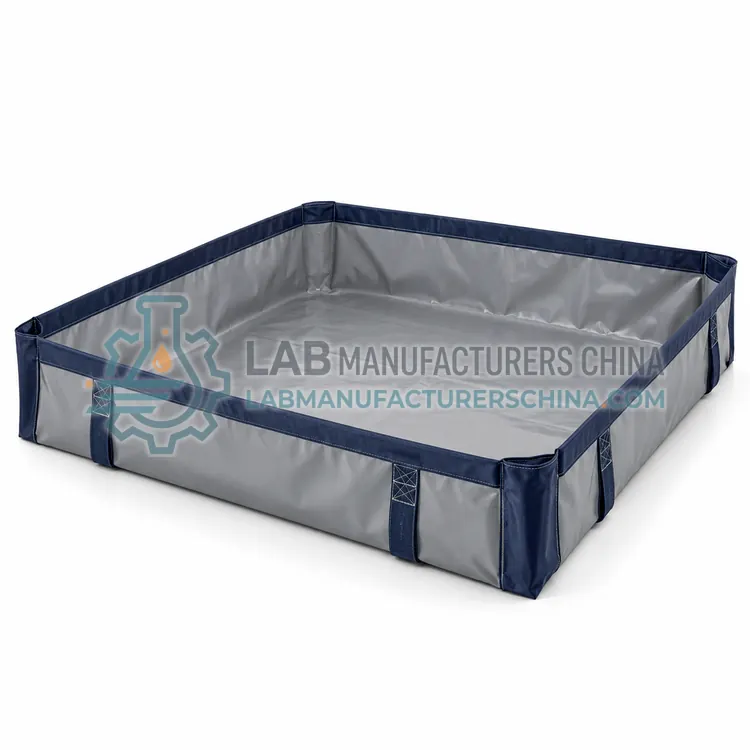
Build spill control around the chemicals actually present rather than a generic kit. Identify whether releases are acids, bases, solvents, mercury, oxidisers or biological, and estimate the largest credible volume from the biggest container. Choose a kit sized for that volume, with absorbent capacity stated in litres, and add neutraliser sachets with pH indicator for acid or base work. For solvents, use chemically resistant absorbents rather than materials that could react. Add drain seals and socks where a spill could reach a drain, and a containment berm or tray where containers are stored or transferred. Confirm personal protective equipment matches the hazard, that waste bags and labels are included, and that the kit is placed where a spill is likely, not locked in a store room.
Full specifications
| Type | General chemical spill kit |
|---|---|
| Absorbent capacity | 5–50 L |
| Absorbent types | Pads, socks, loose |
| PPE included | Gloves, goggles |
| Waste handling | Bags, ties, labels |
| Tools | Scoop and scraper |
| Container | Cabinet, bag or wheeled bin |
| Inspection | Quarterly, recorded |
| Suitability | Aqueous and many solvents |
| Weight | 5–25 kg |
Indicative values for this product class. Final specifications are confirmed on the quotation and in the calibration documents supplied with the instrument.
Applications
- General chemical spills
- Reagent bench clean-up
- Waste accumulation areas
- Teaching laboratories
Key features
- Absorbent pads, socks and loose absorbent
- Capacity 5–50 L stated in litres
- Nitrile gloves and safety goggles
- Waste bags, ties and labels
- Scoop, scraper and procedure card
- Wall cabinet, bag or wheeled bin
Frequently asked questions about Chemical Spill Kit
It is a starting point. Kit contents must match the chemicals present, so acid, base, solvent, mercury and oxidiser work usually needs dedicated neutralisers or absorbents added.
Near the highest-risk points, in a wall cabinet or on a trolley, so it is reachable in seconds without unlocking a store or crossing the laboratory. Mark its location clearly.
It is bagged, labelled with the chemical content and hazard class, and disposed of through the chemical waste route. Do not put spill waste in general refuse, even if the absorbent appears dry.
Absorbents suited to the chemicals, neutraliser with pH indicator for acids or bases, gloves and eye protection, waste bags, labels, a scoop and a written procedure. The contents must match the chemicals present.
Size the kit for the largest single container handled in the area, using the absorbent capacity stated in litres. Larger volumes need additional supplies or a containment berm and a formal response plan.
Sprinkle it around the edge first, then over the spill, and mix gently until the colour indicator shows neutral pH. Then absorb or scoop the residue, bag and label it as chemical waste.
Related models