Riffle Sample Divider
格槽分样器
- SKU SAD-0001
- Sample Dividers
- CE (to be confirmed)
- ISO 9001 manufacturing (to be confirmed)
Price on request — FOB / CIF quoted per order
Prices depend on configuration, quantity and destination port.
Key specifications
| Number of chutes | 10–20 pairs |
|---|---|
| Chute width | 12–50 mm |
| Max particle size | Up to 25 mm |
| Sample capacity | 0.5–50 kg |
| Dividing ratio | 1:2 per pass |
| Material | Stainless steel 304 |
Request a quote Download brochure · to be provided
By Lab Manufacturers China Technical TeamLast reviewed Standards: ISO 3310-1, ASTM E11, ISO 6497
What is the Riffle Sample Divider?
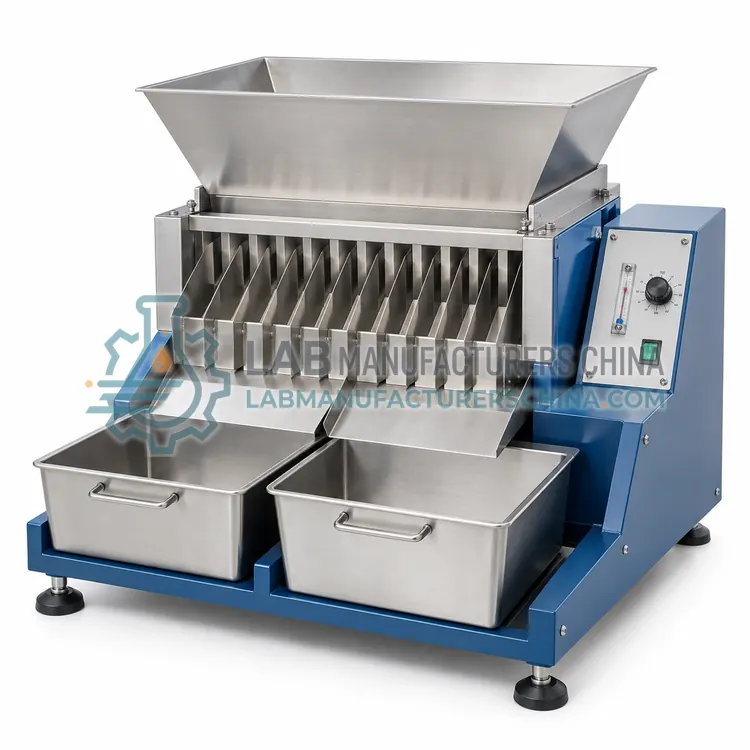
A riffle sample divider pours material through alternating chutes into two equal trays. It is a simple, reliable device for splitting free-flowing dry powders and granules into representative halves in routine laboratory practice.
What is the Riffle Sample Divider?
A riffle sample divider pours material through alternating chutes into two equal trays. It is a simple, reliable device for splitting free-flowing dry powders and granules into representative halves in routine laboratory practice.
Overview
A riffle sample divider consists of a series of chutes that alternate to the left and right, feeding two collecting trays. Sample poured evenly across the chutes is divided into two portions of equal mass, each containing the same distribution of particles as the original. The chute width must be at least two to three times the top particle size to prevent blocking and bias. Splitting is repeated, with mixing between stages, until the required mass remains. The device is robust, needs no power and is easy to clean and inspect. It is a standard tool for preparing laboratory samples from bulk material.
How does it work?
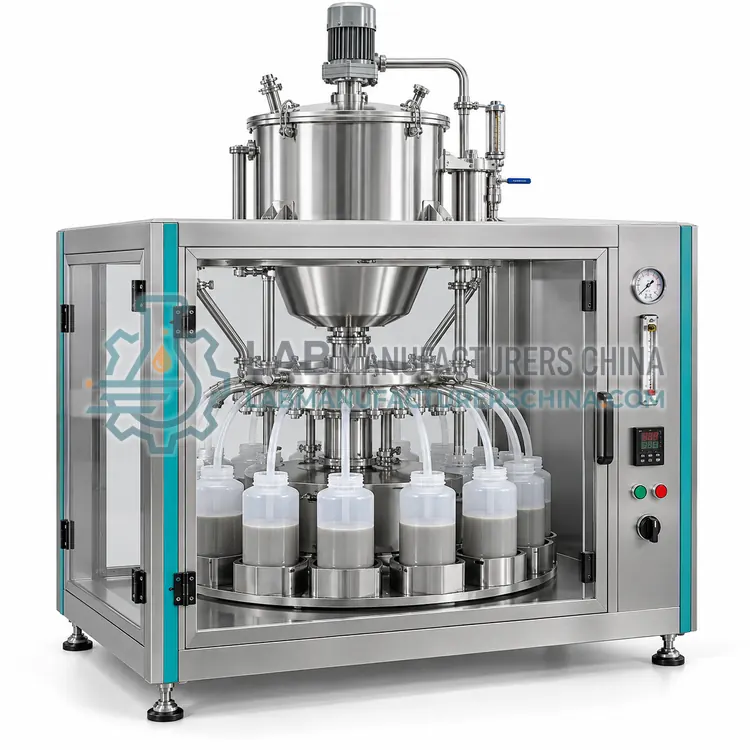
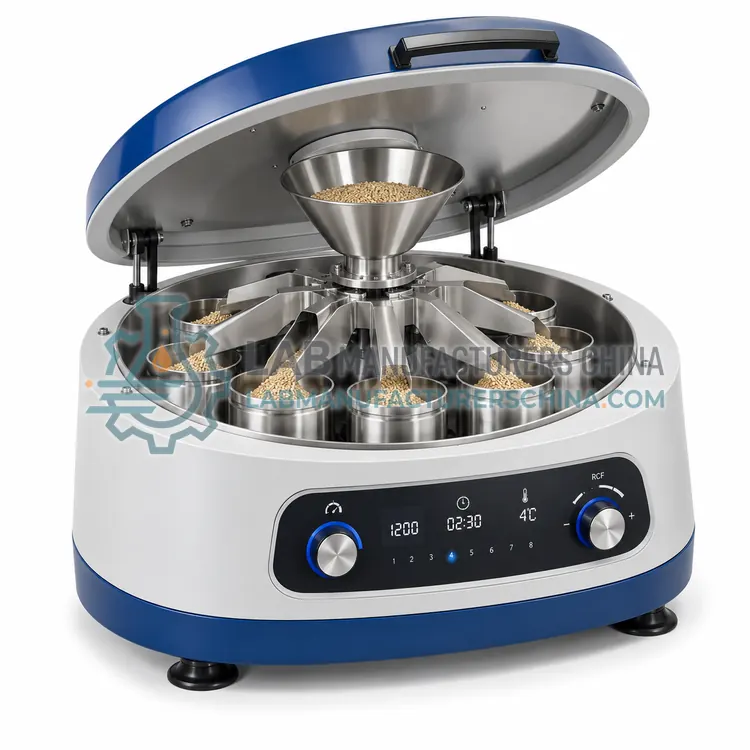
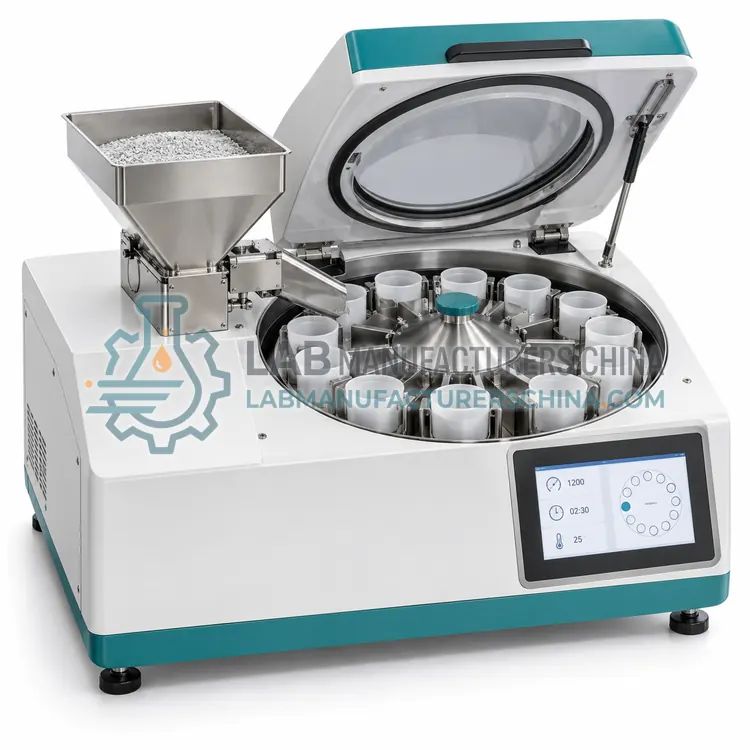
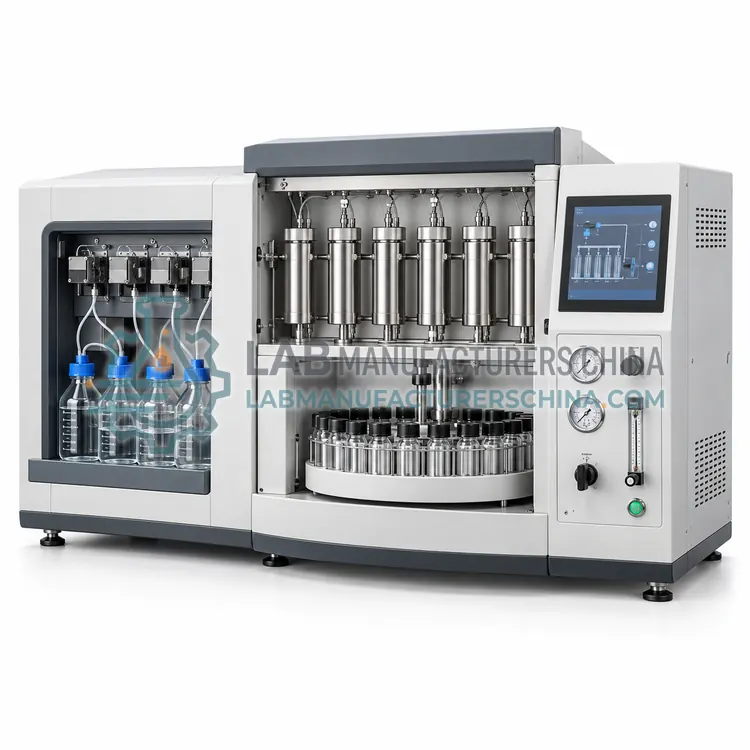
A sample divider reduces a large sample to a smaller one that has the same composition as the original. Riffle dividers pour material through a series of alternating chutes that direct it into two equal trays, and the process is repeated until the required mass remains. Rotary dividers feed material onto a rotating cone or disc so that particles are distributed evenly around collection vessels in turn. Slurry dividers split flowing suspensions using chutes, cutters or rotating scoops. Vibratory dividers spread the material in a uniform layer before splitting. Because division depends on the geometry of the device rather than on manual selection, bias is reduced and reproducibility is improved.
What are the key features?
- Alternating chutes splitting into two trays
- No power required, simple and robust
- Equal portions with matching particle distribution
- Easy to clean and inspect
- Suitable for free-flowing dry powders
What are the technical specifications?
A typical riffle sample divider configuration offers number of chutes of 10–20 pairs, chute width of 12–50 mm, max particle size of Up to 25 mm, sample capacity of 0.5–50 kg, dividing ratio of 1:2 per pass and material of Stainless steel 304. Values are indicative of the product class; the exact figures for each configuration are confirmed on the quotation and the calibration documents supplied with the instrument.
Which applications is it used for?
The Riffle Sample Divider is used in ore and mineral sample splitting, cement and aggregate sampling, soil and sediment preparation and agricultural and fertiliser sampling. Across the wider Sample Dividers class, laboratories also deploy it for mining and ore sample splitting, agricultural soil and grain sampling and cement, aggregate and mineral analysis.
Which standards and certifications apply?
Relevant standards and methods include ISO 3310-1, ASTM E11, ISO 6497, ISO 2591-1 and IEC 61010-1. Certification candidates for this model are CE and ISO 9001 manufacturing; each is to be confirmed for the specific configuration before shipment, and certificates are supplied only where they have been issued.
Reduce particle size and mix the sample before dividing, because a divider cannot make a non-uniform sample representative. Feed at a controlled, even rate and do not overload the device, since excess material causes uneven splitting. Repeat the division in stages to reach the required mass rather than trying to split too far in one pass. Clean the divider thoroughly between samples, and use inert or easily cleaned materials where trace analysis is involved. Verify the performance of the device by dividing a sample and checking that replicate sub-samples give consistent analytical results, and record the procedure in the method.
How do I select the right Riffle Sample Divider?
Choose a riffle divider for free-flowing dry powders and granules. Confirm the chute width exceeds the top particle size by at least a factor of two, and that the capacity matches the sample mass. In an RFQ state the particle size, sample mass, material and dividing ratio required.
How does it compare with other Sample Dividers variants?
Choose a divider according to the sample form and mass. Riffle dividers suit free-flowing dry powders and granules and are simple and reliable, but they must not be overloaded or the chutes will bias the split. Rotary dividers handle larger masses and are less sensitive to particle size, and they can be automated. Slurry dividers suit suspensions and process streams where the sample must be split while flowing. Vibratory dividers spread cohesive or fine material so that a uniform layer is fed to the splitter. Confirm the feed size the divider accepts, the dividing ratio, whether the sample is dry or wet, and the required throughput. The device should be easy to clean to avoid cross-contamination.
Full specifications
| Number of chutes | 10–20 pairs |
|---|---|
| Chute width | 12–50 mm |
| Max particle size | Up to 25 mm |
| Sample capacity | 0.5–50 kg |
| Dividing ratio | 1:2 per pass |
| Material | Stainless steel 304 |
| Feed method | Manual scoop or hopper |
| Trays | Two removable trays |
| Cleaning | Tool-free disassembly |
| Weight | 5–25 kg |
Indicative values for this product class. Final specifications are confirmed on the quotation and in the calibration documents supplied with the instrument.
Applications
- Ore and mineral sample splitting
- Cement and aggregate sampling
- Soil and sediment preparation
- Agricultural and fertiliser sampling
Key features
- Alternating chutes splitting into two trays
- No power required, simple and robust
- Equal portions with matching particle distribution
- Easy to clean and inspect
- Suitable for free-flowing dry powders
Frequently asked questions about Riffle Sample Divider
If a particle is larger than the chute, it may block or roll across several chutes, so the split is no longer random and one tray receives more of the coarse material. A chute width of at least two to three times the top size avoids this bias.
The sample should be poured slowly and evenly across the full width of the chutes, using a scoop or a hopper, so that all chutes receive material at a similar rate. Rapid or uneven feeding causes one side to receive more material and biases the split.
Riffle dividers are intended for dry, free-flowing material. Moist or sticky samples tend to bridge the chutes and split unevenly, so they should be dried first or handled with a different divider, such as a slurry or rotary type depending on the form.
A scoop selects material by position and tends to over- or under-represent particles of different size, density or shape. A mechanical divider uses geometry to divide the stream into equal portions, so each sub-sample has the same composition as the whole and results are more reliable.
The sample is divided in successive stages until the required mass remains, often reducing by half each time with mixing between stages. Dividing too far in one pass, or from a very large to a very small mass, increases error, so a staged approach with an appropriate divider size is preferred.
The minimum reliable mass depends on the top particle size and the heterogeneity of the material. As a rule, larger particles require a larger sample to remain representative. Standards or internal procedures set a minimum mass based on particle size and the analyte, which the divider must be able to deliver.
Related models