Microtube Rotator
微量管旋转器
- SKU ROM-0004
- Rotary Mixers
- CE (to be confirmed)
- RoHS (to be confirmed)
- ISO 9001 manufacturing (to be confirmed)
Price on request — FOB / CIF quoted per order
Prices depend on configuration, quantity and destination port.
Key specifications
| Rotation speed | 5–60 rpm |
|---|---|
| Tube capacity | 0.5, 1.5, 2 mL |
| Number of positions | 24–48 tubes |
| Disc diameter | 160–200 mm |
| Motor type | Brushless DC |
| Timer | 1 min–99 h or continuous |
Request a quote Download brochure · to be provided
By Lab Manufacturers China Technical TeamLast reviewed Standards: IEC 61010-1, IEC 61010-2-051, EN 61326-1
What is the Microtube Rotator?
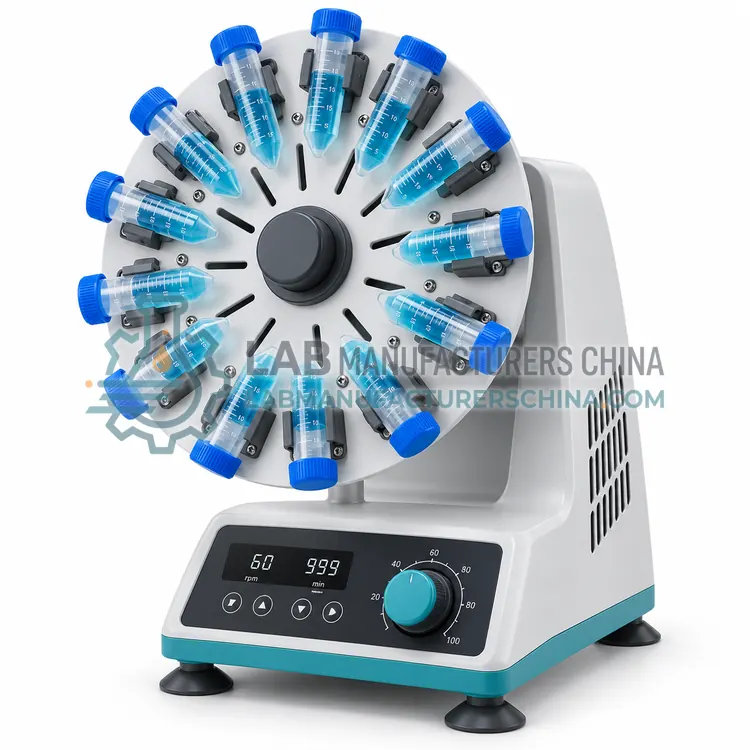
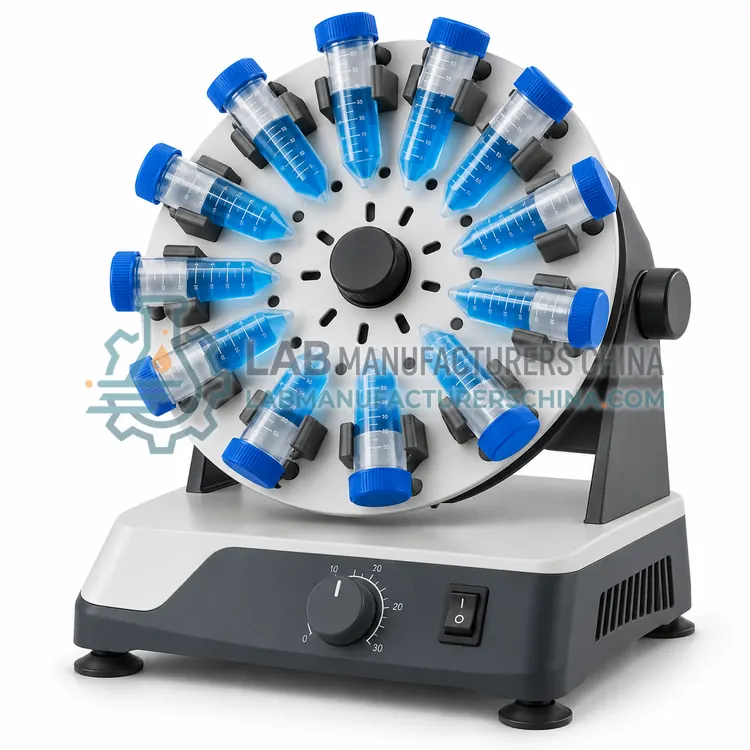
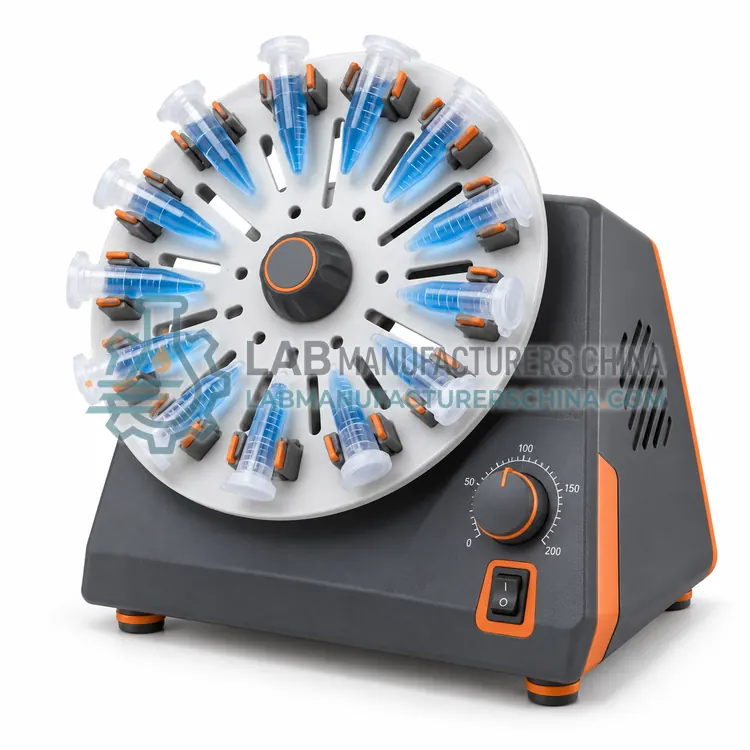
A microtube rotator is a compact rotator with a disc or carousel sized for 0.5 and 1.5 mL microtubes and similar small vials. It suits molecular biology labs that mix many small samples during incubations such as immunoprecipitation and hybridization.
What is the Microtube Rotator?
A microtube rotator is a compact rotator with a disc or carousel sized for 0.5 and 1.5 mL microtubes and similar small vials. It suits molecular biology labs that mix many small samples during incubations such as immunoprecipitation and hybridization.
Overview
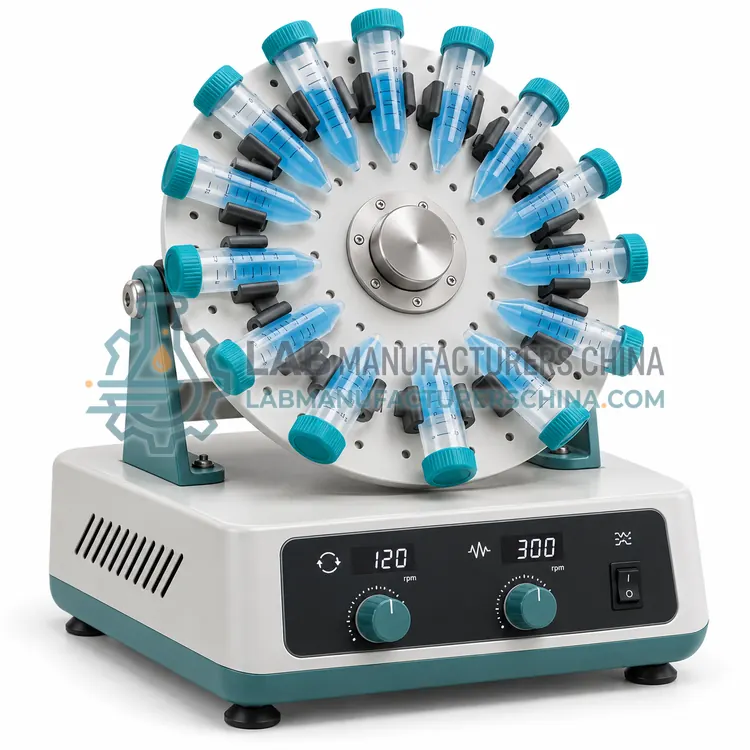
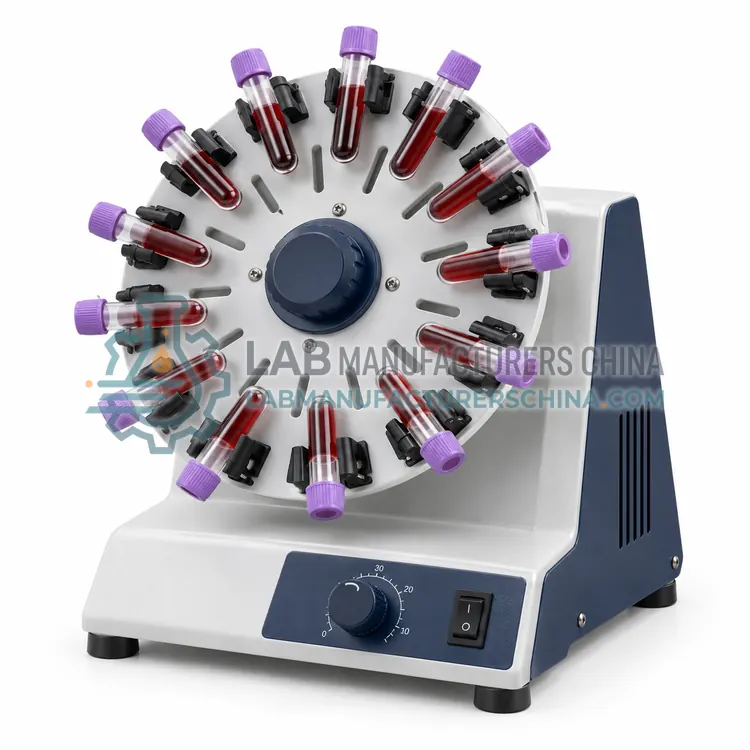
The microtube rotator is designed around small tubes. A compact disc, often 160 to 200 mm across, holds 24 to 48 microtubes of 0.5, 1.5 or 2 mL in spring clips or foam holders. Speed ranges from 5 to 60 rpm, with some models offering a pulse of vibration to release material. The unit is small, weighing 1 to 3 kg, so it fits in incubators, hybridization ovens and cold rooms. An external controller may allow the motor to be placed inside the chamber while the control box stays outside. Heating is generally not included. Typical uses are immunoprecipitation, binding steps in pull-down assays, antibody incubation and enzyme reactions where continuous gentle agitation helps binding. Compared with larger rotators, this type has less capacity for 15 mL or 50 mL tubes but is more convenient for routine molecular biology work.
How does it work?
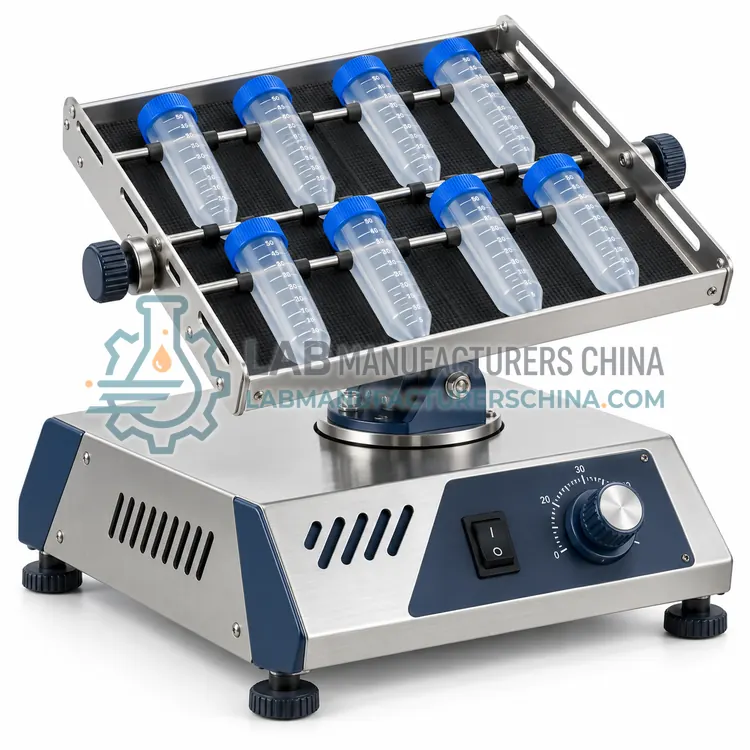
A rotary mixer has an electric motor, usually a brushless DC or gear motor, that drives a horizontal shaft carrying a rotor, disc or carousel. Tubes are clipped into holders around the circumference, and the rotor turns them through 360 degrees so that the air bubble inside travels from one end of the tube to the other. This repeated inversion moves liquid over the full tube length and mixes components by gravity-driven flow rather than by turbulence. Speeds are typically 5 to 100 rpm, which avoids foaming, cell damage and protein denaturation. Some models add a tilt, orbital or vibration motion to loosen pellets. Key components are the motor and gearbox, the rotor with tube holders, a speed controller, a timer and, on better units, an overload protection circuit. Holder design determines the compatible tube sizes from 0.5 mL to 50 mL and bottles.
What are the key features?
- Disc holds 24–48 microtubes of 0.5, 1.5 or 2 mL
- Compact 1–3 kg body that fits in incubators and cold rooms
- Speed range 5–60 rpm for gentle binding reactions
- Remote control box option to keep electronics outside the chamber
- Spring clips or foam holders that secure tubes at any angle
- Optional vibration pulse to release pellets and beads
What are the technical specifications?
A typical microtube rotator configuration offers rotation speed of 5–60 rpm, tube capacity of 0.5, 1.5, 2 mL, number of positions of 24–48 tubes, disc diameter of 160–200 mm, motor type of Brushless DC and timer of 1 min–99 h or continuous. Values are indicative of the product class; the exact figures for each configuration are confirmed on the quotation and the calibration documents supplied with the instrument.
Which applications is it used for?
The Microtube Rotator is used in immunoprecipitation, pull-down and binding assays, antibody incubation, hybridization steps in molecular biology and enzyme reactions in microtubes. Across the wider Rotary Mixers class, laboratories also deploy it for blood and plasma sample mixing, cell suspension handling and protein and antibody incubation.
Which standards and certifications apply?
Relevant standards and methods include IEC 61010-1, IEC 61010-2-051, EN 61326-1, GB 4793.1 and CLSI GP41. Certification candidates for this model are CE, RoHS and ISO 9001 manufacturing; each is to be confirmed for the specific configuration before shipment, and certificates are supplied only where they have been issued.
Place the rotary mixer on a level, stable surface and keep the rotor balanced by loading tubes symmetrically, which reduces vibration and bearing wear. Use tube holders that match the tube diameter and confirm caps are tight, since leaks can damage the motor. If the unit will run in an incubator or cold room, choose a model rated for the temperature and humidity range. Clean the rotor with a mild disinfectant, and disconnect power before cleaning. Inspect holders and clips regularly for cracks. Verify speed periodically with a tachometer, and keep records if the instrument supports a quality system. Electrical safety should follow IEC 61010-1, and the supplier should document the maximum load and duty cycle.
How do I select the right Microtube Rotator?
Select a microtube rotator when most of your work uses 0.5 to 2 mL tubes inside incubators or cold rooms. Use a full-size rotator if you need to mix 15 mL or 50 mL tubes. In the RFQ, specify tube sizes, positions, operating temperature, humidity and any requirement for an external controller.
How does it compare with other Rotary Mixers variants?
The decisive parameters are tube format, speed range, control features and load capacity. First define the tubes or bottles to be mixed, from 0.5 mL microtubes to 50 mL conical tubes or blood collection tubes, and choose a rotor with matching holders. Next, decide whether fixed speed is sufficient or whether adjustable speed, a timer and reversible direction are needed for protocol control. Check the maximum load and number of positions, because overloaded rotors run unevenly and wear the gearbox. Consider additional motions such as orbital, tilt or vibration if pellets must be resuspended. For cell work or biological samples, confirm that the unit is small enough to fit inside an incubator or cold room and is rated for humidity. Review noise, cleanability of the rotor and availability of replacement holders in the RFQ.
Full specifications
| Rotation speed | 5–60 rpm |
|---|---|
| Tube capacity | 0.5, 1.5, 2 mL |
| Number of positions | 24–48 tubes |
| Disc diameter | 160–200 mm |
| Motor type | Brushless DC |
| Timer | 1 min–99 h or continuous |
| Maximum load | 0.8 kg |
| Operating temperature | 0–40 °C |
| Humidity tolerance | Up to 80 % RH non-condensing |
| Power supply | 12 V DC adapter, 100–240 V input |
| Weight | 1–3 kg |
Indicative values for this product class. Final specifications are confirmed on the quotation and in the calibration documents supplied with the instrument.
Applications
- Immunoprecipitation
- Pull-down and binding assays
- Antibody incubation
- Hybridization steps in molecular biology
- Enzyme reactions in microtubes
Key features
- Disc holds 24–48 microtubes of 0.5, 1.5 or 2 mL
- Compact 1–3 kg body that fits in incubators and cold rooms
- Speed range 5–60 rpm for gentle binding reactions
- Remote control box option to keep electronics outside the chamber
- Spring clips or foam holders that secure tubes at any angle
- Optional vibration pulse to release pellets and beads
Frequently asked questions about Microtube Rotator
Many microtube rotators are used in cold rooms and refrigerators, since their motors are small and produce little heat. Confirm the rated temperature and whether condensation will affect the electronics.
Tubes are held by spring clips or foam-lined slots so they stay firmly at the disc edge as it turns. The holder must match the tube diameter to avoid slipping or leaks from the cap.
Most do not include heating because they are designed to fit in incubators or cold rooms. If you need heated rotation, consider a rotator placed inside a hybridization oven or a rotating incubator.
A rotary mixer turns tubes or vials end-over-end on a rotating rotor at low speed. It mixes liquids gently without foaming or shear, and is used for blood, cells, proteins, extractions and reagents in clinical and research laboratories.
A rotary mixer inverts tubes slowly through 360 degrees and mixes by gravity flow, while a vortex mixer shakes tubes in a fast orbit. Rotary mixing suits fragile samples and long incubations, whereas vortexing is better for quick, vigorous mixing.
Most protocols use 10 to 40 rpm. Lower speeds of 5 to 15 rpm are used for fragile cells, while higher speeds of 40 to 100 rpm are used for viscous liquids. Follow the assay or tube manufacturer's instructions.