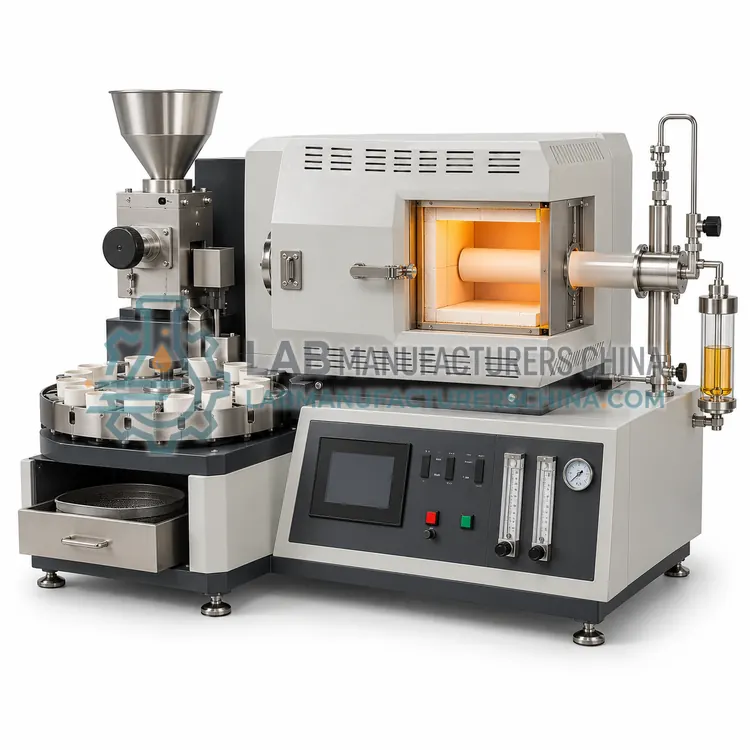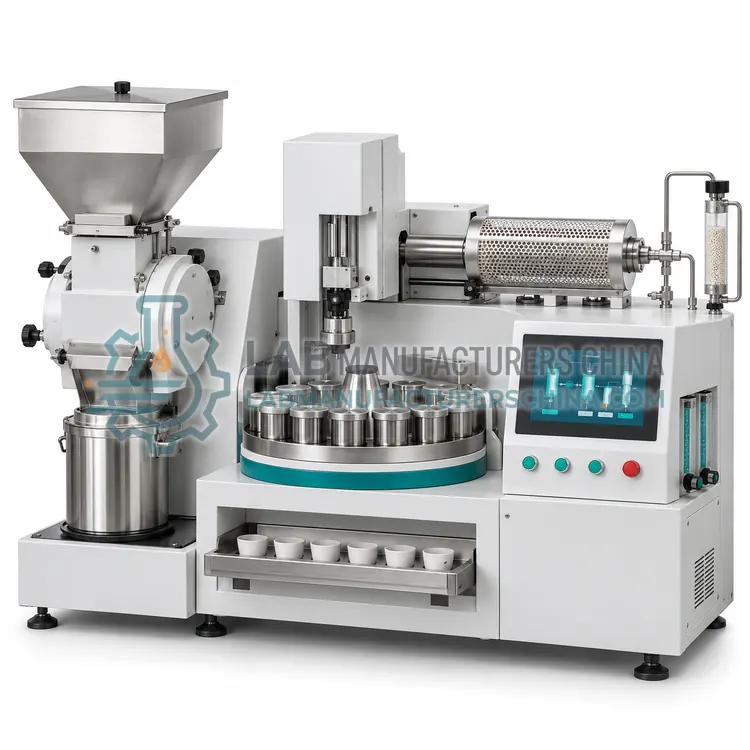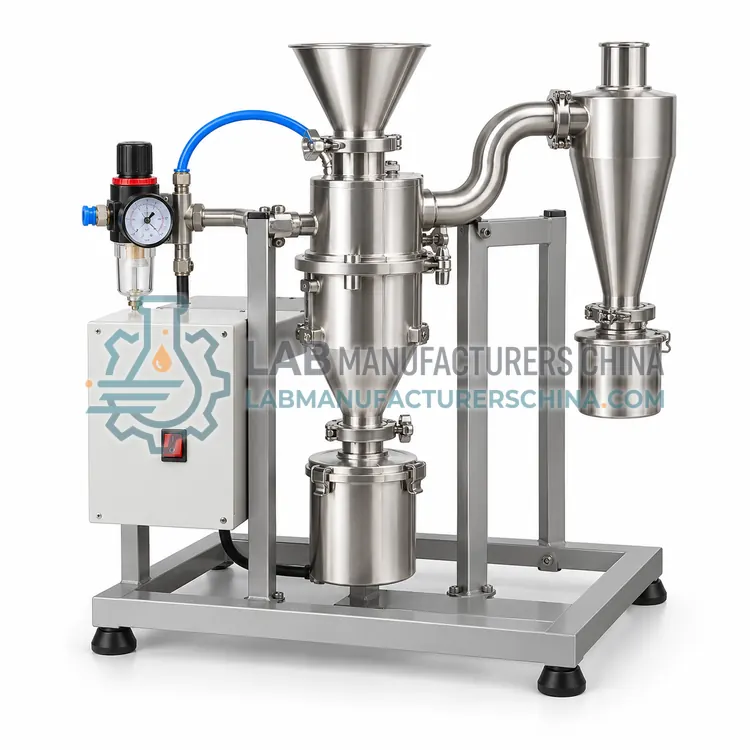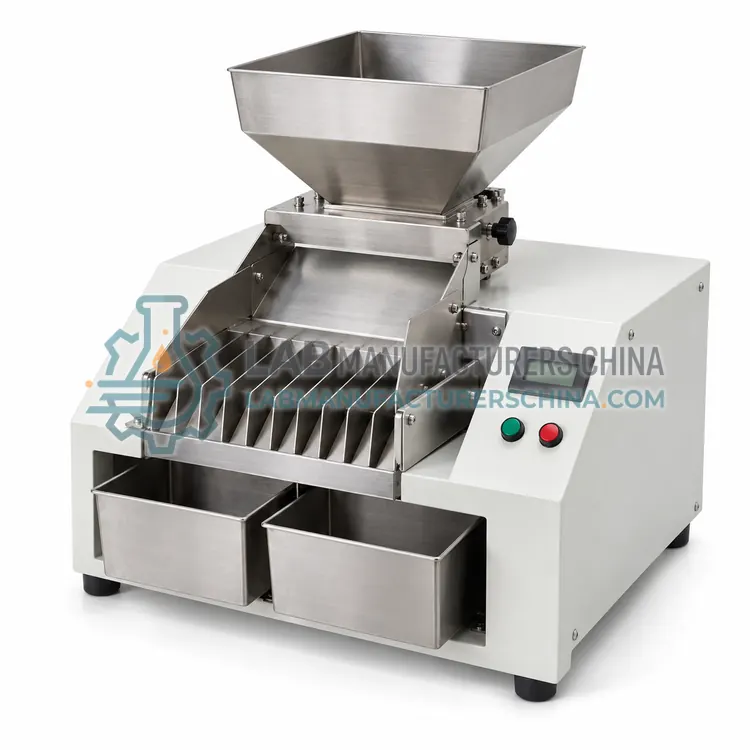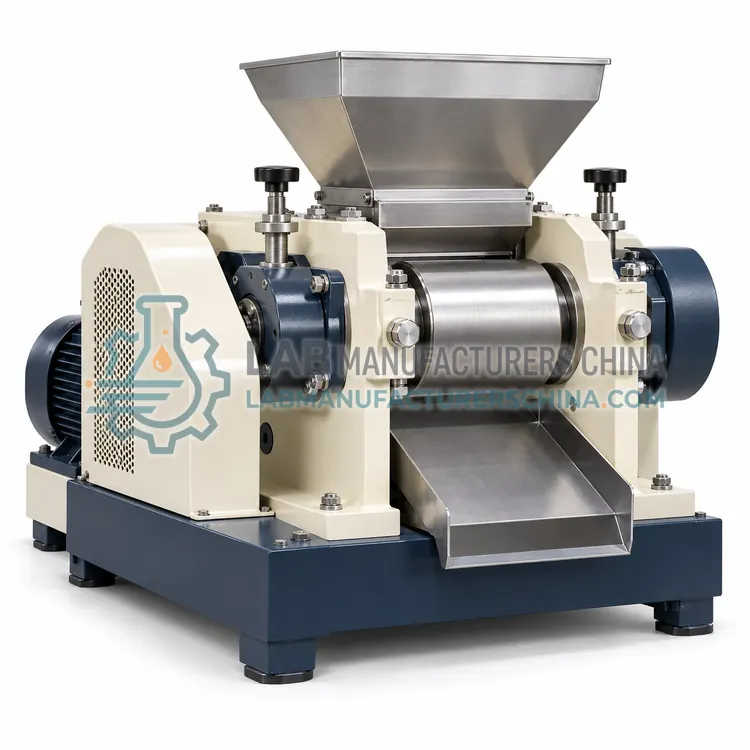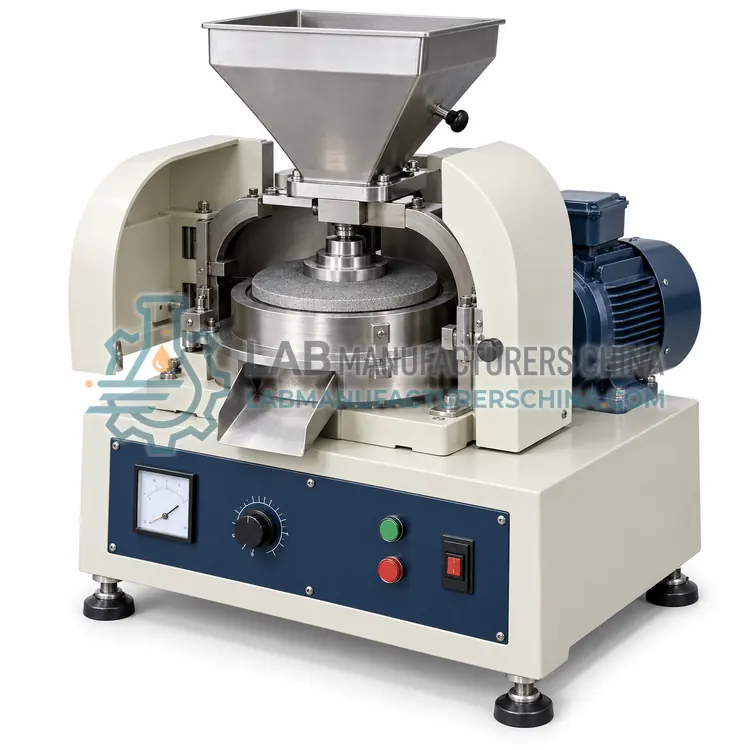
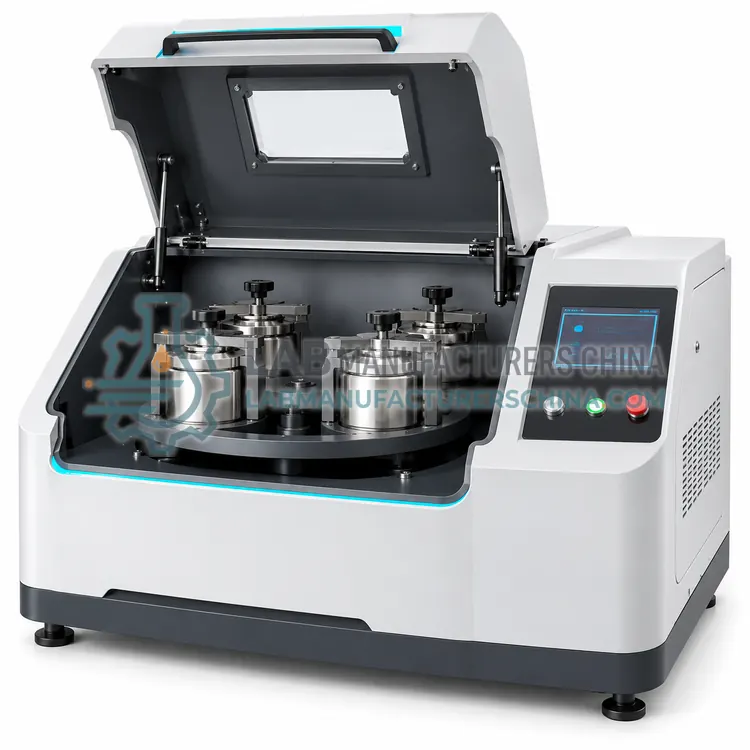
Planetary Ball Mill
行星式球磨机
- SKU PUL-0001
- Pulverizers
- CE (to be confirmed)
- ISO 9001 manufacturing (to be confirmed)
Price on request — FOB / CIF quoted per order
Prices depend on configuration, quantity and destination port.
Key specifications
| Bowl volume | 50–500 mL |
|---|---|
| Maximum feed size | ≤ 10 mm |
| Final fineness | < 75 µm, down to < 20 µm |
| Sample charge | 10–200 g per bowl |
| Sun wheel speed | 100–500 rpm, adjustable |
| Grinding time | 2–10 min with reversing |
Request a quote Download brochure · to be provided
By Lab Manufacturers China Technical TeamLast reviewed Standards: ASTM E877, ISO 3082, ISO 12743
What is the Planetary Ball Mill?
A planetary ball mill grinds a small mineral charge to below 75 µm in minutes by rotating a sealed bowl around a sun wheel while it spins on its own axis. It handles multiple samples at once.
What is the Planetary Ball Mill?
A planetary ball mill grinds a small mineral charge to below 75 µm in minutes by rotating a sealed bowl around a sun wheel while it spins on its own axis. It handles multiple samples at once.
Overview
One or two grinding bowls are mounted on a rotating sun wheel and turned in the opposite direction on their own axes. The combination of centrifugal forces makes the grinding balls climb the bowl wall and then fall onto the sample, producing high-energy impact and friction. Typical bowl volumes are 50 to 500 mL, sample charges 10 to 200 g and grinding times two to ten minutes, with final fineness reaching below 20 µm in suitable materials. Bowls and balls are available in agate, zirconia, tungsten carbide, stainless steel and hardened steel, and the choice governs contamination. Speed, time and reversing modes are programmable, and most mills accept two or four bowls so that samples can be ground in parallel or with a counterweight. Because energy input is high, grinding times must be validated to avoid excessive heating.
How does it work?
Pulverizing reduces particle size by impact, friction and attrition inside a closed vessel, and the energy supplied per unit mass determines the final fineness. In a planetary ball mill the bowl rotates around the sun wheel while turning on its own axis, so grinding balls fall and roll at high energy, giving very fine products in minutes. A vibratory disc mill shakes a ring and puck inside a bowl, producing fast, reproducible grinding of a few hundred grams. A Bond ball mill, with a fixed drum, ball charge and revolution count, is used to measure ore grindability rather than to prepare routine samples. Mortar grinders press and rub material between a pestle and a mortar under spring load, which suits soft to medium-hard minerals and minimizes fines. Jet mills accelerate particles in a gas stream so they break by particle-to-particle collision without media contact, protecting high-purity samples.
What are the key features?
- Sun wheel rotation with counter-rotation of each bowl
- One, two or four grinding bowl positions
- Bowl volumes from 50 to 500 mL
- Programmable speed, time and reversing cycles
- Grinding sets in agate, zirconia, tungsten carbide and steel
- Safety lid interlock with bowl clamping
What are the technical specifications?
A typical planetary ball mill configuration offers bowl volume of 50–500 mL, maximum feed size of ≤ 10 mm, final fineness of < 75 µm, down to < 20 µm, sample charge of 10–200 g per bowl, sun wheel speed of 100–500 rpm, adjustable and grinding time of 2–10 min with reversing. Values are indicative of the product class; the exact figures for each configuration are confirmed on the quotation and the calibration documents supplied with the instrument.
Which applications is it used for?
The Planetary Ball Mill is used in grinding assay samples to 75 µm, preparation for XRF and XRD analysis, grinding of concentrates and tailings and trace element and isotope sample preparation. Across the wider Pulverizers class, laboratories also deploy it for grinding ore to assay fineness, preparation for X-ray fluorescence and diffraction and grindability testing for mill design.
Which standards and certifications apply?
Relevant standards and methods include ASTM E877, ISO 3082, ISO 12743, ISO 13320, GB/T 2007 and IEC 61010-1. Certification candidates for this model are CE and ISO 9001 manufacturing; each is to be confirmed for the specific configuration before shipment, and certificates are supplied only where they have been issued.
Fill the bowl to the recommended fraction of its volume, because too little material wastes energy and too much prevents media movement. Grind for the validated time rather than by eye, and check fineness by sieving a retained portion, since a mill that is wearing out takes longer to reach specification. Limit grinding to avoid heating the sample, especially for sulfide ores that oxidize and for materials whose moisture will be measured later. Clean bowls, rings and balls between samples with brushes, alcohol and, where needed, a purge charge of quartz or barren rock, and keep a log of bowl identity so contamination problems can be traced. Verify performance periodically with a reference material of known particle size distribution, and replace worn media before the product size drifts.
How do I select the right Planetary Ball Mill?
Select the planetary mill when you need fine grinding of small charges of many samples, and choose the grinding set material from the elements you analyse. Specify bowl count and volume, speed range, programming options and the number of grinding sets needed to avoid cross-contamination.
How does it compare with other Pulverizers variants?
Decide first how fine the sample must be and how many grams are needed at that fineness, then choose the mill that reaches it in a practical time. Planetary ball mills and vibratory disc mills cover the widest range and are the usual choice for assay samples. Mortar grinders suit smaller, softer samples and can be automated for repetitive work. Jet mills are reserved for high-purity or heat-sensitive materials because they need a compressed gas supply and have limited throughput. Grinding set material is as important as the mill itself: agate, zirconia and tungsten carbide minimize contamination of iron, chromium and other trace elements, while hardened or chrome steel is cheaper and more durable but contributes wear metals. Also consider how the mill handles sample mass, cleaning between samples, bowl sealing and the risk of over-grinding, which broadens the size distribution and can alter mineral phases.
Full specifications
| Bowl volume | 50–500 mL |
|---|---|
| Maximum feed size | ≤ 10 mm |
| Final fineness | < 75 µm, down to < 20 µm |
| Sample charge | 10–200 g per bowl |
| Sun wheel speed | 100–500 rpm, adjustable |
| Grinding time | 2–10 min with reversing |
| Grinding set materials | Agate, zirconia, tungsten carbide, steel |
| Motor power | 0.4–1.5 kW |
Indicative values for this product class. Final specifications are confirmed on the quotation and in the calibration documents supplied with the instrument.
Applications
- Grinding assay samples to 75 µm
- Preparation for XRF and XRD analysis
- Grinding of concentrates and tailings
- Trace element and isotope sample preparation
Key features
- Sun wheel rotation with counter-rotation of each bowl
- One, two or four grinding bowl positions
- Bowl volumes from 50 to 500 mL
- Programmable speed, time and reversing cycles
- Grinding sets in agate, zirconia, tungsten carbide and steel
- Safety lid interlock with bowl clamping
Frequently asked questions about Planetary Ball Mill
Typically two to ten minutes for a 10 to 200 g charge, depending on hardness, bowl size and target fineness. Cycling with short grinding periods and pauses reduces heating and improves reproducibility.
Hard ore abrades the bowl and balls, so media material enters the sample. Agate and zirconia suit trace element work, tungsten carbide resists abrasion with little iron, and stainless or chrome steel is economical but adds iron, chromium and nickel.
A common starting point is one third of the bowl volume for sample and balls together, with the required ball-to-powder ratio set by the method. Overfilling prevents free movement and underfilling wastes impact energy.
Most assay and XRF methods use material passing a 75 µm sieve, and mineralogical work may need finer or a polished section instead. The required size is set by the analytical method and by the mass needed for it.
Media wear adds elements to the sample. Hardened or chrome steel contributes iron and chromium, while agate, zirconia and tungsten carbide contribute much less. For trace element work, the grinding set is selected for the elements of interest.
It measures the Bond ball mill work index, which describes how much energy is needed to grind an ore to a given size. The drum, ball charge and revolution count are fixed so that results are comparable between laboratories and ores.