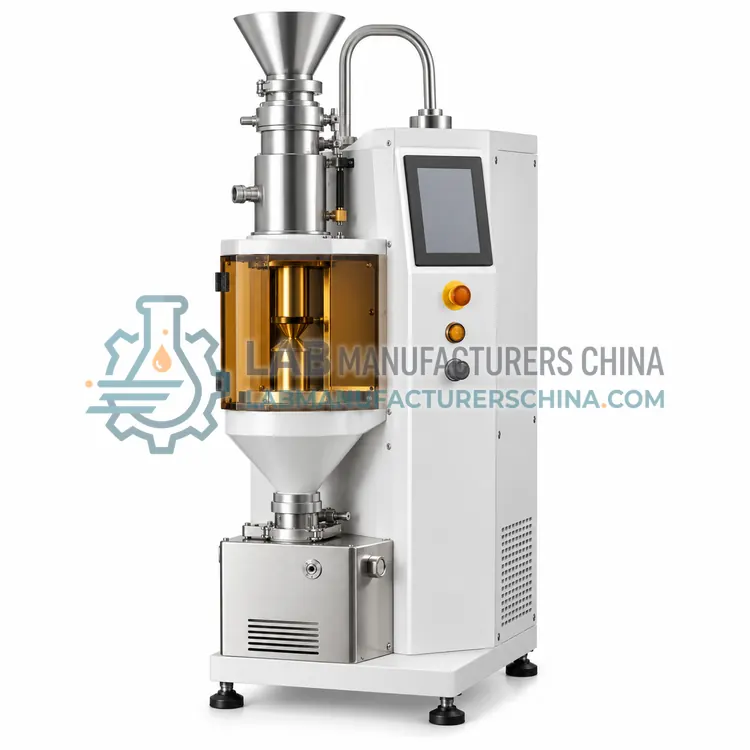
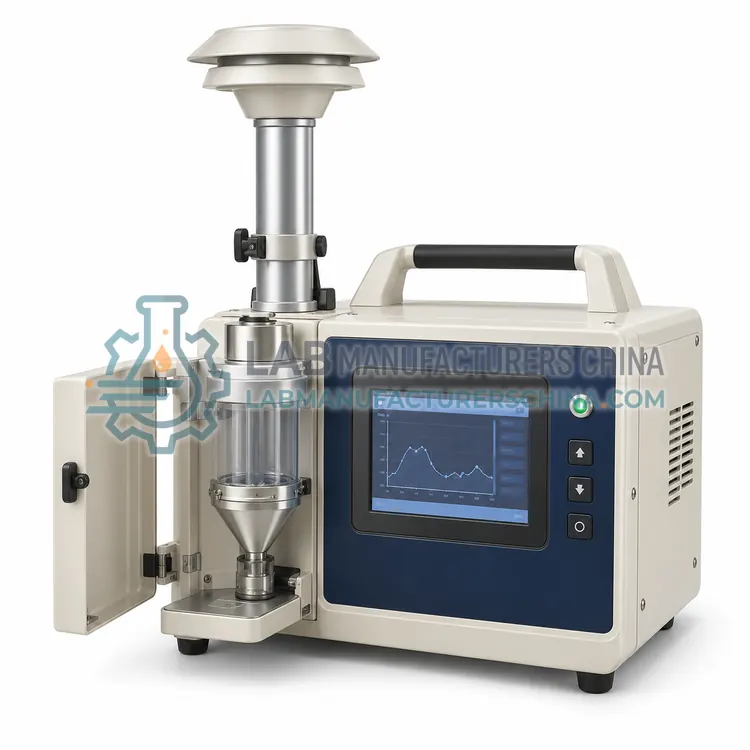
TEOM Particulate Monitor
微量振荡天平颗粒物监测仪
- SKU PAM-0002
- Particulate Monitors
- CE (to be confirmed)
- US EPA equivalent method approval (to be confirmed)
- ISO 9001 manufacturing (to be confirmed)
Price on request — FOB / CIF quoted per order
Prices depend on configuration, quantity and destination port.
Key specifications
| Measurement principle | Tapered element oscillating microbalance |
|---|---|
| Size fractions | PM10, PM2.5, TSP (inlet dependent) |
| Measurement range | 0–1,000,000 µg/m³ (multiple ranges) |
| Lower detection limit | 0.1 µg/m³ (1 h) |
| Averaging time | 10 s to 1 h, selectable |
| Sample flow rate | 3.0 L/min (main), 16.7 L/min (inlet) |
Request a quote Download brochure · to be provided
By Lab Manufacturers China Technical TeamLast reviewed Standards: EN 12341, US EPA 40 CFR Part 50 Appendix L, ISO 23210
What is the TEOM Particulate Monitor?
A continuous monitor that weighs particles on a filter mounted on an oscillating element to give near-real-time PM mass. It is used for regulatory and research networks that need fast, direct mass measurements.
What is the TEOM Particulate Monitor?
A continuous monitor that weighs particles on a filter mounted on an oscillating element to give near-real-time PM mass. It is used for regulatory and research networks that need fast, direct mass measurements.
Overview
The tapered element oscillating microbalance holds a filter cartridge on the tip of a hollow tapered glass element that vibrates at its natural frequency. As particles deposit, the frequency falls in proportion to the added mass, giving a direct mass measurement updated every few seconds. A size-selective inlet and a cyclone or impactor define the PM10 or PM2.5 cut point, and a heated sample stream is often used to limit humidity effects. A filter dynamics measurement system or a sample equilibration system can compensate for the loss of semi-volatile material that evaporates from the heated filter, improving agreement with gravimetric results. Ranges of 0 to several thousand micrograms per cubic metre and detection limits below 1 microgram per cubic metre are typical. The direct mass basis and short averaging time make the instrument useful for studying short pollution episodes and traffic cycles.
How does it work?
Particulate monitors use several physical principles. Beta attenuation monitors deposit particles on a filter tape and measure the attenuation of beta radiation from a carbon-14 source, which is proportional to deposited mass. Tapered element oscillating microbalance instruments weigh particles continuously on a filter mounted on an oscillating element whose frequency falls as mass accumulates. Optical monitors measure light scattered by particles at one or more angles and convert the signal to mass using an assumed or calibrated factor. High-volume samplers draw air through a size-selective inlet and a pre-weighed filter, giving a gravimetric result that serves as a reference. Condensation particle counters grow ultrafine particles in a supersaturated vapour and count them optically. Size-selective inlets such as cyclones or impactors define the cut point.
What are the key features?
- Direct mass measurement from oscillation frequency change needs no density assumption.
- Short averaging times resolve traffic cycles and short pollution episodes.
- Filter dynamics or equilibration system recovers semi-volatile mass.
- Heated sample stream limits humidity-related positive bias.
- Size-selective cyclone or impactor defines the cut point.
- Field-proven design is accepted in regulatory networks worldwide.
What are the technical specifications?
A typical teom particulate monitor configuration offers measurement principle of Tapered element oscillating microbalance, size fractions of PM10, PM2.5, TSP (inlet dependent), measurement range of 0–1,000,000 µg/m³ (multiple ranges), lower detection limit of 0.1 µg/m³ (1 h), averaging time of 10 s to 1 h, selectable and sample flow rate of 3.0 L/min (main), 16.7 L/min (inlet). Values are indicative of the product class; the exact figures for each configuration are confirmed on the quotation and the calibration documents supplied with the instrument.
Which applications is it used for?
The TEOM Particulate Monitor is used in regulatory PM mass networks, short-term pollution episode studies, roadside and near-source monitoring and indoor and workplace dust research. Across the wider Particulate Monitors class, laboratories also deploy it for ambient PM10 and PM2.5 monitoring networks, industrial fence-line dust monitoring and indoor and occupational dust exposure checks.
Which standards and certifications apply?
Relevant standards and methods include EN 12341, US EPA 40 CFR Part 50 Appendix L, ISO 23210, ISO 10155, HJ 653 and GB 3095. Certification candidates for this model are CE, US EPA equivalent method approval and ISO 9001 manufacturing; each is to be confirmed for the specific configuration before shipment, and certificates are supplied only where they have been issued.
Site the monitor so the inlet is 2 to 15 m above ground, away from walls, vents and trees that distort airflow, and record the inlet height. For beta attenuation and TEOM instruments, replace filter tape or cartridges on schedule and perform leak checks and flow audits with a primary standard. Keep the heated inlet and drying system working, since moisture control is critical to accuracy. For gravimetric samplers, equilibrate filters in a controlled weighing room at 20 to 23 °C and 30 to 40 percent relative humidity before and after sampling. Log operational status and invalid data flags, and co-locate new instruments with a reference monitor for field comparison before reporting.
How do I select the right TEOM Particulate Monitor?
Select the TEOM when fast, direct mass data with short averaging is needed, such as near-source or episode studies. Beta attenuation instruments are simpler to operate in remote networks. In an RFQ, specify the size fraction, averaging time, filter type and whether a semi-volatile compensation system is required.
How does it compare with other Particulate Monitors variants?
Choose the monitor by the metric and the purpose. For regulatory PM10 and PM2.5 mass data, beta attenuation or TEOM instruments approved under US EPA or EN methods are used, with gravimetric samplers for reference and auditing. For worker exposure, indoor checks and network densification, low-cost optical monitors give fast indicative results but need correction against reference data. Consider the size cut point, measurement range, averaging time and whether the instrument reports mass or number. Evaluate sampling inlet conditioning, since relative humidity above about 60 percent can bias optical and beta readings through particle growth, so heated inlets or naffion dryers are often fitted. Confirm filter or tape consumption and the calibration and audit schedule.
Full specifications
| Measurement principle | Tapered element oscillating microbalance |
|---|---|
| Size fractions | PM10, PM2.5, TSP (inlet dependent) |
| Measurement range | 0–1,000,000 µg/m³ (multiple ranges) |
| Lower detection limit | 0.1 µg/m³ (1 h) |
| Averaging time | 10 s to 1 h, selectable |
| Sample flow rate | 3.0 L/min (main), 16.7 L/min (inlet) |
| Filter | Teflon-coated glass fibre cartridge |
| Humidity control | Heated sample stream or equilibration system |
| Outputs | RS-232, Ethernet, analog |
| Operating temperature | 0–40 °C (sheltered) |
| Power supply | 220 VAC, 50 Hz |
Indicative values for this product class. Final specifications are confirmed on the quotation and in the calibration documents supplied with the instrument.
Applications
- Regulatory PM mass networks
- Short-term pollution episode studies
- Roadside and near-source monitoring
- Indoor and workplace dust research
Key features
- Direct mass measurement from oscillation frequency change needs no density assumption.
- Short averaging times resolve traffic cycles and short pollution episodes.
- Filter dynamics or equilibration system recovers semi-volatile mass.
- Heated sample stream limits humidity-related positive bias.
- Size-selective cyclone or impactor defines the cut point.
- Field-proven design is accepted in regulatory networks worldwide.
Frequently asked questions about TEOM Particulate Monitor
The heated filter can evaporate semi-volatile compounds such as ammonium nitrate, which the gravimetric method retains because filters are conditioned cool. A filter dynamics measurement system collects the volatilized material and restores agreement.
Filter cartridges are replaced on a scheduled basis, typically every two to four weeks, or sooner when loading is high. The element is cleaned and the mass transducer zeroed according to the manufacturer procedure during each service.
Most TEOM monitors offer averaging from 10 seconds up to one hour. Short averages are useful for research on near-road exposure and short plumes, but are noisier and are not used for regulatory limit comparisons.
PM10 describes particles with an aerodynamic diameter up to 10 micrometres that penetrate the upper airways, while PM2.5 covers particles up to 2.5 micrometres that reach the alveoli. Both are mass-based metrics and are measured with inlets or impactors that define the cut point.
Optical monitors estimate mass from scattered light using an assumption about particle density, refractive index and size, while beta and gravimetric methods measure mass directly. Humidity, composition and size distribution differences cause bias, so optical units are corrected against reference data at each site.
Regulatory stations typically report hourly PM values with daily averages for comparison with limit values, while research applications may use one-minute data. Very short averages increase noise, so smoothing is applied without masking genuine pollution episodes.
Related models