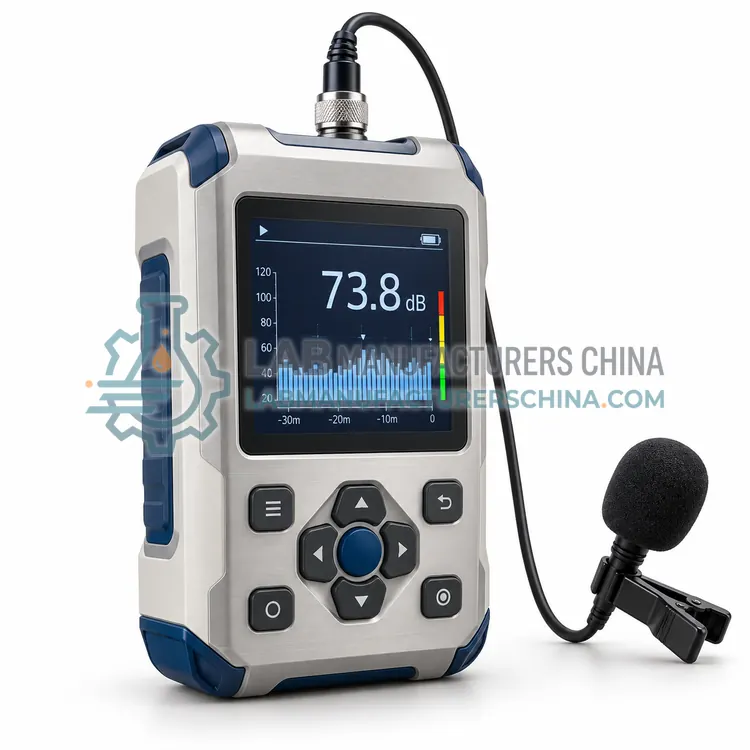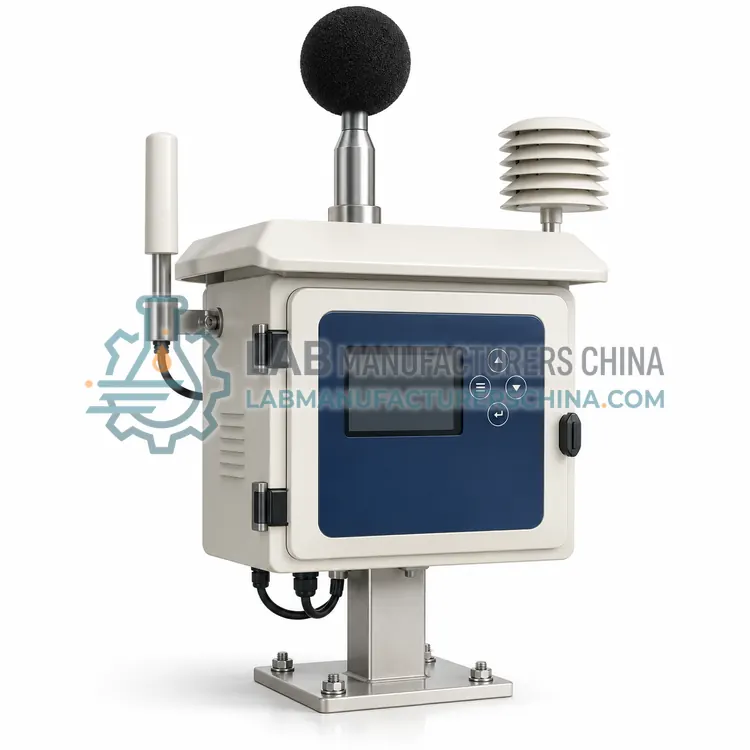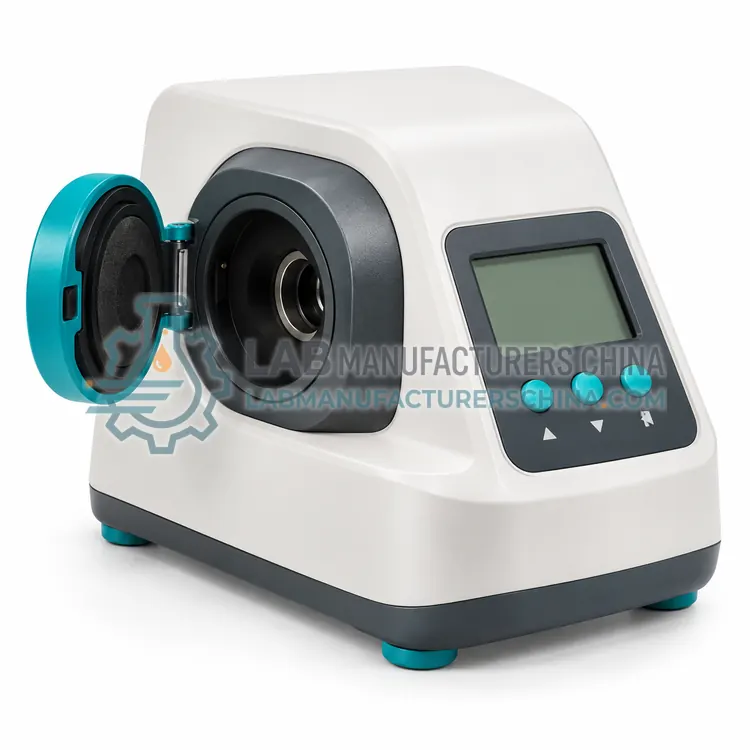
Octave Band Sound Analyzer
倍频程声学分析仪
- SKU NOM-0004
- Noise Monitoring
- CE (to be confirmed)
- China pattern approval (to be confirmed)
- ISO 9001 manufacturing (to be confirmed)
Price on request — FOB / CIF quoted per order
Prices depend on configuration, quantity and destination port.
Key specifications
| Filter class | IEC 61260-1 Class 1 |
|---|---|
| Band range | 6.3 Hz–20 kHz (1/3 octave) |
| FFT lines | 400–6400 |
| Measurement range | 20–140 dB(A) |
| Sound level class | IEC 61672-1 Class 1 |
| Channels | 1–4 |
Request a quote Download brochure · to be provided
By Lab Manufacturers China Technical TeamLast reviewed Standards: IEC 61672-1, IEC 61672-3, IEC 60942 (sound calibrators)
What is the Octave Band Sound Analyzer?
A real-time analyzer that measures sound levels in 1/1 and 1/3 octave bands, often with FFT, for frequency-resolved noise assessment. It is the right choice for machinery noise diagnosis, building acoustics, hearing protector selection and tonal noise evaluation.
What is the Octave Band Sound Analyzer?
A real-time analyzer that measures sound levels in 1/1 and 1/3 octave bands, often with FFT, for frequency-resolved noise assessment. It is the right choice for machinery noise diagnosis, building acoustics, hearing protector selection and tonal noise evaluation.
Overview
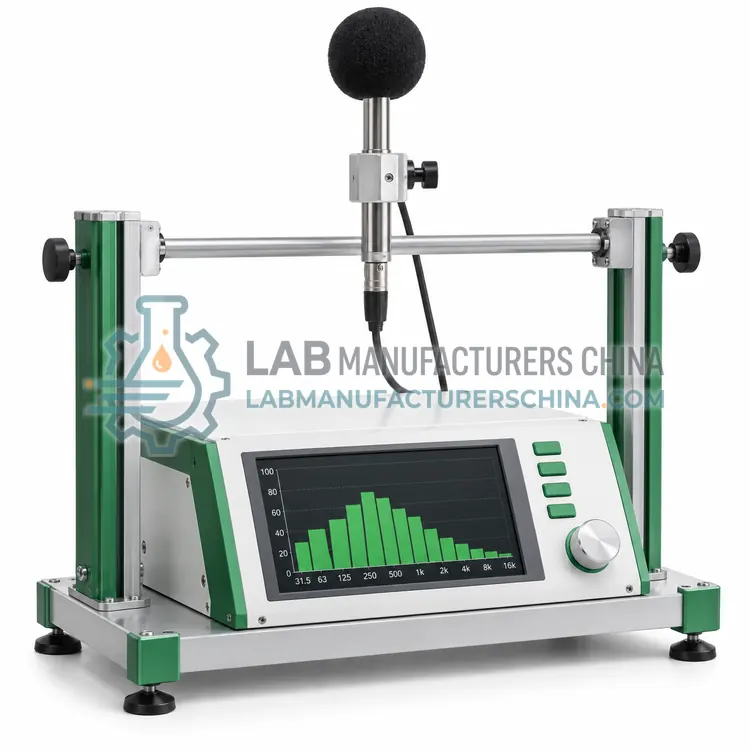
The octave band analyzer processes the microphone signal through parallel digital filters that comply with IEC 61260-1 Class 1, delivering levels in bands from 6.3 Hz to 20 kHz. Results identify which frequencies dominate, which determines noise control treatment, hearing protector attenuation, and compliance with tonal penalties under ISO 1996-2. Many units add FFT analysis with 400 to 6400 lines, reverberation time measurement for room acoustics, and sound power calculations per ISO 3744. Data is displayed as bar spectra and stored with time history. Some analyzers accept multi-channel inputs, allowing vibration accelerometers to be combined. Units are heavier than basic meters and require training, but give engineering-level detail.
How does it work?
A noise instrument converts sound pressure into an electrical signal with a calibrated condenser or MEMS microphone. The signal passes through frequency weighting filters, most commonly A-weighting that approximates human hearing, and C-weighting for peak and low-frequency content. A detector with exponential time weighting, Fast at 125 ms or Slow at 1 s, or an integrating stage produces the level in decibels relative to 20 µPa. Equivalent continuous level Leq, percentile levels such as L10 and L90, maximum and peak levels and sound exposure level are computed digitally. Class 1 instruments have tighter tolerances than Class 2 under IEC 61672-1. Octave or third-octave filter banks and FFT analysis add frequency information, and acoustic calibrators at 94 dB and 1 kHz check sensitivity. Permanent stations add weather protection and telemetry.
What are the key features?
- IEC 61260-1 Class 1 filters cover 1/1 and 1/3 octave bands from 6.3 Hz to 20 kHz.
- FFT analysis with up to 6400 lines resolves tonal components for ISO 1996-2 assessment.
- Reverberation time module supports room acoustics and building performance measurements.
- Sound power calculation follows ISO 3744 for machinery emission declarations.
- Multi-channel input option combines microphone and accelerometer data for diagnostics.
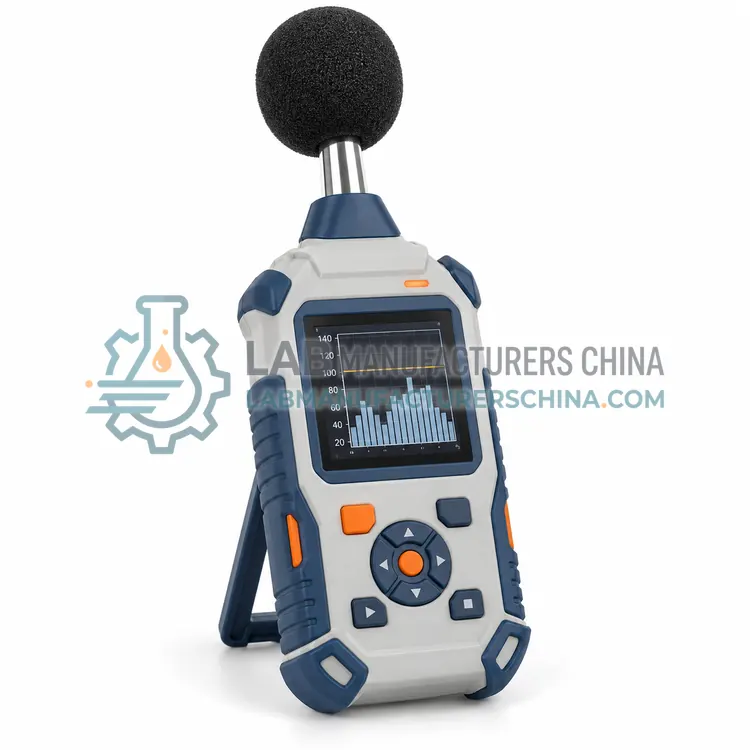
- Large color display shows real-time spectra with peak hold and averaging.
What are the technical specifications?
A typical octave band sound analyzer configuration offers filter class of IEC 61260-1 Class 1, band range of 6.3 Hz–20 kHz (1/3 octave), FFT lines of 400–6400, measurement range of 20–140 dB(A), sound level class of IEC 61672-1 Class 1 and channels of 1–4. Values are indicative of the product class; the exact figures for each configuration are confirmed on the quotation and the calibration documents supplied with the instrument.
Which applications is it used for?
The Octave Band Sound Analyzer is used in machinery noise diagnosis, building and room acoustics, hearing protector selection and tonal noise assessment. Across the wider Noise Monitoring class, laboratories also deploy it for community and environmental noise assessment, construction site noise compliance and occupational noise exposure surveys.
Which standards and certifications apply?
Relevant standards and methods include IEC 61672-1, IEC 61672-3, IEC 60942 (sound calibrators), ISO 1996-1, ISO 9612, IEC 61252 (personal exposure meters), GB 3096 and GB/T 3785.1. Certification candidates for this model are CE, China pattern approval and ISO 9001 manufacturing; each is to be confirmed for the specific configuration before shipment, and certificates are supplied only where they have been issued.
Calibrate with an acoustic calibrator before and after each measurement session and record any drift, which should be under 0.5 dB. Use a windscreen outdoors, keep the microphone 1.2 to 1.5 m above ground and at least 3.5 m from reflecting surfaces for free-field environmental measurements, and avoid rain or condensation on the capsule. Record weather conditions because wind above 5 m/s invalidates many measurements. Instruments need periodic verification in an accredited laboratory, typically every one to two years, following IEC 61672-3. Store in dry conditions, replace batteries before long campaigns, and preserve raw time history when regulators may audit the data. Permanent stations require protection from birds, vandalism and lightning.
How do I select the right Octave Band Sound Analyzer?
Select the octave band analyzer when frequency content drives decisions, such as choosing noise control or hearing protection. For simple dB(A) compliance, a sound level meter is sufficient. In an RFQ, specify band resolution, FFT, reverberation software, channels and calibration documentation.
How does it compare with other Noise Monitoring variants?
Choose the class and type according to the regulation: Class 1 for environmental noise assessment and legal evidence, Class 2 for general surveys and workplace screening. Decide between handheld meters for spot checks, dosimeters for worker exposure and permanent stations for continuous site monitoring. Check the level range, such as 20 to 140 dB, and whether the dynamic range covers both background and peak events. For industrial and product noise, frequency analysis in octave or third-octave bands is needed. Consider data storage, time-history logging with audio recording for source identification, IP rating, temperature range and battery life. For permanent installations, evaluate microphone protection, communication and power. Confirm that the supplier offers IEC 61672-3 periodic verification and traceable calibration.
Full specifications
| Filter class | IEC 61260-1 Class 1 |
|---|---|
| Band range | 6.3 Hz–20 kHz (1/3 octave) |
| FFT lines | 400–6400 |
| Measurement range | 20–140 dB(A) |
| Sound level class | IEC 61672-1 Class 1 |
| Channels | 1–4 |
| Reverberation time | T20, T30, EDT |
| Display | 5–7 inch color touchscreen |
| Storage | SD card or internal 32 GB |
| Battery life | Up to 10 h |
Indicative values for this product class. Final specifications are confirmed on the quotation and in the calibration documents supplied with the instrument.
Applications
- Machinery noise diagnosis
- Building and room acoustics
- Hearing protector selection
- Tonal noise assessment
Key features
- IEC 61260-1 Class 1 filters cover 1/1 and 1/3 octave bands from 6.3 Hz to 20 kHz.
- FFT analysis with up to 6400 lines resolves tonal components for ISO 1996-2 assessment.
- Reverberation time module supports room acoustics and building performance measurements.
- Sound power calculation follows ISO 3744 for machinery emission declarations.
- Multi-channel input option combines microphone and accelerometer data for diagnostics.
- Large color display shows real-time spectra with peak hold and averaging.
Frequently asked questions about Octave Band Sound Analyzer
Octave bands have a bandwidth of one octave, with center frequencies such as 125, 250 and 500 Hz. Third-octave bands divide each octave into three narrower bands for finer detail, and are used for tonal assessment and building acoustics.
Protector attenuation varies by frequency, so the assumed protection depends on the noise spectrum. Octave band levels allow calculation of the protected level at the ear using methods such as those in ISO 4869-2.
Reverberation time, such as T30, is the time for sound in a room to decay by 60 dB after the source stops. It is measured with impulse or interrupted noise methods per ISO 3382 and defines the acoustic character of rooms.
Both follow IEC 61672-1, but Class 1 has tighter tolerances, for example ±1.1 dB at 1 kHz versus ±1.4 dB, and a wider frequency range up to 20 kHz. Class 1 is used for legal environmental and laboratory work, while Class 2 suits general surveys.
dB(A) is sound pressure level measured with A-weighting, which reduces the contribution of low and very high frequencies to match human hearing sensitivity at moderate levels. It is the standard unit for environmental and occupational noise limits.
A field check with a 94 dB acoustic calibrator is done before and after each session. Periodic laboratory verification against IEC 61672-3 is commonly required every one to two years, or as set by the national metrology authority.
Related models