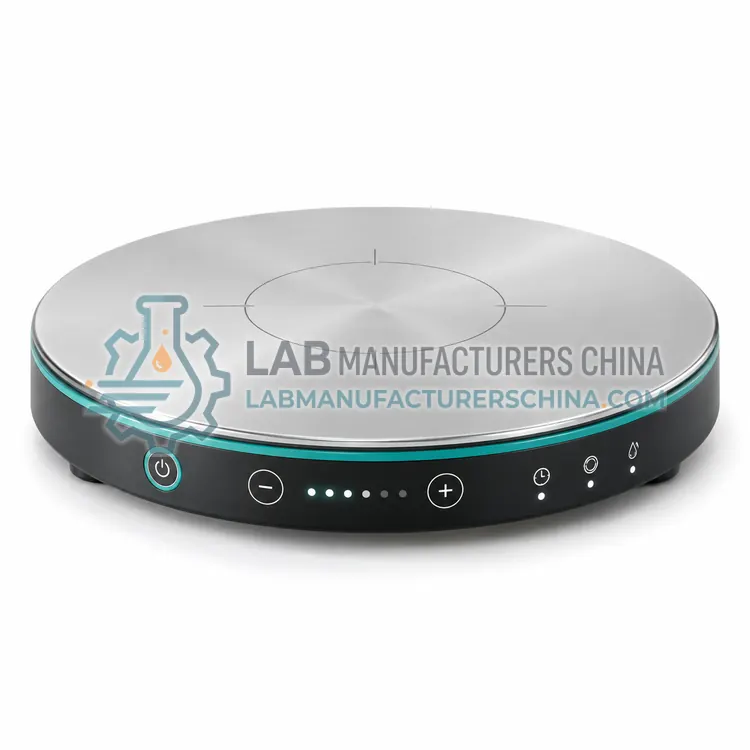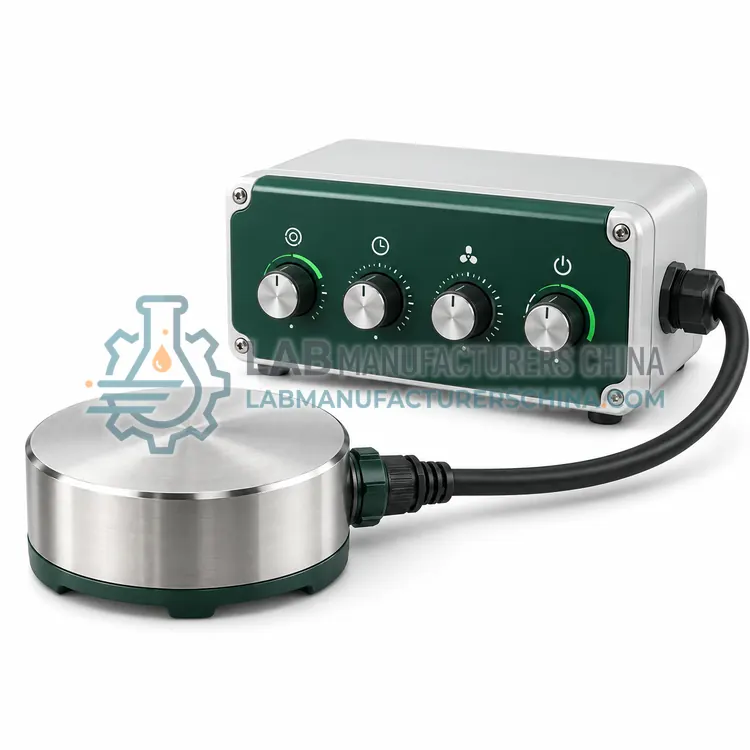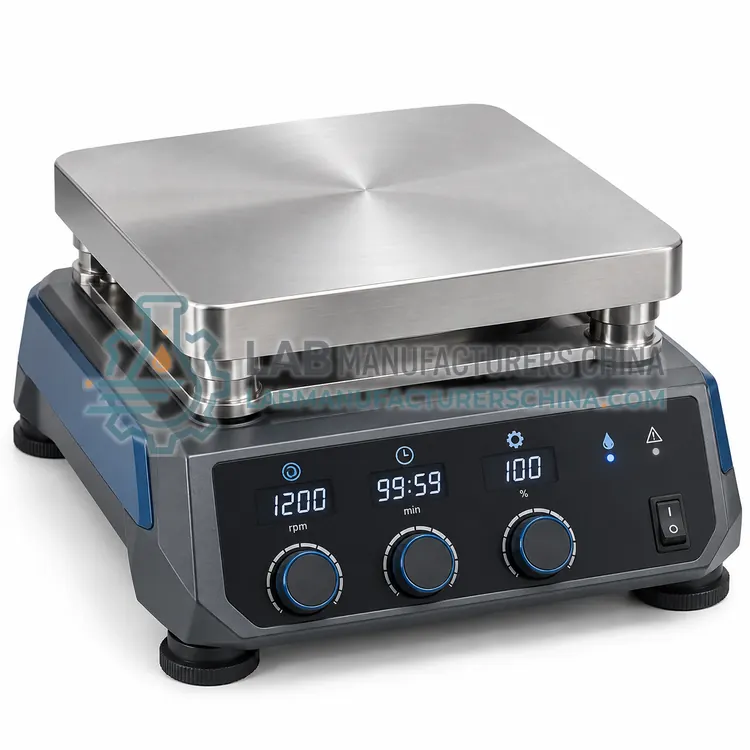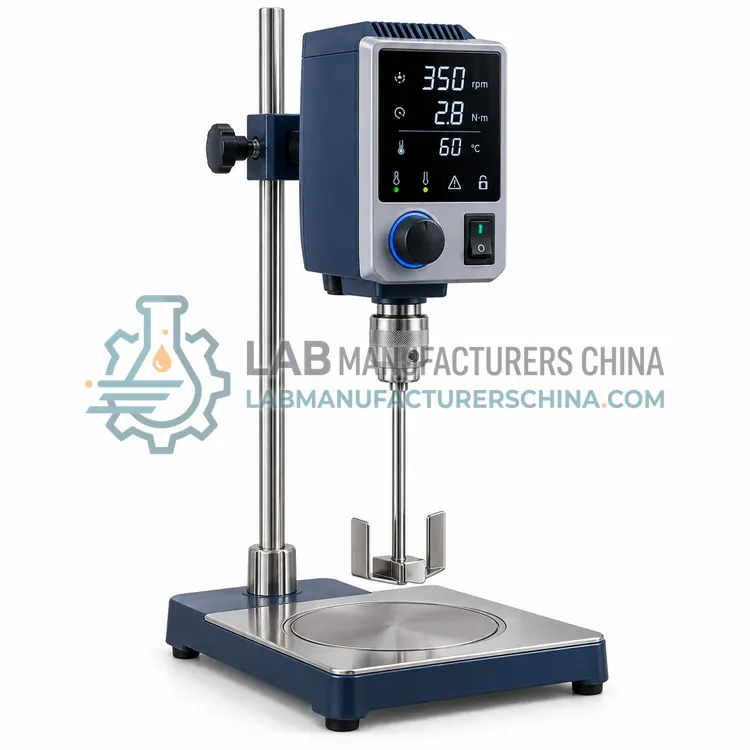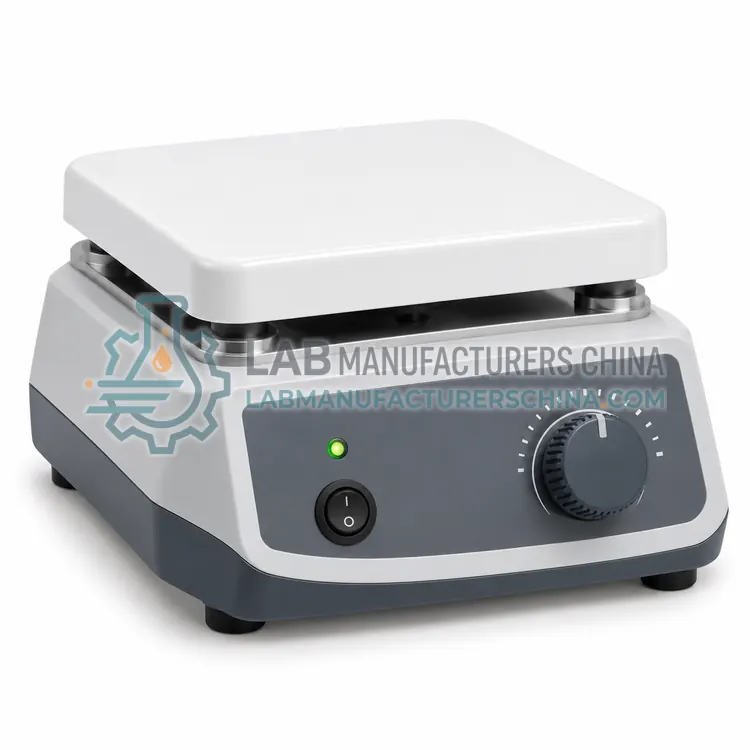
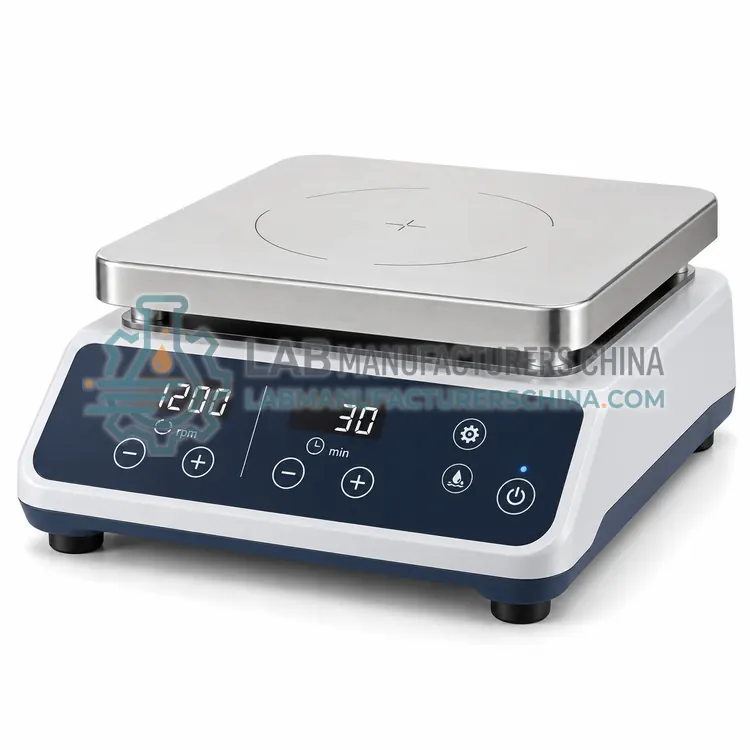
Digital Magnetic Stirrer
数显磁力搅拌器
- SKU MAS-0002
- Magnetic Stirrers
- CE (to be confirmed)
- RoHS (to be confirmed)
- ISO 9001 manufacturing (to be confirmed)
Price on request — FOB / CIF quoted per order
Prices depend on configuration, quantity and destination port.
Key specifications
| Speed range | 50–2,000 rpm |
|---|---|
| Speed display resolution | 1 rpm |
| Speed accuracy | ±2 % of set value |
| Max stirring volume (water) | 10–15 L |
| Timer range | 1 min–99 h |
| Control type | Closed-loop, microcontroller |
Request a quote Download brochure · to be provided
By Lab Manufacturers China Technical TeamLast reviewed Standards: IEC 61010-1, IEC 61010-2-010, IEC 61326-1
What is the Digital Magnetic Stirrer?
A digital magnetic stirrer displays set and actual rpm and regulates speed in a closed loop, often with a timer and overload detection. It is the right choice when stirring speed is part of a documented method or must be repeated reliably between runs and operators.
What is the Digital Magnetic Stirrer?
A digital magnetic stirrer displays set and actual rpm and regulates speed in a closed loop, often with a timer and overload detection. It is the right choice when stirring speed is part of a documented method or must be repeated reliably between runs and operators.
Overview
Digital magnetic stirrers add a microcontroller, a speed sensor and a display to the basic design. The controller compares measured rpm with the set value and adjusts motor drive so speed stays steady as liquid viscosity changes. Typical ranges run from 50 or 100 rpm up to 1,500 to 2,500 rpm, with resolution of 1 rpm and accuracy within a few percent. Many models include a countdown timer, a speed-lock function to prevent accidental changes, an overload or stall alarm that warns of bar decoupling, and an RS-232 or USB port for logging. The top plate is commonly stainless steel or glass-ceramic for chemical resistance. Capacity reaches 10 to 15 L of water-like liquid in standard housings.
How does it work?
A magnetic stirrer contains a motor-driven permanent magnet, or a set of electromagnets, beneath a flat work surface. As the magnetic field rotates, it couples to a PTFE- or glass-coated stir bar placed in the vessel and pulls the bar into synchronous rotation, which creates a vortex and mixes the liquid. Speed is set by varying motor voltage or by pulse-width modulation, and digital models add a tachometer feedback loop to hold rpm constant. If the load or viscosity is too high, the bar decouples from the field and spins erratically. Bar shape, length and surface finish influence mixing efficiency, and larger bars couple better at high volumes. The work surface may be aluminum, stainless steel or glass-ceramic, chosen for chemical resistance and cleanability.
What are the key features?
- Closed-loop speed regulation holds set rpm under changing load
- LED or LCD display of set and actual speed
- Digital timer with automatic stop for unattended runs
- Overload and stall alarm to detect stir bar decoupling
- RS-232 or USB interface for speed logging in some models
- Speed-lock function prevents accidental setting changes
What are the technical specifications?
A typical digital magnetic stirrer configuration offers speed range of 50–2,000 rpm, speed display resolution of 1 rpm, speed accuracy of ±2 % of set value, max stirring volume (water) of 10–15 L, timer range of 1 min–99 h and control type of Closed-loop, microcontroller. Values are indicative of the product class; the exact figures for each configuration are confirmed on the quotation and the calibration documents supplied with the instrument.
Which applications is it used for?
The Digital Magnetic Stirrer is used in method-controlled sample preparation, extraction with defined stirring time, suspension preparation for sampling, pharmaceutical QC solution preparation and timed reactions. Across the wider Magnetic Stirrers class, laboratories also deploy it for buffer and reagent preparation, titration sample mixing and cell culture media preparation.
Which standards and certifications apply?
Relevant standards and methods include IEC 61010-1, IEC 61010-2-010, IEC 61326-1, GB 4793.1 and ISO 9001. Certification candidates for this model are CE, RoHS and ISO 9001 manufacturing; each is to be confirmed for the specific configuration before shipment, and certificates are supplied only where they have been issued.
Place the stirrer on a level, vibration-free surface and keep liquids away from the vents. Start at low speed and increase gradually so the bar does not decouple and strike the vessel wall. Clean PTFE bars and plates after use, and inspect bars for chips or contamination that might carry over between runs. Magnetic fields can affect pacemakers, magnetic media and sensitive electronics, so set safe distances. Periodically verify rpm with a tachometer and record the result in the equipment log. For regulated work, include the unit in the preventive maintenance and qualification program, and check that electrical safety testing complies with IEC 61010-1 and your local requirements.
How do I select the right Digital Magnetic Stirrer?
Select the digital model when rpm is specified in a method, when results must be reproducible between operators, or when a timer and alarm add safety. Compared with analog units it costs more but removes speed ambiguity. State volume, required rpm accuracy, interface need and plate material in your RFQ.
How does it compare with other Magnetic Stirrers variants?
Decide first on maximum liquid volume and viscosity, because these set the magnet strength and the largest bar that will stay coupled. Then choose between analog control, which is economical and adequate for routine mixing, and digital control with a rpm display and closed-loop regulation, which is preferred when repeatability matters. A slim profile helps where space is tight or when stirring inside hoods, while a submersible format suits incubators and cold rooms. Check speed range, particularly the low end for gentle mixing of cell cultures, plus the working surface material, IP rating of the housing and ambient temperature limits. For sensitive samples, verify that the motor does not transmit significant heat to the vessel. Specify voltage, plug type and any required explosion-protection features in your RFQ.
Full specifications
| Speed range | 50–2,000 rpm |
|---|---|
| Speed display resolution | 1 rpm |
| Speed accuracy | ±2 % of set value |
| Max stirring volume (water) | 10–15 L |
| Timer range | 1 min–99 h |
| Control type | Closed-loop, microcontroller |
| Work plate material | Stainless steel or glass-ceramic |
| Interface | RS-232 or USB (optional) |
| Power consumption | 15–30 W |
| Permissible ambient temperature | 5–40 °C |
Indicative values for this product class. Final specifications are confirmed on the quotation and in the calibration documents supplied with the instrument.
Applications
- Method-controlled sample preparation
- Extraction with defined stirring time
- Suspension preparation for sampling
- Pharmaceutical QC solution preparation
- Timed reactions
Key features
- Closed-loop speed regulation holds set rpm under changing load
- LED or LCD display of set and actual speed
- Digital timer with automatic stop for unattended runs
- Overload and stall alarm to detect stir bar decoupling
- RS-232 or USB interface for speed logging in some models
- Speed-lock function prevents accidental setting changes
Frequently asked questions about Digital Magnetic Stirrer
Models with a speed sensor, such as a Hall sensor on the magnet assembly, display actual rpm and regulate against it. Lower-cost digital units may show only the set value, so confirm that closed-loop feedback is included.
Some models provide RS-232 or USB and can send rpm and timer status to a PC or data-management software. If audit trails are required, confirm protocol support, whether the output is read-only and how clock and time stamps are handled.
It indicates that the motor needs more torque than expected to maintain speed, or that the stir bar has decoupled. Reduce the set speed, check the bar and vessel position, and consider an overhead stirrer if viscosity is too high.
A magnetic stirrer mixes liquids in beakers and flasks by spinning a stir bar with a rotating magnetic field. It is used to dissolve solids, prepare buffers, keep suspensions uniform and mix samples during titration or reactions with low-to-medium viscosity.
This is decoupling. The bar loses its magnetic link when speed is raised too fast, the liquid is too viscous, the bar is too small for the volume, or the vessel base is too thick or off-centre. Reduce speed, use a longer bar and center the vessel.
It depends on magnet strength and bar size. Compact units handle about 1–5 L of water-like liquid, while high-capacity models reach around 20 L. Viscosity reduces these figures, and above roughly 1,000 mPa·s an overhead stirrer is usually more reliable.
Related models