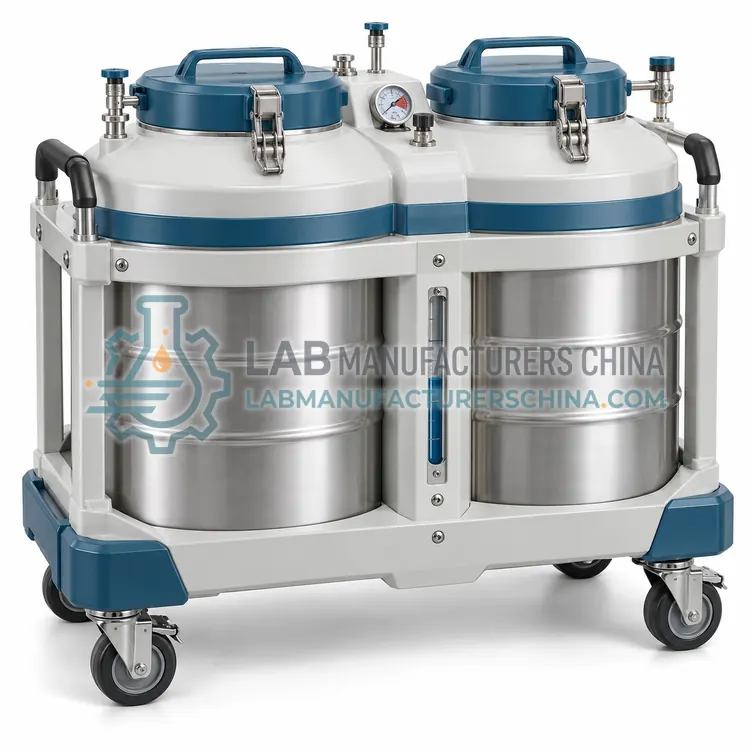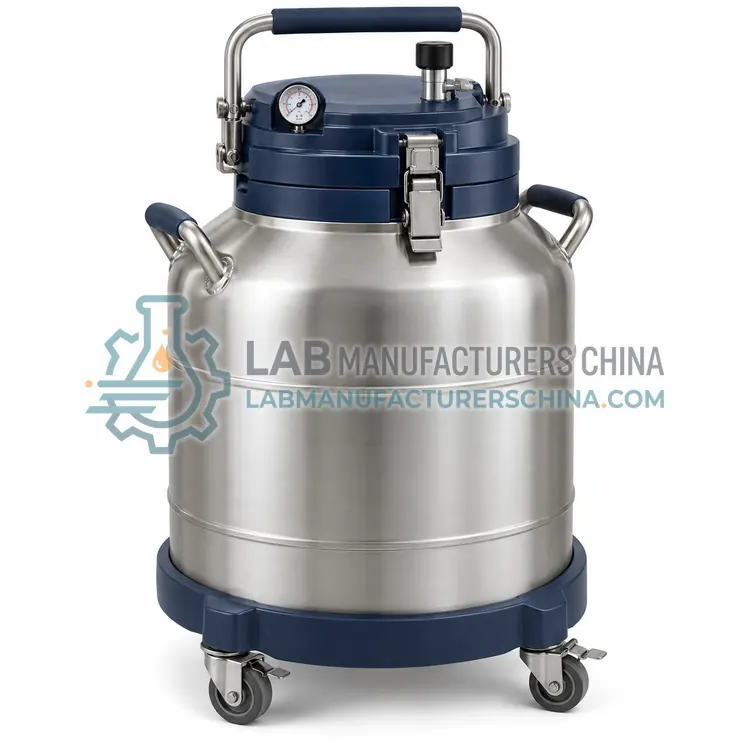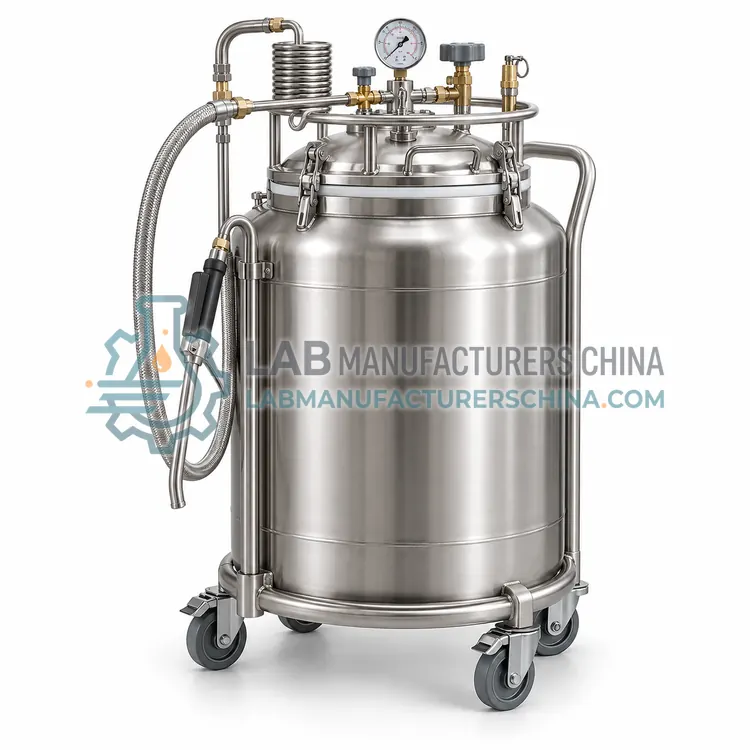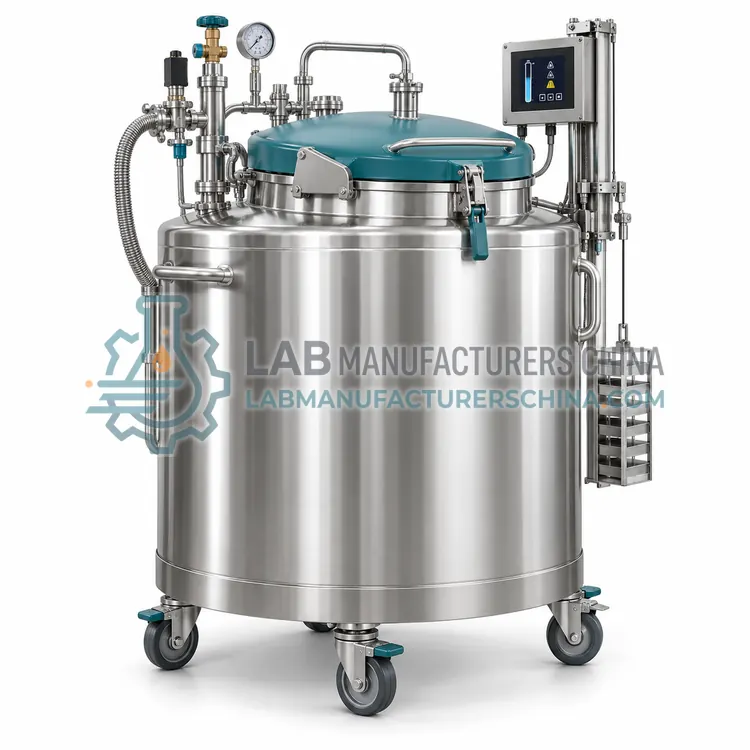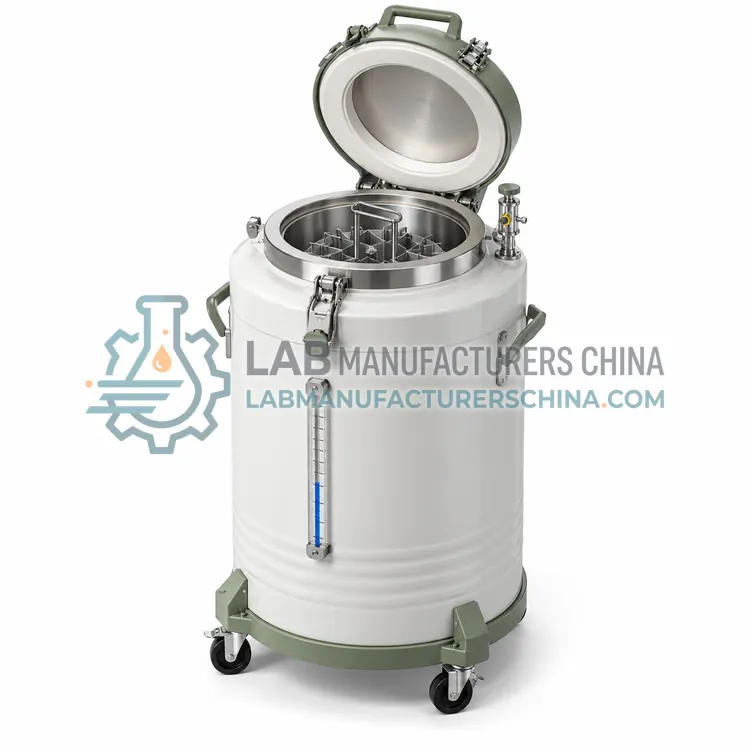
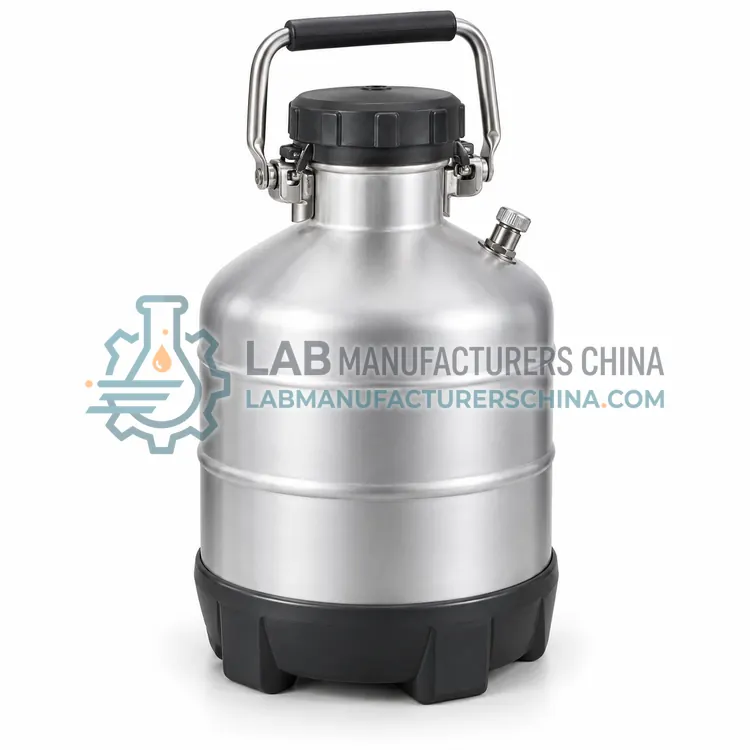
Narrow-Neck Liquid Nitrogen Storage Dewar
窄口液氮储存杜瓦罐
- SKU LNT-0001
- Liquid Nitrogen Tanks
- CE (to be confirmed)
- ISO 9001 manufacturing (to be confirmed)
- GB/T 18442 conformity (to be confirmed)
Price on request — FOB / CIF quoted per order
Prices depend on configuration, quantity and destination port.
Key specifications
| Capacity (liquid) | 10–50 L |
|---|---|
| Neck diameter | 50–80 mm |
| Static evaporation rate | 0.05–0.25 L/day |
| Holding time (no refill) | 2–6 months |
| Storage capacity (2 mL vials) | 200–2,000 vials |
| Canisters | 3–6 |
Request a quote Download brochure · to be provided
By Lab Manufacturers China Technical TeamLast reviewed Standards: ISO 21009-1, ISO 21010, GB/T 18442
What is the Narrow-Neck Liquid Nitrogen Storage Dewar?
A narrow-neck liquid nitrogen storage dewar is a vacuum-insulated vessel with a neck of about 50–80 mm that minimizes heat leak and evaporation. It is the right choice for small to mid-size cryogenic collections where low liquid nitrogen consumption and long holding time matter more than access speed.
What is the Narrow-Neck Liquid Nitrogen Storage Dewar?
A narrow-neck liquid nitrogen storage dewar is a vacuum-insulated vessel with a neck of about 50–80 mm that minimizes heat leak and evaporation. It is the right choice for small to mid-size cryogenic collections where low liquid nitrogen consumption and long holding time matter more than access speed.
Overview
This is the standard laboratory storage dewar, with an aluminum inner vessel, a narrow neck tube and a lid with a plug that restricts gas exchange. Typical capacities run from 10 to 50 L, holding several hundred to a few thousand 2 mL vials in canisters. The narrow opening reduces the heat path, giving static evaporation rates as low as 0.05–0.25 L per day for common sizes and holding times of two to six months without refilling. Access is limited to one canister at a time, which suits collections that are not opened daily. Samples are usually stored in the liquid phase or in the upper liquid-and-vapor zone, depending on fill level. Accessories include canisters, goblets, cryoboxes, locking lids, level rods and casters. Because the neck is small, larger racks cannot be used, so capacity should be planned around canister format.
How does it work?
A liquid nitrogen tank consists of an inner vessel, usually aluminum alloy or stainless steel, suspended inside an outer shell by low-conductivity neck tubes and supports. The annular space is evacuated to a high vacuum and filled with multilayer aluminized film and adsorbent, which suppresses convection, conduction and radiative heat transfer. The remaining heat leak, mostly through the neck, boils nitrogen off slowly as a vapor that exits through the vent. Because no power is needed, the vessel works as a passive store, and holding time depends on volume, neck diameter and insulation quality. Samples sit in canisters, racks or goblets, either submerged in liquid or held in the cold vapor above it. Pressurized dispensing tanks add a relief valve and a pressure-building coil that drives liquid out through a withdrawal valve.
What are the key features?
- Aluminum inner vessel with high-vacuum multilayer insulation for low static evaporation.
- Narrow neck and plug limit heat leak and gas exchange.
- Accepts canisters or goblets for 2 mL cryovials and straws.
- Lockable lid option supports controlled access to stored material.
- No power needed, so storage continues during electrical outages.
- Optional casters and level rod simplify handling and monitoring.
What are the technical specifications?
A typical narrow-neck liquid nitrogen storage dewar configuration offers capacity (liquid) of 10–50 L, neck diameter of 50–80 mm, static evaporation rate of 0.05–0.25 L/day, holding time (no refill) of 2–6 months, storage capacity (2 mL vials) of 200–2,000 vials and canisters of 3–6. Values are indicative of the product class; the exact figures for each configuration are confirmed on the quotation and the calibration documents supplied with the instrument.
Which applications is it used for?
The Narrow-Neck Liquid Nitrogen Storage Dewar is used in small biobank storage, cell line banking, research laboratory cryostorage and veterinary sample storage. Across the wider Liquid Nitrogen Tanks class, laboratories also deploy it for fertility clinic gamete and embryo storage, biobank sample storage and cell line and hybridoma banking.
Which standards and certifications apply?
Relevant standards and methods include ISO 21009-1, ISO 21010, GB/T 18442, EU Pressure Equipment Directive 2014/68/EU, ISO 20387 and IATA Packing Instruction 202. Certification candidates for this model are CE, ISO 9001 manufacturing and GB/T 18442 conformity; each is to be confirmed for the specific configuration before shipment, and certificates are supplied only where they have been issued.
Install tanks in a ventilated room with an oxygen sensor, away from drains and enclosed spaces, and on a level floor rated for the filled weight. Never seal a storage tank airtight, because boil-off gas must be able to escape. Inspect the vessel regularly for frost on the outer shell or a rising evaporation rate, which suggests vacuum loss. Measure liquid level with a dipstick or sensor on a fixed schedule and record it. Clean with mild detergent and dry completely before refilling, and keep canisters and lids free of ice. Users should wear cryogenic gloves, a face shield and closed footwear. Recertify transportable vessels according to local pressure-equipment rules.
How do I select the right Narrow-Neck Liquid Nitrogen Storage Dewar?
Select a narrow-neck dewar when sample access is weekly or less and low nitrogen consumption matters. Choose a wide-mouth tank if you need larger racks or frequent access. In an RFQ, specify liquid capacity, neck diameter, number and type of canisters, required static evaporation rate with test conditions, lid lock, and accessories such as a level gauge.
How does it compare with other Liquid Nitrogen Tanks variants?
The first decision is function: storage, transport or dispensing. For storage, choose the neck diameter and capacity to suit the vial format, since wide-mouth tanks hold more vials and allow easier access but lose liquid faster. Compare static evaporation rate and holding time at the stated fill level, and ask for the test method. For transport, prioritize vibration and tilt resistance, a lockable lid and a rated holding time during shipping, and confirm airline and IATA rules for dry shippers. For dispensing, check working pressure, withdrawal valve type and whether a pressure relief device is fitted. Consider construction material: aluminum is light, stainless steel is stronger. Also specify a level indicator or gauge, casters, and a lockable lid for material that requires audit control.
Full specifications
| Capacity (liquid) | 10–50 L |
|---|---|
| Neck diameter | 50–80 mm |
| Static evaporation rate | 0.05–0.25 L/day |
| Holding time (no refill) | 2–6 months |
| Storage capacity (2 mL vials) | 200–2,000 vials |
| Canisters | 3–6 |
| Inner vessel material | Aluminum alloy |
| Operating temperature | −196°C (liquid phase) |
| Empty weight | 8–25 kg |
| Outer dimensions (diameter) | 350–520 mm |
Indicative values for this product class. Final specifications are confirmed on the quotation and in the calibration documents supplied with the instrument.
Applications
- Small biobank storage
- Cell line banking
- Research laboratory cryostorage
- Veterinary sample storage
Key features
- Aluminum inner vessel with high-vacuum multilayer insulation for low static evaporation.
- Narrow neck and plug limit heat leak and gas exchange.
- Accepts canisters or goblets for 2 mL cryovials and straws.
- Lockable lid option supports controlled access to stored material.
- No power needed, so storage continues during electrical outages.
- Optional casters and level rod simplify handling and monitoring.
Frequently asked questions about Narrow-Neck Liquid Nitrogen Storage Dewar
A 35 L narrow-neck dewar with six canisters typically holds about 1,000–1,500 2 mL cryovials, depending on canister and box design. Always check the manufacturer's vial count for the specific rack format, because quoted capacity varies with box height and pitch.
Yes, because the neck is the main path for heat leak into the vessel. A smaller opening reduces conductive and radiative heat, so a narrow-neck dewar often evaporates at half the rate of a wide-mouth tank of similar volume.
Yes, if the liquid level is kept below the sample boxes, but temperature at the top of a narrow dewar can rise above −150°C. Use a sensor at the highest box position and keep a minimum liquid level to ensure vapor-phase conditions hold.
It stores biological samples such as cells, semen, embryos and tissues at −196°C without power, or it transports and dispenses liquid nitrogen. Laboratories, fertility clinics, biobanks and breeding centers are the main users, alongside some industrial cooling applications.
Static evaporation rate is the liquid nitrogen lost per day when the vessel is full, at rest and closed, usually measured in liters per day. A lower value means a longer holding time and less refilling, so it is the key comparison figure between tanks.
Interval depends on capacity and evaporation rate. A small 3–10 L dewar may last two to four weeks, a 35 L storage tank often about two to three months when closed, and heavily used tanks need checks weekly. Level should be measured and recorded routinely.
Related models