Barcode Sample Tracking System
条码样品跟踪系统
- SKU LII-0003
- LIMS Integration
- CE (to be confirmed)
- ISO 9001 manufacturing (to be confirmed)
Price on request — FOB / CIF quoted per order
Prices depend on configuration, quantity and destination port.
Key specifications
| Type | Barcode sample tracking system |
|---|---|
| Code type | 2D Data Matrix or QR |
| Label materials | Cryo, solvent, autoclave grades |
| Scan points | Receipt, process, storage |
| Temperature range | −196 to +120 °C by material |
| Printer | Thermal transfer |
Request a quote Download brochure · to be provided
By Lab Manufacturers China Technical TeamLast reviewed Standards: 21 CFR Part 11 (electronic records and signatures), EU GMP Annex 11 (computerised systems), ISO 15189 (medical laboratories, quality and competence)
What is the Barcode Sample Tracking System?
A barcode sample tracking system labels and scans tubes and plates so every action is reliably tied to a unique sample identity. It is the backbone of traceability from receipt to report.
What is the Barcode Sample Tracking System?
A barcode sample tracking system labels and scans tubes and plates so every action is reliably tied to a unique sample identity. It is the backbone of traceability from receipt to report.
Overview
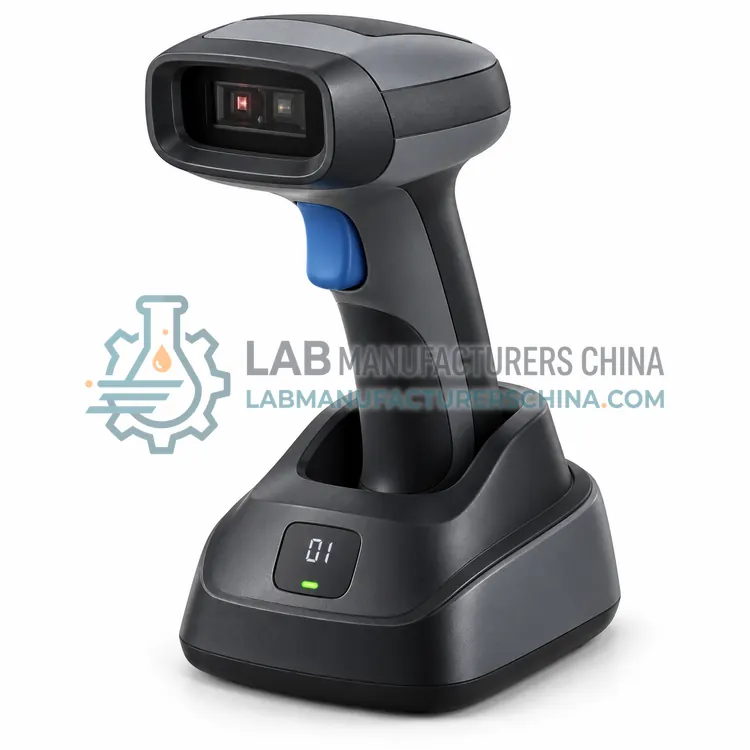
The system prints and applies barcode labels, usually 2D codes that hold more data in less space, and scanners read them at receipt, during processing, on instruments and at storage. Label materials must survive the temperatures, solvents and handling of the workflow, including cryogenic storage and autoclaving. Software maps each barcode to sample metadata, position, history and results, and can show where a sample is at any time. Scan points confirm that the right sample is loaded on the right instrument, preventing mismatches that are hard to detect later. Exception handling covers damaged or unreadable labels, which may be reprinted under control. The system supports chain of custody, storage location management and, in clinical use, positive patient identification through wristband matching.
How does it work?
LIMS integration transfers structured data between laboratory systems using defined interfaces and message formats. Work orders are sent from the LIMS to an instrument or automation system, which returns results with sample identifiers, timestamps and quality flags. Middleware sits between instruments and the LIMS when instruments cannot connect directly, translating protocols, queuing jobs and merging results from several analyzers. Barcode labels attach a unique identity to each tube or plate, so every action can be tied to a sample. Electronic laboratory notebook integration links experimental records to the LIMS sample or method. Reporting modules assemble results, quality control data and turnaround metrics into reports and dashboards. Throughout, controls such as user authentication, audit trails, version control and backup protect data integrity, following 21 CFR Part 11 and GMP Annex 11 expectations.
What are the key features?
- Barcode label printing and application
- 2D codes for compact data
- Scan points at receipt, processing and storage
- Specialty labels for cold and solvents
- Location and history mapping
- Positive patient identification option
What are the technical specifications?
A typical barcode sample tracking system configuration offers type of Barcode sample tracking system, code type of 2D Data Matrix or QR, label materials of Cryo, solvent, autoclave grades, scan points of Receipt, process, storage, temperature range of −196 to +120 °C by material and printer of Thermal transfer. Values are indicative of the product class; the exact figures for each configuration are confirmed on the quotation and the calibration documents supplied with the instrument.
Which applications is it used for?
The Barcode Sample Tracking System is used in sample receipt and accessioning, storage location management, multi-step workflow tracking and patient identification in clinical use. Across the wider LIMS Integration class, laboratories also deploy it for clinical laboratory result reporting, pharmaceutical QC data capture and environmental testing records.
Which standards and certifications apply?
Relevant standards and methods include 21 CFR Part 11 (electronic records and signatures), EU GMP Annex 11 (computerised systems), ISO 15189 (medical laboratories, quality and competence), ISO/IEC 17025 (testing and calibration laboratories), HL7 (healthcare data exchange) and ASTM E1394 (clinical laboratory instrument interface). Certification candidates for this model are CE and ISO 9001 manufacturing; each is to be confirmed for the specific configuration before shipment, and certificates are supplied only where they have been issued.
Validate the integrated system for the intended use, covering data transfer accuracy, error handling and recovery, and repeat validation after changes to interfaces, software versions or instrument firmware. Maintain an interface register with owners, formats and change procedures, because an unrecorded firmware update can break data flow. Protect credentials, restrict access by role and retain audit trails, and back up both data and configuration. Monitor interface queues and error logs daily, and define what happens when a connection fails, so manual workarounds are controlled and recorded. Train staff on data entry, verification and the meaning of quality flags. Review data integrity periodically, and keep documentation current for inspection.
How do I select the right Barcode Sample Tracking System?
Choose barcode tracking to secure sample identity at every step, and match label materials to the storage and chemistry. Confirm scan points and LIMS mapping. RFQ: labels and temperatures, scan points, workflow steps and LIMS integration.
How does it compare with other LIMS Integration variants?
Map the data flow first: which systems create data, which consume it and where manual transcription still happens. Choose interfaces that match the instrument capabilities, using HL7, ASTM or a vendor driver where available, and middleware where several instruments need one connection. Confirm that the LIMS can receive the fields you need, including quality flags, units, method identifiers and operator identity, and that it can send work orders and test rules back. Check audit trail, access control and versioning against 21 CFR Part 11 and local rules, and confirm how validation and change control are handled. Consider barcode labelling and scanning at every step, since sample identity is the backbone of traceability. Test throughput, error handling and recovery with the real instruments before go-live.
Full specifications
| Type | Barcode sample tracking system |
|---|---|
| Code type | 2D Data Matrix or QR |
| Label materials | Cryo, solvent, autoclave grades |
| Scan points | Receipt, process, storage |
| Temperature range | −196 to +120 °C by material |
| Printer | Thermal transfer |
| Software mapping | Sample, position, history |
| Exception handling | Controlled label reprint |
| Chain of custody | Recorded scans |
| LIMS interface | Metadata and results |
Indicative values for this product class. Final specifications are confirmed on the quotation and in the calibration documents supplied with the instrument.
Applications
- Sample receipt and accessioning
- Storage location management
- Multi-step workflow tracking
- Patient identification in clinical use
Key features
- Barcode label printing and application
- 2D codes for compact data
- Scan points at receipt, processing and storage
- Specialty labels for cold and solvents
- Location and history mapping
- Positive patient identification option
Frequently asked questions about Barcode Sample Tracking System
2D codes such as Data Matrix or QR hold more characters in a smaller area and tolerate some damage, which suits small tubes. Linear codes are still used where only a short identifier is needed.
By using cryogenic-grade label and adhesive that remain attached and legible at very low temperature, including immersion in liquid nitrogen for some grades, so samples can be identified without thawing.
The sample is treated as an exception: work stops on it, the cause is recorded and, if identity can be confirmed, a replacement label is printed under controlled conditions so traceability is preserved.
It is the transfer of sample information, methods and results between laboratory instruments or automation and the laboratory information management system, so data moves automatically, with traceability and without manual transcription.
When instruments cannot connect directly to the LIMS, or when several analyzers need one connection. Middleware translates protocols, queues jobs, merges results and applies rules such as autoverification before the LIMS receives data.
A barcode gives every tube or plate a unique identity that can be scanned at each step, so results, positions and records are tied to the right sample. Without it, traceability depends on manual labels and is error-prone.
Related models