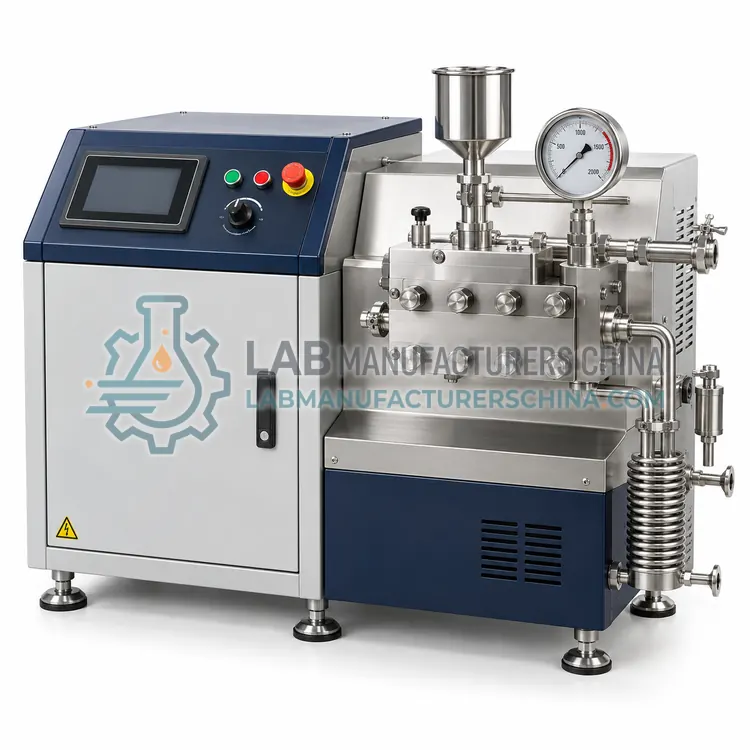
High-Pressure Homogenizer
高压均质机
- SKU HOM-0003
- Homogenizers
- CE (to be confirmed)
- ISO 9001 manufacturing (to be confirmed)
Price on request — FOB / CIF quoted per order
Prices depend on configuration, quantity and destination port.
Key specifications
| Working pressure | Up to 150 MPa |
|---|---|
| Flow rate | 10–500 L/h |
| Typical droplet size | 100–1,000 nm |
| Number of passes | 1–10 programmable |
| Temperature control | Cooling between passes |
| Contact material | Stainless steel 316L |
Request a quote Download brochure · to be provided
By Lab Manufacturers China Technical TeamLast reviewed Standards: ISO 6887-1, ISO 6497, EPA 3050B
What is the High-Pressure Homogenizer?
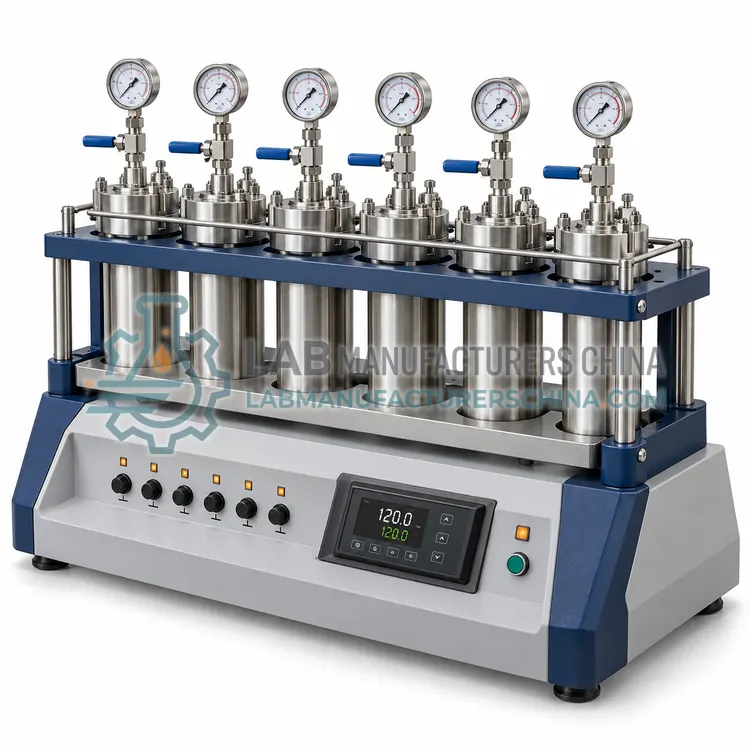
A high-pressure homogenizer forces the sample through a narrow valve under high pressure to break droplets and cells. It is used to produce fine, stable emulsions and to disrupt cells at laboratory and production scale.
What is the High-Pressure Homogenizer?
A high-pressure homogenizer forces the sample through a narrow valve under high pressure to break droplets and cells. It is used to produce fine, stable emulsions and to disrupt cells at laboratory and production scale.
Overview
A high-pressure homogenizer pumps the sample at high pressure through a narrow valve. As the fluid accelerates into the valve gap and then expands, it experiences intense shear, impact against the valve seat and cavitation, all of which break droplets and cells and reduce particle size. One or more passes may be used, and pressure and temperature are controlled to protect the product. The design produces very fine and stable emulsions and dispersions, and is used for milk, cosmetics, pharmaceuticals and cell disruption. Interaction chambers and valve materials are matched to viscosity, abrasiveness and required droplet size, and cooling is often applied between passes.
How does it work?
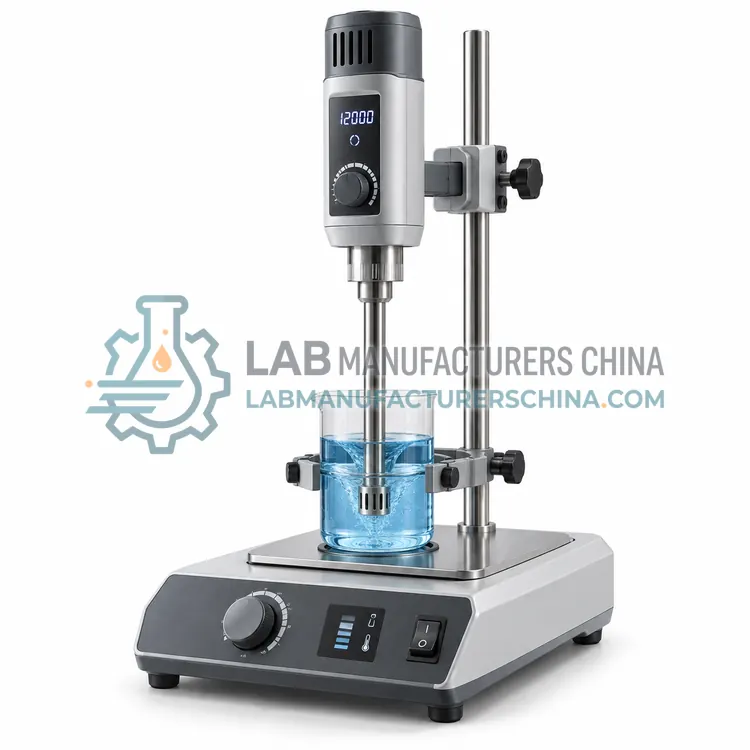
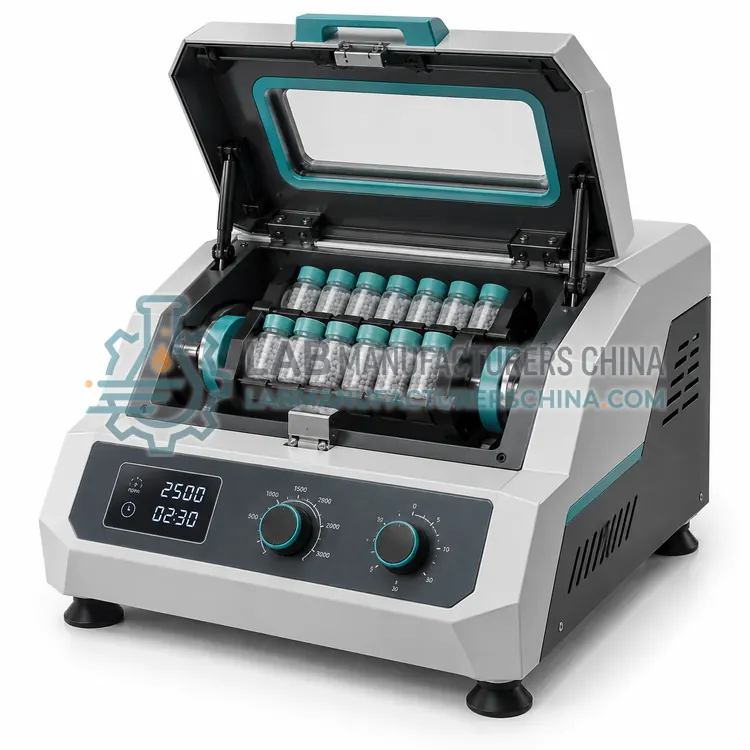
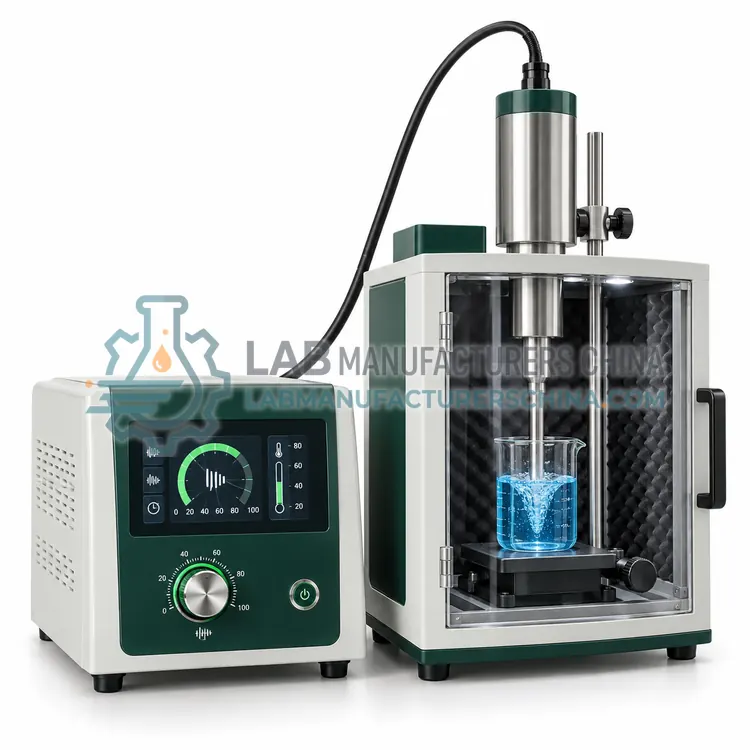
Homogenizers reduce particle size and mix components so that any portion of the sample represents the whole. Blade homogenizers spin a sharp blade at high speed to chop and blend tissue or food. Rotor-stator homogenizers draw the sample into a narrow gap between a fast rotor and a stationary stator, creating intense shear that disrupts cells and emulsions. High-pressure homogenizers force the sample through a small valve under pressure, so shear, impact and cavitation break droplets and cells. Bead mill homogenizers shake the sample with small beads to grind and lyse material in tubes. Ultrasonic homogenizers use cavitation from a vibrating probe to disrupt cells and disperse particles.
What are the key features?
- High-pressure valve for intense shear and cavitation
- Multiple passes for finer droplet size
- Cooling between passes to protect products
- Laboratory and production scale options
- Reproducible, stable emulsion formation
What are the technical specifications?
A typical high-pressure homogenizer configuration offers working pressure of Up to 150 MPa, flow rate of 10–500 L/h, typical droplet size of 100–1,000 nm, number of passes of 1–10 programmable, temperature control of Cooling between passes and contact material of Stainless steel 316L. Values are indicative of the product class; the exact figures for each configuration are confirmed on the quotation and the calibration documents supplied with the instrument.
Which applications is it used for?
The High-Pressure Homogenizer is used in pharmaceutical emulsion and liposome production, food and dairy homogenisation, cosmetic nanoemulsion preparation and cell disruption for bioprocessing. Across the wider Homogenizers class, laboratories also deploy it for food and feed microbiological preparation, tissue and cell disruption and emulsion and nanoparticle dispersion.
Which standards and certifications apply?
Relevant standards and methods include ISO 6887-1, ISO 6497, EPA 3050B, ISO 17635 and IEC 61010-1. Certification candidates for this model are CE and ISO 9001 manufacturing; each is to be confirmed for the specific configuration before shipment, and certificates are supplied only where they have been issued.
Keep the working part and the sample cool, since homogenisation generates heat that can degrade proteins, nucleic acids and volatile analytes. Clean and, where necessary, sterilise probes, blades and chambers between samples to avoid cross-contamination. Use the smallest effective volume and the shortest time that gives a uniform sample, and record the settings in the method. For microbiological work, follow aseptic technique and validated procedures such as ISO 6887-1. Inspect probes and seals for wear, and handle ultrasonic probes so they do not run dry, which would damage them.
How do I select the right High-Pressure Homogenizer?
Choose a high-pressure homogenizer for fine, stable emulsions, dispersions or cell disruption. Confirm the pressure range and number of passes achieve the target droplet size, and that the flow rate and minimum volume suit the batch. In an RFQ state the target droplet size, batch volume, viscosity and whether cooling or inert conditions are required.
How does it compare with other Homogenizers variants?
Choose a homogenizer according to the sample type, volume and the purpose of homogenisation. Blade homogenizers suit soft tissue and food at moderate volumes; rotor-stator units handle larger volumes and tougher material; bead mill homogenizers suit small volumes and high-throughput lysis in tubes; high-pressure homogenizers suit emulsions and cell disruption at scale; and ultrasonic homogenizers suit small volumes and nanoparticle dispersion. Confirm the working volume, the achievable particle or droplet size, and whether the sample must remain cool to protect analytes. Consider cross-contamination between samples and whether disposable or autoclavable components are needed for microbiological work.
Full specifications
| Working pressure | Up to 150 MPa |
|---|---|
| Flow rate | 10–500 L/h |
| Typical droplet size | 100–1,000 nm |
| Number of passes | 1–10 programmable |
| Temperature control | Cooling between passes |
| Contact material | Stainless steel 316L |
| Valve material | Tungsten carbide or ceramic |
| Minimum sample volume | About 100 mL |
| Output | Digital pressure display |
| Power supply | 380 V AC, three phase |
Indicative values for this product class. Final specifications are confirmed on the quotation and in the calibration documents supplied with the instrument.
Applications
- Pharmaceutical emulsion and liposome production
- Food and dairy homogenisation
- Cosmetic nanoemulsion preparation
- Cell disruption for bioprocessing
Key features
- High-pressure valve for intense shear and cavitation
- Multiple passes for finer droplet size
- Cooling between passes to protect products
- Laboratory and production scale options
- Reproducible, stable emulsion formation
Frequently asked questions about High-Pressure Homogenizer
The number of passes depends on the starting material and the target droplet size. One or two passes often suffice for simple emulsions, while cell disruption or very fine nanoemulsions may need several passes. More passes reduce size but heat the product and increase wear, so the minimum is chosen.
High-pressure homogenisation converts a large amount of mechanical energy into heat, so the product can warm significantly and degrade heat-sensitive compounds. Cooling between passes, using a heat exchanger or pre-chilled sample, protects proteins, fats and volatiles during multiple passes.
Yes, with suitable valve and interaction chamber materials such as tungsten carbide or ceramic, which resist abrasion. Viscous products need more power and may require larger passages or dilution. Very abrasive or high-solids products accelerate wear and should be assessed before routine use.
Keep runs short, use the lowest effective speed or power, and work in intervals with pauses. Pre-chill the sample and, in some designs, the working part or chamber. For very heat-sensitive material, bead mill homogenisation in pre-cooled tubes or homogenisation on ice reduces degradation.
Rotor-stator and paddle or blade homogenizers are common for food and environmental microbiology, because they release microorganisms from the matrix without excessive heating. Procedures such as ISO 6887-1 define sample preparation and dilution, and autoclavable or disposable parts help prevent cross-contamination.
A blade homogeniser chops with a sharp rotating blade and suits soft tissue and food at moderate volumes. A rotor-stator homogeniser draws material into a narrow gap and applies high shear, which disrupts tougher material, cells and emulsions more effectively and handles larger volumes.
Related models