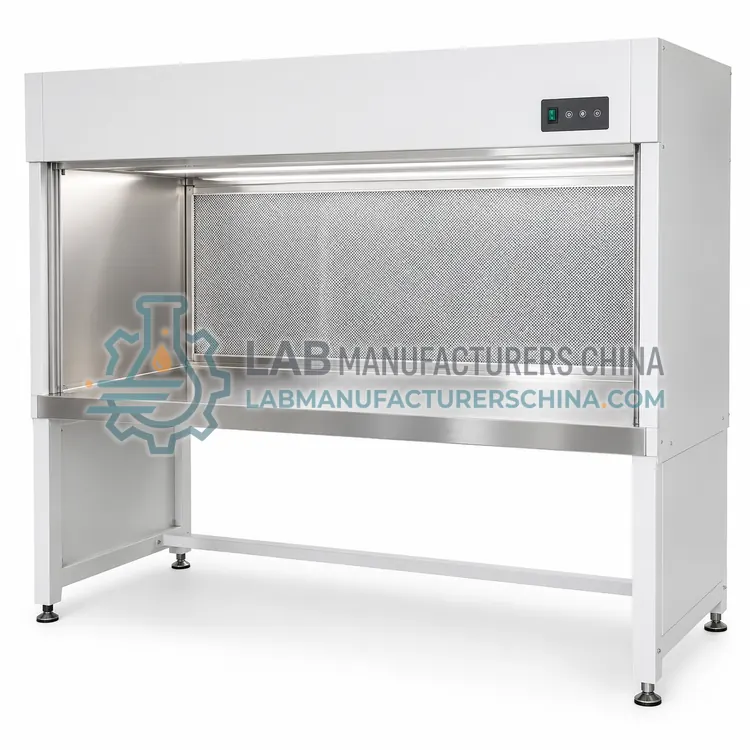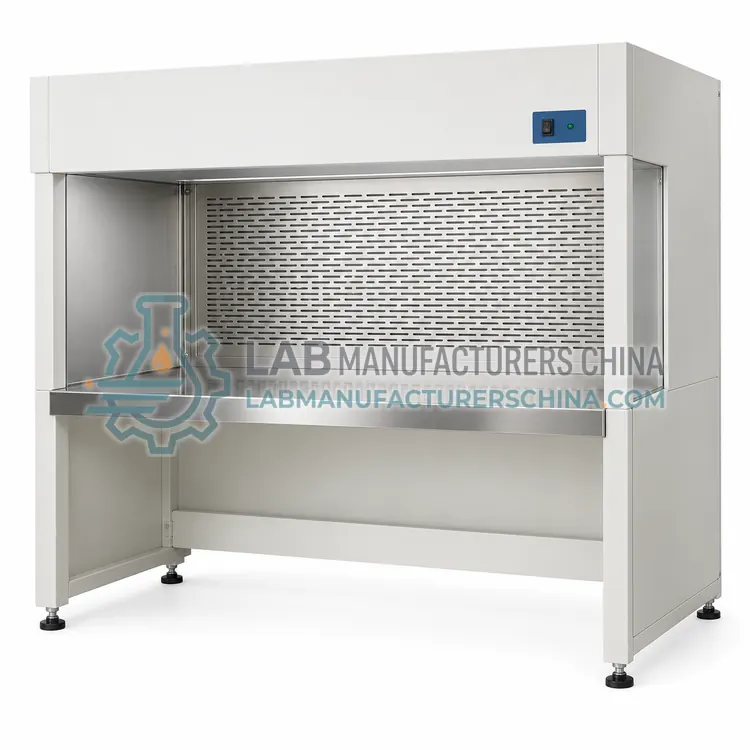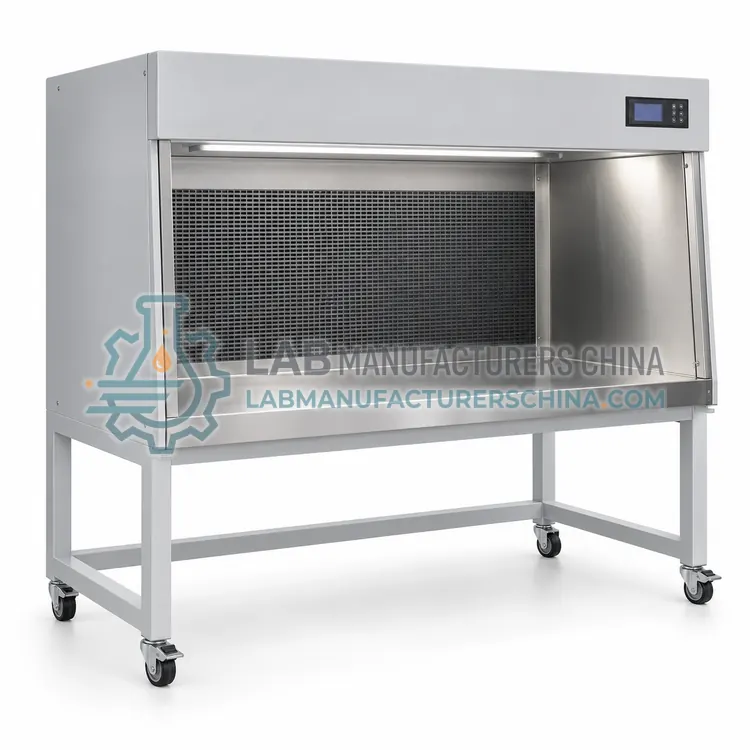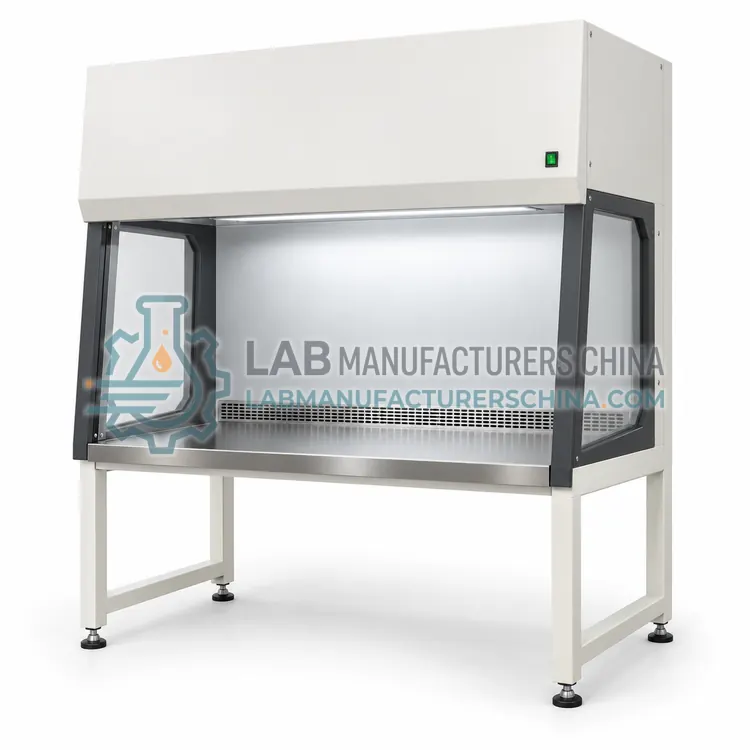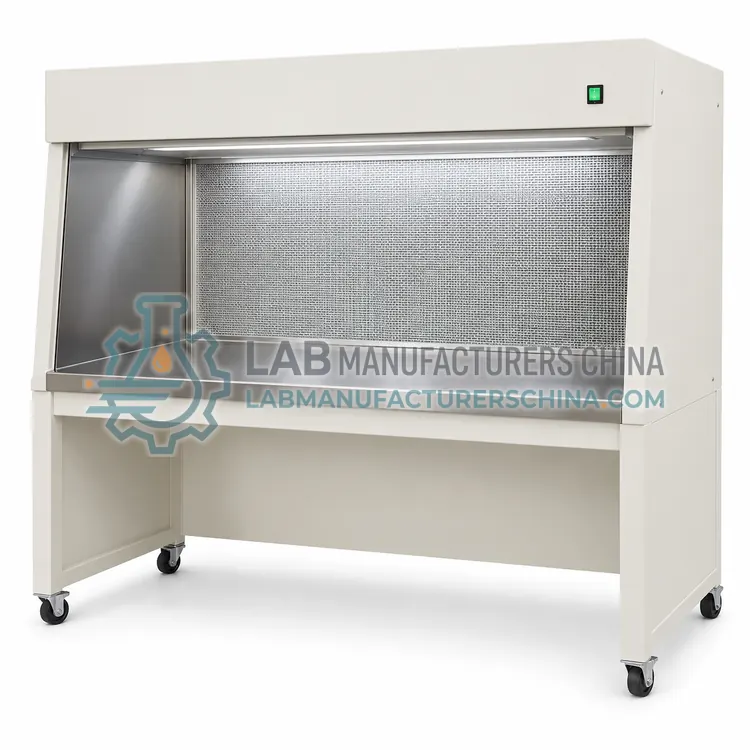
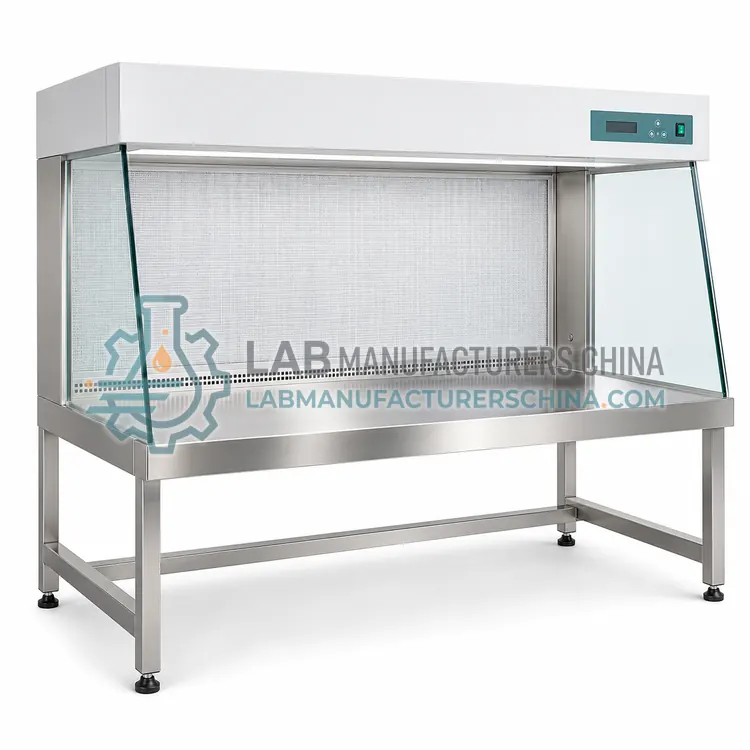
Horizontal Laminar Flow Clean Bench
水平层流洁净工作台
- SKU HLF-0001
- Horizontal Laminar Flow
- CE (to be confirmed)
- ISO 9001 manufacturing (to be confirmed)
Price on request — FOB / CIF quoted per order
Prices depend on configuration, quantity and destination port.
Key specifications
| Flow direction | Horizontal, rear to front |
|---|---|
| Filter class | HEPA H14, ≥ 99.97 % at 0.3 µm |
| Face velocity | 0.3–0.5 m/s |
| Cleanliness | ISO 5 at work surface |
| Width | 900–1800 mm |
| Work surface | Stainless steel 304 |
Request a quote Download brochure · to be provided
By Lab Manufacturers China Technical TeamLast reviewed Standards: ISO 14644-1 (cleanroom classification), ISO 14644-3 (test methods), IEST-RP-CC002 (unidirectional flow clean-air devices)
What is the Horizontal Laminar Flow Clean Bench?
A horizontal laminar flow clean bench is an open-front workbench with HEPA air crossing from the rear grille. It provides ISO 5 protection for the work with clear access for assembly and inspection tasks.
What is the Horizontal Laminar Flow Clean Bench?
A horizontal laminar flow clean bench is an open-front workbench with HEPA air crossing from the rear grille. It provides ISO 5 protection for the work with clear access for assembly and inspection tasks.
Overview
The workbench is typically 900–1800 mm wide and 600–750 mm deep with a stainless steel or laminate work surface. A fan draws room air through a prefilter and a HEPA H14 filter, and a rear plenum with adjustable diffuser produces a uniform stream at 0.3–0.5 m/s across the whole bench. Air then leaves the front to the room or is captured by a top hood for ducted or recirculating models. A pressure gauge indicates filter loading, and lighting is mounted to avoid disturbing the stream. The open front gives unobstructed access, so the unit is well suited to flat work such as display assembly, electronic inspection and plating. Because the stream flows towards the operator, the unit is not for hazardous aerosols, and a wall or screen should shield it from draughts.
How does it work?
In a horizontal laminar flow cabinet, room air is drawn through a prefilter and a HEPA filter and then pushed through a rear plenum and diffuser. It leaves the back grille as a unidirectional stream at 0.3–0.5 m/s and crosses the entire work surface before reaching the operator, carrying particles and microbes away from the work. Because the stream comes from behind the work, the operator has clear access to the whole bench with no barrier or downward draught. Air may then exhaust to the room or be ducted or recirculated depending on the model. The filter removes at least 99.97 % of 0.3 µm particles for HEPA and 99.999 % for ULPA. Face velocity, filter integrity and particle counts are the performance measures, and the laminar stream is easily disturbed by draughts, so the cabinet must be sited away from doors and air supply diffusers.
What are the key features?
- Open-front bench with rear HEPA supply
- HEPA H14 filter at 99.97 % for 0.3 µm
- Face velocity 0.3–0.5 m/s across the bench
- Widths 900–1800 mm, stainless or laminate top
- Adjustable diffuser for uniform flow
- Pressure gauge for filter loading
What are the technical specifications?
A typical horizontal laminar flow clean bench configuration offers flow direction of Horizontal, rear to front, filter class of HEPA H14, ≥ 99.97 % at 0.3 µm, face velocity of 0.3–0.5 m/s, cleanliness of ISO 5 at work surface, width of 900–1800 mm and work surface of Stainless steel 304. Values are indicative of the product class; the exact figures for each configuration are confirmed on the quotation and the calibration documents supplied with the instrument.
Which applications is it used for?
The Horizontal Laminar Flow Clean Bench is used in electronic assembly, optical inspection, media plating and component packaging. Across the wider Horizontal Laminar Flow class, laboratories also deploy it for electronics and optics assembly, media preparation and plating and inspection and packaging.
Which standards and certifications apply?
Relevant standards and methods include ISO 14644-1 (cleanroom classification), ISO 14644-3 (test methods), IEST-RP-CC002 (unidirectional flow clean-air devices), EN 1822 (HEPA and ULPA filters), EU GMP Annex 1 (sterile manufacturing) and GB 50073 (cleanroom design code). Certification candidates for this model are CE and ISO 9001 manufacturing; each is to be confirmed for the specific configuration before shipment, and certificates are supplied only where they have been issued.
Site the cabinet away from doors, windows, air diffusers and walkways, since draughts above 0.2 m/s disturb the horizontal stream. Verify filter integrity and face velocity at installation and at least annually, changing prefilters every 3–6 months. Keep the work area clear of large objects that block the stream, and place items at the sides rather than directly in front of the filter face. Clean the work surface and interior with compatible agents and avoid aerosols that could contaminate the filter. Do not use the cabinet for hazardous aerosols or chemical vapour, since it protects only the work. Record requalification results to support audits.
How do I select the right Horizontal Laminar Flow Clean Bench?
Choose this bench for flat assembly or inspection where clear front access matters. Confirm width, work height and whether the room can accept recirculated air. RFQ: width, filter class, exhaust option, work height and cleanliness target.
How does it compare with other Horizontal Laminar Flow variants?
Choose a horizontal laminar flow cabinet when the task needs clear, unobstructed access to the work surface and the operator does not need protection from aerosols. Decide whether the cabinet recirculates, exhausts to the room or is ducted, based on room conditions and the process. Select filter class by the required cleanliness, commonly HEPA H14 for ISO 5 and ULPA for ISO 4 or better, and match width and working height to the equipment. For GMP or aseptic use, choose stainless steel construction with cleanable surfaces. Confirm face velocity, filter integrity and particle counts at commissioning, and check that the site has no strong draughts. Horizontal flow is less suitable for tall work or when the operator must lean over the work, since the air then travels towards the operator's breathing zone.
Full specifications
| Flow direction | Horizontal, rear to front |
|---|---|
| Filter class | HEPA H14, ≥ 99.97 % at 0.3 µm |
| Face velocity | 0.3–0.5 m/s |
| Cleanliness | ISO 5 at work surface |
| Width | 900–1800 mm |
| Work surface | Stainless steel 304 |
| Exhaust | Room, ducted or recirculating |
| Pre-filter | Washable, G4 |
| Noise level | ≤ 62 dB(A) |
| Power supply | 220 V, 50 Hz, 150–350 W |
Indicative values for this product class. Final specifications are confirmed on the quotation and in the calibration documents supplied with the instrument.
Applications
- Electronic assembly
- Optical inspection
- Media plating
- Component packaging
Key features
- Open-front bench with rear HEPA supply
- HEPA H14 filter at 99.97 % for 0.3 µm
- Face velocity 0.3–0.5 m/s across the bench
- Widths 900–1800 mm, stainless or laminate top
- Adjustable diffuser for uniform flow
- Pressure gauge for filter loading
Frequently asked questions about Horizontal Laminar Flow Clean Bench
Flat tasks such as assembly, inspection, plating and packaging where the operator needs to reach across the work surface. Tall items can block the horizontal stream and are better suited to vertical flow.
A HEPA H14 filter at 99.97 % or better for 0.3 µm particles, combined with correct face velocity and a clean room, normally achieves ISO 5 at the work surface. Verify by particle counting.
A pressure gauge or differential pressure sensor across the filter shows increasing resistance as the filter loads. When the set limit is reached, or face velocity falls below range, the filter should be changed.
Horizontal flow crosses the bench from the back and gives the operator clear access to the whole work surface without a downward draught. It suits flat assembly and inspection work best.
No. The air flows towards the operator after crossing the work, so aerosols are not contained. Use a biosafety cabinet when the operator must be protected, and a fume hood for chemical vapour.
Draughts above about 0.2 m/s from doors, windows, people moving or air diffusers. Site the cabinet away from these, and avoid placing large objects directly in front of the filter face.
Related models