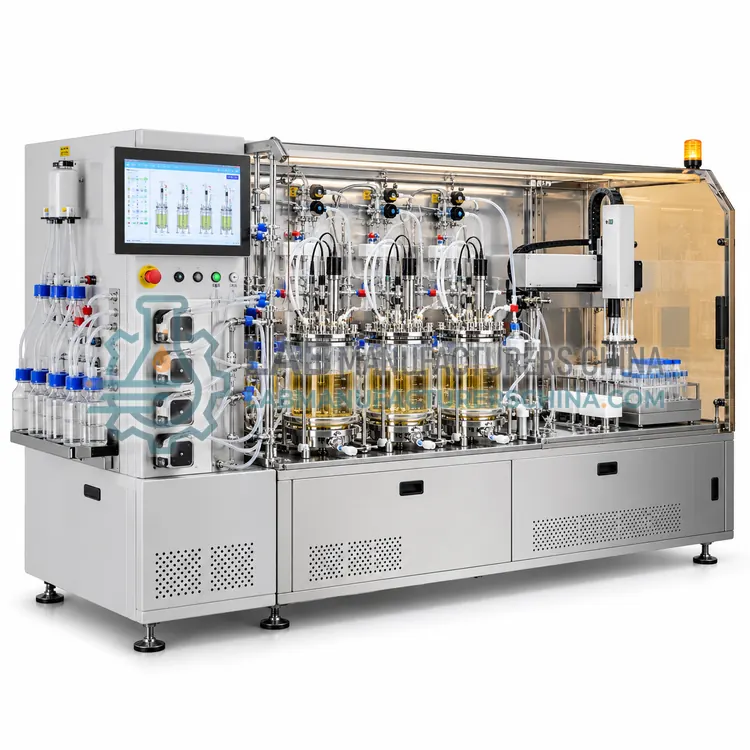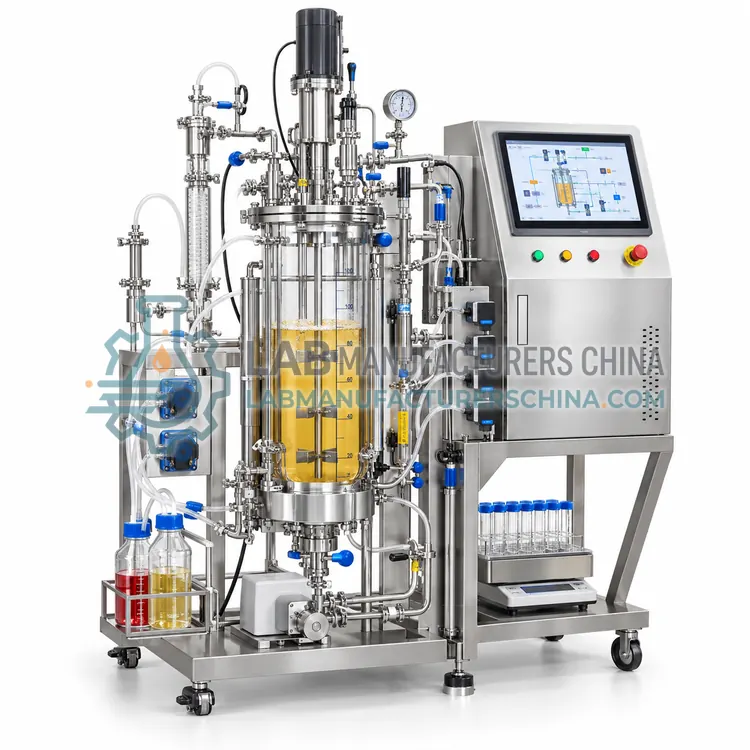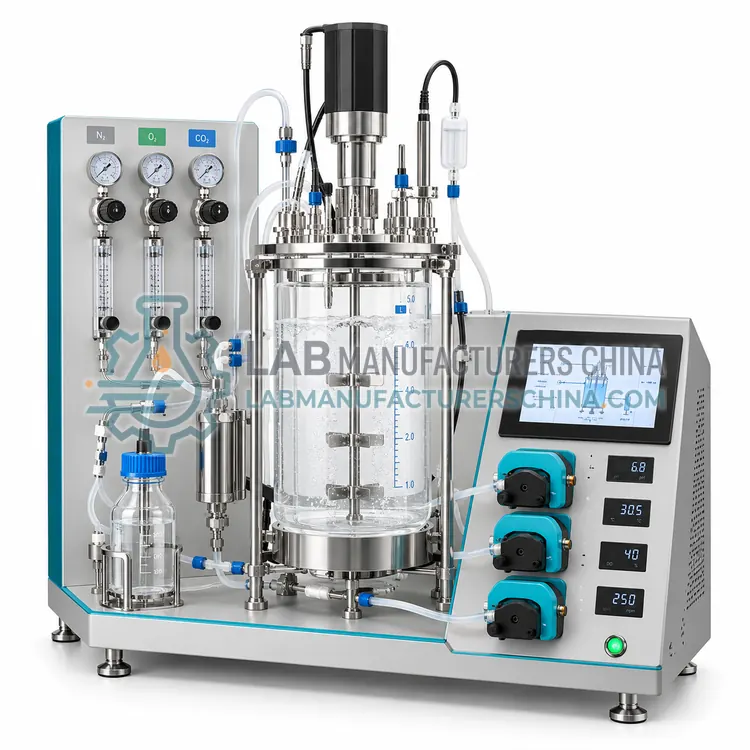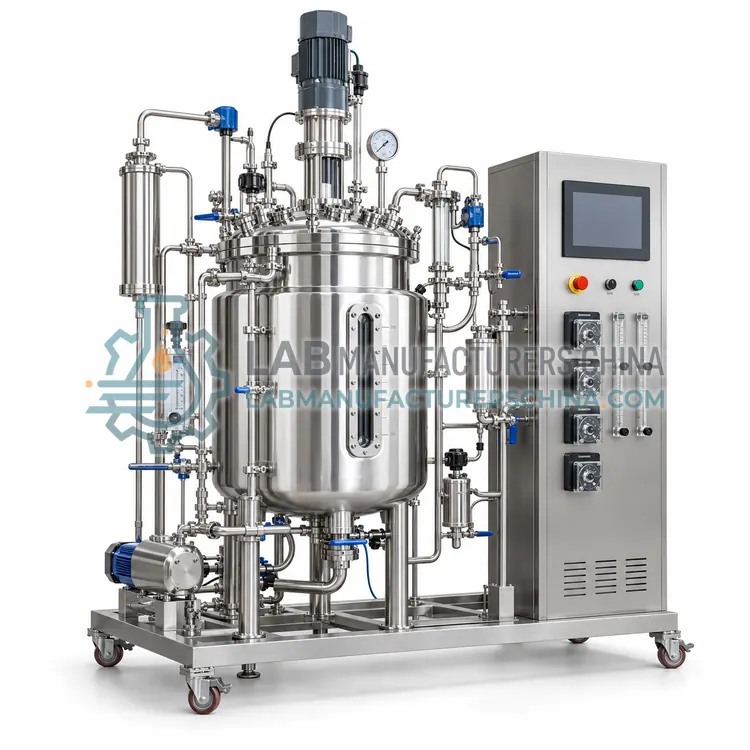
Off-Gas Analysis and Control System
尾气分析与控制系统
- SKU FCS-0005
- Fermentation Control Systems
- CE (to be confirmed)
- ISO 9001 manufacturing (to be confirmed)
- IEC 61010-1 compliance (to be confirmed)
Price on request — FOB / CIF quoted per order
Prices depend on configuration, quantity and destination port.
Key specifications
| Gases measured | O2 and CO2 (optional CH4, H2) |
|---|---|
| Measurement principle | Paramagnetic, infrared or mass spectrometry |
| O2 range | 0–25% (or 0–100%) |
| CO2 range | 0–10% |
| Accuracy | ±0.1% absolute (sensor dependent) |
| Vessels supported | 1 to many with multiplexing |
Request a quote Download brochure · to be provided
By Lab Manufacturers China Technical TeamLast reviewed Standards: EU GMP Annex 11, 21 CFR Part 11, IEC 61010-1
What is the Off-Gas Analysis and Control System?
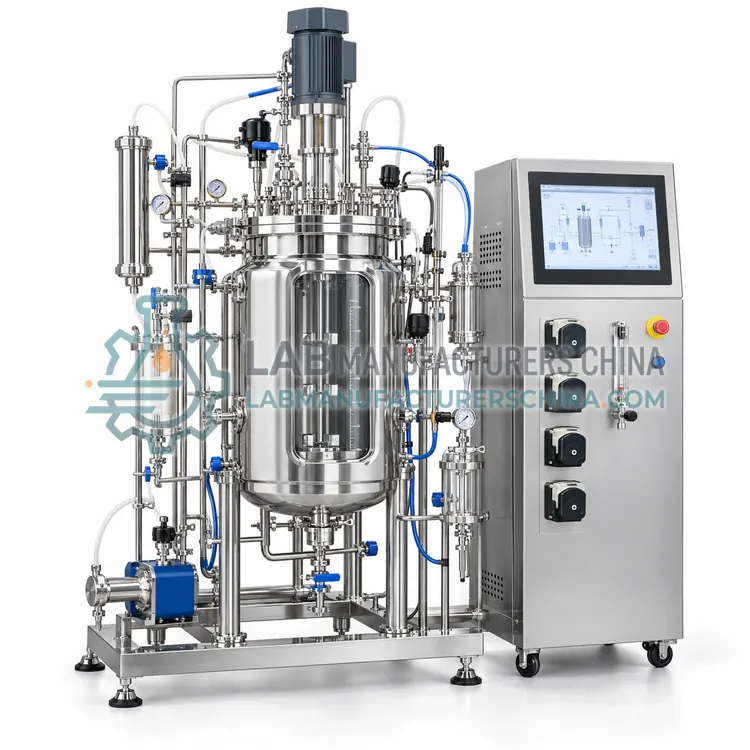
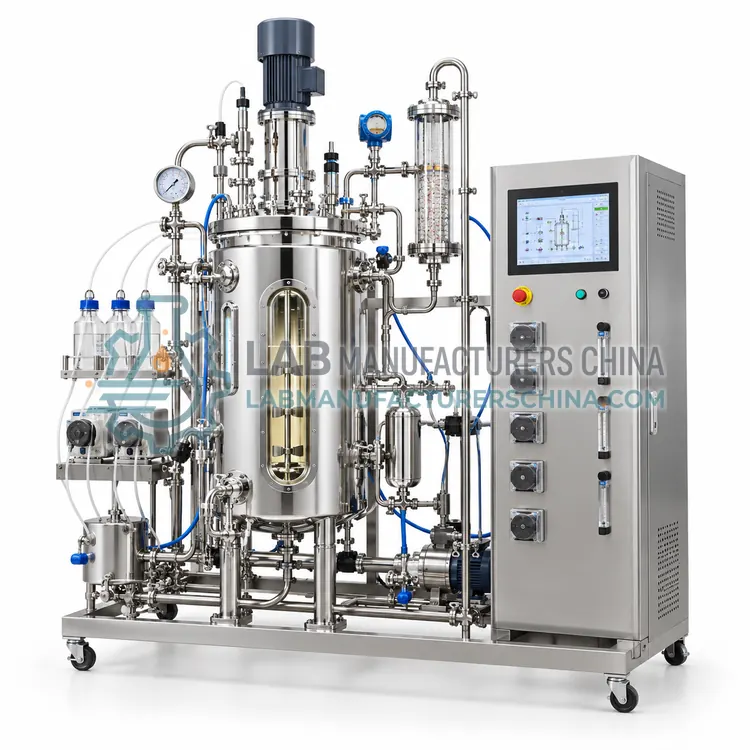
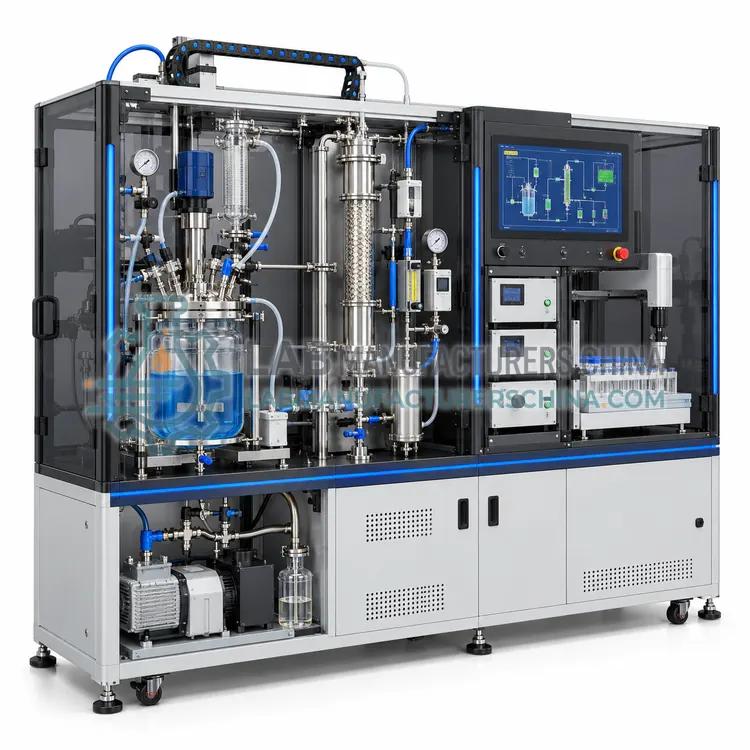
An off-gas analysis and control system measures oxygen and carbon dioxide in the exhaust and uses the data to monitor metabolism and support control. It adds insight into growth and feed sufficiency during fermentation.
What is the Off-Gas Analysis and Control System?
An off-gas analysis and control system measures oxygen and carbon dioxide in the exhaust and uses the data to monitor metabolism and support control. It adds insight into growth and feed sufficiency during fermentation.
Overview
An off-gas analysis and control system samples the exhaust gas from a fermenter and measures oxygen and carbon dioxide concentrations, usually with paramagnetic, electrochemical or infrared sensors, sometimes complemented by mass spectrometry for multiple vessels. Combined with the measured inlet flow and composition, these values give oxygen uptake rate, carbon dioxide evolution rate and the respiratory quotient. These derived values reveal metabolic state, feed limitation and stress earlier than biomass or product measurements, and can switch feeds, adjust temperature or trigger alarms. The system needs gas conditioning, such as drying and filtering, to protect sensors, and calibration gases to maintain accuracy. When used for control, the data loop must be validated, and sampling must not disturb vessel pressure or sterility.
How does it work?
Fermentation control systems measure process variables with sensors, compare them with setpoints and adjust actuators to reduce the difference. Temperature is controlled by heating or cooling through a jacket or blanket, using on-off, proportional or PID action. pH is maintained by dosing acid or base, and dissolved oxygen by cascade control that first adjusts gas flow or oxygen fraction and then agitation speed. Feed pumps deliver carbon source by flow, weight or a profile, and antifoam is added when a foam sensor detects buildup. Controllers display trends, log data and raise alarms when values leave limit bands, and networked systems collect data from several vessels into one record. Gas mixing and off-gas analysis add finer control, and calibration, probe health and actuator response determine how well the loops perform.
What are the key features?
- Measures exhaust oxygen and carbon dioxide
- Calculates uptake rate, evolution rate and RQ
- Earlier indication of metabolic state than biomass
- Can trigger feed, temperature or alarm actions
- Gas conditioning and calibration gas support
What are the technical specifications?
A typical off-gas analysis and control system configuration offers gases measured of O2 and CO2 (optional CH4, H2), measurement principle of Paramagnetic, infrared or mass spectrometry, O2 range of 0–25% (or 0–100%), CO2 range of 0–10%, accuracy of ±0.1% absolute (sensor dependent) and vessels supported of 1 to many with multiplexing. Values are indicative of the product class; the exact figures for each configuration are confirmed on the quotation and the calibration documents supplied with the instrument.
Which applications is it used for?
The Off-Gas Analysis and Control System is used in metabolic monitoring, feed strategy control, scale-up and mass balance studies and detection of culture stress. Across the wider Fermentation Control Systems class, laboratories also deploy it for fermentation and cell culture control, process development and scale-up and regulated batch production and records.
Which standards and certifications apply?
Relevant standards and methods include EU GMP Annex 11, 21 CFR Part 11, IEC 61010-1, IEC 61508, ISO 9001, ICH Q11 and GAMP 5. Certification candidates for this model are CE, ISO 9001 manufacturing and IEC 61010-1 compliance; each is to be confirmed for the specific configuration before shipment, and certificates are supplied only where they have been issued.
Calibrate pH and dissolved oxygen probes on a defined schedule and record the calibration in the batch file, because these measurements drift with use and sterilization. Verify actuator response, such as pump calibration and valve travel, so that control output matches the actual liquid or gas delivered. Protect controllers from moisture, heat and electrical noise, and use uninterruptible power for critical runs. Test alarm and failsafe behaviour, including what happens if a probe or pump fails during a long culture. For networked systems, back up configurations and data, control software versions and manage changes formally. Keep operator manuals and training current, and confirm the electrical installation meets IEC 61010-1.
How do I select the right Off-Gas Analysis and Control System?
Choose off-gas analysis when you need finer insight into metabolism or want to control feed and conditions from gas data. In an RFQ specify measured gases, ranges, accuracy, number of vessels, conditioning requirements, calibration gas needs and how the data feed into control.
How does it compare with other Fermentation Control Systems variants?
Define the loops and signals you must control and record before choosing hardware. Count the analog inputs for pH, dissolved oxygen, temperature, pressure and level, and the outputs for pumps, valves, heaters and stirrers, and confirm that spare capacity allows later expansion. Decide whether you need standalone single-vessel control or a networked system that shares data across vessels and integrates with a manufacturing execution or laboratory information system. Check PID tuning capability, cascade control, profile and ramp functions, and whether off-gas or gas-mixing control is included. For regulated work, require user access control, audit trails, alarm logging and batch reporting, and confirm the software can be validated. Consider probe calibration workflow, alarm escalation, communication protocols and the availability of spares and support.
Full specifications
| Gases measured | O2 and CO2 (optional CH4, H2) |
|---|---|
| Measurement principle | Paramagnetic, infrared or mass spectrometry |
| O2 range | 0–25% (or 0–100%) |
| CO2 range | 0–10% |
| Accuracy | ±0.1% absolute (sensor dependent) |
| Vessels supported | 1 to many with multiplexing |
| Gas conditioning | Drying and filtration before the sensor |
| Data output | OUR, CER, RQ logged with batch |
Indicative values for this product class. Final specifications are confirmed on the quotation and in the calibration documents supplied with the instrument.
Applications
- Metabolic monitoring
- Feed strategy control
- Scale-up and mass balance studies
- Detection of culture stress
Key features
- Measures exhaust oxygen and carbon dioxide
- Calculates uptake rate, evolution rate and RQ
- Earlier indication of metabolic state than biomass
- Can trigger feed, temperature or alarm actions
- Gas conditioning and calibration gas support
Frequently asked questions about Off-Gas Analysis and Control System
The respiratory quotient is the ratio of carbon dioxide produced to oxygen consumed. Its value changes with the substrate being metabolized and can indicate feed limitation, overflow metabolism or stress, making it useful for adjusting feed before growth or product formation suffers.
Exhaust gas carries water vapor, foam and aerosols that can damage sensors and block lines. Coolers, dryers and filters condition the sample before measurement, and the sampling point must avoid pressure drops that would disturb the vessel or draw in contamination.
Yes, it can switch feeds, adjust temperature or trigger alarms when rates pass thresholds. Because control actions depend on sensor accuracy, the analyzer is calibrated with standard gases and the data loop is validated before it is used to make process decisions.
It measures temperature, pH, dissolved oxygen and other variables, adjusts pumps, valves and heaters to hold setpoints, and records the batch profile. It also raises alarms on deviations, which is essential for reproducibility and for documenting regulated production.
Cascade control holds a primary variable, such as dissolved oxygen, by adjusting secondary variables in sequence, usually gas flow first and then agitation speed. This keeps control stable when demand changes and avoids using excessive stirring that could damage shear-sensitive cells.
Measuring carbon dioxide and oxygen in the exhaust gas gives an indirect view of metabolic activity and the respiratory quotient without taking samples. This helps trigger feed changes, detect metabolic shifts and support scale-up calculations, and it can be used as a control input.
Related models