Low-Flow Groundwater Sampling Pump
低流量地下水采样泵
- SKU ENS-0004
- Environmental Sampling
- CE (to be confirmed)
- RoHS (to be confirmed)
- ISO 9001 manufacturing (to be confirmed)
Price on request — FOB / CIF quoted per order
Prices depend on configuration, quantity and destination port.
Key specifications
| Flow rate | 0.1–1.0 L/min, adjustable |
|---|---|
| Pump type | Bladder, helical rotor or peristaltic |
| Maximum lift | Up to 60 m (submersible) |
| Well diameter | ≥ 50 mm |
| Tubing material | PTFE or low-density polyethylene |
| Purge rate | 0.1–0.5 L/min (low-flow) |
Request a quote Download brochure · to be provided
By Lab Manufacturers China Technical TeamLast reviewed Standards: ISO 5667-1, ISO 5667-3, ISO 18400-101
What is the Low-Flow Groundwater Sampling Pump?
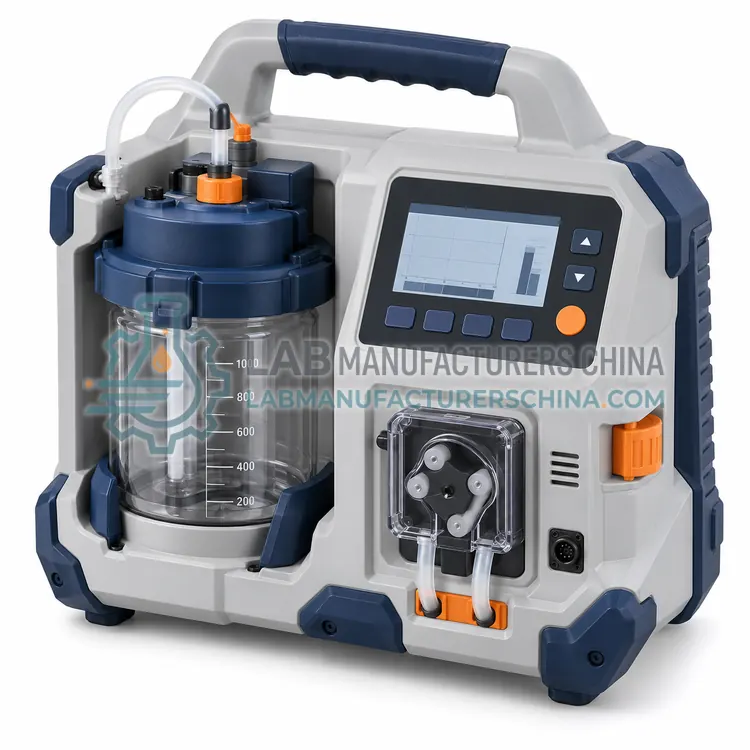
A small submersible or peristaltic pump that draws groundwater slowly to minimise turbidity and aeration. It is the right choice for monitoring wells where dissolved metals, volatiles or water quality parameters must reflect ambient conditions.
What is the Low-Flow Groundwater Sampling Pump?
A small submersible or peristaltic pump that draws groundwater slowly to minimise turbidity and aeration. It is the right choice for monitoring wells where dissolved metals, volatiles or water quality parameters must reflect ambient conditions.
Overview
The low-flow pump is lowered into a monitoring well and operated at 0.1 to 0.5 L/min. Because drawdown is minimal, water enters the screen at a low velocity, so colloidal fines and sorbed metals stay in place and turbidity stays low. Bladder, helical rotor submersible and peristaltic designs are common, with PTFE or low-density polyethylene tubing used to avoid sorption and leaching. Operators usually monitor pH, conductivity, dissolved oxygen, ORP and turbidity in a flow-through cell until readings stabilise, which indicates that formation water rather than stagnant casing water is being pumped. Dedicated pumps are left in each well to prevent cross-contamination between stations. The method is slower than bailer purging but produces more reproducible dissolved-phase results and less purge water to handle.
How does it work?
Environmental sampling equipment captures a volume of the target medium under controlled conditions so that the laboratory result represents the site. Automatic water samplers use a peristaltic or vacuum pump to draw a fixed volume into bottles on a time or flow-proportional schedule, with pre-rinse cycles to limit cross-contamination and refrigeration or ice to preserve samples. Sediment grab samplers close spring-loaded jaws when lowered onto the bed, while core samplers drive a lined tube to recover an undisturbed vertical profile. Low-flow groundwater pumps use bladder or helical rotors to lift water at 0.1–0.5 L/min, reducing turbidity and volatilization. Passive air samplers rely on diffusion or permeation into a sorbent, integrating exposure over days to weeks. Containers, tubing and sorbents are chosen so analytes do not adsorb, leach or degrade before analysis.
What are the key features?
- Draws water at 0.1–0.5 L/min to keep turbidity and aeration low.
- PTFE or LDPE tubing prevents sorption and leaching of analytes.
- Flow-through cell allows in-line monitoring of stabilisation parameters.
- Dedicated downhole placement avoids cross-contamination between wells.
- Bladder and helical rotor options suit different well diameters and depths.
- Low purge volume reduces waste handling costs and site disturbance.
What are the technical specifications?
A typical low-flow groundwater sampling pump configuration offers flow rate of 0.1–1.0 L/min, adjustable, pump type of Bladder, helical rotor or peristaltic, maximum lift of Up to 60 m (submersible), well diameter of ≥ 50 mm, tubing material of PTFE or low-density polyethylene and purge rate of 0.1–0.5 L/min (low-flow). Values are indicative of the product class; the exact figures for each configuration are confirmed on the quotation and the calibration documents supplied with the instrument.
Which applications is it used for?
The Low-Flow Groundwater Sampling Pump is used in groundwater monitoring well sampling, dissolved metals compliance sampling, volatile organic compound groundwater samples and landfill and contaminated site monitoring. Across the wider Environmental Sampling class, laboratories also deploy it for contaminated site investigation, surface water and effluent monitoring and groundwater compliance monitoring.
Which standards and certifications apply?
Relevant standards and methods include ISO 5667-1, ISO 5667-3, ISO 18400-101, ASTM D6907, US EPA Method 1669 and EN ISO 16017-1. Certification candidates for this model are CE, RoHS and ISO 9001 manufacturing; each is to be confirmed for the specific configuration before shipment, and certificates are supplied only where they have been issued.
Plan a sampling and analysis plan that defines locations, depths, frequencies, preservation and chain-of-custody. Clean and decontaminate reusable equipment between stations using procedures free of the target analytes, and collect field blanks, trip blanks and duplicates. Transport samples in coolers with ice at 0–4 °C and ship within the method holding time. Calibrate pumps and flow meters before each campaign and record volumes for flow-proportional composites. For regulatory work, follow the applicable guidance and keep records for audit. Store tubing and bottles away from solvents and exhaust, and replace worn seals and liners, which are common sources of contamination and leakage.
How do I select the right Low-Flow Groundwater Sampling Pump?
Choose a low-flow pump when dissolved-phase concentrations and low turbidity are required, especially for metals and volatiles. For shallow wells with only general chemistry, a bailer may be acceptable. In an RFQ, state well diameter and depth, tubing material, required flow range, controller features and whether dedicated leave-in installation is planned.
How does it compare with other Environmental Sampling variants?
Start from the matrix and the analytical method, because these decide the container, preservation and allowable holding time. For flowing water and effluent, choose between grab samples and automatic samplers that can composite over time or flow. For sediments and soils, decide whether a surface grab or an undisturbed core is required, and match the sampler material to the target analytes so metals do not leach from brass or alloy components. For groundwater, low-flow sampling gives lower turbidity and more reproducible metals results than bailers. For air, select active sorbent tubes when short-term concentrations are needed and passive samplers when long-term averages are sufficient. Confirm decontamination procedures, blank requirements and the number of duplicates before specifying.
Full specifications
| Flow rate | 0.1–1.0 L/min, adjustable |
|---|---|
| Pump type | Bladder, helical rotor or peristaltic |
| Maximum lift | Up to 60 m (submersible) |
| Well diameter | ≥ 50 mm |
| Tubing material | PTFE or low-density polyethylene |
| Purge rate | 0.1–0.5 L/min (low-flow) |
| Flow cell | pH, EC, DO, ORP, turbidity probes |
| Power supply | 12 VDC controller or battery |
| Operating temperature | 0–40 °C |
| Dedicated installation | One pump per well, leave-in |
| Weight | 1–4 kg |
Indicative values for this product class. Final specifications are confirmed on the quotation and in the calibration documents supplied with the instrument.
Applications
- Groundwater monitoring well sampling
- Dissolved metals compliance sampling
- Volatile organic compound groundwater samples
- Landfill and contaminated site monitoring
Key features
- Draws water at 0.1–0.5 L/min to keep turbidity and aeration low.
- PTFE or LDPE tubing prevents sorption and leaching of analytes.
- Flow-through cell allows in-line monitoring of stabilisation parameters.
- Dedicated downhole placement avoids cross-contamination between wells.
- Bladder and helical rotor options suit different well diameters and depths.
- Low purge volume reduces waste handling costs and site disturbance.
Frequently asked questions about Low-Flow Groundwater Sampling Pump
Operators monitor pH, conductivity, dissolved oxygen, ORP and turbidity in a flow-through cell. When three consecutive readings vary within set tolerances, typically 0.1 pH unit, 3 percent conductivity and 10 percent turbidity, the water is assumed to represent the formation.
Leaving one pump and its tubing in each well removes the need to decontaminate between stations, so carry-over between wells is almost eliminated. It also saves time, since no lowering and purging from the surface is required at each visit.
Peristaltic pumps are not ideal for volatiles because the suction lift creates a vacuum that can degas the sample. For VOCs, use a submersible bladder or helical rotor pump placed in or just above the screen, and fill sample vials with no headspace.
A grab sample is a single aliquot taken at one time and place, while a composite combines several aliquots over time or flow into one container. Composite sampling is preferred for variable discharges such as wastewater, and grab sampling suits stable conditions or volatile parameters that change during storage.
Low-flow sampling draws water at 0.1 to 0.5 L/min so the water level and flow stay stable and turbidity remains low. Lower turbidity means fewer suspended solids, which carry sorbed metals and can bias results. It also reduces aeration and volatilization loss compared with high-rate purging.
Preservation depends on the analyte: metals need nitric acid to pH below 2, while COD and nutrients need sulfuric acid, and cyanide and sulfide need sodium hydroxide. Keep samples at 0 to 4 °C, fill containers with no headspace for volatile organics and respect the method holding time.
Related models