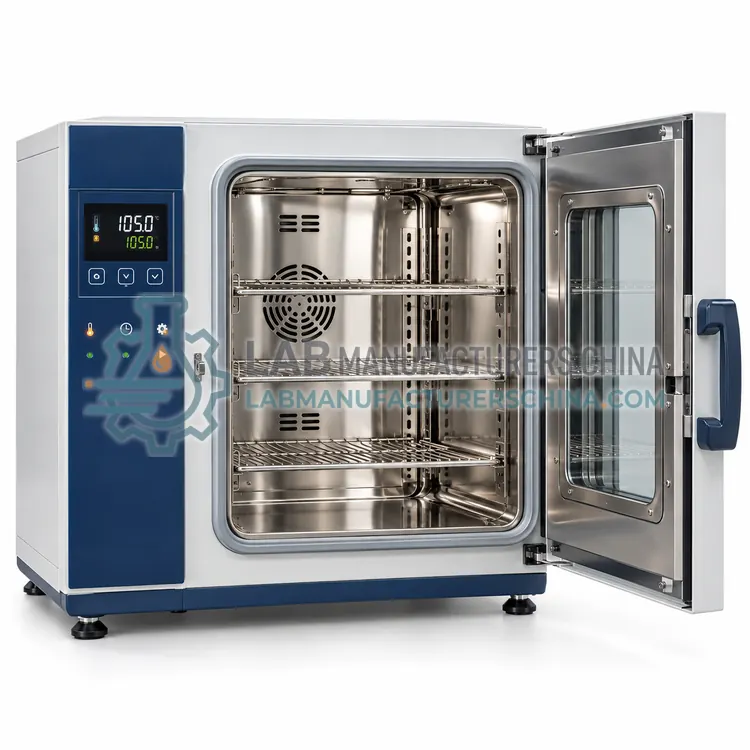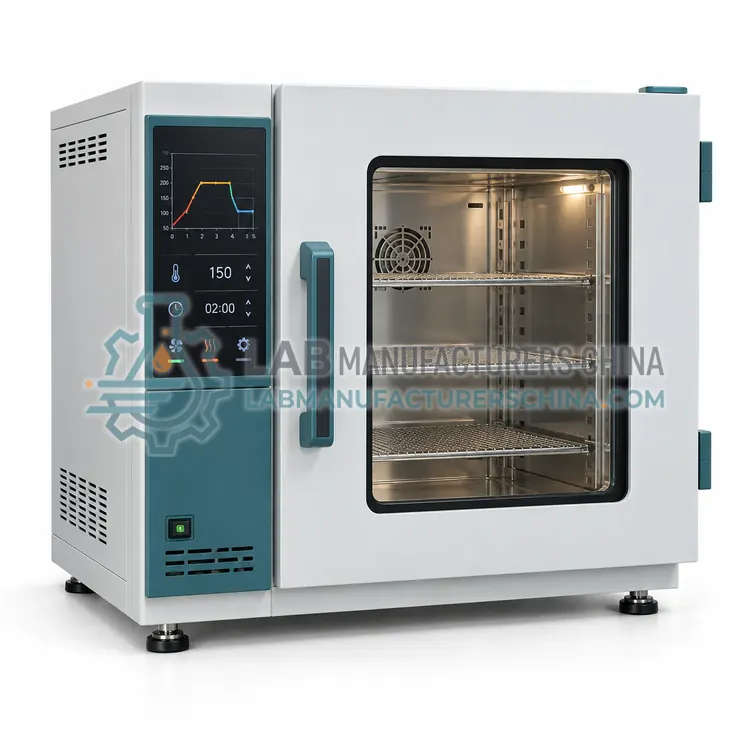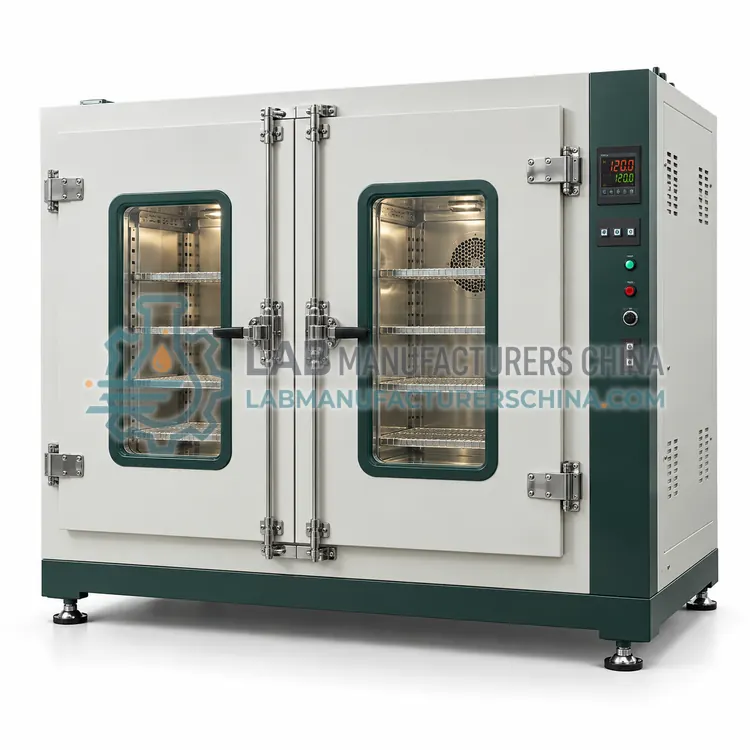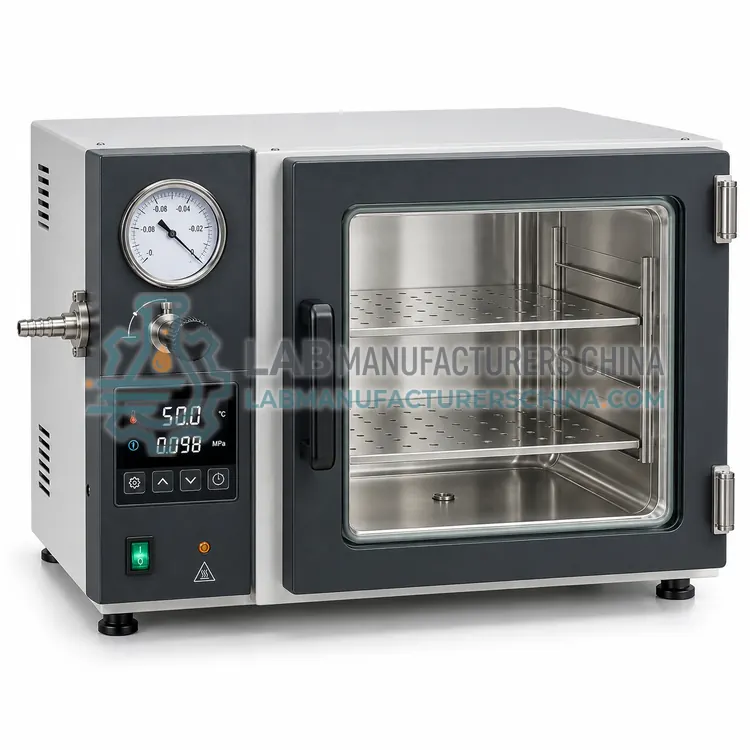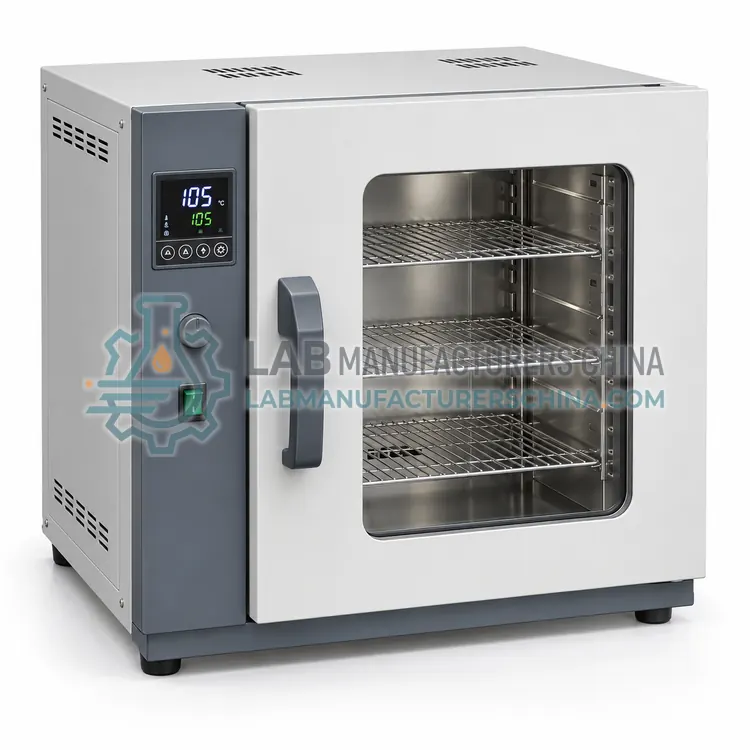
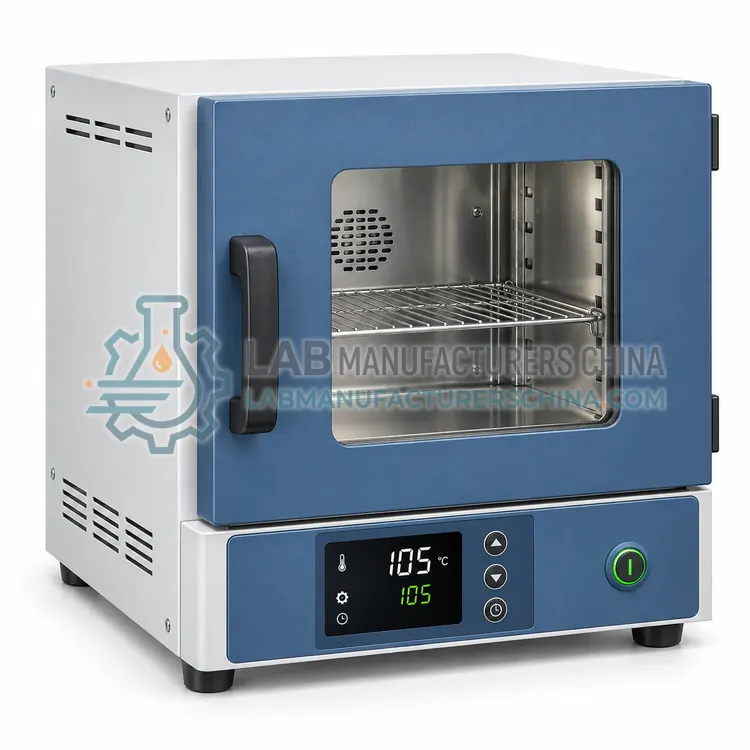
Benchtop Mini Drying Oven
台式小型干燥箱
- SKU DRO-0005
- Drying Ovens
- CE (to be confirmed)
- ISO 9001 manufacturing (to be confirmed)
- RoHS (to be confirmed)
Price on request — FOB / CIF quoted per order
Prices depend on configuration, quantity and destination port.
Key specifications
| Chamber volume | 9–30 L |
|---|---|
| Temperature range | RT+10 to 200–250 C |
| Temperature uniformity at 105 C | ±3–5 C |
| Temperature fluctuation | ±1 C |
| Heating power | 300–800 W |
| Time to 105 C | ≈ 20–40 min |
Request a quote Download brochure · to be provided
By Lab Manufacturers China Technical TeamLast reviewed Standards: IEC 61010-1, IEC 61010-2-010, DIN 12880
What is the Benchtop Mini Drying Oven?
A benchtop mini drying oven has a compact chamber of 9 to 30 liters and temperatures up to 200 or 250 C. It fits limited bench space and small loads, such as drying a few samples, small glassware or teaching exercises.
What is the Benchtop Mini Drying Oven?
A benchtop mini drying oven has a compact chamber of 9 to 30 liters and temperatures up to 200 or 250 C. It fits limited bench space and small loads, such as drying a few samples, small glassware or teaching exercises.
Overview
Mini ovens are compact units with chamber volume of 9 to 30 liters, occupying about 0.3 by 0.4 m of bench. They have a lower power draw of 300 to 800 W, reaching 105 C within 20 to 40 minutes, and run on standard mains outlets. Interior is stainless steel or coated steel, often with one or two small shelves. Natural convection is typical for simplicity, although fan-assisted variants exist. Controllers are digital PID with timer, and an over-temperature limiter is standard. The small thermal mass gives quick recovery. They suit individual research benches, teaching laboratories, sample preparation for one instrument and low-volume drying where a full-size oven would waste energy. Maximum temperature is typically 200 to 250 C.
How does it work?
A drying oven uses resistance heating elements placed at the bottom, sides or back of an insulated chamber. A temperature sensor, usually a Pt100 or thermocouple, feeds a PID controller that switches the heaters to hold the setpoint. In gravity or natural-convection designs, warm air rises and circulates passively, which gives gentle heating and little disturbance of powders. Forced-convection designs add a fan for uniformity, but the models in this category are generally natural-convection or fan-assisted for routine use. Moisture evaporates from samples and leaves through adjustable vents in the top or rear. Chamber walls are stainless steel or coated steel, insulated with mineral wool or ceramic fiber, and the door has a silicone gasket. An independent over-temperature limiter cuts power if the control fails.
What are the key features?
- Compact 9 to 30 liter chamber for limited bench space
- Runs on standard mains with 300 to 800 W heating
- Reaches 105 C in 20 to 40 minutes
- Digital PID controller with timer and over-temperature limiter
- Low thermal mass for quick recovery after door opening
What are the technical specifications?
A typical benchtop mini drying oven configuration offers chamber volume of 9–30 L, temperature range of RT+10 to 200–250 C, temperature uniformity at 105 C of ±3–5 C, temperature fluctuation of ±1 C, heating power of 300–800 W and time to 105 C of ≈ 20–40 min. Values are indicative of the product class; the exact figures for each configuration are confirmed on the quotation and the calibration documents supplied with the instrument.
Which applications is it used for?
The Benchtop Mini Drying Oven is used in teaching laboratory drying, small sample preparation, individual bench use and low-volume glassware drying. Across the wider Drying Ovens class, laboratories also deploy it for glassware drying, sample moisture removal and sterilizing heat-stable items.
Which standards and certifications apply?
Relevant standards and methods include IEC 61010-1, IEC 61010-2-010, DIN 12880, EN 60519-1, ASTM E145, GB/T 30435 and ISO 9001. Certification candidates for this model are CE, ISO 9001 manufacturing and RoHS; each is to be confirmed for the specific configuration before shipment, and certificates are supplied only where they have been issued.
Place the oven on a stable, non-combustible surface with at least 15 to 30 cm clearance on all sides for ventilation. Do not heat flammable solvents, explosive materials or sealed containers, since standard ovens have ignition sources and no explosion relief. Keep loads to no more than about 70 percent of shelf area to allow airflow, and do not block vents. Use vented exhaust where fumes are produced. Calibrate temperature using a reference probe at set intervals, and map uniformity when needed. Allow warm-up and recovery times after door openings. Wear heat-resistant gloves, and let the oven cool before cleaning. Inspect gaskets, vents and the over-temperature limiter regularly and keep service records.
How do I select the right Benchtop Mini Drying Oven?
Select a benchtop mini oven for small loads, limited space or teaching, where a few liters of chamber volume and one or two shelves are enough. It lacks the capacity and uniformity of larger models, so it suits glassware drying, small batches and student work. In the RFQ, specify volume, maximum temperature, internal dimensions, convection type and voltage.
How does it compare with other Drying Ovens variants?
Start with chamber volume, since it sets throughput and footprint, typically 30 to 500 liters. Then set the temperature range with a margin above the highest working temperature, and verify uniformity at that temperature, often ±1 to ±5 C. Choose natural convection for fine powders and light materials, and fan-assisted types for faster recovery and uniform temperature. Specify interior material, with 304 stainless steel preferred for clean applications. Consider controller type, whether a simple digital controller or a programmable one with timers and ramp segments. Check safety features such as over-temperature protection. For regulated laboratories, evaluate documentation and calibration options, including sensor ports for mapping. Finally confirm electrical supply and whether shelves, trays or extra ports are needed.
Full specifications
| Chamber volume | 9–30 L |
|---|---|
| Temperature range | RT+10 to 200–250 C |
| Temperature uniformity at 105 C | ±3–5 C |
| Temperature fluctuation | ±1 C |
| Heating power | 300–800 W |
| Time to 105 C | ≈ 20–40 min |
| Shelves supplied | 1–2 |
| External size | ≈ 400 × 400 × 500 mm |
| Weight | ≈ 12–25 kg |
| Power supply | 220 V, 50/60 Hz |
Indicative values for this product class. Final specifications are confirmed on the quotation and in the calibration documents supplied with the instrument.
Applications
- Teaching laboratory drying
- Small sample preparation
- Individual bench use
- Low-volume glassware drying
Key features
- Compact 9 to 30 liter chamber for limited bench space
- Runs on standard mains with 300 to 800 W heating
- Reaches 105 C in 20 to 40 minutes
- Digital PID controller with timer and over-temperature limiter
- Low thermal mass for quick recovery after door opening
Frequently asked questions about Benchtop Mini Drying Oven
Yes for routine drying with tolerance of several degrees. Temperature fluctuation is about ±1 C and uniformity ±3 to ±5 C. For methods with tight specifications, use a larger forced-air oven with documented uniformity.
Only if it is suitable for such use, since ventilation can disturb temperature and the heater is an ignition source. Do not place it where flammable solvents are used, and follow laboratory safety rules.
Heating consumes 300 to 800 W during warm-up, then a fraction of that to hold temperature, often 100 to 250 W at 105 C. Running costs are therefore much lower than full-size ovens for small loads.
It removes moisture from samples and glassware, bakes coatings, conditions materials and sterilizes heat-stable items using dry heat. Typical temperatures range from about 50 to 250 C, held by a PID controller within a few degrees.
A gravity oven relies on rising warm air, giving slower heating, larger temperature gradients and little disturbance to powders. A forced convection oven uses a fan to circulate air, reaching temperature faster with better uniformity.
No. Standard ovens contain heaters, thermostats and relays that can ignite flammable vapors, and they have no explosion protection. Use a vacuum oven with safety design or a certified explosion-proof oven for solvent-wet samples.
Related models