Automatic Water Still
自动蒸馏水器
- SKU DIU-0003
- Distillation Units
- CE (to be confirmed)
- ISO 9001 manufacturing (to be confirmed)
- RoHS (to be confirmed)
Price on request — FOB / CIF quoted per order
Prices depend on configuration, quantity and destination port.
Key specifications
| Output | 4–30 L/h |
|---|---|
| Conductivity | 1–5 µS/cm |
| Level control | Float or conductivity sensor |
| Automatic drain | Timed or conductivity triggered |
| Storage tank | 10–100 L optional |
| Safety | Low-level and over-temperature cutout |
Request a quote Download brochure · to be provided
By Lab Manufacturers China Technical TeamLast reviewed Standards: ISO 3696, CLSI GP40, USP <645>
What is the Automatic Water Still?
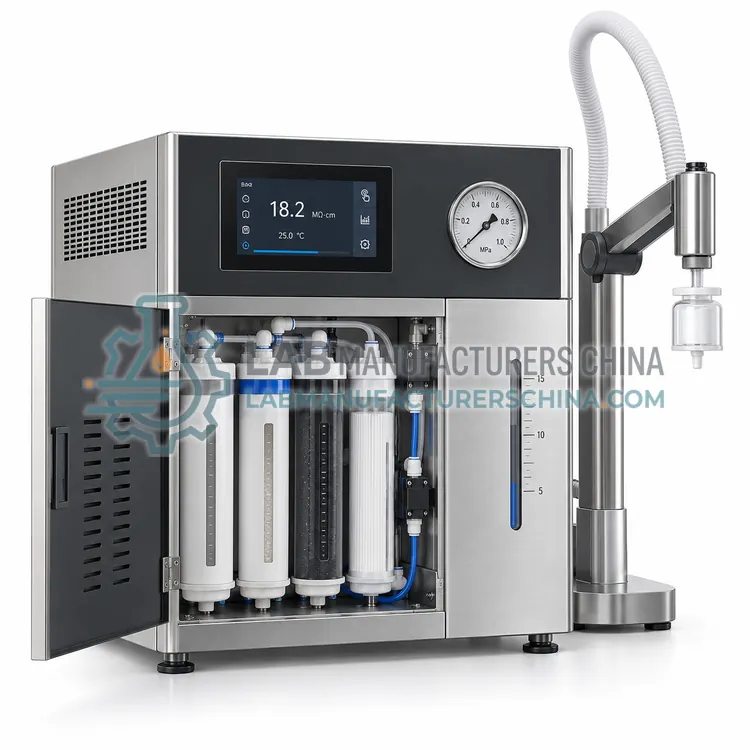
An automatic water still fills, boils, monitors and drains itself, so it can run unattended for long periods. It is used where a reliable, continuous supply of distilled water is needed every day.
What is the Automatic Water Still?
An automatic water still fills, boils, monitors and drains itself, so it can run unattended for long periods. It is used where a reliable, continuous supply of distilled water is needed every day.
Overview
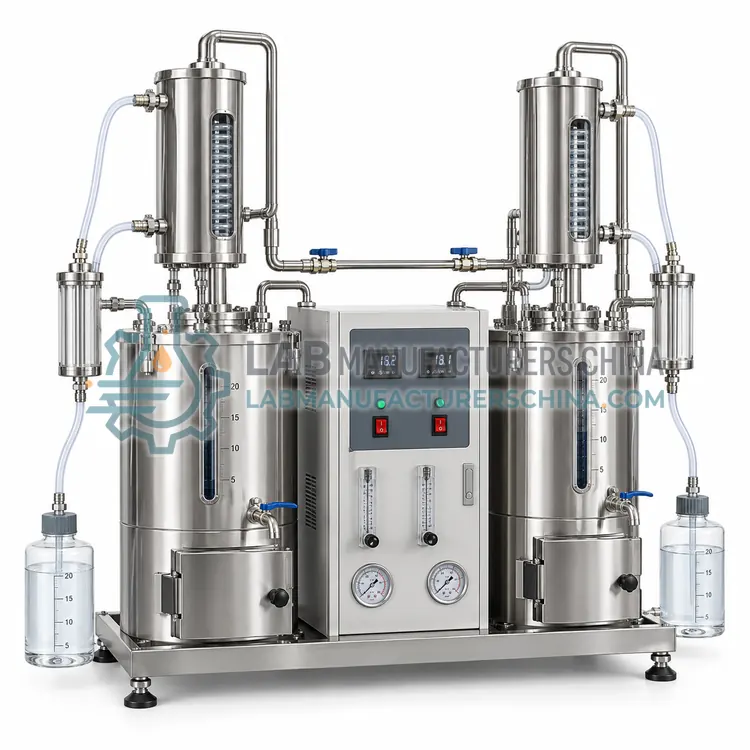
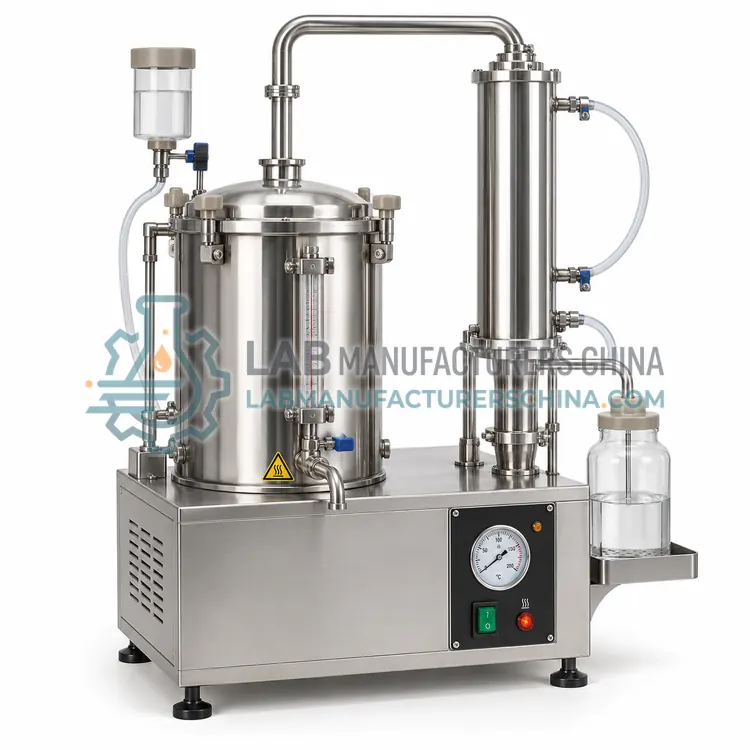
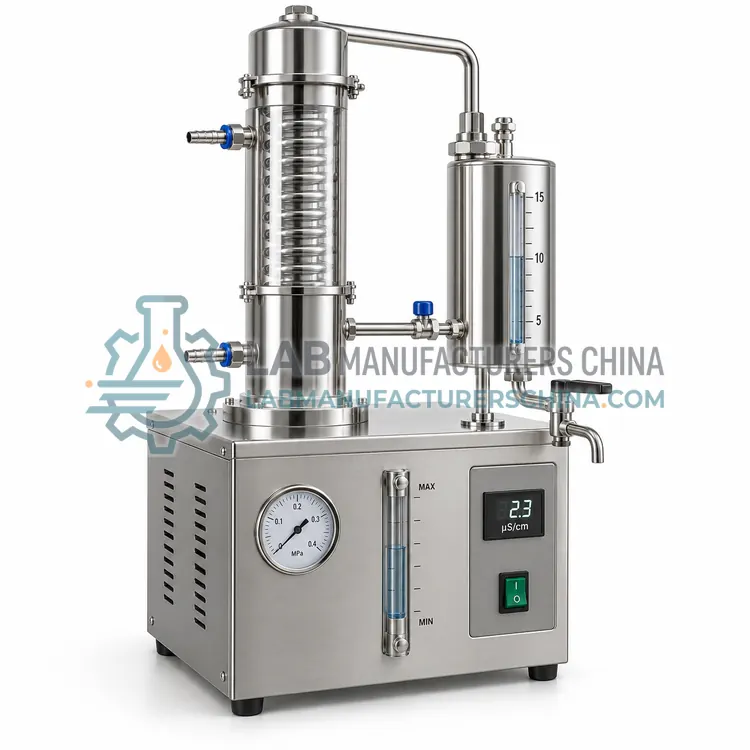
The automatic water still adds control logic to the basic distillation process. A solenoid inlet valve maintains the boiler level through a float or conductivity sensor, a timer or conductivity monitor triggers automatic draining of the concentrated boiler water, and safety cutouts stop heating if the level falls or the temperature rises. Some models include an integrated storage tank with level control and a distribution pump, so distillate is available on demand. Output ranges from 4 to 30 liters per hour, and conductivity is monitored with an alarm. Because the unit can operate overnight or over a weekend, it suits laboratories that consume distilled water continuously and want to avoid manual filling. Softening or reverse osmosis pretreatment is still recommended, and maintenance focuses on descaling, valve service and sensor cleaning.
How does it work?
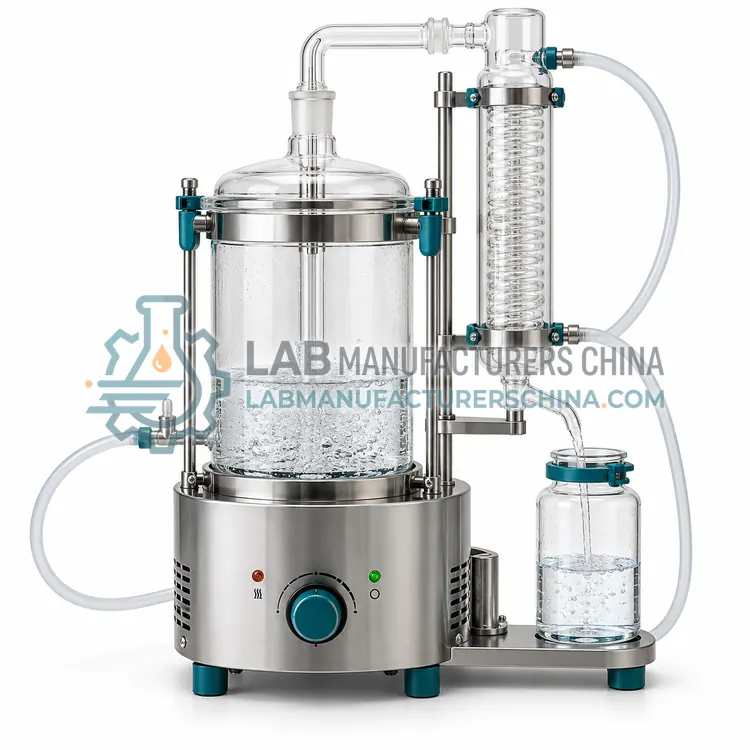
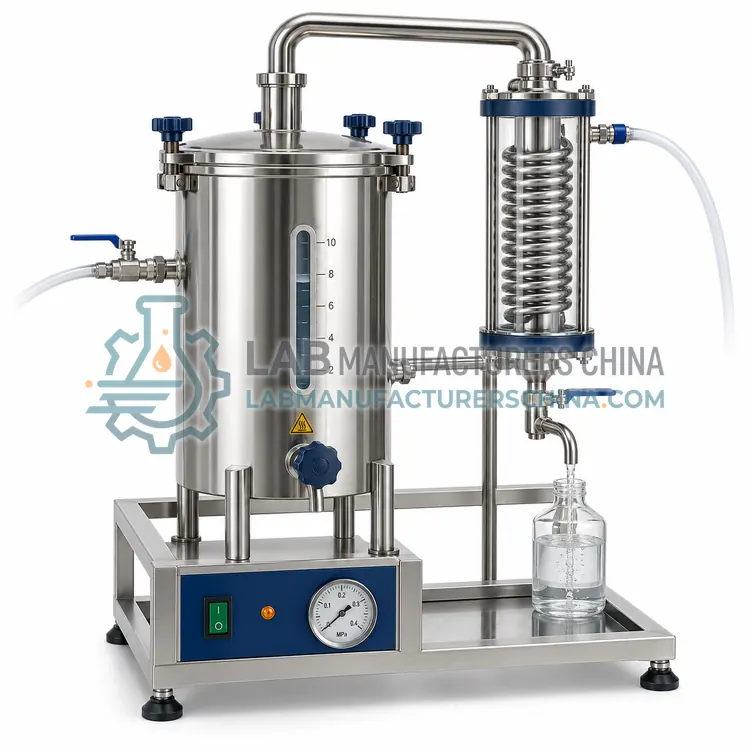
A distillation unit heats feed water to boiling in a boiler, and the steam rises through a column or baffle that separates entrained droplets carrying dissolved salts. The vapor then condenses on a cooled surface and is collected as distillate. Non-volatile ions, particles and pyrogens remain in the boiler, which is drained periodically, while volatile substances such as ammonia, carbon dioxide and some organics may carry over unless a baffle or a second stage traps them. Single-stage stills give conductivity of about 1 to 5 microsiemens per centimeter, and double-stage units reach lower values by distilling the distillate again. Typical components are the boiler with heating elements and level control, the condenser with cooling water or air, the baffle, and conductivity monitoring. Scale from hard water forms on the elements, so descaling is routine maintenance.
What are the key features?
- Automatic inlet valve and level maintenance
- Timed or conductivity-triggered boiler drain
- Safety cutouts for low level and high temperature
- Optional storage tank and distribution pump
- Output of 4–30 L/h with conductivity alarm
- Suited to unattended overnight operation
What are the technical specifications?
A typical automatic water still configuration offers output of 4–30 L/h, conductivity of 1–5 µS/cm, level control of Float or conductivity sensor, automatic drain of Timed or conductivity triggered, storage tank of 10–100 L optional and safety of Low-level and over-temperature cutout. Values are indicative of the product class; the exact figures for each configuration are confirmed on the quotation and the calibration documents supplied with the instrument.
Which applications is it used for?
The Automatic Water Still is used in continuous laboratory water supply, multi-user reagent water, autoclave and washer feed, overnight unattended operation and media and buffer preparation. Across the wider Distillation Units class, laboratories also deploy it for reagent and buffer preparation, autoclave and sterilizer feed and microbiology media preparation.
Which standards and certifications apply?
Relevant standards and methods include ISO 3696, CLSI GP40, USP <645>, IEC 61010-1 and ISO 9001. Certification candidates for this model are CE, ISO 9001 manufacturing and RoHS; each is to be confirmed for the specific configuration before shipment, and certificates are supplied only where they have been issued.
Feed the still with softened or pretreated water to slow scale formation, and descale on a regular schedule with a suitable acid. Do not let the boiler run dry; keep level controls and low-level cutouts in working order. Ensure adequate cooling water flow and temperature, because poor cooling reduces output and may allow vapor to escape. Drain the boiler concentrate regularly to prevent salt buildup, and never let it concentrate beyond the design limit. Clean the condenser and collection vessel to avoid re-contamination, and cover stored distillate. Follow IEC 61010-1 for electrical safety and local rules for hot water and steam. Record conductivity, output and descaling dates so quality and maintenance stay under control.
How do I select the right Automatic Water Still?
Choose an automatic still when the laboratory consumes distilled water continuously and manual filling is impractical. For occasional small volumes, a simple tabletop still is enough. In the RFQ, state daily volume, storage needs and monitoring.
How does it compare with other Distillation Units variants?
Begin with the required water quality and volume. Single-stage stills suit general reagent preparation and autoclave feed, while double-stage or quartz stills are chosen when very low conductivity and low pyrogen content are needed. Match output to daily demand, considering that a still runs continuously and needs cooling water unless it is air-cooled. Check the material of the boiler and condenser, since borosilicate glass, quartz and stainless steel differ in contamination and durability. Hard feed water increases scaling and maintenance, so consider softening or reverse osmosis pretreatment. Look for automatic level control, over-temperature protection and conductivity monitoring, and confirm whether the design allows easy descaling. Finally, compare energy and cooling water consumption, because distillation has the highest operating cost of the common purification methods.
Full specifications
| Output | 4–30 L/h |
|---|---|
| Conductivity | 1–5 µS/cm |
| Level control | Float or conductivity sensor |
| Automatic drain | Timed or conductivity triggered |
| Storage tank | 10–100 L optional |
| Safety | Low-level and over-temperature cutout |
| Monitoring | Conductivity with alarm |
| Heater power | 3–15 kW |
| Power supply | 380 V three-phase |
Indicative values for this product class. Final specifications are confirmed on the quotation and in the calibration documents supplied with the instrument.
Applications
- Continuous laboratory water supply
- Multi-user reagent water
- Autoclave and washer feed
- Overnight unattended operation
- Media and buffer preparation
Key features
- Automatic inlet valve and level maintenance
- Timed or conductivity-triggered boiler drain
- Safety cutouts for low level and high temperature
- Optional storage tank and distribution pump
- Output of 4–30 L/h with conductivity alarm
- Suited to unattended overnight operation
Frequently asked questions about Automatic Water Still
A float or conductivity sensor keeps the boiler level correct, and a low-level cutout stops the heater if the supply fails. Keep these devices clean and tested so protection remains effective.
Salt concentration rises in the boiler as water evaporates, and automatic draining limits this so quality stays stable and scaling slows. Draining frequency is set by timer or conductivity.
Yes on models with a tank and level control, which also allows gravity or pumped distribution. Keep the tank vented, covered and cleaned to avoid re-contamination.
A single-stage still reaches about 1 to 5 microsiemens per centimeter, and a double-stage still lower values, with very low pyrogen content. Volatile contaminants are not removed unless a baffle or second stage is used.
Dissolved salts in hard water precipitate on heating elements and boiler walls, reducing heat transfer, lowering output and ultimately damaging the element. Softening or reverse osmosis pretreatment and regular descaling prevent this.
Yes, pyrogens are non-volatile and remain in the boiler, so the distillate is essentially pyrogen-free if carry-over is prevented by proper baffling. Verify with a limulus amebocyte lysate test for critical use.
Related models