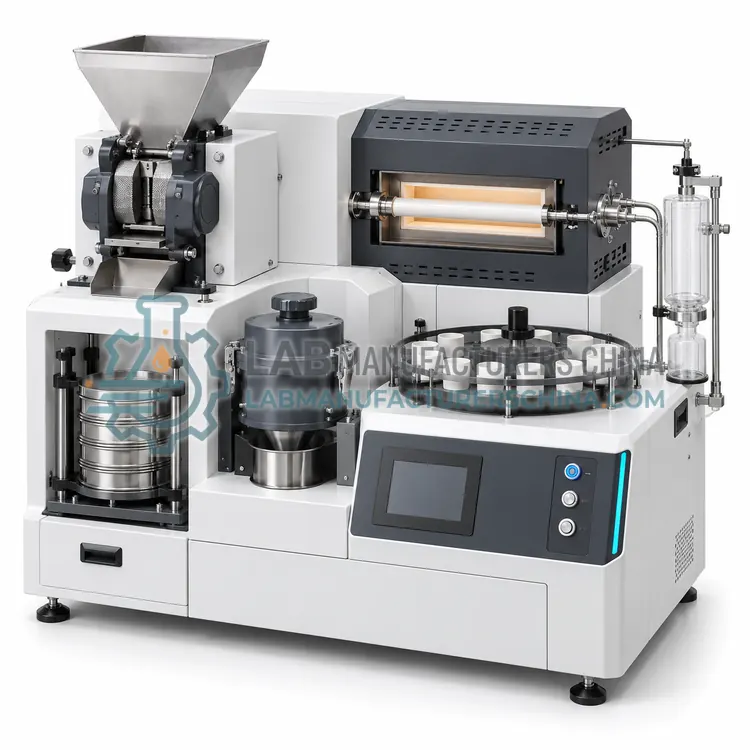
Rotary Sample Divider for Coal
煤用旋转缩分器
- SKU CSP-0005
- Coal Sample Preparation
- CE (to be confirmed)
- ISO 9001 manufacturing (to be confirmed)
Price on request — FOB / CIF quoted per order
Prices depend on configuration, quantity and destination port.
Key specifications
| Number of vessels | 6–20 |
|---|---|
| Applicable top size | ≤ 10 mm, best below 3 mm |
| Sample capacity | 2–100 L per run |
| Feeding rate | Adjustable, 1–20 kg/min |
| Rotation speed | 20–60 rpm |
| Mass deviation between fractions | ≤ 2 % |
Request a quote Download brochure · to be provided
By Lab Manufacturers China Technical TeamLast reviewed Standards: ASTM D2013, ASTM D2234, ISO 1988
What is the Rotary Sample Divider for Coal?
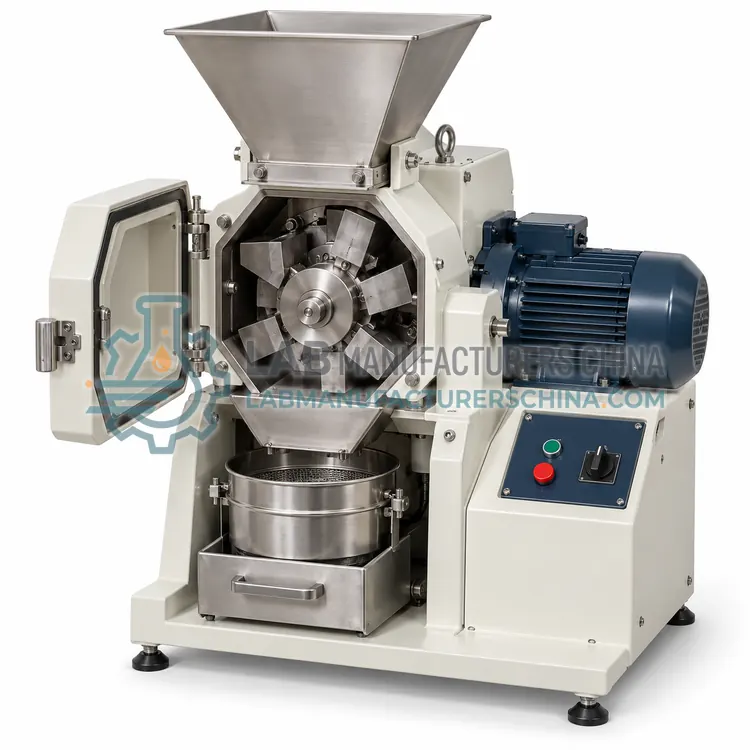
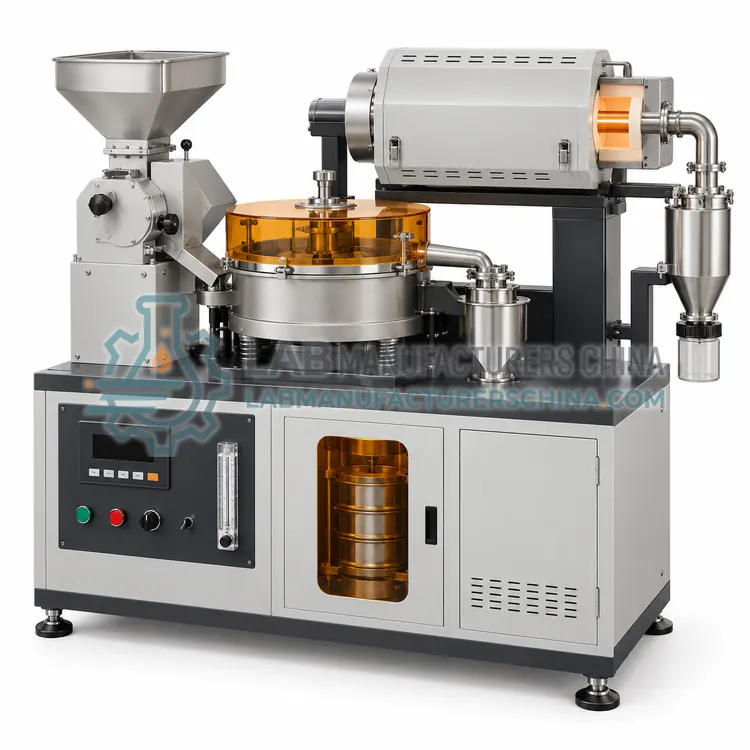
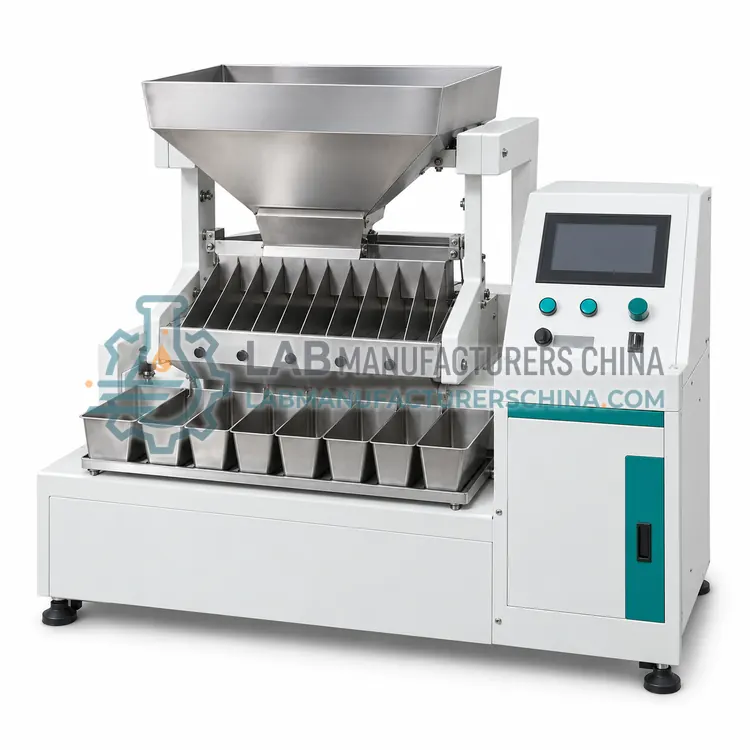
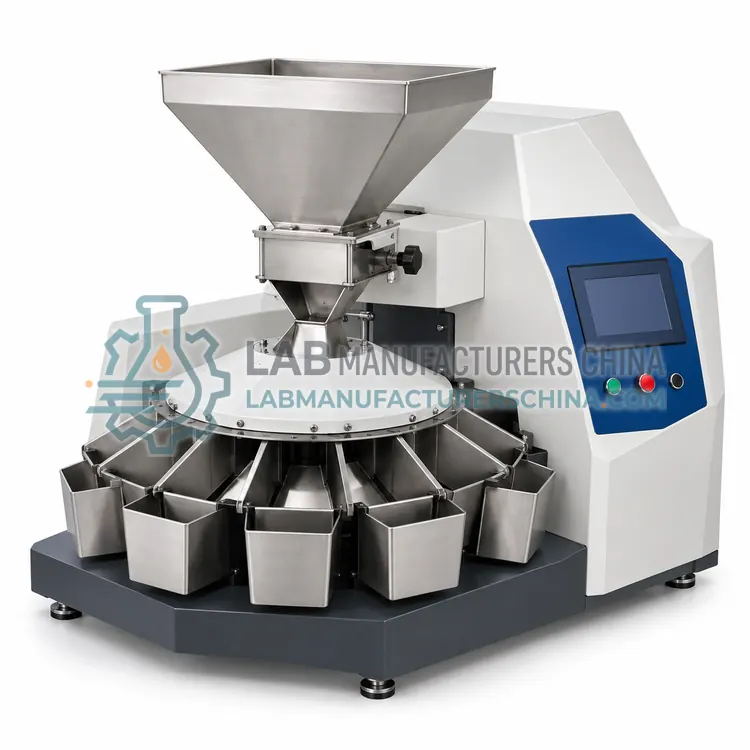
A rotary sample divider feeds coal at a controlled rate into a set of vessels on a rotating table, producing several fractions of equal mass. It gives the most accurate split for fine coal and can be automated.
What is the Rotary Sample Divider for Coal?
A rotary sample divider feeds coal at a controlled rate into a set of vessels on a rotating table, producing several fractions of equal mass. It gives the most accurate split for fine coal and can be automated.
Overview
A vibrating feeder spreads material into a narrow stream that falls into vessels arranged around a rotating carousel. Because each vessel is exposed to the stream for an identical fraction of the rotation, the fractions have equal mass and the same particle size distribution, which makes the method less sensitive to operator technique than riffle splitting. Feed rate is adjusted so the stream is thin and the vessels are not overfilled, and a timer or counter stops the run after the required number of revolutions. Divider capacities range from a few litres for laboratory pulverized coal to systems with large vessels for plant samples, and units can be integrated into automatic sample preparation lines. Cleaning between samples, dust containment and periodic check-weighing of the fractions maintain accuracy.
How does it work?
Coal is heterogeneous, so sample preparation must cut particle size and sample mass without changing composition. Size reduction proceeds in stages: a jaw or roll crusher takes lump coal down to a few millimetres, a hammer mill or crusher reduces it to about one millimetre, and a vibratory ring mill or disc pulverizer grinds a laboratory portion below 200 µm, or to 75 µm for ash and elemental work. Between stages the sample must be mixed and divided, because mass reduction must be proportional: a riffle divider splits a stream into two equal halves through alternate chutes, and a rotary divider collects a controlled stream in rotating vessels to give identical fractions. Moisture control is critical, so equipment is enclosed, pass-through times are short and contact surfaces are chosen to avoid adding iron or other contamination that would bias ash and elemental results.
What are the key features?
- Rotating table with six to twenty collection vessels
- Vibrating feeder producing a controlled thin stream
- Equal-mass fractions from a full rotation cycle
- Run termination by timer or revolution counter
- Dust-enclosed feed and discharge
- Interface for automatic sample preparation lines
What are the technical specifications?
A typical rotary sample divider for coal configuration offers number of vessels of 6–20, applicable top size of ≤ 10 mm, best below 3 mm, sample capacity of 2–100 L per run, feeding rate of Adjustable, 1–20 kg/min, rotation speed of 20–60 rpm and mass deviation between fractions of ≤ 2 %. Values are indicative of the product class; the exact figures for each configuration are confirmed on the quotation and the calibration documents supplied with the instrument.
Which applications is it used for?
The Rotary Sample Divider for Coal is used in dividing pulverized coal before analysis, automatic sample preparation lines, plant and mine laboratory sample rooms and dividing coke and mineral process samples. Across the wider Coal Sample Preparation class, laboratories also deploy it for coal mine and preparation plant sample chains, power station coal quality laboratories and commercial inspection sample preparation.
Which standards and certifications apply?
Relevant standards and methods include ASTM D2013, ASTM D2234, ISO 1988, ISO 13909-1, ISO 18283, GB/T 474, GB/T 475 and IEC 61010-1. Certification candidates for this model are CE and ISO 9001 manufacturing; each is to be confirmed for the specific configuration before shipment, and certificates are supplied only where they have been issued.
Prepare samples in a controlled room where moisture loss is limited, and work quickly through each stage, weighing after every division so that mass balance can be checked. Clean equipment between samples with brushes and, where necessary, by running a small amount of the next sample through, to avoid cross-contamination. Record the top size, mass and equipment settings for each stage so the reduction history can be audited. Keep grinding sets within wear limits, since worn plates change product size and can raise ash through iron pick-up. Guard feed openings, provide dust extraction rated for coal dust and use motors and switches suitable for a dusty environment. Reference materials and duplicate samples should be put through the same chain as routine samples to verify that no bias is introduced.
How do I select the right Rotary Sample Divider for Coal?
Choose the rotary divider for fine coal and for any application where split accuracy must be documented, especially in automated lines. Specify vessel count and volume, feed size, rate range, contact material and cleaning access, and check the fraction mass tolerance.
How does it compare with other Coal Sample Preparation variants?
Plan the whole chain before buying individual machines. Match the top size of incoming material to crusher feed openings and the required final fineness to the pulverizer, and keep reduction ratios moderate by using several stages rather than one large step. Check throughput against the number of samples per shift, and check that the product size table of the sampling standard is respected, since the minimum sample mass depends on top size. Choose contact materials with contamination in mind: manganese steel wears well but adds iron, while tungsten carbide or ceramic grinding sets cost more and keep ash and trace element results cleaner. Look for enclosed, dust-tight designs with extraction connections, quick-release bowls or plates for cleaning, and drives rated for continuous duty. For dividing, riffle dividers suit gravity flows and rotary dividers give the best precision on fine coal.
Full specifications
| Number of vessels | 6–20 |
|---|---|
| Applicable top size | ≤ 10 mm, best below 3 mm |
| Sample capacity | 2–100 L per run |
| Feeding rate | Adjustable, 1–20 kg/min |
| Rotation speed | 20–60 rpm |
| Mass deviation between fractions | ≤ 2 % |
| Contact material | Stainless steel |
| Power supply | 220 V, 50/60 Hz |
Indicative values for this product class. Final specifications are confirmed on the quotation and in the calibration documents supplied with the instrument.
Applications
- Dividing pulverized coal before analysis
- Automatic sample preparation lines
- Plant and mine laboratory sample rooms
- Dividing coke and mineral process samples
Key features
- Rotating table with six to twenty collection vessels
- Vibrating feeder producing a controlled thin stream
- Equal-mass fractions from a full rotation cycle
- Run termination by timer or revolution counter
- Dust-enclosed feed and discharge
- Interface for automatic sample preparation lines
Frequently asked questions about Rotary Sample Divider for Coal
Each vessel receives material for the same share of a complete rotation, so fractions are equal in mass and composition regardless of minor stream fluctuations. Riffle splitters depend more on how evenly the operator feeds the chute bank.
Best results come with material below about three millimetres, and most models accept up to ten millimetres. Coarser material should be reduced and divided with a riffle splitter first, because large particles will not distribute evenly.
Weigh the collected fractions periodically; they should agree within the tolerance claimed by the manufacturer and required by your method. Persistent variation points to uneven feeding, a blocked outlet or an incorrect rotation speed.
Coal varies in ash, moisture and sulfur from lump to lump, so a laboratory result is only as representative as the sample it is measured on. Crushing, mixing and proportional dividing reduce that variability before analysis.
The minimum mass depends on the top particle size and is specified in sampling standards such as ASTM D2013 and ISO 1988. As a rule the retained mass falls as particle size falls, so dividing only follows an effective size reduction.
Tungsten carbide, agate, zirconia and ceramic sets add little iron and are preferred when ash or trace elements matter. Hardened or manganese steel is more economical and durable but can raise ash slightly through wear.