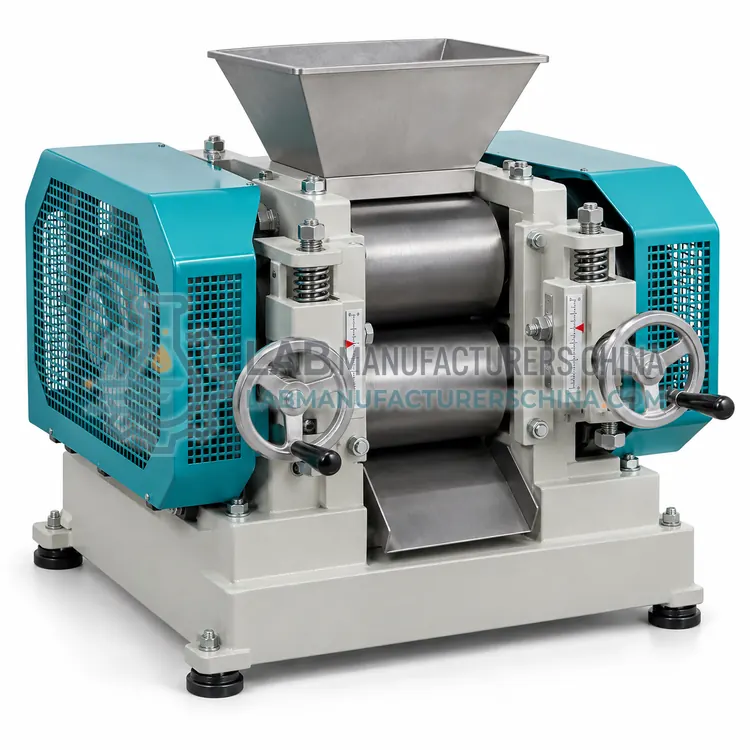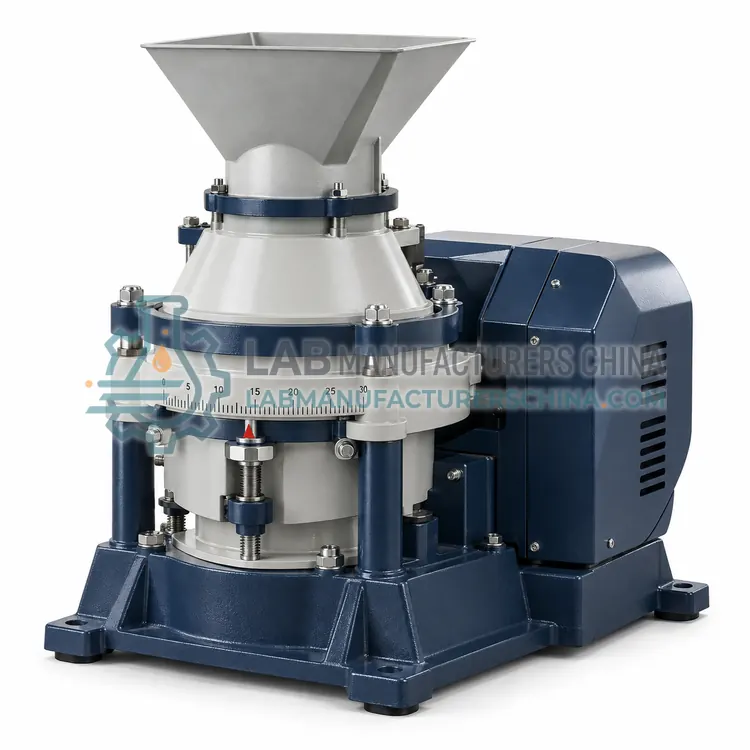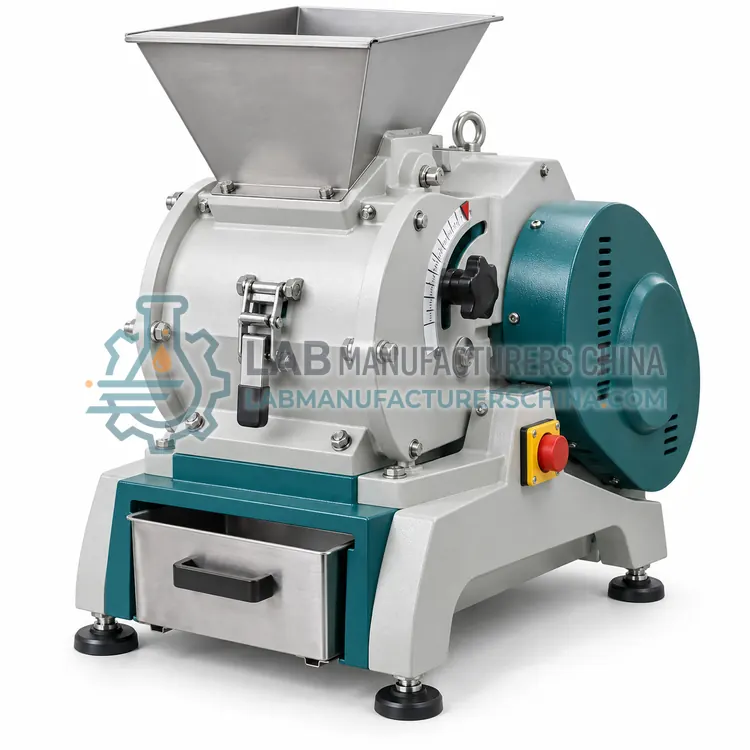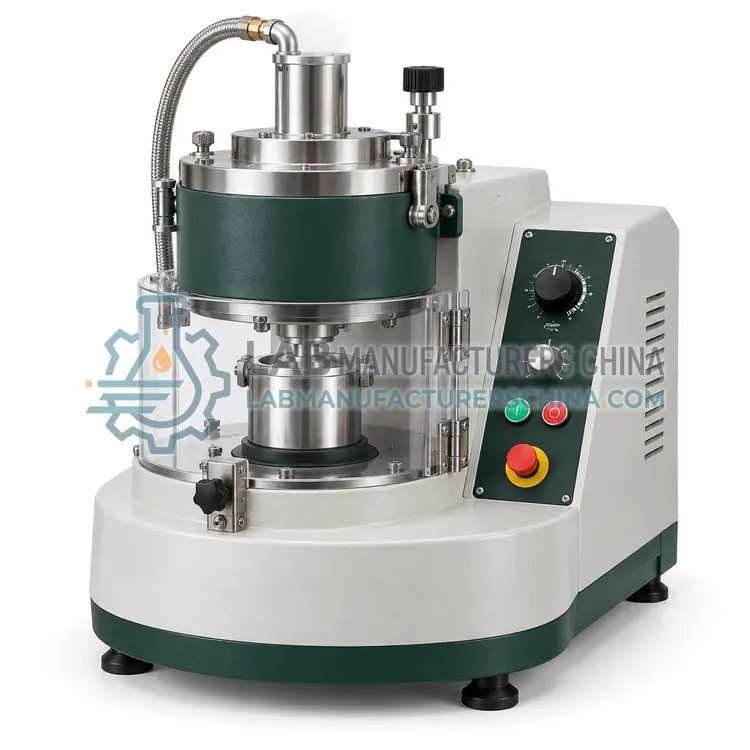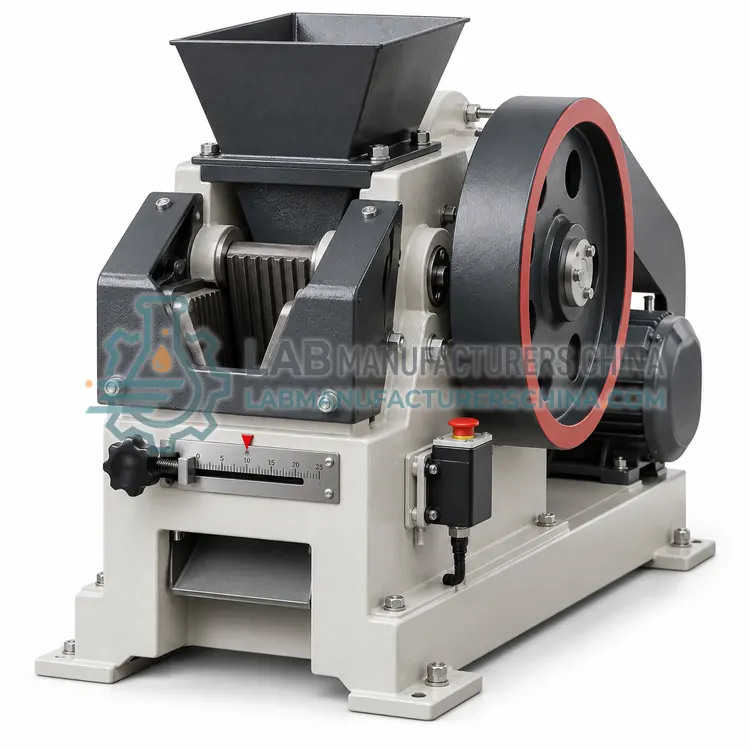
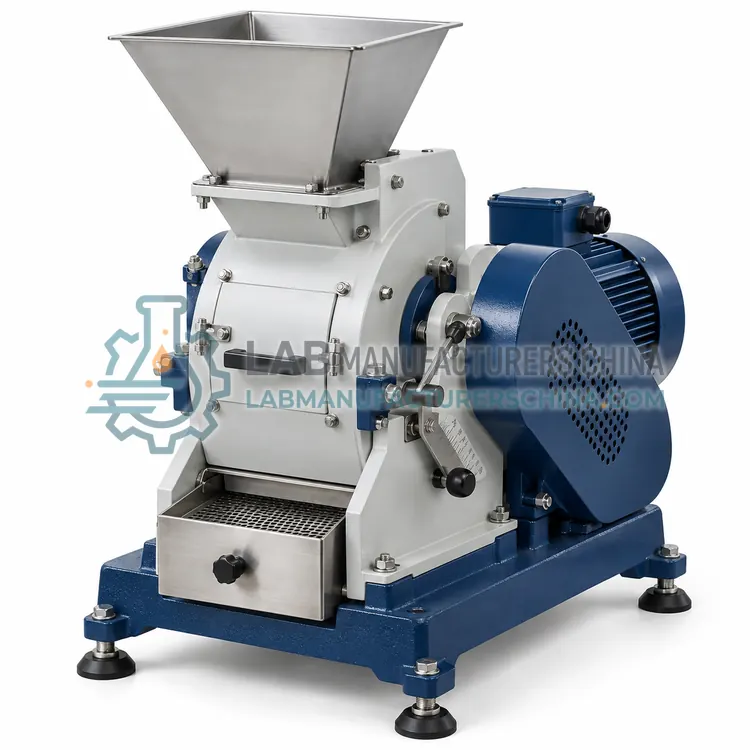
Hammer Crusher
锤式破碎机
- SKU CRU-0004
- Crushers
- CE (to be confirmed)
- ISO 9001 manufacturing (to be confirmed)
Price on request — FOB / CIF quoted per order
Prices depend on configuration, quantity and destination port.
Key specifications
| Max feed size | 50 mm |
|---|---|
| Product size | 0.5–10 mm, grate dependent |
| Throughput | Up to 400 kg/h |
| Rotor speed | 1,000–3,000 rpm |
| Hammer material | Hardened alloy steel |
| Grate type | Interchangeable |
Request a quote Download brochure · to be provided
By Lab Manufacturers China Technical TeamLast reviewed Standards: ISO 3310-1, ASTM E11, ISO 2591-1
What is the Hammer Crusher?
A hammer crusher breaks material by rapid impacts from rotating hammers. It reaches high reduction ratios on soft to medium-hard, low-abrasion feed and is used for coal, limestone and similar samples in the laboratory.
What is the Hammer Crusher?
A hammer crusher breaks material by rapid impacts from rotating hammers. It reaches high reduction ratios on soft to medium-hard, low-abrasion feed and is used for coal, limestone and similar samples in the laboratory.
Overview
A hammer crusher consists of a rotor carrying swinging hammers inside a chamber lined with breaker plates or a grate. Feed entering the chamber is struck by the hammers and thrown against the plates, breaking by impact until it is small enough to pass the grate. Because breakage is by impact rather than a single squeezing pass, reduction ratios are high and the product is fine. The grate or gap setting controls product size. The design suits soft to medium-hard, low-abrasion materials such as coal, limestone, gypsum and dried plant material, but abrasive feed causes rapid hammer wear.
How does it work?
Crushers apply mechanical forces that exceed the strength of the feed material, causing it to fracture. Jaw crushers press material between a fixed and a moving jaw, roll crushers draw it between counter-rotating cylinders, cone crushers squeeze it in a gyrating chamber, hammer crushers strike it with rotating hammers, and impact crushers break it against a rotating or fixed anvil. The reduction ratio, feed size and product size depend on the machine geometry, the gap setting and the material hardness. Crushing is normally the coarse stage that prepares feed for a mill, and over-crushing is avoided because fines can complicate later handling. Wear parts are made from hardened steel or manganese alloys to resist abrasion.
What are the key features?
- Rotating hammers for high-ratio impact breakage
- Breaker plates and grate for size control
- High reduction ratio in a single pass
- Swings hammers that retract for uncrushable objects
- Compact chamber suited to soft and medium-hard feed
What are the technical specifications?
A typical hammer crusher configuration offers max feed size of 50 mm, product size of 0.5–10 mm, grate dependent, throughput of Up to 400 kg/h, rotor speed of 1,000–3,000 rpm, hammer material of Hardened alloy steel and grate type of Interchangeable. Values are indicative of the product class; the exact figures for each configuration are confirmed on the quotation and the calibration documents supplied with the instrument.
Which applications is it used for?
The Hammer Crusher is used in coal and coke sample preparation, limestone and gypsum crushing, dried plant and biomass material and secondary crushing before milling. Across the wider Crushers class, laboratories also deploy it for mining and ore sample preparation, cement and clinker analysis and geological and soil sample reduction.
Which standards and certifications apply?
Relevant standards and methods include ISO 3310-1, ASTM E11, ISO 2591-1, IEC 61010-1 and ISO 6497. Certification candidates for this model are CE and ISO 9001 manufacturing; each is to be confirmed for the specific configuration before shipment, and certificates are supplied only where they have been issued.
Install crushers on a firm floor with the necessary electrical protection and, where required, dust extraction and noise enclosure. Do not exceed the rated feed size, since oversized pieces can jam the machine or damage the jaws. Feed material gradually and avoid running the crusher empty for long periods. Check and replace wear parts on schedule, and clean thoroughly between samples to avoid cross-contamination, using a blank or quartz flush where trace analysis demands it. Follow lock-out procedures during maintenance and guard all moving parts.
How do I select the right Hammer Crusher?
Choose a hammer crusher for soft to medium-hard, low-abrasion material when a high reduction ratio is needed in one pass. Confirm the grate selection gives the required product size and that the feed is not too abrasive. In an RFQ state feed size, product size, throughput, hammer material and the material's abrasiveness.
How does it compare with other Crushers variants?
Choose a crusher according to the feed size, hardness and abrasiveness of the material and the required product size. Jaw crushers suit hard, brittle lumps and give a fairly uniform product with adjustable gap. Roll crushers suit medium-hard, brittle material and produce less dust. Cone crushers handle high throughput of hard material. Hammer and impact crushers suit softer, less abrasive materials and give higher reduction ratios. Confirm that the feed opening accepts the largest pieces, that the reduction ratio matches the required downstream size, and that the crushing chamber and wear parts suit the abrasiveness. Consider dust control, sample representativeness and cleaning between samples.
Full specifications
| Max feed size | 50 mm |
|---|---|
| Product size | 0.5–10 mm, grate dependent |
| Throughput | Up to 400 kg/h |
| Rotor speed | 1,000–3,000 rpm |
| Hammer material | Hardened alloy steel |
| Grate type | Interchangeable |
| Motor power | 1.5–5.5 kW |
| Reduction ratio | Up to 20:1 |
| Dust connection | Provided |
| Power supply | 380 V AC, three phase |
Indicative values for this product class. Final specifications are confirmed on the quotation and in the calibration documents supplied with the instrument.
Applications
- Coal and coke sample preparation
- Limestone and gypsum crushing
- Dried plant and biomass material
- Secondary crushing before milling
Key features
- Rotating hammers for high-ratio impact breakage
- Breaker plates and grate for size control
- High reduction ratio in a single pass
- Swings hammers that retract for uncrushable objects
- Compact chamber suited to soft and medium-hard feed
Frequently asked questions about Hammer Crusher
Hammer wear depends on the abrasiveness of the feed: hard minerals such as quartz abrade the metal rapidly, while coal and limestone cause much less wear. Hard-facing or tungsten carbide hammers extend life, but for very abrasive material a jaw or roll crusher is more economical.
Product size is set mainly by the grate openings and secondarily by rotor speed and hammer clearance. Smaller grate openings give a finer product but lower throughput. Grates are interchangeable, so the size can be changed to suit the method.
Moist and sticky material can blind the grate and reduce throughput, and may build up in the chamber. Drying the sample before crushing, or choosing a different crusher such as a jaw or roll type, avoids the problem. Some designs include a heated or easy-clean chamber.
Crushing is the coarse stage that breaks large lumps into smaller pieces, typically down to a few millimetres, using compression or impact. Milling is the finer stage that reduces material to powder, often below one millimetre, using impact, friction or cutting. Crushers protect mills from oversized feed.
A jaw crusher is the usual choice for hard, brittle rock because it applies high compression force and tolerates abrasive material. A cone crusher handles higher throughput of hard material, while roll crushers suit medium-hard brittle samples where less dust is preferred.
Wear parts should be chosen to avoid introducing the elements being analyzed, and the chamber is cleaned or flushed between samples. For trace work, a quartz or other inert flush may be crushed and discarded first. Recording cleaning procedures in the method supports reproducibility.
Related models