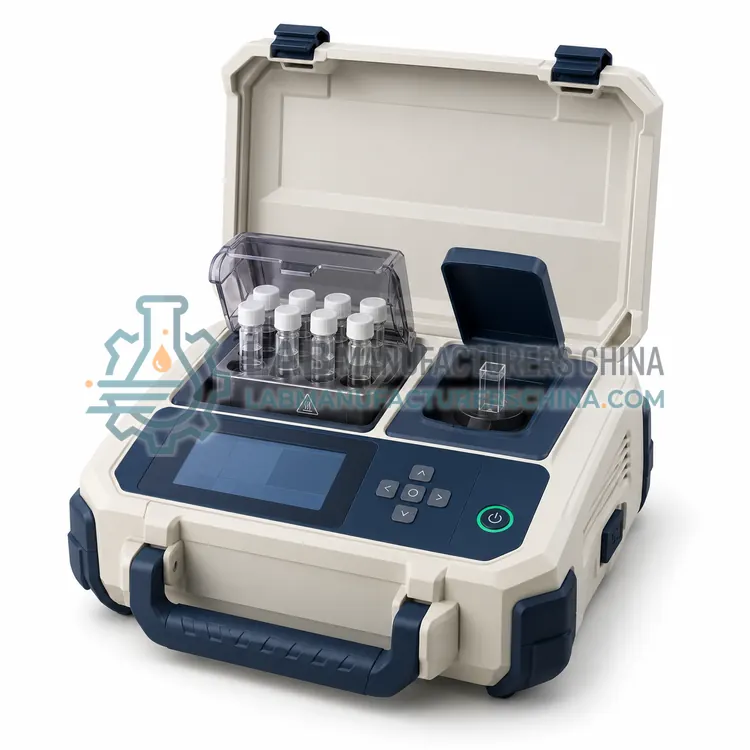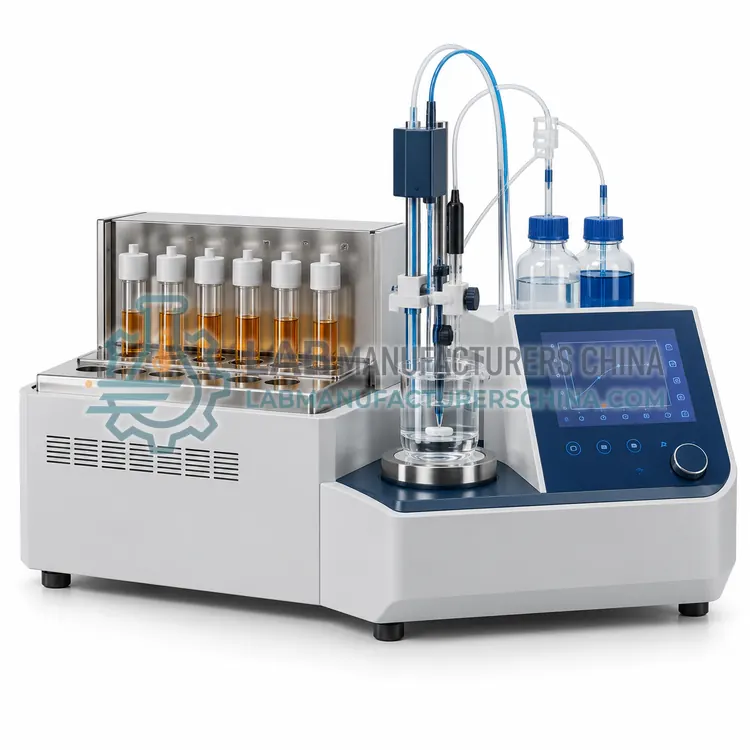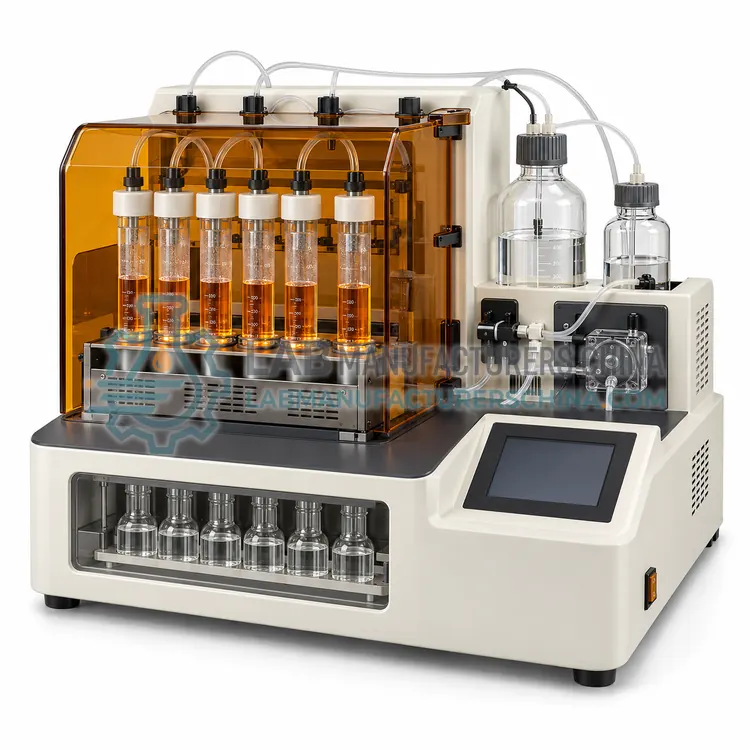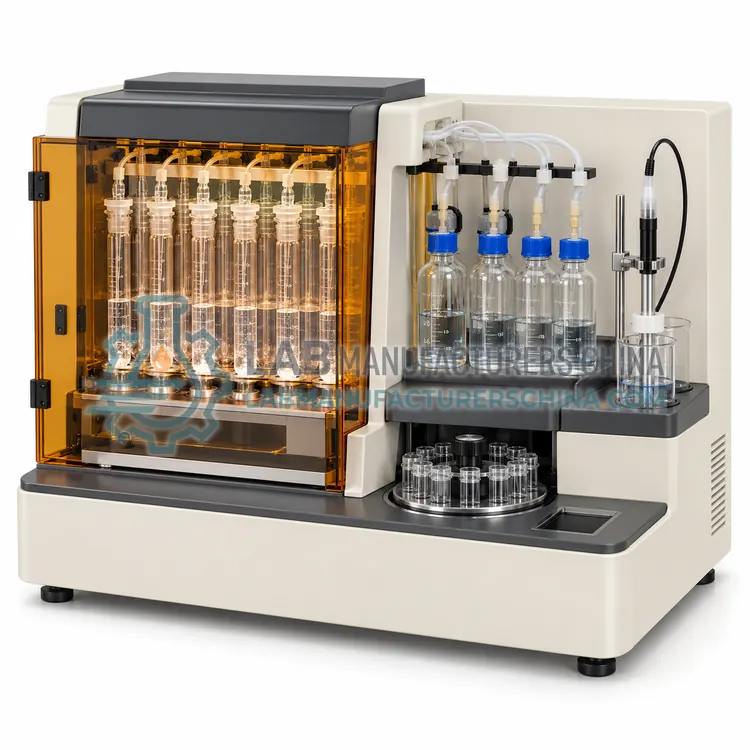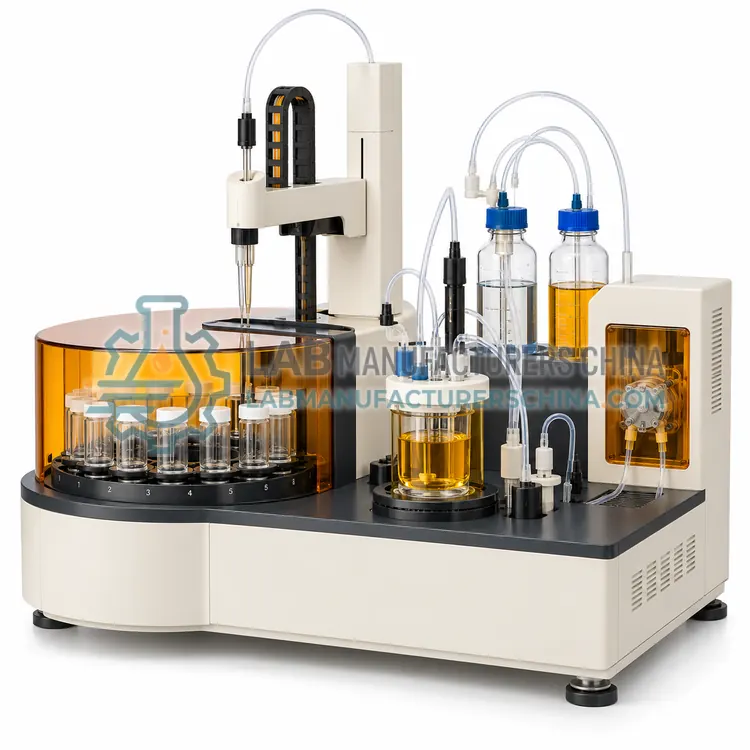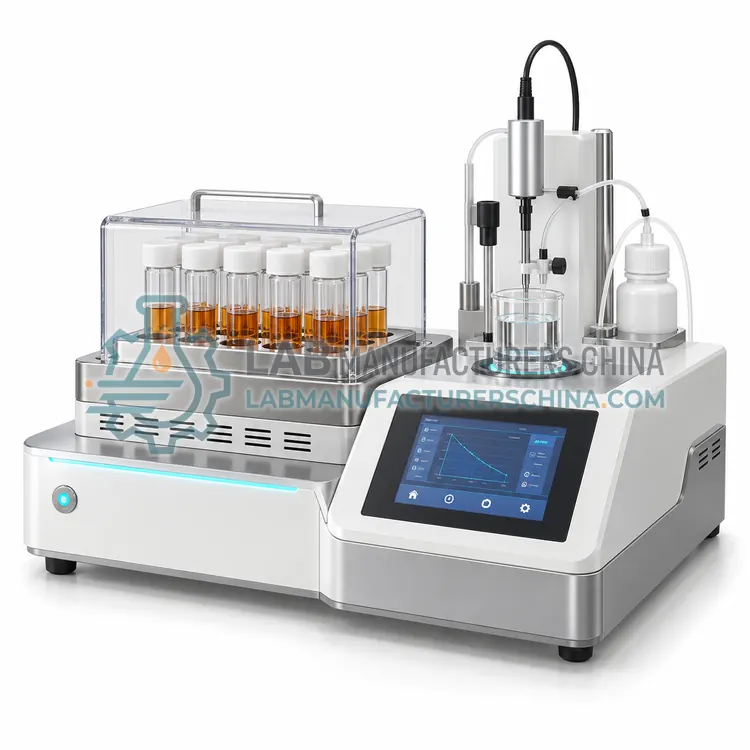
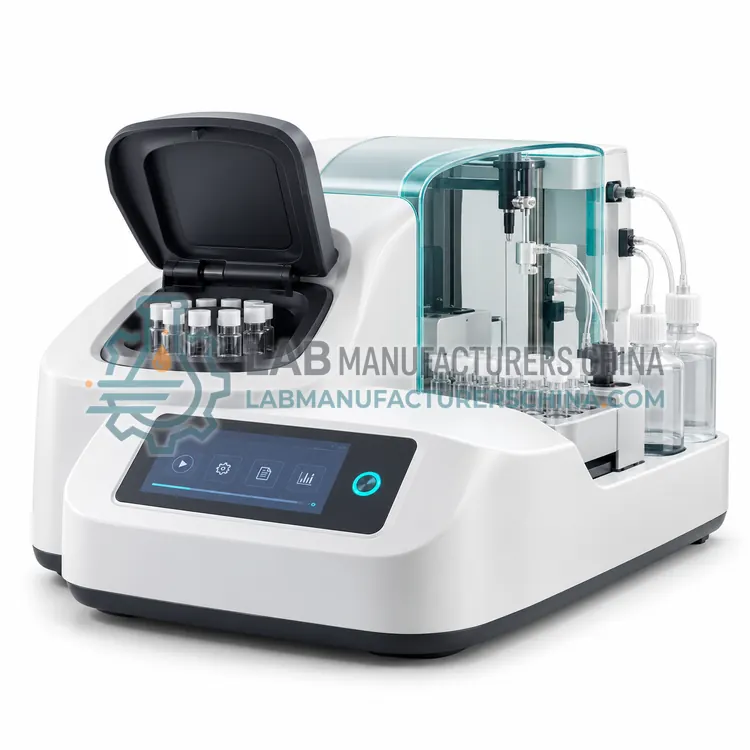
Automated COD Analyzer with Autosampler
配自动进样器的自动 COD 分析仪
- SKU COD-0004
- COD Analyzers
- CE (to be confirmed)
- ISO 9001 manufacturing (to be confirmed)
- IQ/OQ documentation (to be confirmed)
Price on request — FOB / CIF quoted per order
Prices depend on configuration, quantity and destination port.
Key specifications
| Automated steps | Dosing, digestion, cooling, reading |
|---|---|
| Autosampler capacity | 30–90 positions |
| Digestion temperature | 150 °C, ±1 °C |
| Digestion time | 120 min programmable |
| Throughput | 20–60 determinations per hour |
| Detection | Two-wavelength photometry or titration |
Request a quote Download brochure · to be provided
By Lab Manufacturers China Technical TeamLast reviewed Standards: ISO 6060, ISO 15705, EPA 410.4
What is the Automated COD Analyzer with Autosampler?
An automated COD analyzer with autosampler performs dosing, digestion, cooling and colorimetric or titrimetric detection without operator intervention. It suits busy laboratories processing many wastewater samples with strict regulatory and audit traceability requirements.
What is the Automated COD Analyzer with Autosampler?
An automated COD analyzer with autosampler performs dosing, digestion, cooling and colorimetric or titrimetric detection without operator intervention. It suits busy laboratories processing many wastewater samples with strict regulatory and audit traceability requirements.
Overview
The system draws sample from a vial or cup, adds reagent tubes or doses dichromate, catalyst and masking agent, transfers the mixture to a heated block and holds it at 150 °C for the required time. After controlled cooling, absorbance is read or the residual dichromate is titrated, and results are calculated from stored calibrations and reported with batch, vial and quality-control information. Automatic barcode reading of reagent tubes and gravimetric or volumetric dosing improve reproducibility, and control samples can be scheduled at defined positions so that every batch includes them. Throughputs range from about 20 to 60 determinations per hour, and the software records audit trails for regulatory work.
How does it work?
Chemical oxygen demand is determined by oxidising the sample with potassium dichromate in strong sulfuric acid at about 150 °C for two hours, usually in sealed tubes. Silver sulfate catalyses the oxidation of most organic compounds, and mercury sulfate masks chloride, which would otherwise be oxidised and inflate the result. The dichromate consumed is proportional to the oxidisable material and is measured either photometrically, from the colour change of dichromate to chromium(III) at 600 nm or by the decrease in dichromate absorbance at 440 nm, or by titration of the remaining dichromate with ferrous ammonium sulfate. Results are reported as milligrams of oxygen per litre. COD is faster than BOD and includes material that is not biodegradable, which is why it is used for discharge compliance and process control.
What are the key features?
- Automated dosing, digestion, cooling and detection
- Autosampler for 30–90 sample positions
- Barcode reading of reagent tubes and standards
- Scheduled quality-control samples in every batch
- Automatic calculation with audit-trail records
- Throughput of 20–60 determinations per hour
What are the technical specifications?
A typical automated cod analyzer with autosampler configuration offers automated steps of Dosing, digestion, cooling, reading, autosampler capacity of 30–90 positions, digestion temperature of 150 °C, ±1 °C, digestion time of 120 min programmable, throughput of 20–60 determinations per hour and detection of Two-wavelength photometry or titration. Values are indicative of the product class; the exact figures for each configuration are confirmed on the quotation and the calibration documents supplied with the instrument.
Which applications is it used for?
The Automated COD Analyzer with Autosampler is used in high-volume wastewater laboratory testing, municipal plant monitoring programmes, industrial effluent compliance laboratories and contract and central laboratory operations. Across the wider COD Analyzers class, laboratories also deploy it for wastewater treatment influent and effluent monitoring, industrial discharge compliance testing and municipal plant process control.
Which standards and certifications apply?
Relevant standards and methods include ISO 6060, ISO 15705, EPA 410.4, Standard Methods 5220 D and ISO/IEC 17025. Certification candidates for this model are CE, ISO 9001 manufacturing and IQ/OQ documentation; each is to be confirmed for the specific configuration before shipment, and certificates are supplied only where they have been issued.
COD chemistry is hazardous: dichromate is a carcinogen and strong oxidant, sulfuric acid is corrosive, and mercury salts are toxic, so digestion must be performed in sealed tubes or closed reflux systems with fume control and separate waste collection for heavy-metal-bearing residues. Chloride interferes seriously and is masked with mercury sulfate, so the expected chloride concentration must be known and the masking ratio respected; high-chloride samples may need dilution or a low-range method. Quality control requires blanks, standards, spiked samples and duplicates in each batch, and the dichromate solution should be standardised. Sealed tubes should be mixed thoroughly before reading, and the reading should be taken after the tubes cool to avoid temperature bias.
How do I select the right Automated COD Analyzer with Autosampler?
Select an automated system when sample numbers are high and reproducible dosing matters more than instrument cost. Confirm throughput against your workload, that quality-control samples can be scheduled automatically, and that the data system provides the audit trail your accreditation requires.
How does it compare with other COD Analyzers variants?
Choose the measurement format from where the sample is taken and how the result will be used. Sealed-tube colorimetric systems with a digestion reactor are the standard for laboratories, offering ranges from 0 to 15,000 mg/L with small sample and reagent volumes. Portable colorimeters bring the same chemistry to the plant or river bank for rapid screening. Titrimetric analysis is used for high-concentration or coloured and turbid samples, where photometry is unreliable, and remains the classic reference for difficult matrices. Automated analysers with autosamplers reduce reagent handling and improve traceability where sample numbers are high. Online UV analysers provide continuous trend data for treatment control but must be correlated with the dichromate method, since UV absorbance responds to aromatic compounds rather than total oxidisable matter.
Full specifications
| Automated steps | Dosing, digestion, cooling, reading |
|---|---|
| Autosampler capacity | 30–90 positions |
| Digestion temperature | 150 °C, ±1 °C |
| Digestion time | 120 min programmable |
| Throughput | 20–60 determinations per hour |
| Detection | Two-wavelength photometry or titration |
| Ranges | 0–150 to 0–15,000 mg/L |
| Repeatability | RSD ≤ 3 percent |
| Quality control | Blanks, standards and spikes scheduled per batch |
| Data management | Audit trail, LIMS export, barcode tracking |
Indicative values for this product class. Final specifications are confirmed on the quotation and in the calibration documents supplied with the instrument.
Applications
- High-volume wastewater laboratory testing
- Municipal plant monitoring programmes
- Industrial effluent compliance laboratories
- Contract and central laboratory operations
Key features
- Automated dosing, digestion, cooling and detection
- Autosampler for 30–90 sample positions
- Barcode reading of reagent tubes and standards
- Scheduled quality-control samples in every batch
- Automatic calculation with audit-trail records
- Throughput of 20–60 determinations per hour
Frequently asked questions about Automated COD Analyzer with Autosampler
Automatic dosing removes pipetting variation, and temperature and time are controlled identically for every sample. Barcode verification of reagent tubes prevents using an expired or wrong-range tube, which is a common source of error.
Some platforms support both, switching chemistry and detection according to the method selected, while others are dedicated to one. Laboratories that must confirm colorimetric results by titration should choose a system with that flexibility.
Regular replacement of pump tubing and needles, cleaning of the optical or titration cell, verification of the digestion block temperature and scheduled checks with certified standards are typical. Waste collection for dichromate and mercury residues is also required.
COD measures the oxygen equivalent of all material in a water sample that can be oxidised by dichromate under acid conditions. It includes biodegradable and non-biodegradable organic matter plus some inorganic species, reported in milligrams of oxygen per litre.
COD is a chemical oxidation that takes about two hours in a heated reactor, while BOD requires five days of microbial incubation. COD therefore supports rapid process decisions, and the COD to BOD ratio indicates how biodegradable a wastewater is.
Chloride is oxidised by dichromate and inflates the result, so mercury sulfate is added in a fixed ratio to chloride to form a complex that resists oxidation. Samples with very high chloride need dilution or a low-range method.
Related models