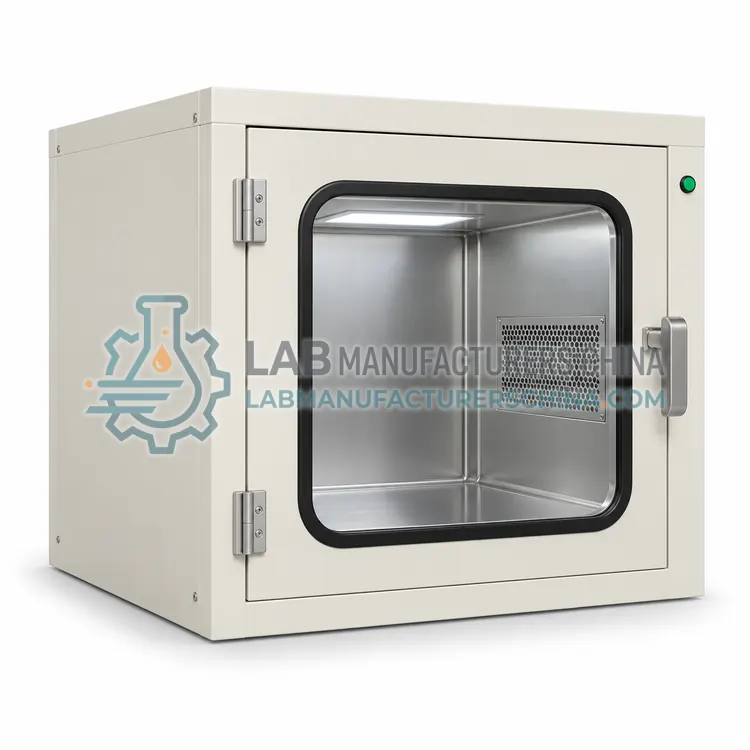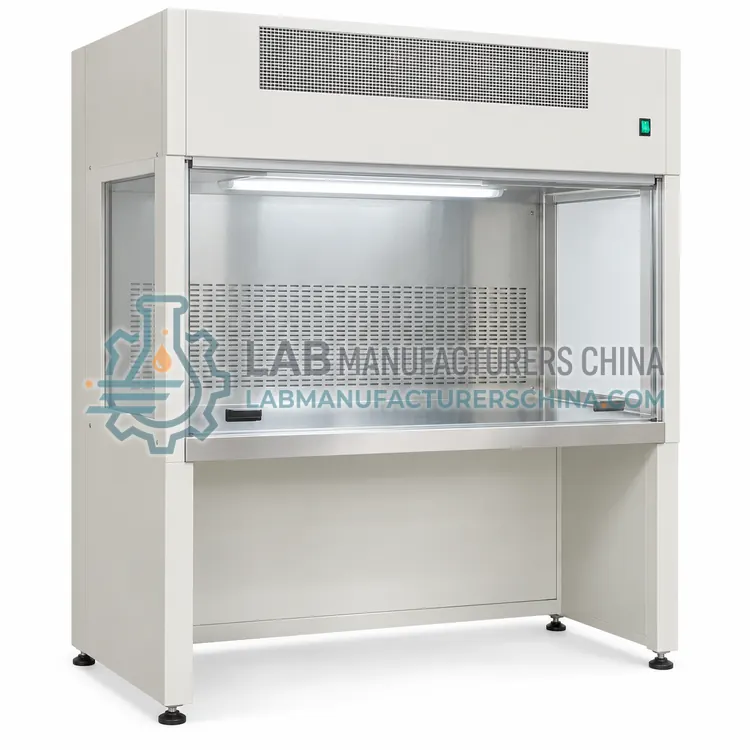
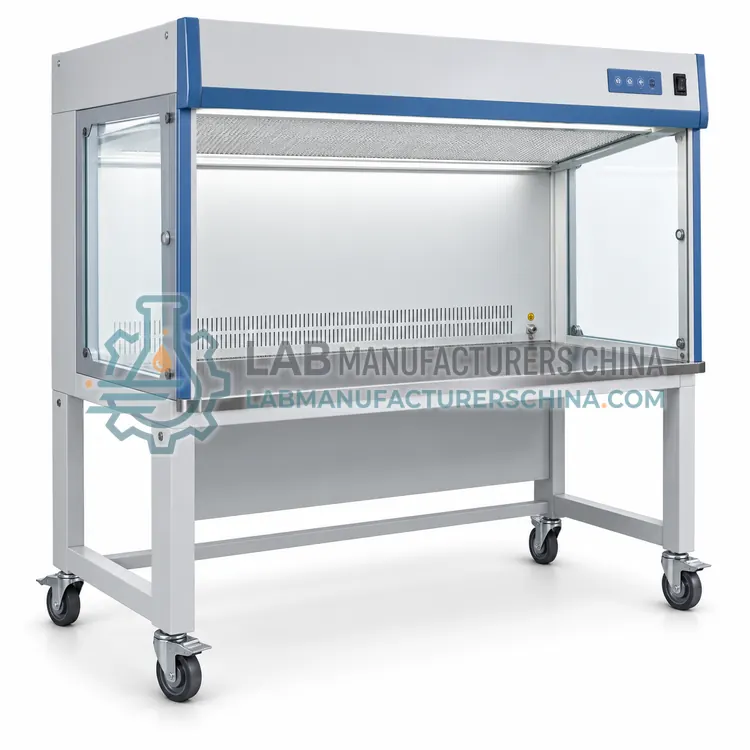
Mobile Clean Bench for Cleanroom Use
洁净室用移动式洁净工作台
- SKU CLB-0005
- Clean Benches
- CE (to be confirmed)
- ISO 9001 manufacturing (to be confirmed)
Price on request — FOB / CIF quoted per order
Prices depend on configuration, quantity and destination port.
Key specifications
| Mobility | 4 locking casters |
|---|---|
| Cleanliness class | ISO 5 at rest |
| Air velocity | 0.3–0.45 m/s |
| Filter grade | H14 HEPA |
| Width | 800–1200 mm |
| Weight | 80–150 kg |
Request a quote Download brochure · to be provided
By Lab Manufacturers China Technical TeamLast reviewed Standards: ISO 14644-1 (cleanroom classification), ISO 14644-3 (test methods), ISO 14644-4 (design and construction)
What is the Mobile Clean Bench for Cleanroom Use?
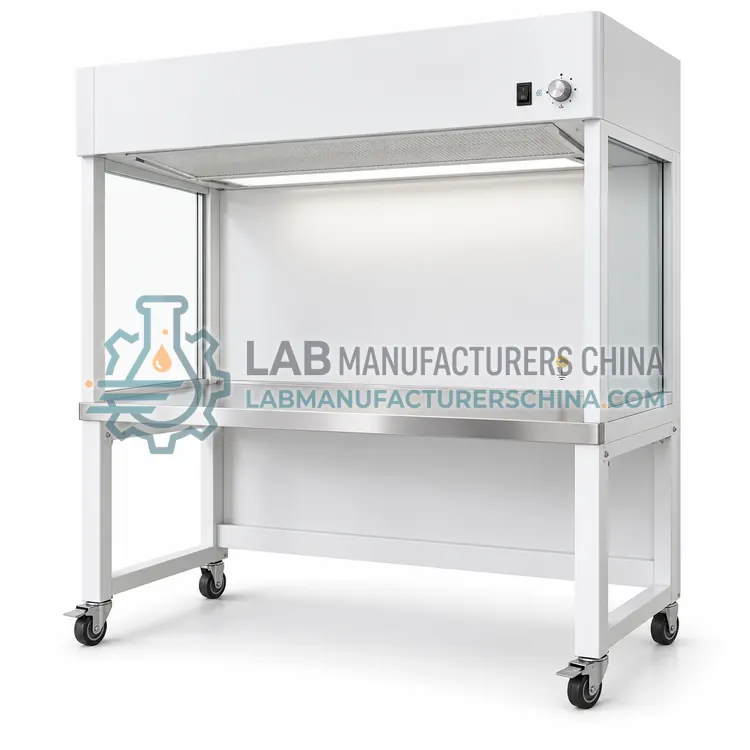
A mobile clean bench is a clean bench mounted on locking casters so it can be moved between stations within a cleanroom. It provides flexible ISO 5 local protection without fixed installation.
What is the Mobile Clean Bench for Cleanroom Use?
A mobile clean bench is a clean bench mounted on locking casters so it can be moved between stations within a cleanroom. It provides flexible ISO 5 local protection without fixed installation.
Overview
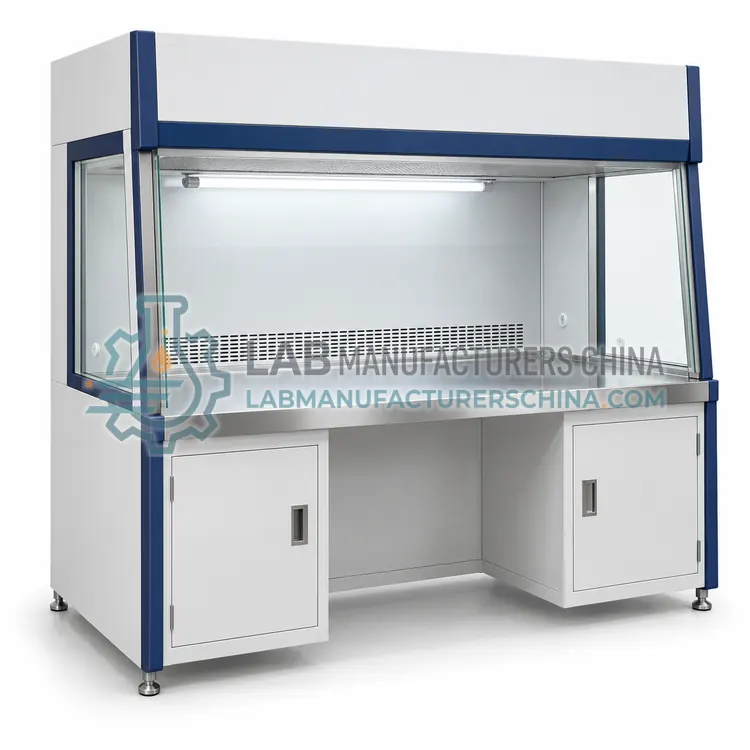
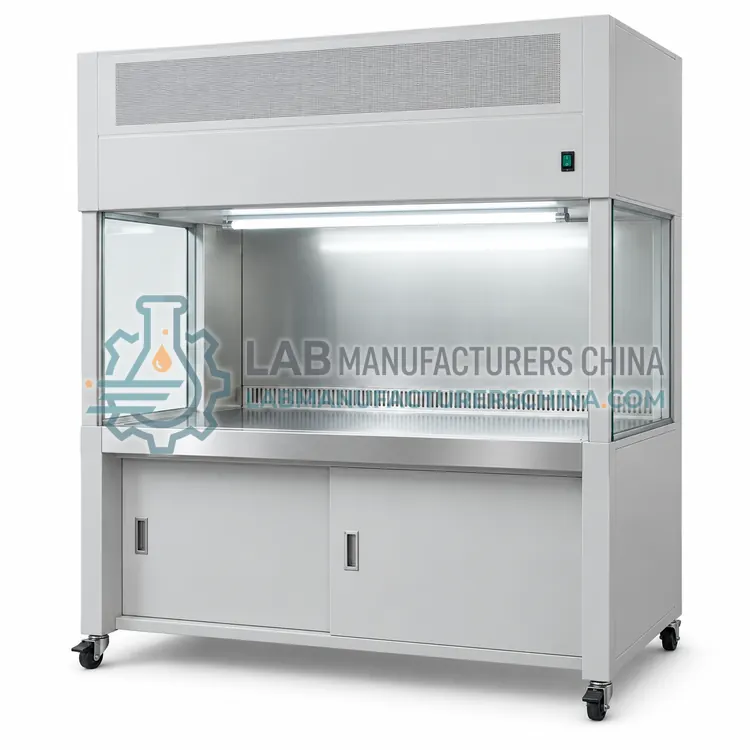
The bench is built on a stainless steel frame with four locking casters and a compact footprint, for example 800–1200 mm wide. It includes a fan filter unit with H14 HEPA, airflow at 0.3–0.45 m/s, LED lighting and a solid or perforated work surface. Power comes from a standard 220 V supply with a retractable cord, and some models have a battery option for short moves. The body is light stainless or coated steel so the unit weighs 80–150 kg. Flexible use supports temporary process zones during maintenance, small batch work and validation studies. Airflow should be checked after each move, since drafts and floor position influence performance.
How does it work?
A cleanroom clean bench draws air from the room through a prefilter, pressurizes it in a plenum and forces it through a HEPA or ULPA filter so that unidirectional (laminar) air flows over the work surface at 0.3–0.5 m/s. In a horizontal design the air passes from the rear toward the operator, while in a vertical design it descends from the ceiling of the work zone. The moving air sweeps particles generated by operators and products away from the work area, maintaining ISO Class 5 (Class 100) air at the working height. Because the air exits into the room, these benches protect the product, not the operator. Stainless steel or powder-coated steel work surfaces, fluorescent LED lighting, and an airflow controller complete the unit. For cleanrooms, benches often use low-particle materials and sealed cable penetrations.
What are the key features?
- Locking casters for movement between stations
- Fan filter unit with H14 HEPA
- 0.3–0.45 m/s laminar flow at ISO 5
- Compact footprint of 800–1200 mm width
- Retractable power cord
- Light stainless steel frame of 80–150 kg
What are the technical specifications?
A typical mobile clean bench for cleanroom use configuration offers mobility of 4 locking casters, cleanliness class of ISO 5 at rest, air velocity of 0.3–0.45 m/s, filter grade of H14 HEPA, width of 800–1200 mm and weight of 80–150 kg. Values are indicative of the product class; the exact figures for each configuration are confirmed on the quotation and the calibration documents supplied with the instrument.
Which applications is it used for?
The Mobile Clean Bench for Cleanroom Use is used in temporary process zones, small batch filling, equipment maintenance and validation studies. Across the wider Clean Benches class, laboratories also deploy it for electronics assembly, optical component inspection and medical-device assembly.
Which standards and certifications apply?
Relevant standards and methods include ISO 14644-1 (cleanroom classification), ISO 14644-3 (test methods), ISO 14644-4 (design and construction), IEST-RP-CC002 (unidirectional flow devices), JG/T 292 (clean bench), GB/T 25915.1 and EN 1822 (HEPA and ULPA filters). Certification candidates for this model are CE and ISO 9001 manufacturing; each is to be confirmed for the specific configuration before shipment, and certificates are supplied only where they have been issued.
Place the bench away from doors and supply diffusers, since room drafts above 0.1 m/s can disturb the laminar flow. Commission with a filter leak test, airflow velocity survey and particle count to ISO 14644-3. Replace prefilters every 3–6 months and HEPA filters when face velocity cannot be restored at maximum fan speed, typically every 3–5 years. Wipe surfaces with isopropanol or a compatible disinfectant, working from clean to dirty. Because benches recirculate room air, they must not be used with hazardous chemicals, pathogens or cytotoxics. Record airflow and particle checks in the cleanroom log for regulatory audits.
How do I select the right Mobile Clean Bench for Cleanroom Use?
Choose a mobile bench for flexible or temporary ISO 5 zones inside an existing cleanroom. Fixed benches have more stable airflow. RFQ: width, weight limit, caster type, power and whether a battery is needed. Confirm the mains supply as well.
How does it compare with other Clean Benches variants?
Choose by the direction of airflow, the size of the work area and the product being handled. Vertical flow suits assembly of components where operators work over the product, while horizontal flow suits inspection of larger items. Check the work-zone width, commonly 900–1800 mm, the filter grade, H14 HEPA or ULPA U15 for critical semiconductor work, and the air velocity control. Consider noise, which should remain under 65 dB(A), vibration, and ESD-safe surfaces for electronics. Stainless steel tops suit pharmaceutical use, while ESD-rated tops suit electronics. Decide whether a mobile stand, a wall-hung option or built-in lighting is required. Benches for chemicals or biologicals require fume or biosafety protection instead, not a clean bench.
Full specifications
| Mobility | 4 locking casters |
|---|---|
| Cleanliness class | ISO 5 at rest |
| Air velocity | 0.3–0.45 m/s |
| Filter grade | H14 HEPA |
| Width | 800–1200 mm |
| Weight | 80–150 kg |
| Noise level | ≤ 60 dB(A) |
| Illuminance | ≥ 500 lux |
| Power supply | 220 V, 50 Hz, 200–400 W |
| Work surface | 304 stainless steel |
Indicative values for this product class. Final specifications are confirmed on the quotation and in the calibration documents supplied with the instrument.
Applications
- Temporary process zones
- Small batch filling
- Equipment maintenance
- Validation studies
Key features
- Locking casters for movement between stations
- Fan filter unit with H14 HEPA
- 0.3–0.45 m/s laminar flow at ISO 5
- Compact footprint of 800–1200 mm width
- Retractable power cord
- Light stainless steel frame of 80–150 kg
Frequently asked questions about Mobile Clean Bench for Cleanroom Use
Yes. After each move, check air velocity, leakage and particle count, since drafts and floor position can change performance. Revalidate after a major relocation.
Some models include a small battery for moving between outlets, but continuous operation needs mains power to keep the laminar flow. Check the supplier's runtime.
Generally no. Critical aseptic filling should use validated fixed equipment with controlled airflow visualisation. Mobile benches suit assembly, preparation and non-critical steps.
A cleanroom clean bench is a HEPA-filtered workstation that directs laminar air over the work surface at 0.3–0.5 m/s to give ISO 5 conditions. It protects the product but not the operator, so it is not suitable for hazardous materials.
A cleanroom controls the air of an entire room, while a clean bench provides a local ISO 5 zone. Benches let a facility achieve ISO 5 for a single process inside an ISO 7 or 8 room at lower cost.
Not for hazardous biologicals. Clean benches blow air toward the operator and offer no containment. For infectious or cytotoxic work, use a Class II biosafety cabinet or an isolator instead.
Related models