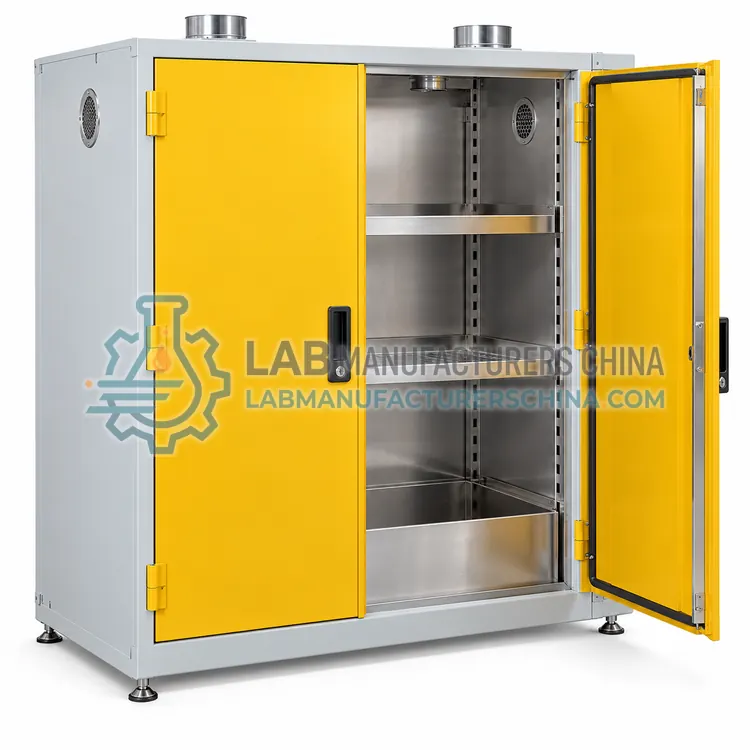
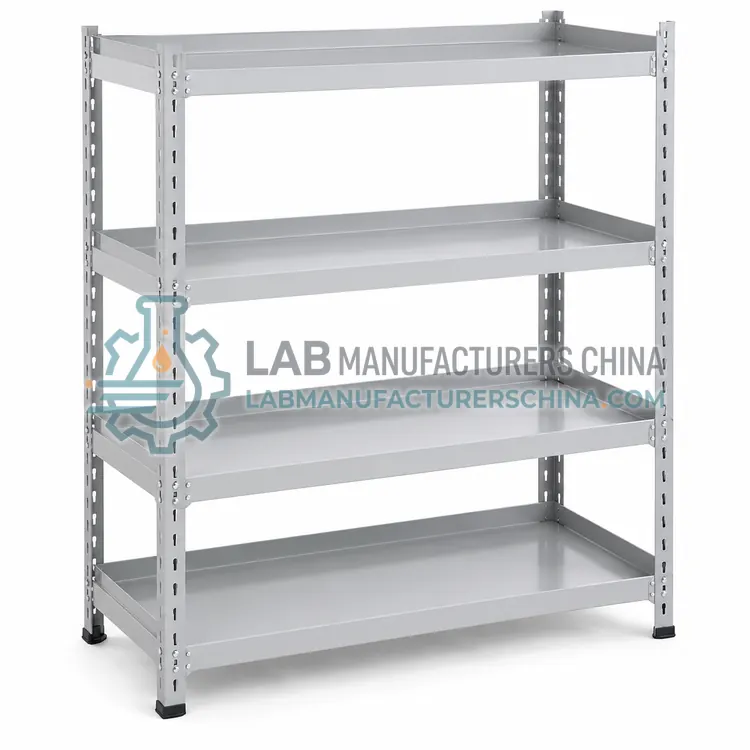
Chemical Storage Shelving Unit
化学品储存货架
- SKU CHS-0001
- Chemical Storage
- CE (to be confirmed)
- ISO 9001 manufacturing (to be confirmed)
Price on request — FOB / CIF quoted per order
Prices depend on configuration, quantity and destination port.
Key specifications
| Type | Chemical storage shelving |
|---|---|
| Material | Powder-coated steel or PP |
| Shelf load | 100–300 kg |
| Spill edge | 20–50 mm or tray |
| Width | 900–1800 mm |
| Depth | 450–600 mm |
Request a quote Download brochure · to be provided
By Lab Manufacturers China Technical TeamLast reviewed Standards: NFPA 30 (flammable and combustible liquids code), NFPA 55 (compressed gases and cryogenic fluids), EN 14470-1 (fire safety storage cabinets)
What is the Chemical Storage Shelving Unit?
A chemical storage shelving unit is corrosion-resistant shelving with spill-retaining edges for general reagents. It organises bottles by hazard class and keeps broken containers from running onto the floor, so spills stay contained.
What is the Chemical Storage Shelving Unit?
A chemical storage shelving unit is corrosion-resistant shelving with spill-retaining edges for general reagents. It organises bottles by hazard class and keeps broken containers from running onto the floor, so spills stay contained.
Overview
The unit is usually made from powder-coated steel, stainless steel or polypropylene, with height-adjustable shelves rated at 100–300 kg each. Spill-retaining edges of 20–50 mm or removable trays sit on each shelf so a leaking bottle is held, and open or slatted construction reduces vapour accumulation. Widths of 900–1800 mm and depths of 450–600 mm suit standard laboratory walls, and shelf positions can be adjusted for tall containers. Some versions add partitions or labelled sections for hazard classes, and a sloping top can prevent items being stored on the highest surface. The shelving is fixed to the wall or floor for stability, and incompatible classes are placed on separate units or separated by distance and barriers.
How does it work?
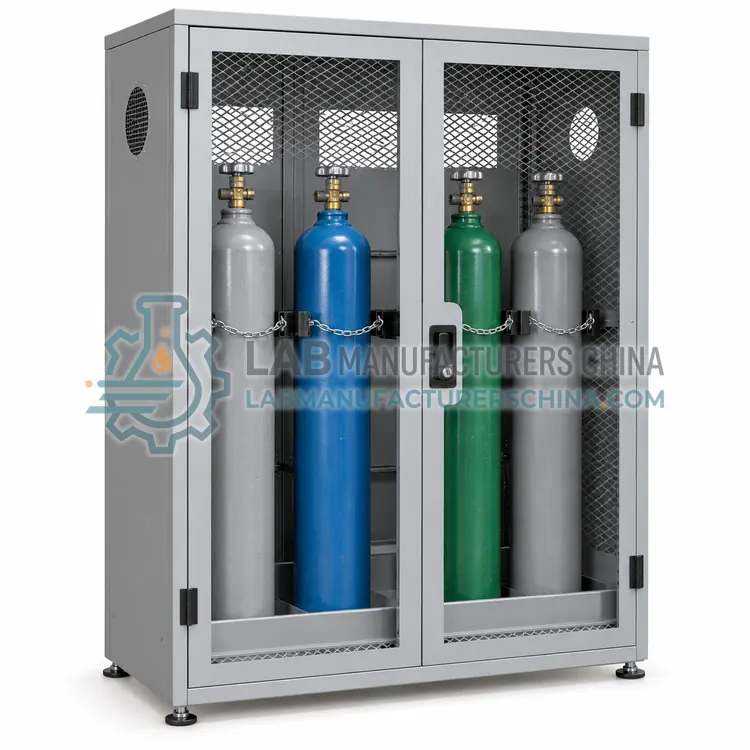
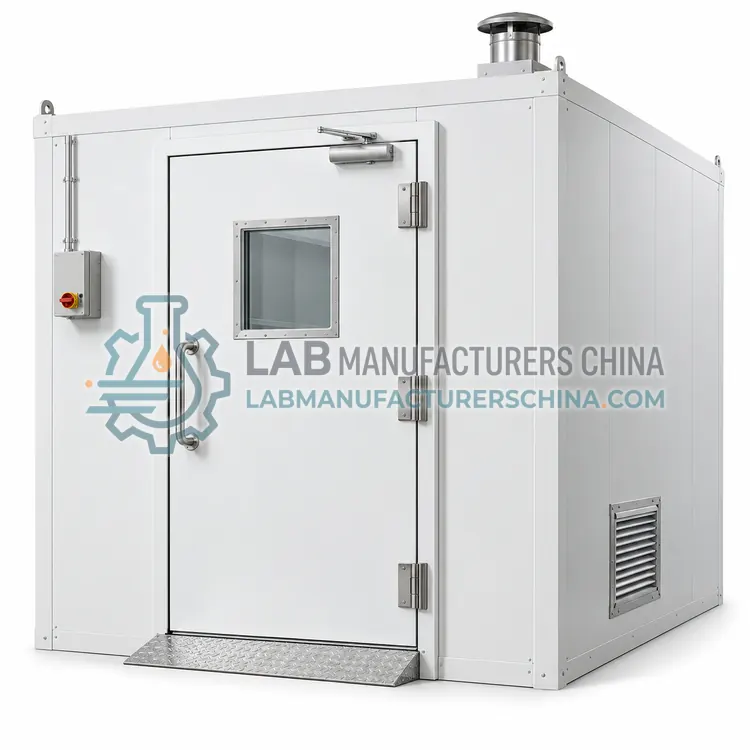
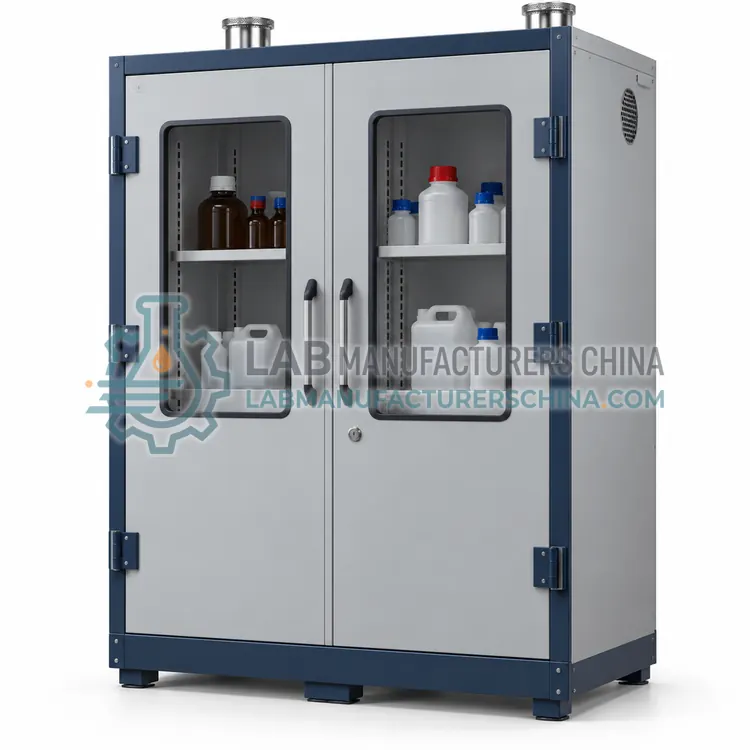
Chemical storage equipment works by segregating incompatible materials, containing spills and controlling vapour and ignition risk. Hazard classes are separated by distance, by cabinets with different linings, or by physical barriers, so acids, bases, oxidisers, flammables and toxics cannot mix if a container leaks or breaks. Shelving is designed for the load and corrosion resistance, with spill-retaining edges or trays so a broken bottle does not run onto the floor. Ventilated cabinets and stores move air from low level to high level, keeping vapour concentrations under exposure limits for volatile reagents. Gas cylinder stores confine and restrain cylinders so heat, leaks or falls do not create missiles, and walk-in rooms provide bulk capacity with fire separation. Labelling, inventory records and secondary containment complete the system.
What are the key features?
- Powder-coated steel, stainless or polypropylene
- Shelves rated 100–300 kg each
- Spill edges of 20–50 mm or trays
- Adjustable shelf heights
- Labelled segregation sections
- Wall or floor fixing for stability
What are the technical specifications?
A typical chemical storage shelving unit configuration offers type of Chemical storage shelving, material of Powder-coated steel or PP, shelf load of 100–300 kg, spill edge of 20–50 mm or tray, width of 900–1800 mm and depth of 450–600 mm. Values are indicative of the product class; the exact figures for each configuration are confirmed on the quotation and the calibration documents supplied with the instrument.
Which applications is it used for?
The Chemical Storage Shelving Unit is used in general reagent storage, segregated hazard shelving, waste bottle accumulation and teaching laboratory stores. Across the wider Chemical Storage class, laboratories also deploy it for reagent storage in chemistry laboratories, solvent and flammable storage and compressed gas storage.
Which standards and certifications apply?
Relevant standards and methods include NFPA 30 (flammable and combustible liquids code), NFPA 55 (compressed gases and cryogenic fluids), EN 14470-1 (fire safety storage cabinets), OSHA 29 CFR 1910.106 (flammable liquids), GB 15603 (chemical storage rules) and ISO 15190 (medical laboratories, safety requirements). Certification candidates for this model are CE and ISO 9001 manufacturing; each is to be confirmed for the specific configuration before shipment, and certificates are supplied only where they have been issued.
Set and enforce maximum quantities for each hazard class, since a store that is too full loses the benefit of segregation and increases fire load. Keep the inventory current and review it at least annually, removing expired or unneeded reagents. Inspect shelving, trays and cabinet linings for corrosion and damage, and check ventilation and airflow where fitted. Restrain gas cylinders at all times, and keep valve protection caps on when not in use. Store oxidisers away from organics and never on the same shelf, and keep acids below or away from cyanides and sulphides. Train staff to close containers, label secondary vessels and return items to the correct store, and record all checks.
How do I select the right Chemical Storage Shelving Unit?
Choose shelving by load, corrosion resistance and spill retention, and plan one unit or section per hazard class. Confirm fixings and shelf heights. RFQ: chemicals and classes, loads, bottle sizes, width and whether ventilation is needed.
How does it compare with other Chemical Storage variants?
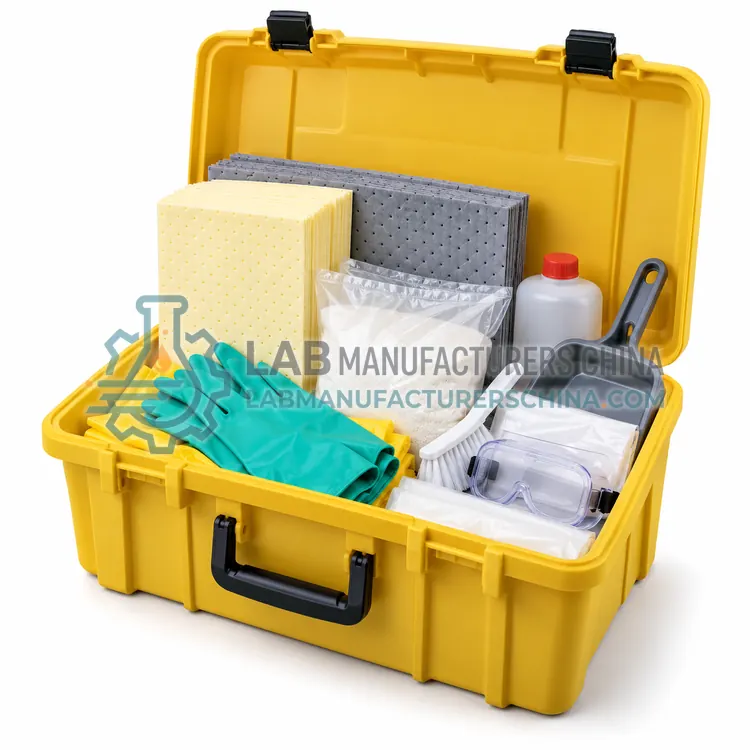
Map the chemicals against hazard classes before choosing equipment. Use corrosion-resistant shelving with spill edges for general reagents, and separate shelves or cabinets for acids, bases, oxidisers and flammable solvents. Choose ventilated cabinets where vapour is aggressive or exposure limits are low, and connect the duct correctly so vapour is removed rather than drawn into the laboratory. Use a dedicated gas cylinder store for compressed gases, sized and restrained to the codes, and keep oxidising and flammable gases apart. Provide a walk-in store for bulk quantities where fire separation and ventilation are required. Add secondary containment trays and keep an inventory with maximum quantities, dates and owners. Confirm that the layout follows local codes for fire load, exits and ventilation, and that signage and segregation are clear.
Full specifications
| Type | Chemical storage shelving |
|---|---|
| Material | Powder-coated steel or PP |
| Shelf load | 100–300 kg |
| Spill edge | 20–50 mm or tray |
| Width | 900–1800 mm |
| Depth | 450–600 mm |
| Shelves | 4–6 adjustable |
| Fixings | Wall or floor anchors |
| Segregation | Partitions or separate units |
| Finish | Acid-resistant coating |
Indicative values for this product class. Final specifications are confirmed on the quotation and in the calibration documents supplied with the instrument.
Applications
- General reagent storage
- Segregated hazard shelving
- Waste bottle accumulation
- Teaching laboratory stores
Key features
- Powder-coated steel, stainless or polypropylene
- Shelves rated 100–300 kg each
- Spill edges of 20–50 mm or trays
- Adjustable shelf heights
- Labelled segregation sections
- Wall or floor fixing for stability
Frequently asked questions about Chemical Storage Shelving Unit
Add the weight of the largest container group you expect to place on a shelf, then apply a safety margin. Solvent carboys and acid bottles are heavy, so shelves rated 100–300 kg are common.
A broken or leaking bottle releases liquid that would otherwise run down the shelves and onto the floor, spreading exposure and damage. Edges or trays hold it until it can be cleaned.
Only compatible ones. Keep acids away from bases and cyanides, oxidisers away from solvents, and water-reactives away from aqueous reagents, using separate shelves, cabinets or units.
By hazard class, not alphabetically. Keep acids, bases, oxidisers, flammables, toxics and water-reactive materials in separate areas or cabinets, with secondary containment, so incompatible materials cannot react if a container fails.
Alphabetical order can place incompatible materials together, such as an acid next to a cyanide or an oxidiser next to a solvent. Segregation by hazard class is safer and reflects how incidents develop.
Where volatile, odorous or toxic reagents are stored, or when exposure limits are low. Low-level inlet and high-level exhaust keep vapour concentrations down, and the duct must discharge outdoors or through suitable filtration.
Related models