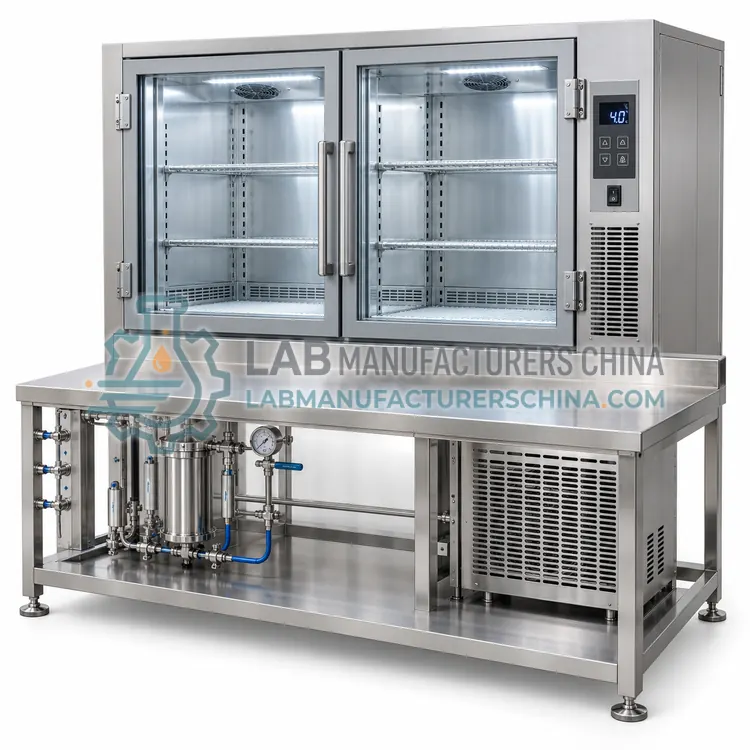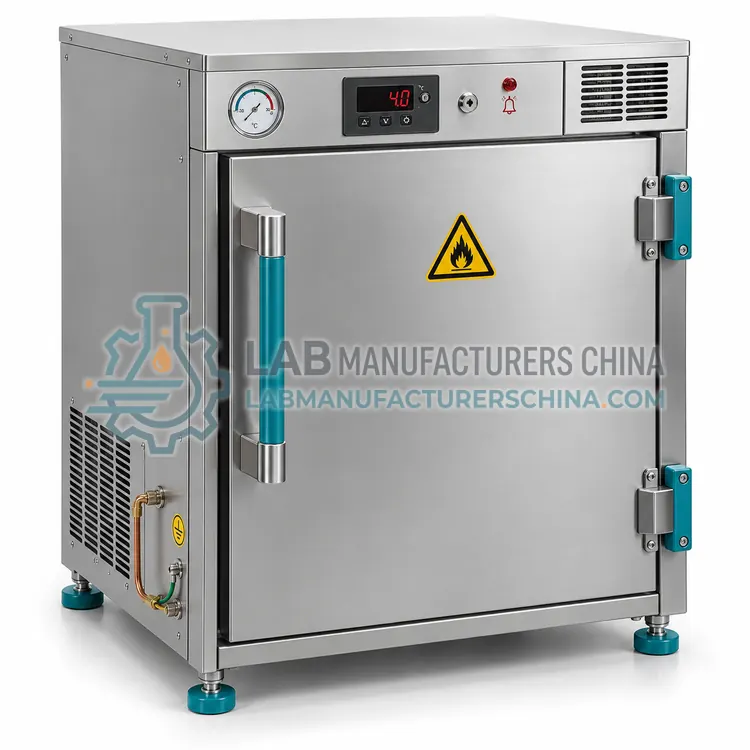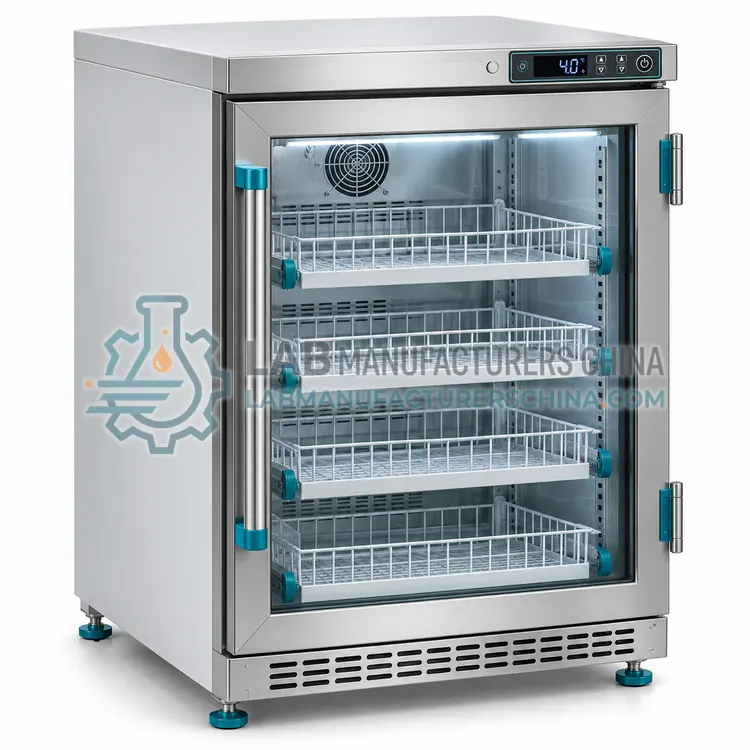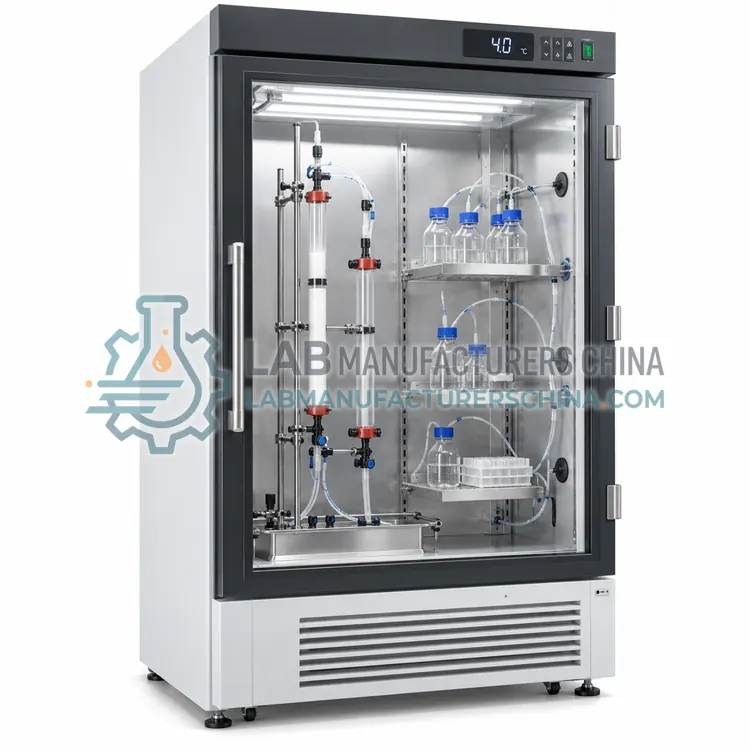
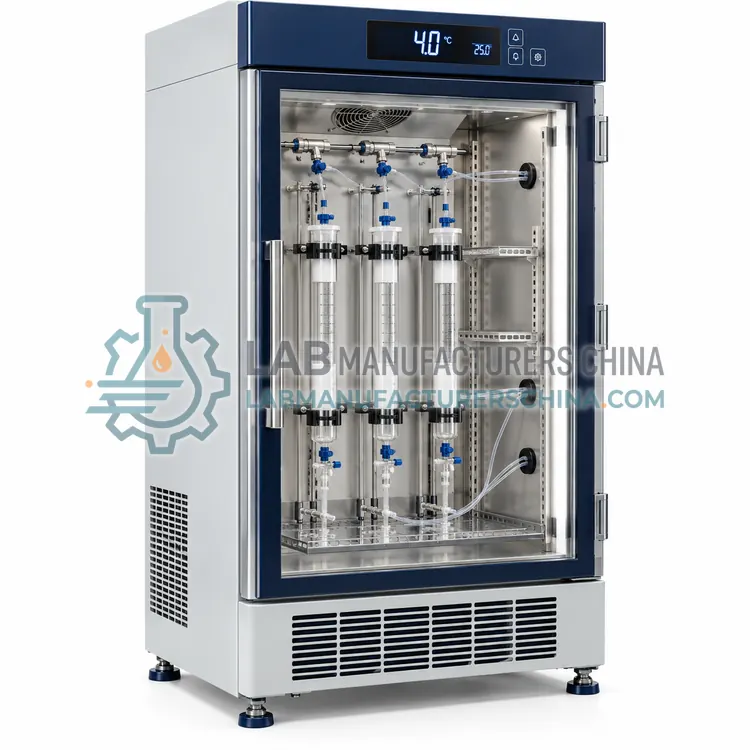
Variable-Temperature Chromatography Refrigerator (0–25 °C)
可变温层析冷藏箱(0–25 °C)
- SKU CHR-0005
- Chromatography Refrigerators
- CE (to be confirmed)
- ISO 9001 manufacturing (to be confirmed)
Price on request — FOB / CIF quoted per order
Prices depend on configuration, quantity and destination port.
Key specifications
| Temperature range | 0–25 °C |
|---|---|
| Net volume | 300–800 L |
| Temperature stability | ±0.5 K |
| Temperature uniformity | ≤ 2 K |
| Programming | Multi-step with ramp, 10–20 programs |
| Safety cutout | Independent over-temperature |
Request a quote Download brochure · to be provided
By Lab Manufacturers China Technical TeamLast reviewed Standards: IEC 61010-1, IEC 61010-2-011, IEC 61326-1
What is the Variable-Temperature Chromatography Refrigerator (0–25 °C)?
A programmable cabinet controllable between about 0 and 25 °C for chromatography methods that run at several temperatures. It supports cold purification, ambient equilibration and column conditioning without moving instruments between environments, which improves method reproducibility and saves setup time.
What is the Variable-Temperature Chromatography Refrigerator (0–25 °C)?
A programmable cabinet controllable between about 0 and 25 °C for chromatography methods that run at several temperatures. It supports cold purification, ambient equilibration and column conditioning without moving instruments between environments, which improves method reproducibility and saves setup time.
Overview
Some methods call for different temperatures at different stages, for instance loading at 4 °C, elution at 15 °C and equilibration at 25 °C. A variable-temperature cabinet has a refrigeration system plus a heater and a controller that offers programmable steps with ramps. Typical control is ±0.5 K around the set point, with uniformity within 2 K. Volume is 300–800 L, and the cabinet has cable ports and a work shelf. A calibrated control probe and a separate over-temperature safety cutout protect samples. Such cabinets are also used for stability studies of small batches at 5, 15 or 25 °C, although an incubator with humidity control is a better choice for formal ICH stability work. Energy use is higher than a fixed 4 °C cabinet.
How does it work?
A chromatography refrigerator uses a vapour-compression circuit and forced-air circulation, like any laboratory refrigerator, but the cabinet is configured around the workflow. Cold-cabinet versions include a work shelf, cable ports, internal sockets and lighting so that FPLC pumps, detectors and collectors operate inside at 4 °C. The controller holds the set point, usually within ±1 K, with airflow directed to avoid blowing across columns. Storage versions emphasise drawers, racks and locks for columns and standards. Light-protected versions use opaque doors and amber lighting, and variable-temperature versions add a heater and programmable profiles. The thermal design must handle door openings and the heat load of instruments inside the cabinet.
What are the key features?
- Programmable 0–25 °C range with multi-step temperature profiles
- Control stability of about ±0.5 K around the set point
- Independent over-temperature cutout protects samples
- Cable ports and work shelf for instrument operation
- Data output records temperature for method documentation
What are the technical specifications?
A typical variable-temperature chromatography refrigerator (0–25 °c) configuration offers temperature range of 0–25 °C, net volume of 300–800 L, temperature stability of ±0.5 K, temperature uniformity of ≤ 2 K, programming of Multi-step with ramp, 10–20 programs and safety cutout of Independent over-temperature. Values are indicative of the product class; the exact figures for each configuration are confirmed on the quotation and the calibration documents supplied with the instrument.
Which applications is it used for?
The Variable-Temperature Chromatography Refrigerator (0–25 °C) is used in multi-temperature chromatography methods, column equilibration, temperature-dependent separations and method development studies. Across the wider Chromatography Refrigerators class, laboratories also deploy it for protein purification at 4 °C, HPLC column storage and reference-standard storage.
Which standards and certifications apply?
Relevant standards and methods include IEC 61010-1, IEC 61010-2-011, IEC 61326-1, ICH Q2(R2), NFPA 45, NFPA 30 and ISO 9001. Certification candidates for this model are CE and ISO 9001 manufacturing; each is to be confirmed for the specific configuration before shipment, and certificates are supplied only where they have been issued.
Place the cabinet on a level floor with the ventilation clearance stated in the manual, and size the electrical supply for the cabinet plus any instruments plugged into internal sockets. Allow the interior to reach set point before loading instruments. Condensation forms on cold surfaces when the door is open, so provide a drain or drip tray and keep electrical connections dry. Calibrate probes at least yearly, clean the condenser regularly, and check gaskets. For regulated work, document temperature mapping and record temperature so that run conditions can be shown in method records.
How do I select the right Variable-Temperature Chromatography Refrigerator (0–25 °C)?
Choose the variable-temperature cabinet when methods require stepwise or alternative temperatures. Specify temperature range, stability, programmable steps, cable ports and volume. For a fixed 4 °C purification, a standard cold cabinet is simpler and uses less energy, so the variable-temperature model is justified only by method needs.
How does it compare with other Chromatography Refrigerators variants?
Decide first whether the cabinet will run instruments or only store consumables. For instruments, specify internal dimensions, total heat load, cable ports, sockets and door type, and choose a large cabinet for several systems. For consumables, an undercounter model with drawers is enough. Choose a light-protected model for photosensitive standards and a variable-temperature model for methods with multiple temperatures. Compare temperature uniformity, noise, condensation control and alarms. Confirm ambient range, power supply and floor loading. Never place open flammable solvents in a standard unit, and choose a flammable-storage or explosion-proof model where solvents are stored.
Full specifications
| Temperature range | 0–25 °C |
|---|---|
| Net volume | 300–800 L |
| Temperature stability | ±0.5 K |
| Temperature uniformity | ≤ 2 K |
| Programming | Multi-step with ramp, 10–20 programs |
| Safety cutout | Independent over-temperature |
| Cooling method | Forced-air with heater |
| Cable ports | 2 ports, 40–60 mm |
| Data output | USB or RS-485 |
| Power supply | 220–240 V, 50 Hz |
Indicative values for this product class. Final specifications are confirmed on the quotation and in the calibration documents supplied with the instrument.
Applications
- Multi-temperature chromatography methods
- Column equilibration
- Temperature-dependent separations
- Method development studies
Key features
- Programmable 0–25 °C range with multi-step temperature profiles
- Control stability of about ±0.5 K around the set point
- Independent over-temperature cutout protects samples
- Cable ports and work shelf for instrument operation
- Data output records temperature for method documentation
Frequently asked questions about Variable-Temperature Chromatography Refrigerator (0–25 °C)
Temperature changes retention, selectivity and protein stability. Loading at 4 °C may preserve activity, while elution at a higher temperature may improve peak shape or speed. Programmable control makes such temperature profiles reproducible.
No. Column ovens heat the column itself to 30–80 °C with tight stability for HPLC. This cabinet controls the surrounding air over 0–25 °C, suited to bioseparation systems and sample handling.
Ramp rates depend on volume and load, typically around 0.5–1 °C per minute when cooling or heating with an empty cabinet. Loaded instruments add thermal mass, so allow time for equilibration before starting a run.
It is a laboratory cabinet that either runs chromatography systems at about 4 °C, with cable ports and a work shelf, or stores columns, standards and samples at 2–8 °C with drawers and locks. It provides stable temperature for sensitive separations and consumables.
Low temperature slows proteolysis, aggregation and microbial growth, preserving protein activity during long runs. Many enzymes and antibodies are purified at 4 °C for this reason, although some methods are run at room temperature when the target is stable.
Not in a standard unit. Ordinary refrigerators contain ignition sources such as switches and lights, so open flammable liquids are a hazard. Use a flammable-storage or explosion-proof refrigerator and follow local fire-safety rules and standards like NFPA 45.
Related models
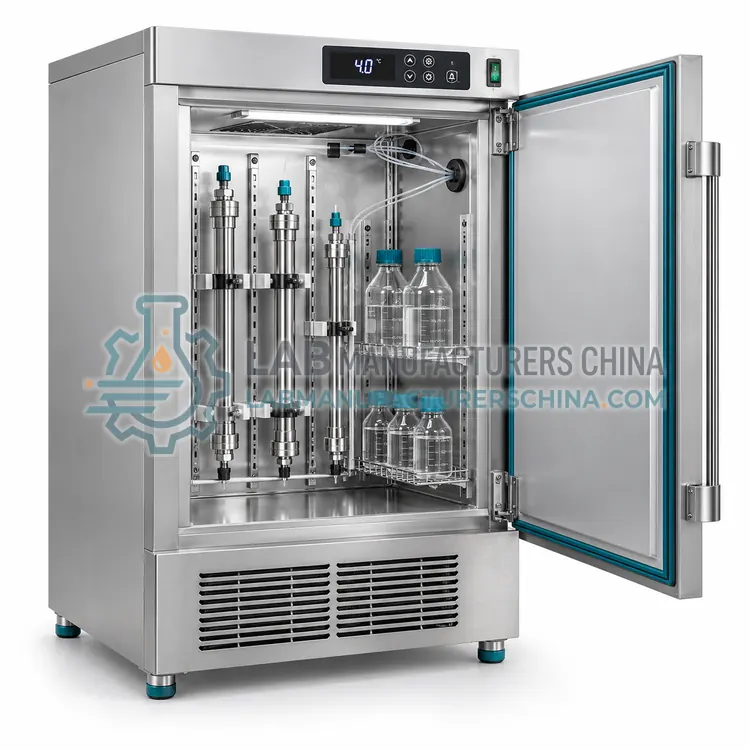
Undercounter Chromatography Column and Sample Storage Refrigerator
台下式层析柱与样品储存冷藏箱
- CE (to be confirmed)
- +1
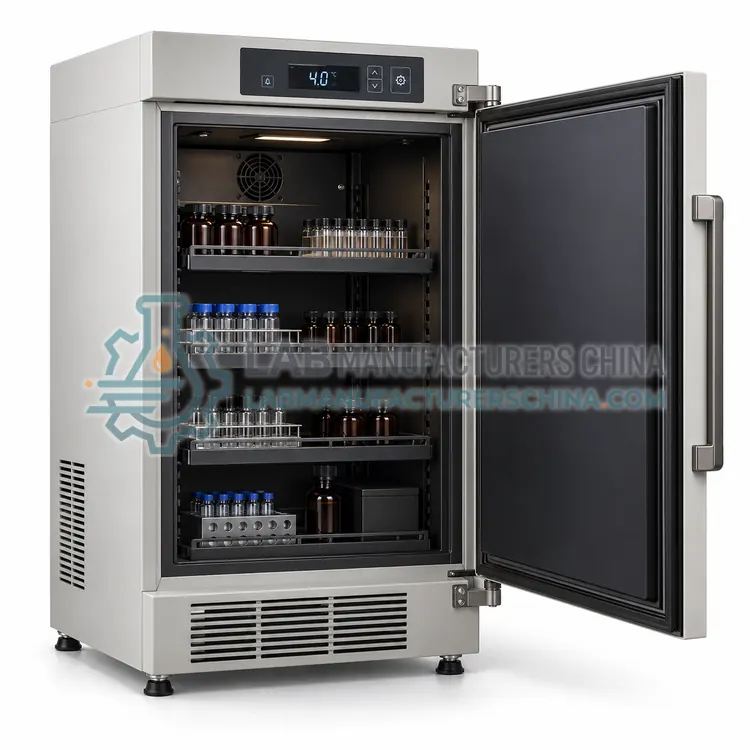
Light-Protected Chromatography Refrigerator for Photosensitive Standards
避光型层析冷藏箱(光敏标准品)
- CE (to be confirmed)
- +1